 Tendata AI
  Exhibition
 B2B Platforms
 Standalone Website
 Social Media
 Emails
 Events
 2025-11-27
Malaysia—often referred to as “China away from home”—is rapidly becoming the most reliable choice for Chinese companies expanding into Southeast Asia.
Walking through the streets of Kuala Lumpur, one can easily feel a sense of time-space overlap—MINISO, ChaTraMue, Mixue, and vivo signs everywhere; Chinese new-energy vehicles frequently appear in ride-hailing services; Chinese signage and Mandarin conversations are completely commonplace.
This “sense of familiarity” comes not only from brand recognition, but from deep cultural connections.
Malaysia has the highest proportion of ethnic Chinese outside of China and Singapore, and is the only country in the world—aside from China—where the Chinese education system spans from kindergarten to university. It is one of the most well-preserved overseas soils of Chinese culture.
Cultural affinity provides a natural bridge for Chinese businesses to land. And when we shift our view from culture to economics and business, a vibrant modern economy reveals its strong growth momentum.
With 40% GDP growth over the past decade, one of Southeast Asia’s top three GDPs per capita, and manufacturing accounting for 23.4% of GDP… Malaysia has the manufacturing capability of an “Eastern Silicon Valley,” the logistical advantage of Port Klang, and strong policy support for new energy and electrical & electronic industries.
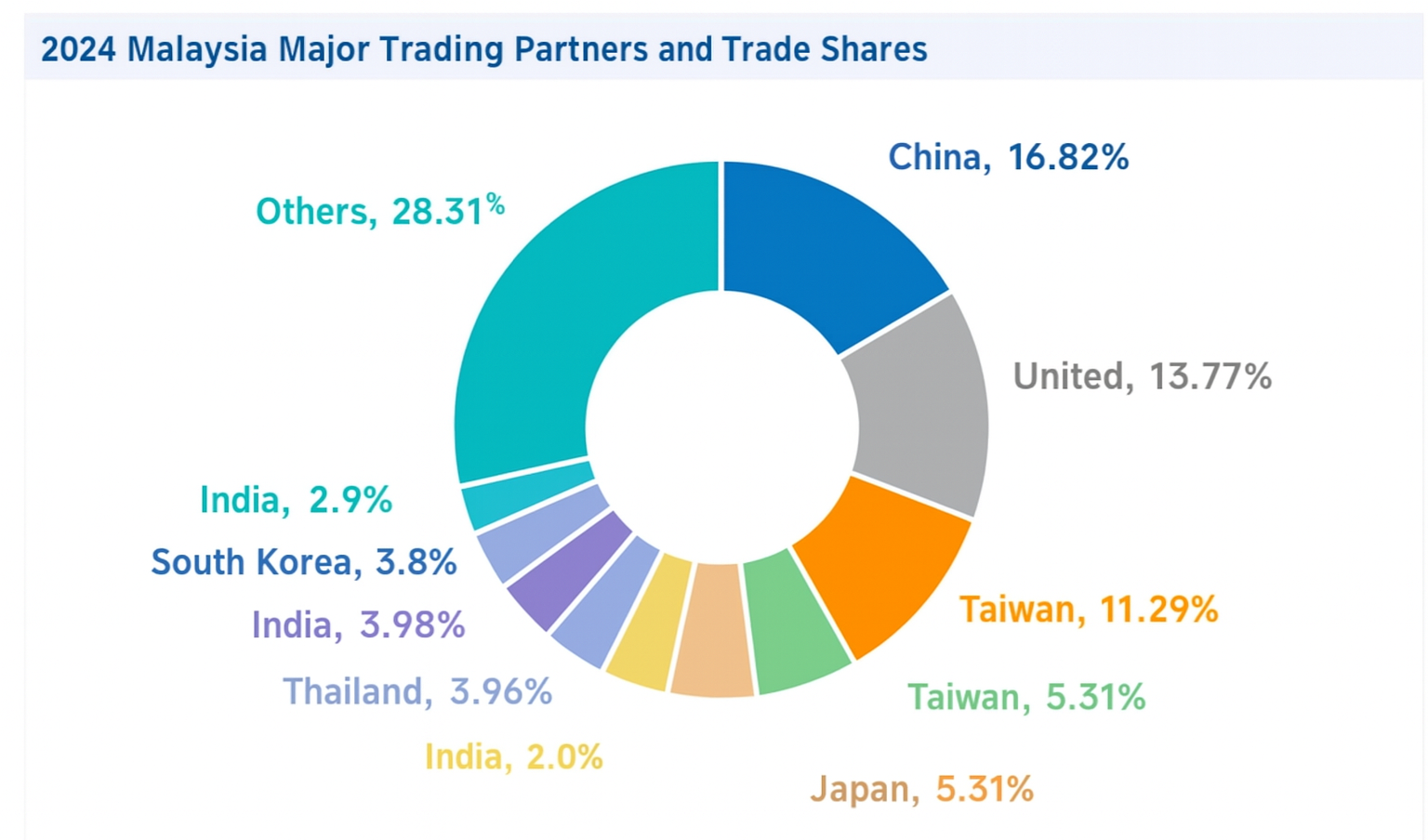
Amid global supply chain restructuring, China and Malaysia continue deepening economic cooperation through the “Two Countries, Twin Parks” model, joint infrastructure development, and strategic industrial investment. China has been Malaysia’s largest trading partner for many consecutive years.
According to the UOB Business Outlook Survey 2024, Malaysia is the top investment destination over the next three years for both ASEAN and Chinese companies. Chinese firms such as Huawei, Geely, Chery, and BYD are rapidly expanding their footprints here—further proving the country’s growing appeal to investors.
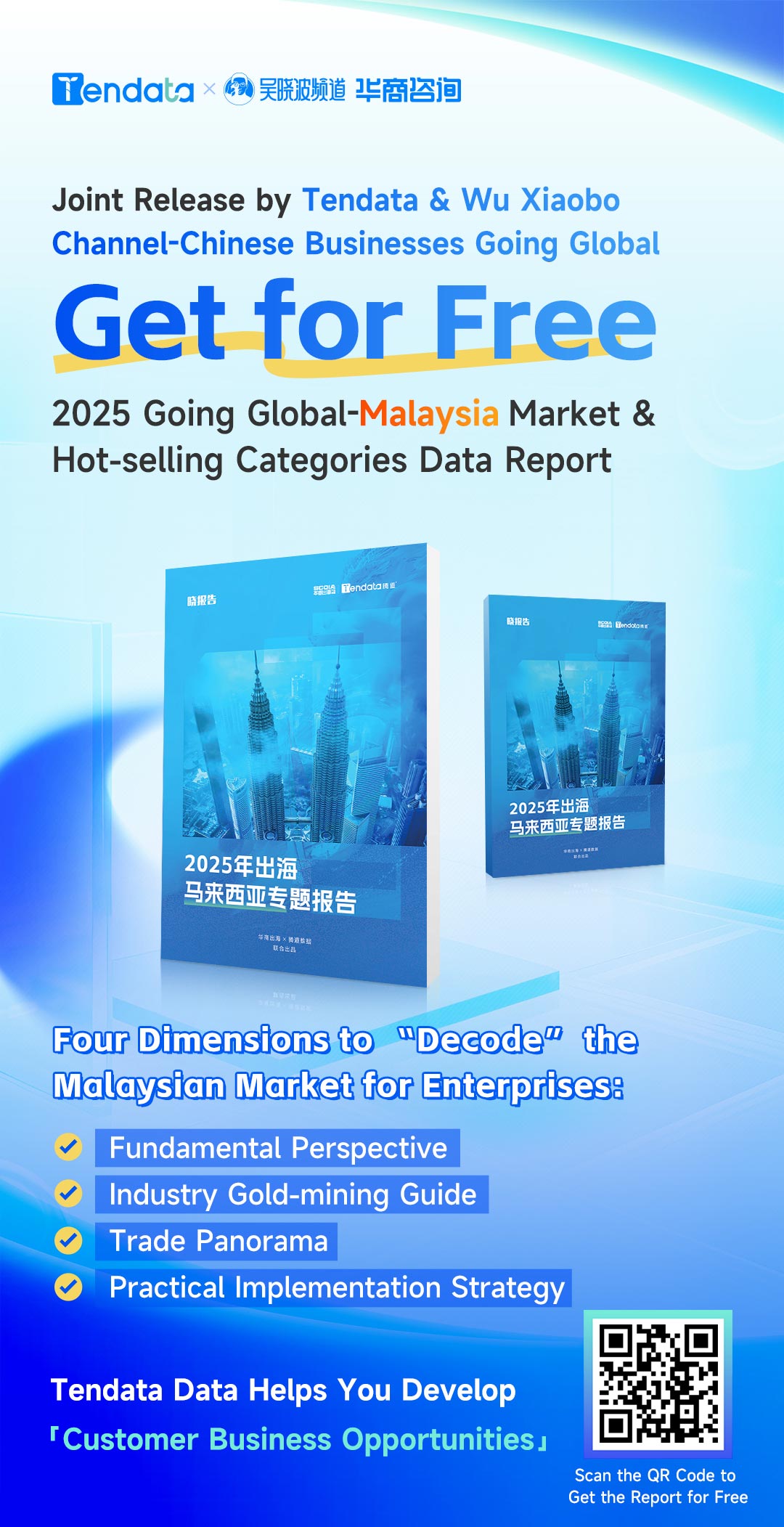
To support this trend, the Wu Xiaobo Channel, the Chinese Business Overseas Alliance, and global trade-data service provider Tendata jointly released the 2025 Malaysia Expansion Special Report. From fundamentals and trade overview to five major industrial opportunities, it provides a complete playbook and actionable strategies for businesses going abroad.
1. Choosing Malaysia Is Essentially Choosing “Certainty”
In an era of geopolitical instability and economic fluctuations, Malaysia stands out as a rare overseas market offering “certainty”—thanks to its stable geography, multicultural inclusiveness, neutral political stance, and resilient economic environment.
Compared with Vietnam’s low-cost manufacturing or Indonesia’s resource advantage, Malaysia’s core competitiveness lies in stability. This stability is reflected in several dimensions.
A strategic and irreplaceable geographic location
Situated at Southeast Asia’s crossroads—bordering Thailand to the north, Singapore to the south, facing the Philippines and Indonesia to the east, and guarding the Strait of Malacca to the west—Malaysia naturally serves as a gateway to ASEAN’s 600-million-population market and a major pivot between East-West trade.
Its efficient transportation and logistics system maximizes this advantage. KL International Airport enables 2-hour access to major Southeast Asian cities. About 25% of global maritime trade passes through Malaysia; its ports rank among the top three in ASEAN, with goods reaching Singapore or Indonesia within 24 hours.
Port Klang, Malaysia’s largest port, ranked 10th globally by container throughput in 2024—second only to Singapore in Southeast Asia. Tanjung Pelepas Port rose to 14th with a 16.9% growth rate.
A resilient economy with long-term growth potential
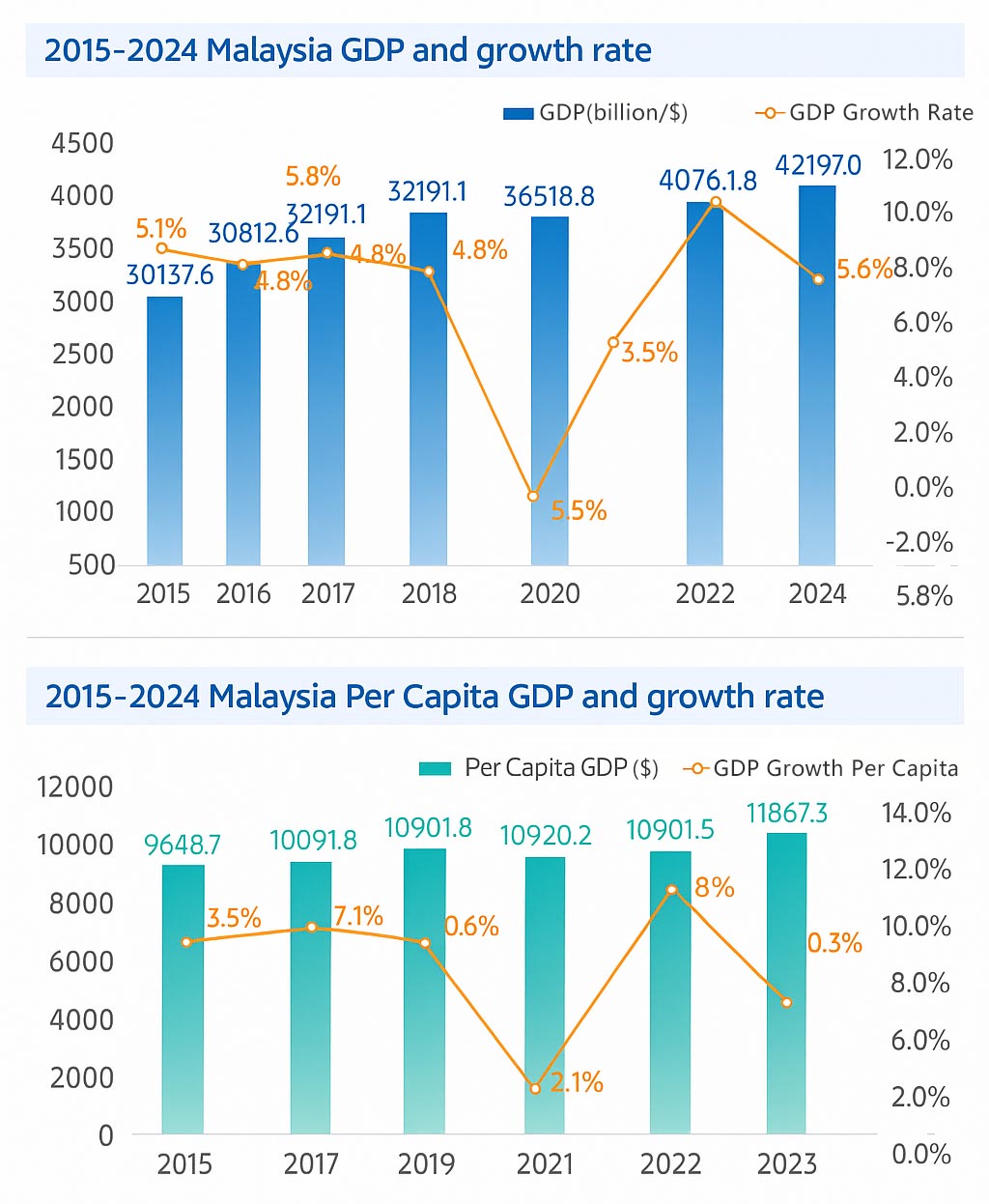
According to the World Bank, Malaysia’s GDP grew from USD 301.36 billion in 2015 to USD 421.97 billion in 2024—an increase of around 40%.
GDP per capita reached USD 11,867 in 2024, ranking third in Southeast Asia. The 2025 GDP growth forecast is 4.5%, higher than the emerging-market average.
In trade, Malaysia has maintained a surplus for 26 consecutive years since 1998, with overall trade showing an upward trend over the past five years. Its import and export markets are highly diversified:
· Top import sources: Singapore (15%), US (13%), China (12%)
· Top export destinations: China (22%), Singapore (12%), US (9%)
Compared with Vietnam—where over 30% of exports depend on the US—Malaysia’s diversified structure prevents excessive reliance on any single market, increasing resilience.
Demographic dividend powering growth
Malaysia’s advantages are realized through four dimensions: labor force composition, multilingual talent, lower labor costs, and strong consumption power.
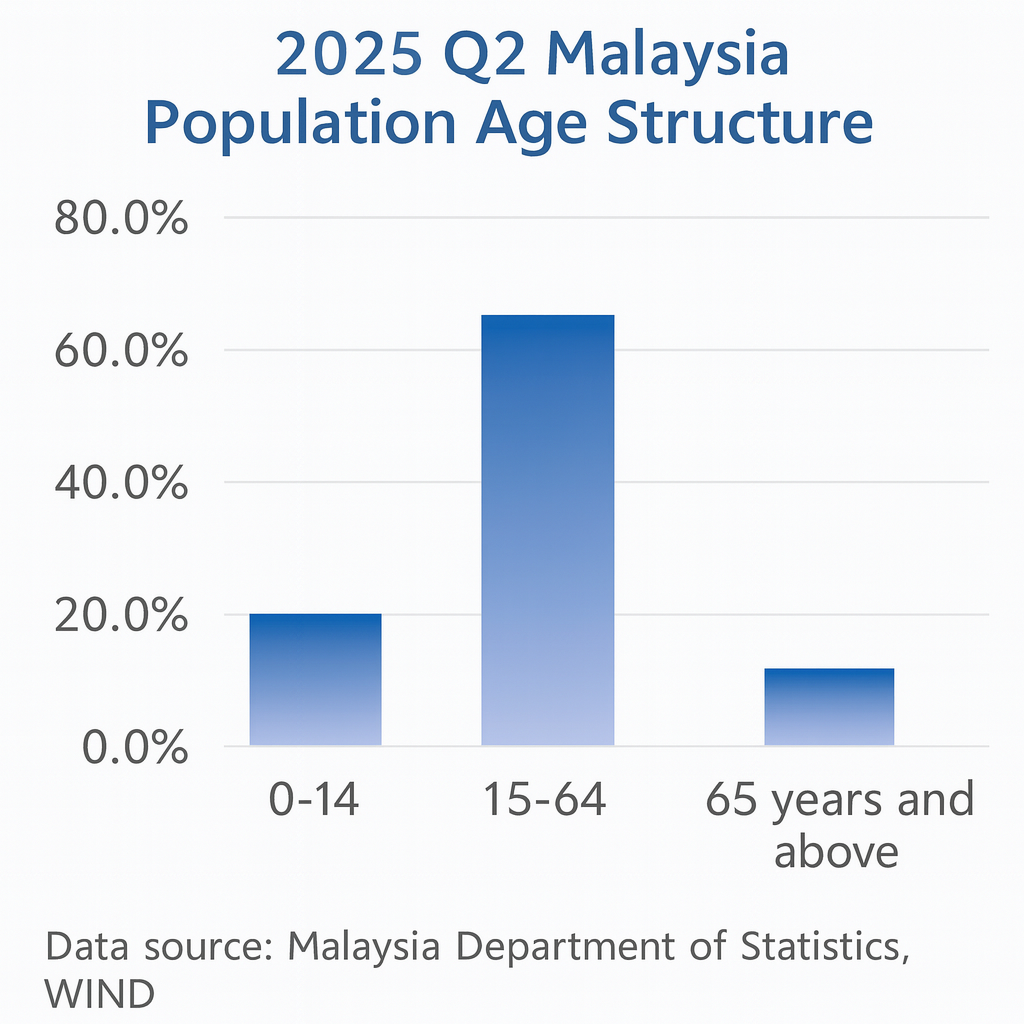
In Q2 2025, the working-age population accounted for 70.4%. With a median age of around 30, the demographic structure closely resembles China during its own demographic dividend period.
As a multicultural society, Malaysia produces large numbers of trilingual talents fluent in Mandarin, English, and Malay—highly valuable for Chinese companies going overseas.
However, local work culture tends to favor “slow living,” with different work habits and lower tolerance for overtime—requiring managers to adapt, respect, and integrate.
Consumption power is also strong: Malaysia is ASEAN’s 4th-largest consumer market, with per-capita spending second only to Singapore. In 2023, the ratio of consumption to disposable income reached 105%, the highest among major ASEAN economies—indicating high activity and purchasing power.
A rule-of-law business environment that protects foreign investment
As a Commonwealth country, Malaysia inherits a common-law system with transparent legal frameworks and strong protection for IP and contractual enforcement.
Foreign companies receive national treatment; most industries impose no foreign-equity restrictions; and a dedicated commercial court accelerates business dispute resolution.
This reduces compliance risks and increases long-term confidence for investors.
2. What Malaysia Needs Is Exactly What Chinese Companies Excel At
Malaysia is currently prioritizing development of five major industries: semiconductors, new energy, pharmaceuticals, the digital economy, and medical devices—shifting from labor-intensive to technology-intensive industries.
Chinese companies have deep capabilities in these very fields, creating a historic window of opportunity.
1) Semiconductors: A critical node in the global supply chain
Through the National Semiconductor Strategy (NSS) and NIMP2030, Malaysia aims to become a global semiconductor powerhouse.
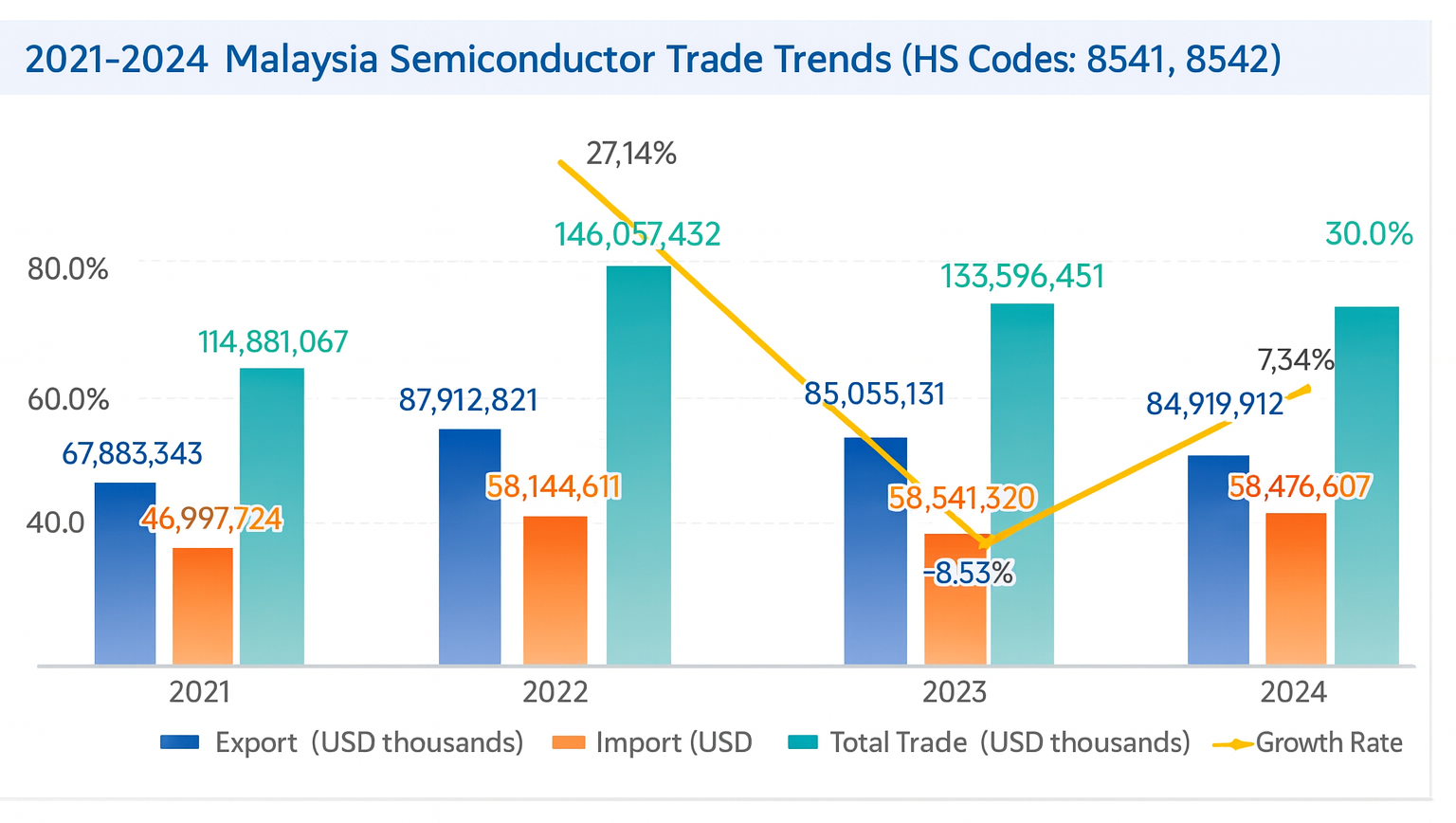
· Semiconductors account for 40% of Malaysia’s total exports
· Malaysia is the 6th-largest semiconductor exporter in the world
· Holds 13% of the global OSAT (assembly & testing) market
Labor costs are 1/3–1/2 of Singapore’s, with over 800,000 workers in electronics manufacturing.
Global giants—Intel, AMD, Infineon—coexist with Chinese companies such as Huawei and Tongfu Microelectronics, creating a full-chain ecosystem from design to manufacturing to packaging/testing.
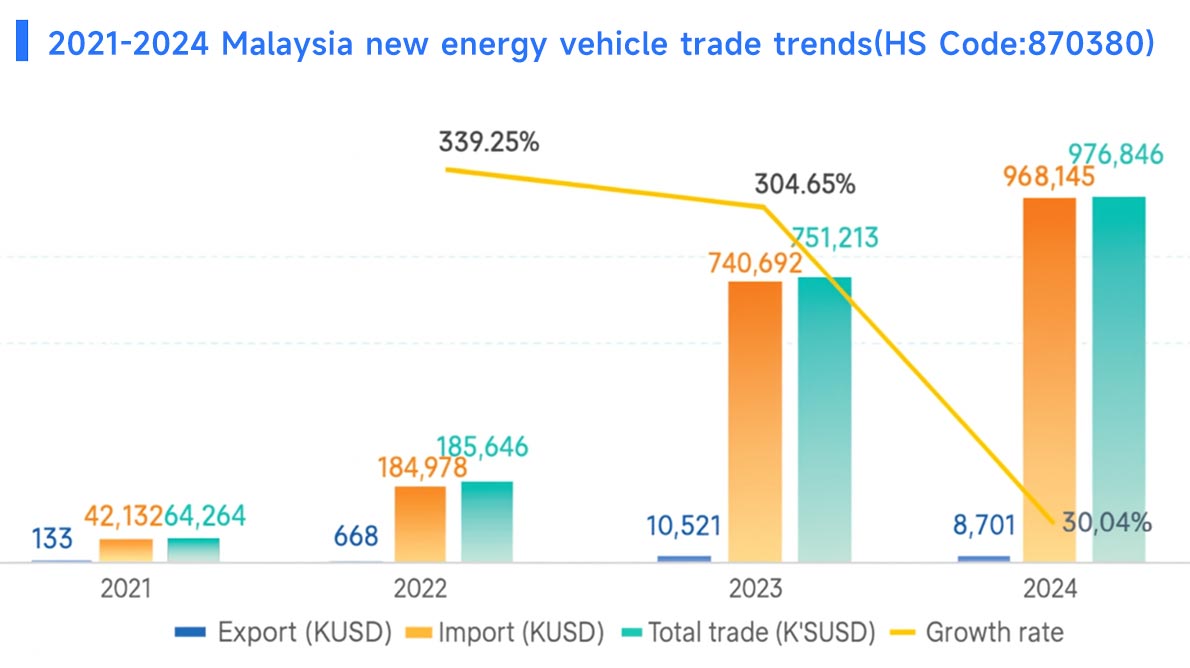
2) New-energy vehicles: A home field for Chinese brands
Malaysia is one of the few ASEAN countries with its own auto brands. Annual auto production exceeds 740,000 units, with 700,000 employees in the industry.
However, the market has long been dominated by Japanese fuel-vehicle brands, leaving a major gap in EV development—precisely where Chinese automakers excel.
· As of Nov 2024, Malaysia registered 44,423 xEVs, +19% YoY
· BEVs grew 45%, reaching 14,766 units
· Government targets:
(1) 20% EV sales by 2030
(2) 50% by 2040
(3) 80% by 2050
Chinese brands are thriving:
· BYD ranked #1 with 8,570 registrations (31% share)
· Chery sales jumped 338%, entering the top five
· Geely-Proton partnerships are strong among local consumers
3) Digital economy: Southeast Asia’s version of the China model
With expanding 5G coverage and mature online consumption habits, Malaysia’s digital economy is booming—digital trade surged 101.51% YoY in 2024.
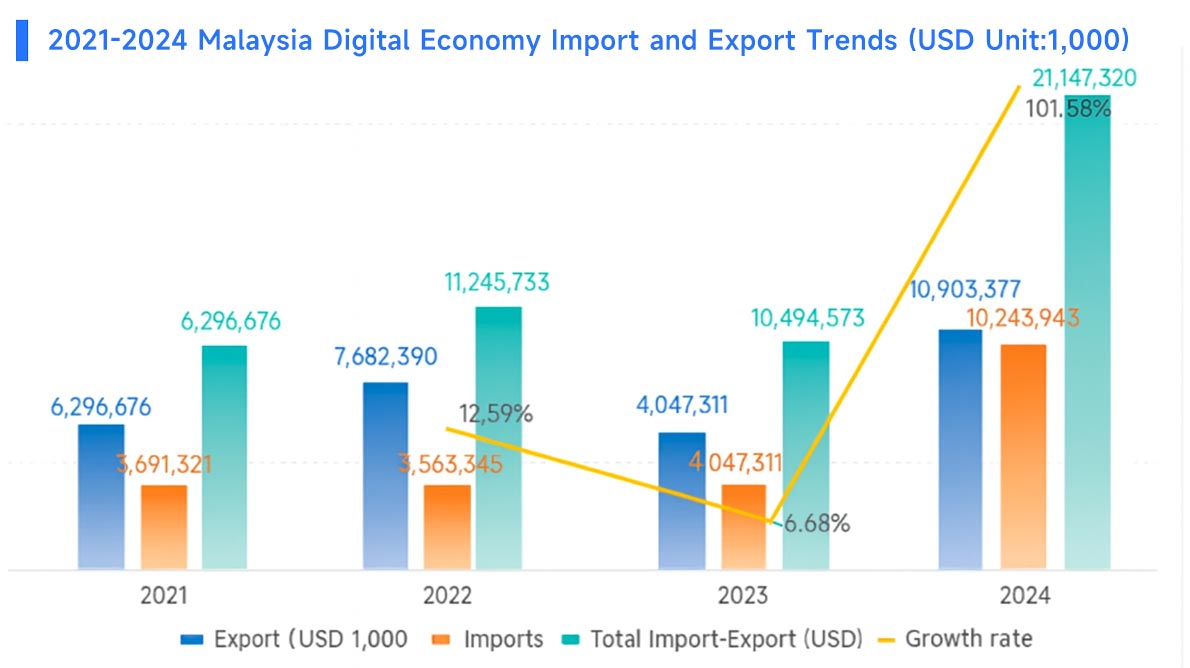
But challenges remain: logistics, warehousing, and digital marketing. These create opportunities for Chinese companies.
Alibaba’s eWTP digital hub and Tencent Cloud’s KL data center illustrate how Chinese platforms are reshaping Malaysia’s digital infrastructure.
Malaysia’s market consists of multi-layered segments:
· Top layer: Highly digitalized urban youth—Kuala Lumpur users spend 98 minutes daily on TikTok; hybrid models like livestream + convenience-store pickup are emerging; SHEIN’s AR try-on conversion rate is 20% higher than in the Middle East.
· Middle layer: Rapidly expanding Malay middle class—civil servant salary reforms push monthly household median income above RM 6,000; NEV sales rose 170% YoY; BYD’s right-hand-drive models have become status symbols.
· Base layer: Islamic economy—Malaysia implemented the world’s first blockchain halal-traceability system; Ningxia’s goji berry suppliers achieved full-process traceability and received JAKIM halal certification.
This structured market offers diverse entry points for Chinese businesses of all types.
3. Localization: The Key to Long-Term Success in Malaysia
Successful overseas expansion requires shifting from merely “going out” to truly “going in.” And the first step is respecting cultural differences—often the most challenging step.
Malaysia’s multi-ethnic and multi-religious society includes:
· ~60% Muslims (Islam as state religion)
· Hindu and Chinese Buddhist/Taoist communities
· Strong religious norms influencing daily life and workplace rules
Respect is the first ticket to entering the Malaysian market.
Work culture considerations
· Malaysian companies value harmony and consensus
· Overtime culture is rare
· Muslim employees require prayer time during work hours
· Some Chinese enterprises converted meeting rooms into prayer rooms and adjusted work shifts—earning strong employee support
Religious practices and taboos
· Malay Muslims avoid pork and alcohol
· Avoid images of animals or humans on certain items
· Left hand considered unclean; use the right hand to pass objects
· Avoid touching someone’s head
· Women entering mosques must wear long robes and headscarves
Mastery of these details is necessary to transform cultural differences into organizational strengths.
Why labor-intensive industries are not ideal
Malaysia has only 33 million people; few locals want “3D jobs,” so factories rely on foreign workers (about 20%). Low-end labor costs are higher than Vietnam or Indonesia.
Policies also reject low-value manufacturing, instead supporting high-value, automated, precision industries.
As Prime Minister Anwar stated:
“Cooperation is not replacement—it is empowerment.”
This captures the essence of China–Malaysia collaboration: not low-end capacity relocation, but value co-creation through technology, ecosystem development, and compliant operations.
Conclusion
Political stability, economic growth, policy incentives, industry complementarity, and cultural closeness are the elements that make Malaysia the top destination for Chinese companies expanding into Southeast Asia.
For 2025, Malaysia enters a phase of concentrated policy benefits. Early movers are already harvesting returns.
For SMEs, Malaysia is an ideal “first stop”: manageable costs, lower risks, and easier adaptation. The experience gained here becomes a foundation for entering broader global markets.
Our report also provides detailed guidance on company registration, costs, industry restrictions, tax policy, and investment incentives.
Expanding into Malaysia is not just about finding a new market—it is about finding certainty. Not just about business expansion—but about building a shared future.
Contact us now to access the full report!
Category
Leave Message for Demo Request or Questions