 Tendata AI
  Export News
 2026-07-06
Global exports of caviar reached approximately US$627.4 million in 2025, demonstrating steady growth in international demand for this premium seafood product.
Compared with US$579.1 million in 2021, worldwide caviar exports increased by 8.3% over five years. On a year-over-year basis, export value rose 6.2% from US$590.7 million in 2024.
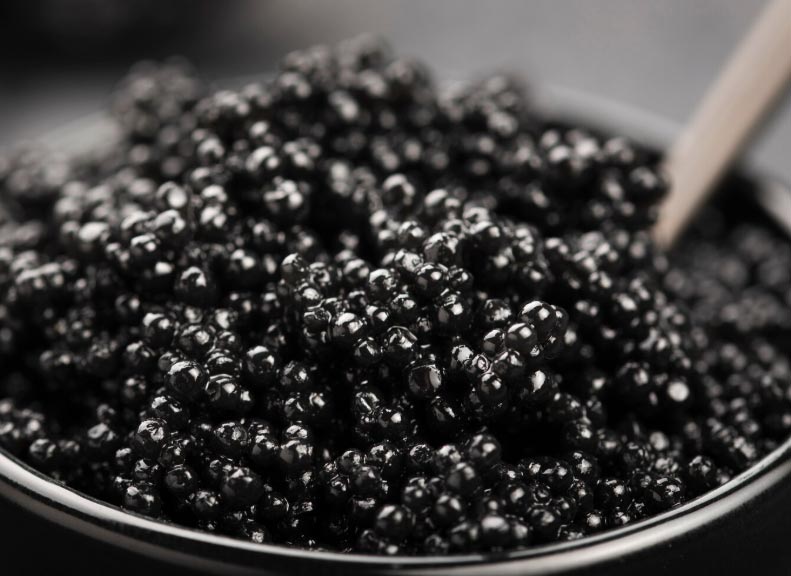
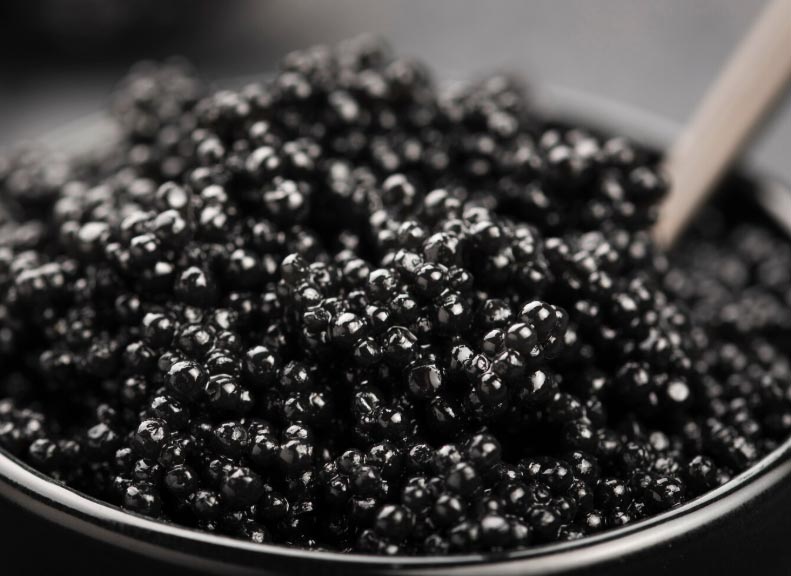
Traditional sturgeon caviar remained the most valuable category, generating US$280.7 million, or 44.7% of total global caviar exports in 2025. This represented a larger market share than the 42.3% recorded one year earlier. Authentic caviar is produced from the roe of wild sturgeon, primarily harvested from the Caspian Sea and the Black Sea.
Meanwhile, caviar substitutes made from the eggs of non-sturgeon fish generated US$346.7 million, accounting for the remaining 55.3% of export value. Although substitute caviar achieved higher overall sales, traditional caviar continued to command a far higher average export price. In 2025, authentic caviar averaged approximately US$212,144 per ton, nearly 11 times the average price of US$19,355 per ton for non-sturgeon alternatives.
Key Market Insights
Trade performance varied considerably between the two product categories.
Traditional caviar exports expanded by 55.3% between 2021 and 2025, including an impressive 20.7% increase from 2024.
By comparison, exports of caviar substitutes declined 13% over the five-year period and slipped another 3.2% year over year.
The five largest exporters of traditional caviar—mainland China, Italy, France, Poland, and Germany—together accounted for 76% of global export value, highlighting the concentration of production within a relatively small number of suppliers.
The market for caviar substitutes was more diversified. The top five exporters—Japan, Germany, mainland China, the United States, and Denmark—represented 60.9% of worldwide exports.
Caviar Exports by Region
For traditional caviar, Europe remained the leading supplier, contributing 49.2% of global exports. Asia followed closely with 45.6%.
The remaining exports originated from:
· North America — 2.9%
· Africa — 1.4%
· Latin America and the Caribbean — 1%
· Oceania — 0.001%
For caviar substitutes made from non-sturgeon fish eggs, regional distribution was as follows:
· Europe — 48%
· Asia — 40.6%
· North America — 10.5%
· Latin America and the Caribbean — 0.8%
· Oceania — 0.1%
· Africa — 0.005%
In addition to export value, analysts often compare export volumes and average prices to better understand competitiveness within the global caviar market.
For customs classification purposes:
· HS Code 160431 covers traditional sturgeon caviar.
· HS Code 160432 applies to caviar substitutes produced from non-sturgeon fish eggs.
Top Traditional Caviar Exporters
The following countries generated the highest export revenue from traditional caviar in 2025:
1. Mainland China — US$118.2 million (42.1%)
2. Italy — US$27.6 million (9.8%)
3. France — US$24.3 million (8.7%)
4. Poland — US$22.2 million (7.9%)
5. Germany — US$20.8 million (7.4%)
6. Belgium — US$14.4 million (5.1%)
7. Bulgaria — US$5.73 million (2%)
8. United States — US$5.68 million (2%)
9. Portugal — US$4.6 million (1.7%)
10. Madagascar — US$3.8 million (1.4%)
11. Spain — US$3.6 million (1.3%)
12. Greece — US$3.2 million (1.1%)
13. Hong Kong — US$3.1 million (1.1%)
14. Netherlands — US$2.6 million (0.9%)
15. Canada — US$2.4 million (0.8%)
Collectively, these fifteen countries supplied 93.5% of the world's traditional caviar exports.
Among the leading exporters, Portugal recorded the fastest annual growth with a remarkable 295.3% increase, followed by Spain (83.5%), Poland (56.3%), and the United States (41.8%).
The Netherlands was the only country within the top fifteen to report a decline, with exports falling 12.2% compared with 2024.
Leading Exporters of Caviar Substitutes
Countries exporting caviar made from non-sturgeon fish eggs generated the following sales in 2025:
· Japan — US$68.9 million (19.9%)
· Germany — US$48.3 million (13.9%)
· Mainland China — US$47 million (13.5%)
· United States — US$27.3 million (7.9%)
· Denmark — US$19.8 million (5.7%)
· Sweden — US$15.1 million (4.4%)
· Russia — US$11.2 million (3.2%)
· Netherlands — US$9.8 million (2.8%)
· Canada — US$8.9 million (2.6%)
· Finland — US$7.4 million (2.1%)
· Iceland — US$7.3 million (2.1%)
· Lithuania — US$6.8 million (2%)
· South Korea — US$6.3 million (1.8%)
· Latvia — US$6.2 million (1.8%)
· Spain — US$5.8 million (1.7%)
Together, these countries contributed 85.4% of total global exports of caviar substitutes in 2025, indicating a broader supplier base than the traditional caviar market.
The strongest year-over-year growth came from:
· Finland — 128.2%
· Lithuania — 122.5%
· United States — 58.9%
· Latvia — 27.6%
Meanwhile, Canada (-8.8%) and mainland China (-0.2%) experienced modest declines in export value.
Top Caviar Exporters in 2025
According to Tendata, the world's leading caviar exporters in 2025 include:
1. THAI UNION MANUFACTURING CO LTD — 2.25% (US$7.33 million)
2. UAB VICIUNAI IR KO — 2.13% (US$6.93 million)
3. SIA KARAVELA — 1.30% (US$4.23 million)
4. FCF CO LTD — 1.28% (US$4.17 million)
5. RIBERALVES COMERCIO E INDUSTRIA DE PRODUTOS ALIMENTARES S A — 1.28% (US$4.15 million)
6. ООО МИНТАЙ ДВ — 1.27% (US$4.14 million)
7. ACIPENSER SA — 1.18% (US$3.84 million)
8. VIAS H K CO LTD — 1.12% (US$3.65 million)
9. ООО ВОСТОК ВЭД — 1.10% (US$3.57 million)
10. SIA REMARK S — 1.09% (US$3.55 million)
>>Find More Caviar Exporters via Tendata<<
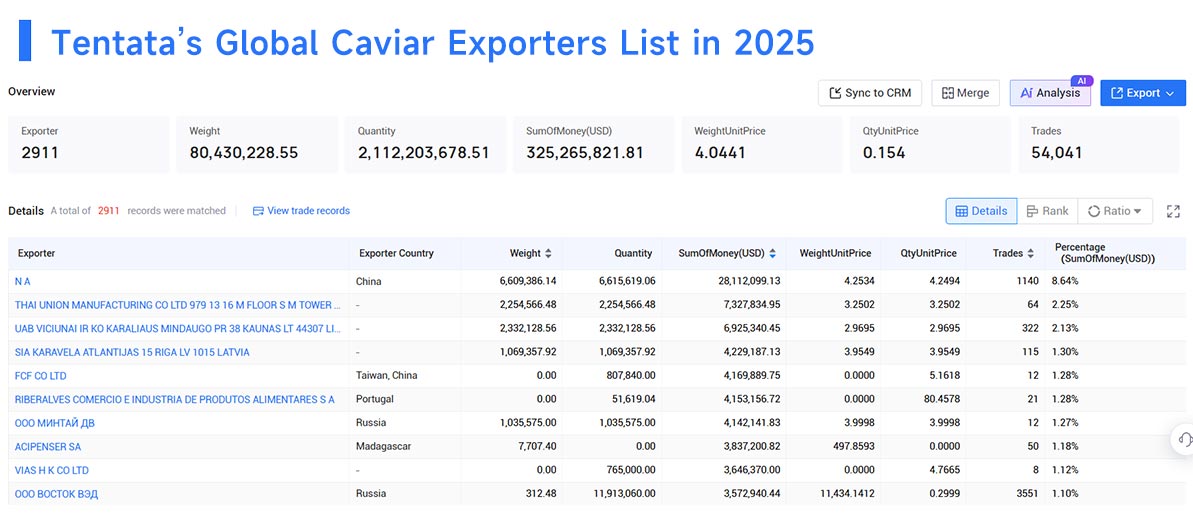
With Tendata's Global Trade Intelligence Platform, buyers can access verified shipment records, identify active caviar exporters, evaluate supplier performance, and connect with reliable manufacturers worldwide using real trade data.
Category
Leave Message for Demo Request or Questions