
 Tendata AI
  Exhibition
 B2B Platforms
 Standalone Website
 Social Media
 Emails
 Import News
 2026-04-07
Keypoints
·Cocoa imports are highly concentrated in emerging processing hubs, particularly in Asia and Latin America, where countries such as Indonesia, Brazil, and Malaysia dominate due to their large-scale grinding and re-export capabilities
·The structure of cocoa imports shows a dual demand pattern, with high volumes of raw cocoa beans alongside increasing imports of semi-processed products like cocoa butter, powder, and paste, reflecting growing value-added processing in importing countries
·Global cocoa imports are increasingly influenced by price volatility and supply-side constraints, with sharp price increases in 2024–2025 significantly impacting import values despite relatively stable or declining volumes
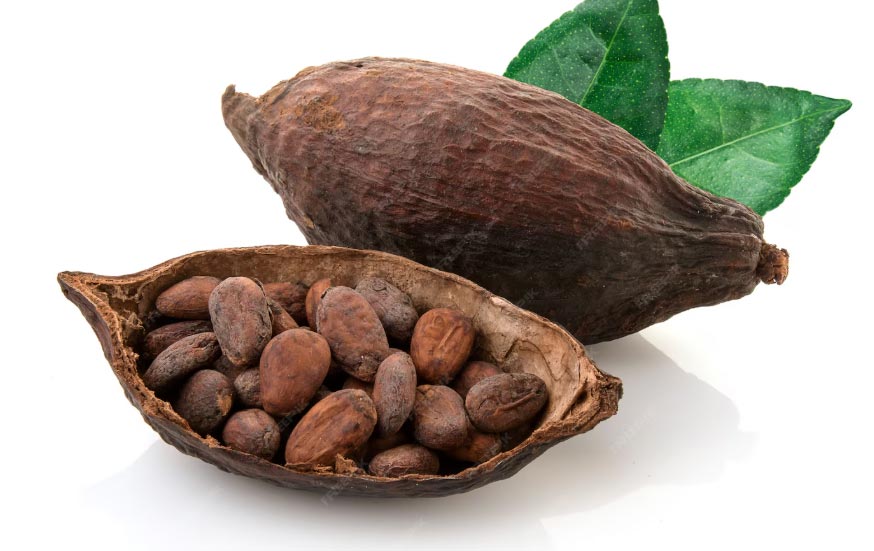
The global cocoa industry plays a vital role in supporting the food, beverage, and confectionery sectors across the world. From raw cocoa beans to high-value processed products such as cocoa butter, powder, and paste, cocoa imports drive international trade and supply chain stability in the chocolate and food manufacturing industries. Understanding the major cocoa importing countries provides valuable insight into global demand distribution, processing capacity, and evolving consumption trends. This blog explores global cocoa imports based on trade data, highlighting key importing markets, cocoa HS Codes, major importers, and other critical trends shaping the international cocoa trade.
Global Cocoa Imports Data: 2025 Overview
The global cocoa industry plays a vital role in supporting the food, beverage, and confectionery sectors worldwide, with cocoa serving as the core raw material for chocolate and related products. As demand for cocoa-based goods continues to rise across developed and emerging markets, cocoa imports have become a key indicator of global consumption patterns and supply chain dynamics. According to trade data, cocoa imports involve 22,274 importers across 132 destination countries, generating a total trade value of $17.00 billion and accounting for 475,084 transactions, reflecting strong market liquidity and widespread demand. In recent years, global cocoa trade has expanded significantly, with total cocoa bean trade reaching nearly $18.7 billion in 2024, driven by growing consumption and price fluctuations in the global market . Major importing regions such as Europe and Asia continue to dominate demand, supported by robust processing industries and rising chocolate consumption. This overview highlights key cocoa imports trends, market scale, and trade activity, offering valuable insights into global sourcing strategies, demand hotspots, and evolving supply chain structures.
List of Major Cocoa Importing HS Codes
According to Tendata global trade data, here is the list of top cocoa HS Codes in 2025:
1.HS Code:18010010(11.49%, $1954.29 Million):Cocoa beans, whole or broken, raw or roasted
2.HS Code:18050000(7.02%, $1193.29 Million):Cocoa powder, not containing added sugar or other sweetening matter
3.HS Code:18040000(5.21%, $886.36 Million):Cocoa butter, fat and oil
4.HS Code:1801000000(3.96%, $672.70 Million):Cocoa beans, whole or broken, raw or roasted
5.HS Code:1803100000(1.76%, $299.22 Million):Cocoa paste, not defatted
6.HS Code:18040001(1.75%, $298.15 Million):Cocoa butter, fat and oil
7.HS Code:1805000000(1.72%, $293.00 Million):Cocoa powder, not containing added sugar or other sweetening matter
8.HS Code:1804000000(1.55%, $263.21 Million):Cocoa butter, fat and oil
9.HS Code:18032001(1.39%, $235.84 Million):Cocoa mass, totally or partially defatted
10.HS Code:15132919(1.33%, $226.03 Million):Other solid fractions of palm kernel oils, babassu, except primary packagings, with net weight of 1 kg or less
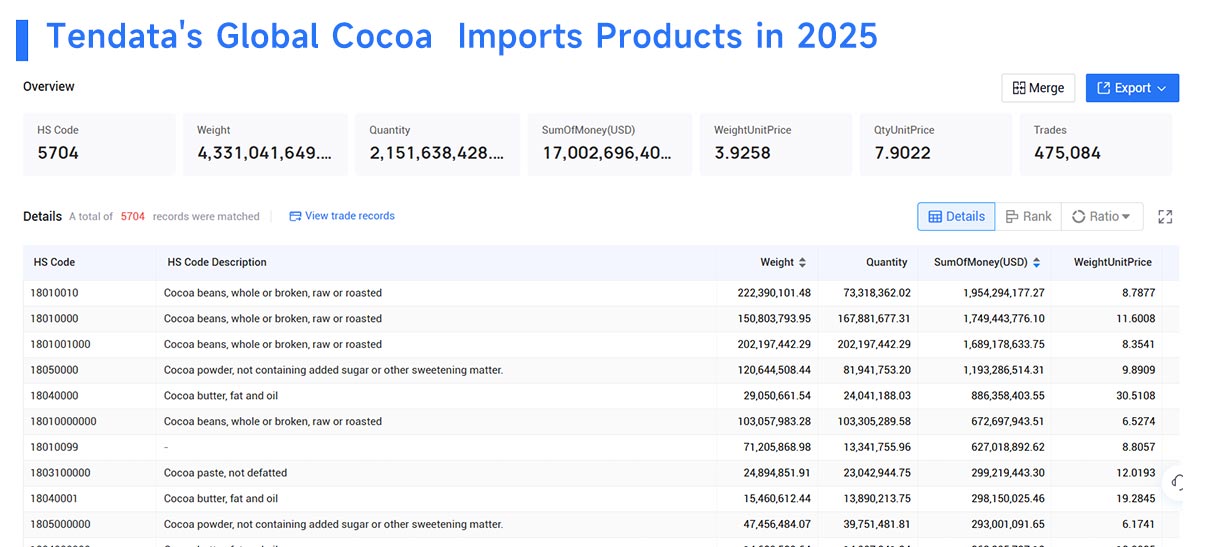
According to Tendata global trade data, the structure of cocoa import in 2025 shows a clear concentration across upstream raw materials and semi-processed cocoa products, reflecting strong demand from the global chocolate and food processing industries. The largest share of cocoa imported products comes from HS Code 18010010 (11.49%, $1954.29 Million), covering raw or roasted cocoa beans, which remain the core input for cocoa processing worldwide. This is followed by cocoa powder (HS Code 18050000, 7.02%) and cocoa butter (HS Code 18040000, 5.21%), both essential ingredients in confectionery manufacturing and downstream food applications. Additionally, semi-finished products such as cocoa paste (HS Code 1803100000) and defatted cocoa mass (HS Code 18032001) indicate a growing trend toward value-added processing within importing countries. The presence of related vegetable oil derivatives like HS Code 15132919 also highlights supply chain linkages in fat and oil substitution within chocolate production. Overall, this HS code distribution reveals that cocoa import markets are not only driven by raw bean demand but also by increasing imports of processed and semi-processed cocoa products, offering actionable insights for exporters targeting high-demand segments and optimizing product positioning in the global cocoa trade.
Top Cocoa Importing Countries
According to Tendata global trade data, below is the list of major cocoa importing countries in 2025:
1.Indonesia (18.09%, $3076.11 Million)
2.Brazil (14.89%, $2530.87 Million)
3.Malaysia (13.30%, $2261.06 Million)
4.India (12.50%, $2124.64 Million)
5.Mexico (12.29%, $2088.98 Million)
6.Ukraine (6.35%, $1079.46 Million)
7.Russia (2.95%, $502.33 Million)
8.Uruguay (1.69%, $286.50 Million)
9.Colombia (1.58%, $268.63 Million)
10.Philippines (1.42%, $241.29 Million)
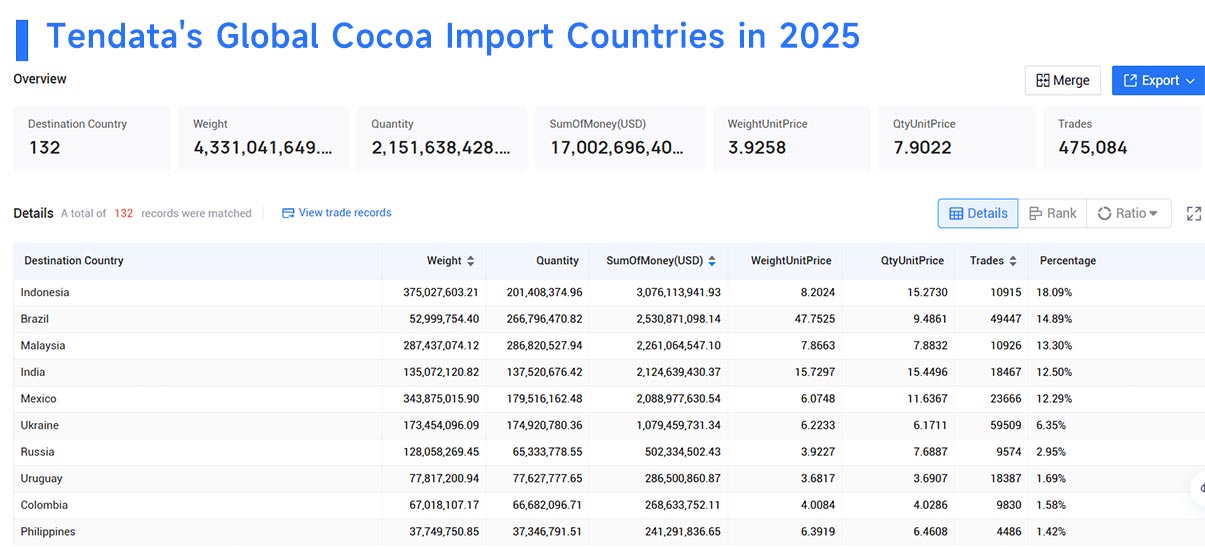
The global cocoa trade landscape is shaped by a diverse group of high-demand markets, with cocoa imports in 2025 showing strong concentration across emerging and processing-driven economies. According to Tendata global trade data, Indonesia leads the cocoa imported market with an 18.09% share ($3076.11 Million), driven by its large-scale cocoa grinding and export-oriented chocolate manufacturing industry. It is followed by Brazil (14.89%), Malaysia (13.30%), and India (12.50%), all of which play dual roles as both processors and growing consumer markets. Mexico (12.29%) also stands out as a key importer, supported by its expanding food and confectionery sector.
In addition, countries such as Ukraine (6.35%) and Russia (2.95%) highlight steady demand in Eastern Europe, while Uruguay, Colombia, and the Philippines represent smaller but strategically important cocoa import markets with rising consumption trends. This distribution of cocoa imports reflects a clear shift toward Asia and Latin America as core demand hubs, where increasing processing capacity and domestic consumption are driving higher volumes of cocoa imported products. For exporters, understanding these top cocoa importing countries provides critical insights into market entry opportunities, regional demand patterns, and supply chain positioning in the evolving global cocoa industry.
Top Global Cocoa Importers in 2025
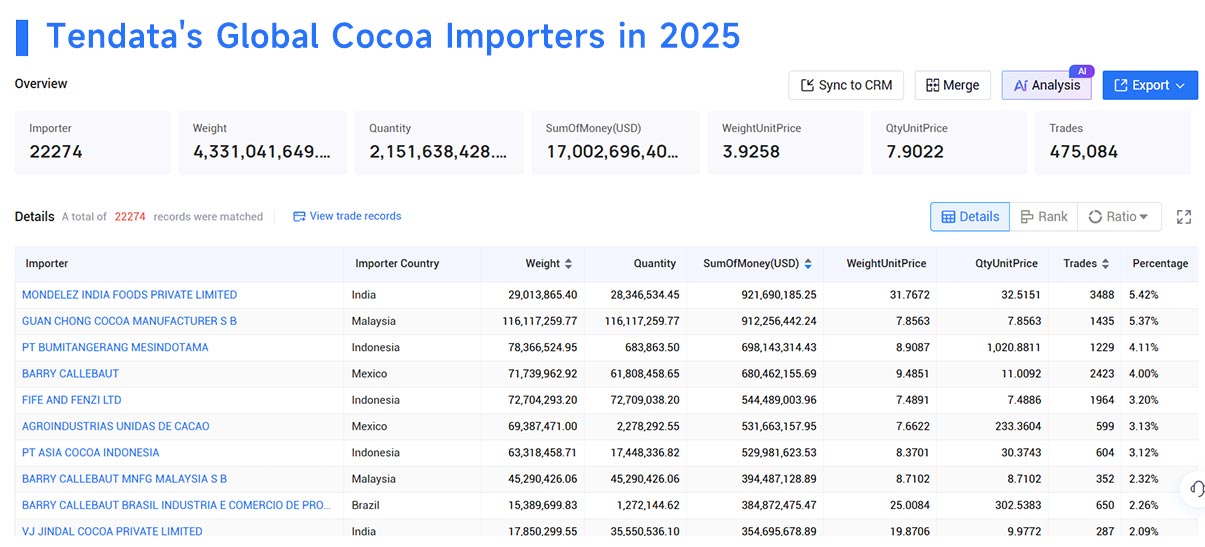
According to Tendata global trade data, here is the list of top cocoa importers worldwide in 2025:
1.MONDELEZ INDIA FOODS PRIVATE LIMITED (5.42%, $921.69 Million)
2.GUAN CHONG COCOA MANUFACTURER S B (5.37%, $912.26 Million)
3.PT INTAGERANG MESINDOTAMA (4.11%, $698.14 Million)
4.BARRY CALLEBAUT (4.00%, $680.46 Million)
5.FIFE AND FENZ LTD (3.20%, $544.49 Million)
6.AGROINDUSTRIAS UNIDAS DE CACAO (3.13%, $531.66 Million)
7.PT ASIA COCOA INDONESIA (3.12%, $529.98 Million)
8.BARRY CALLEBAUT MNFG MALAYSIA S B (2.32%, $394.49 Million)
9.BARRY CALLEBAUT BRASIL INDUSTRIA E COMERCIO DE PRODUTOS (2.26%, $384.87 Million)
10.VJ JINDAL COCOA PRIVATE LIMITED (2.09%, $354.70 Million)
How to Find Cocoa Import Data with Tendata?
To effectively analyze cocoa imports and identify real buyers in the global market, businesses need access to structured and high-frequency trade data. Platforms like Tendata provide a systematic way to track cocoa imported products by integrating customs records, shipment data, and company-level information from over 228+ countries.
With Tendata, users can simply input keywords such as cocoa, HS codes, or target countries to access detailed cocoa imports data, including importer names, transaction values, shipment frequency, and supply chain routes. This allows exporters to quickly identify high-potential markets and active buyers who consistently import cocoa-related products.
In addition, the platform enables in-depth analysis of competitor activity, pricing trends, and sourcing patterns, helping businesses understand where competitors are selling and which buyers are already purchasing similar products. By leveraging these insights, companies can build targeted prospect lists, refine outreach strategies, and improve conversion rates.
Overall, using Tendata for cocoa import analysis transforms fragmented trade information into actionable intelligence—allowing exporters to move from basic market research to precise customer acquisition and strategic decision-making in the global cocoa industry.
Final Words
In conclusion, the global cocoa market is undergoing a transition from supply shocks to a more balanced but still volatile phase, making cocoa imports increasingly strategic for buyers and exporters alike. Despite easing prices after the 2024 peak, the market remains influenced by supply recovery, demand fluctuations, and structural cost pressures, highlighting the importance of real-time trade intelligence.
For businesses engaged in cocoa importing, relying on fragmented data is no longer sufficient. Tendata provides a comprehensive solution by aggregating multi-source global trade data, enabling users to track cocoa imported volumes, identify active importers, and analyze procurement frequency across key markets. With features such as importer screening, supply chain mapping, and pricing trend analysis, companies can move beyond basic market insights to precise customer targeting and risk-aware decision-making.
Ultimately, as global demand continues to shift toward emerging markets and processed cocoa products,using tools like Tendata allows exporters to better understand where cocoa imports are growing, who the real buyers are, and how to position their products competitively—turning complex trade data into actionable growth opportunities in the evolving cocoa industry.
FAQ: Insight into Cocoa Imports
1.How to analyze cocoa imports using Tendata?
Understanding cocoa imports requires more than just basic trade statistics—it involves identifying real buyers, tracking shipment activity, and analyzing supply chain patterns. According to Tendata global trade insights, the global cocoa market remains highly active, driven by demand from chocolate, beverage, and food processing industries, with thousands of active importers worldwide .
With Tendata, businesses can easily access structured cocoa imports data by searching keywords, HS codes, or target countries. The platform provides detailed records such as importer names, transaction values, trade frequency, and sourcing origins. This allows exporters to identify consistent buyers, evaluate market demand, and understand where cocoa imported products are flowing globally.
In addition, Tendata enables users to analyze competitor activity, monitor pricing trends, and map supply chain relationships. These capabilities help companies move beyond surface-level data and build precise customer acquisition strategies. For businesses involved in cocoa trade, using Tendata transforms fragmented cocoa imports information into actionable insights—supporting smarter market entry, better lead generation, and higher conversion efficiency
Category
Leave Message for Demo Request or Questions