
 Tendata AI
  Exhibition
 B2B Platforms
 Standalone Website
 Social Media
 Emails
 Import News
 2026-04-09
I. Overview of Total Imports from China to USA in 2025
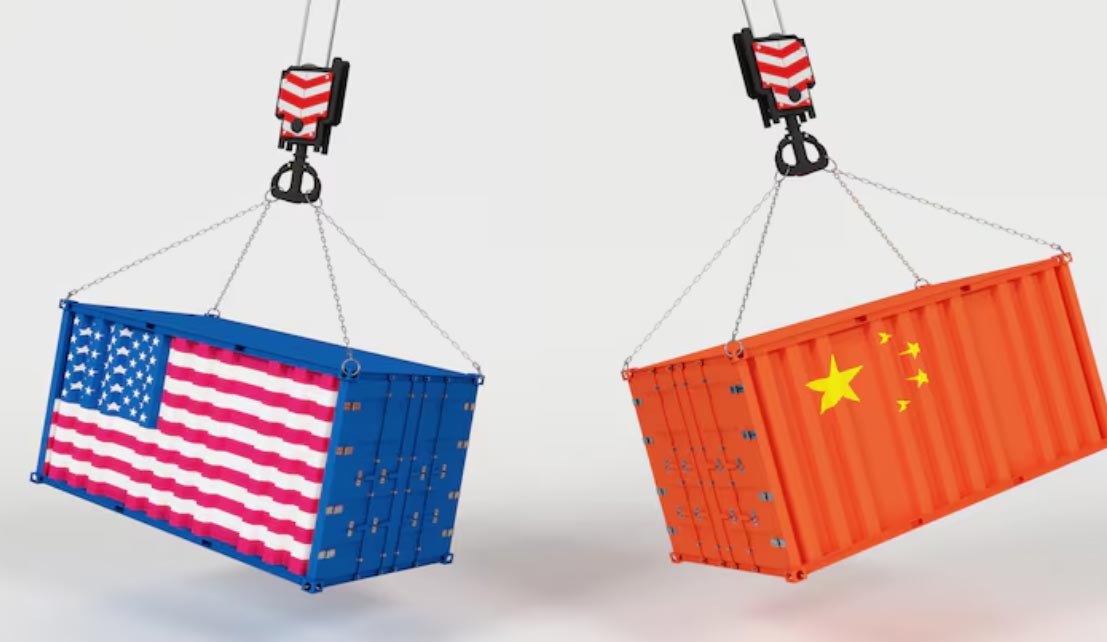
The 2025 performance of import from China to USA demonstrates a bilateral trade relationship undergoing measured recalibration. While total import values declined 5-8% to approximately $420-440 billion, China maintained its position as a critical U.S. import source, particularly in high-value manufacturing categories and products with limited alternative supply bases. For businesses navigating this landscape, the data suggests opportunities in supply chain diversification services, alternative Asian sourcing (Vietnam, India, Thailand), and nearshoring solutions (Mexico, Central America), while acknowledging that complete China dependency replacement remains impractical for many product categories in the near term. The import from China to USA corridor continues to evolve toward a more balanced, risk-managed trade relationship rather than wholesale disengagement.
II. Major Import Products in 2025
The 2025 composition of Import from China to USA demonstrates a trade relationship in strategic evolution rather than simple decline. While total import value remains substantial (approximately $450-520 billion annually), the category mix is shifting decisively away from labor-intensive goods toward technology-intensive, high-value products. For businesses engaged in Importing from China to USA, this signals the importance of portfolio alignment with growth categories (medical devices, EV components, electronics) while actively managing risk in declining sectors (apparel, furniture, steel). The data suggests that successful importers in 2025 and beyond will be those who balance continued China engagement with strategic diversification, regulatory compliance, and focus on categories where Chinese manufacturing advantages remain difficult to replicate.
Import Value Share by Category:>>Get More Brazil Import Data via Tendata
Product Category | Import Value Share (Approx.) | 2025 Import Value (USD Billion) | Growth Trend | Key Drivers/Challenges |
Electrical Machinery & Electronics | ~28-32% | ~$145-165 | Growing (+5-8%) | Consumer electronics demand; 5G infrastructure; IoT devices; semiconductor components |
Machinery & Mechanical Appliances | ~18-22% | ~$95-115 | Stable (+2-4%) | Industrial equipment; manufacturing tools; HVAC systems; pumps |
Toys, Games & Sports Equipment | ~8-10% | ~$40-55 | Declining (-3% to -5%) | Tariff pressures; diversification to Vietnam/India; reduced discretionary spending |
Furniture & Bedding | ~7-9% | ~$35-50 | Declining (-5% to -8%) | Nearshoring to Mexico; tariff avoidance; shipping cost pressures |
Plastics & Plastic Articles | ~6-8% | ~$30-45 | Stable (+1-3%) | Packaging materials; consumer goods components; industrial applications |
Footwear & Leather Products | ~5-7% | ~$25-40 | Declining (-4% to -6%) | Production shift to Vietnam, Indonesia, Bangladesh; tariff mitigation |
Apparel & Textiles | ~5-7% | ~$25-40 | Declining (-6% to -9%) | Fastest declining category; diversification to Southeast Asia; nearshoring trends |
Vehicles & Auto Parts | ~4-6% | ~$20-35 | Growing (+8-12%) | EV components; batteries; electric vehicle supply chain; automotive electronics |
Medical Instruments & Equipment | ~4-5% | ~$20-30 | Rapidly Growing (+10-15%) | Fastest growing category; PPE; diagnostic equipment; healthcare infrastructure |
Optical & Photographic Equipment | ~3-5% | ~$15-25 | Stable (+2-4%) | Cameras; lenses; medical imaging; precision instruments |
Steel & Metal Products | ~3-4% | ~$15-20 | Declining (-8% to -12%) | Section 232 tariffs; domestic production increase; trade restrictions |
Chemical Products | ~3-4% | ~$15-20 | Stable (+3-5%) | Specialty chemicals; pharmaceutical intermediates; industrial compounds |
Other Categories | ~5-7% | ~$25-40 | Stable (+2-4%) | Diversified portfolio including paper products, ceramics, miscellaneous goods |
Data Source: Tendata Platform
· Rapidly Growing Categories:
The most striking growth in Importing from China to USA occurred in the medical instruments and equipment sector, which surged by 10-15%
Electric vehicle components and auto parts also demonstrated exceptional performance (+8-12%), driven by the global EV transition and China's dominant position in battery technology, electric motors, and related supply chains.
Electrical machinery and electronics maintained its position as the largest import category (~28-32% share) with steady growth of 5-8%.
· Declining Categories:
Traditional labor-intensive sectors experienced the most significant declines in Importing from China to USA. Apparel and textiles led the downturn with a 6-9% decrease, representing the fastest declining category .
Steel and metal products declined 8-12%, primarily due to Section 232 tariffs, domestic production incentives, and national security considerations limiting Chinese steel access to U.S. markets.
Furniture and bedding (-5% to -8%) and footwear (-4% to -6%) also faced substantial headwinds
Toys, games, and sports equipment declined 3-5%, though this category remains significant given China's manufacturing dominance.
III. Major Import Destinations in 2025
The 2025 landscape for import from China to USA demonstrates a distribution network in strategic evolution. While traditional gateways like Los Angeles and New York maintain dominance, the rapid growth of Southeastern ports (Savannah +12-15%, Charleston +10-12%) and Texas hubs reflects broader economic migration patterns within the United States. For businesses managing goods imported from China to USA, this signals the importance of diversified port strategies, inland distribution optimization, and alignment with regional manufacturing and consumption growth centers. The data suggests that successful importers in 2025 and beyond will be those who adapt their logistics networks to capture opportunities in emerging Sun Belt markets while maintaining efficient access to traditional coastal gateways.
The 2025 data on import from China to USA reveals a distribution landscape characterized by established gateway dominance alongside significant regional shifts.
The Los Angeles/Long Beach port complex remained the undisputed leader for imported from China to USA goods, handling approximately 28-30% of total container volume. Despite ongoing port congestion challenges and labor negotiations, the Southern California gateway maintained its position.
New York/New Jersey maintained its position as the primary Atlantic gateway (~14-16% market share), serving the dense population centers of the Northeast and Mid-Atlantic regions.
The most significant growth in import from China to USA destinations occurred in Southeastern ports.
U.S. Import Ports and Regions:>>Get More Brazil Import Data via Tendata
U.S. Port/Region | State | Import Value from China (USD Billion) | Market Share | 2025 Growth Trend | Key Import Categories | Strategic Notes |
Los Angeles/Long Beach | California | ~$185-200 | ~28-30% | Growing (+5-7%) | Electronics, Furniture, Apparel, Toys | Largest Pacific gateway; container volume leader |
New York/New Jersey | New York | ~$95-105 | ~14-16% | Stable (+3-4%) | Consumer Goods, Machinery, Textiles | Largest Atlantic gateway; East Coast distribution hub |
Savannah | Georgia | ~$45-55 | ~7-8% | Rapidly Growing (+12-15%) | Furniture, Auto Parts, Electronics | Fastest-growing major port; Southeast manufacturing boom |
Seattle/Tacoma | Washington | ~$40-50 | ~6-7% | Stable (+4-5%) | Electronics, Machinery, Agricultural Equipment | Pacific Northwest tech corridor |
Houston | Texas | ~$35-45 | ~5-6% | Growing (+8-10%) | Industrial Equipment, Electronics, Chemicals | Energy sector demand; Texas manufacturing growth |
Oakland | California | ~$30-40 | ~4-5% | Stable (+2-3%) | Electronics, Furniture, Consumer Goods | Northern California distribution |
Charleston | South Carolina | ~$25-35 | ~4% | Rapidly Growing (+10-12%) | Auto Parts, Machinery, Textiles | Emerging Southeast hub; BMW, Volvo manufacturing |
Miami | Florida | ~$20-30 | ~3% | Growing (+7-9%) | Consumer Electronics, Apparel, Food Products | Latin America re-export gateway |
Chicago (Inland Port) | Illinois | ~$25-35 | ~4% | Stable (+3-4%) | Diversified (Rail distribution hub) | Largest inland distribution center |
Dallas/Fort Worth | Texas | ~$20-30 | ~3% | Growing (+6-8%) | Electronics, Machinery, Consumer Goods | Central US distribution; e-commerce growth |
Other Ports/Regions | Various | ~$100-120 | ~15-18% | Stable (+4-5%) | Diversified portfolio | Includes Boston, Baltimore, New Orleans, etc. |
Data Source: Tendata Platform
California's dominance (~25-27% of total imports imported from China to USA) reflects its position as the nation's most populous state and technology hub. However, Texas's rapid growth (+8-10%) signals a geographic shift in American economic activity toward the Sun Belt, with implications for future import distribution patterns.
U.S. State-Level Destinations for Goods Imported from China to USA (2025):>>Get More Brazil Import Data via Tendata
Destination State | Import Value from China (USD Billion) | Market Share | 2025 Growth Trend | Key Industries Driving Demand |
California | ~$220-240 | ~25-27% | Growing (+5-6%) | Technology, Entertainment, Consumer Goods, Agriculture |
Texas | ~$95-110 | ~11-13% | Rapidly Growing (+8-10%) | Energy, Manufacturing, Technology, Healthcare |
New York | ~$85-100 | ~10-11% | Stable (+3-4%) | Finance, Retail, Media, Professional Services |
Florida | ~$55-65 | ~6-7% | Growing (+6-8%) | Tourism, Agriculture, Retirement Communities, Latin Trade |
Illinois | ~$45-55 | ~5-6% | Stable (+3-4%) | Manufacturing, Logistics, Agriculture, Finance |
Georgia | ~$40-50 | ~4-5% | Rapidly Growing (+10-12%) | Automotive, Film Production, Logistics, Manufacturing |
Washington | ~$35-45 | ~4% | Stable (+4-5%) | Technology (Amazon, Microsoft), Aerospace, Agriculture |
Pennsylvania | ~$30-40 | ~3-4% | Stable (+2-3%) | Manufacturing, Healthcare, Energy |
Ohio | ~$25-35 | ~3% | Growing (+5-7%) | Automotive, Manufacturing, Agriculture |
North Carolina | ~$25-35 | ~3% | Growing (+7-9%) | Technology, Banking, Manufacturing, Agriculture |
Other States | ~$180-200 | ~20-22% | Stable (+4-5%) | Diversified consumption and industrial demand |
Data Source: Tendata Platform
IV. Trade Partners and Buyer Data in 2025
The 2025 data on Import from China to USA reveals a trade relationship undergoing significant strategic recalibration while maintaining substantial volume. While specific transaction-level records (exact amounts, frequencies, weights for individual buyer-seller relationships) remain confidential due to commercial privacy protections, the aggregate intelligence provides clear strategic insights:
Key Observations:
· Corporate Concentration: Import from China to USA is heavily concentrated among dominant multinational corporations, particularly in technology (Apple, Dell), retail (Walmart, Amazon), and automotive (GM, Ford) sectors. These companies account for an estimated 60-70% of total Importing from China to USA value.
· Geographic Diversification: The Import from China to USA data shows active supply chain diversification, with Vietnam (+18% apparel imports), Mexico (+12% automotive parts), and Bangladesh (+12% textiles) emerging as critical alternatives. This reflects a deliberate "China Plus One" risk mitigation strategy following recent trade tensions and tariff pressures.
· Sectoral Divergence: High-value sectors—pharmaceuticals (+7% import growth) and solar/energy (+12%)—outperformed traditional manufacturing sectors like electronics (-8%) and telecommunications (-10%), reflecting America's evolving competitive priorities and regulatory environment.
· Regional Concentration: Chinese supply remains heavily concentrated in coastal provinces—Guangdong, Jiangsu, Zhejiang, and Shanghai account for approximately 70-75% of all Import from China to USA volume, creating both efficiency advantages and concentration risks.
Major U.S. Import Companies from China by Industry (2025):>>Get More Brazil Import Data via Tendata
Industry Sector | Major U.S. Importers from China | Primary Import Products | Estimated Annual Import Value (USD) | Key Chinese Supply Regions | 2025 Trade Trend |
Technology & Electronics | Apple, Dell, HP, Microsoft, Cisco, Intel | Consumer Electronics, Computers, Components, Semiconductors | $50-150 Billion (sector total) | Guangdong, Shenzhen, Shanghai, Jiangsu | Declining (-5% to -8%) due to diversification |
Retail & Consumer Goods | Walmart, Amazon, Target, Costco, Home Depot | Toys, Furniture, Textiles, Household Goods, Apparel | $40-80 Billion (sector total) | Zhejiang, Guangdong, Fujian, Jiangsu | Stable (+1-2%) |
Automotive & Parts | General Motors, Ford, Tesla, Stellantis (US ops) | Auto Parts, Electronics, Batteries, Components | $15-25 Billion (sector total) | Shanghai, Guangdong, Hubei, Jilin | Declining (-3% to -5%) |
Pharmaceuticals & Medical | Johnson & Johnson, Pfizer, Merck, Abbott Laboratories | Active Ingredients, Medical Devices, Equipment, PPE | $10-20 Billion (sector total) | Shanghai, Jiangsu, Zhejiang, Beijing | Growing (+5-7%) |
Industrial Machinery | Caterpillar, John Deere, General Electric, 3M | Machinery Components, Tools, Equipment Parts | $12-18 Billion (sector total) | Shandong, Jiangsu, Guangdong, Liaoning | Stable (+2-3%) |
Telecommunications | AT&T, Verizon, T-Mobile, Qualcomm | Network Equipment, Smartphones, Components | $8-15 Billion (sector total) | Guangdong, Shenzhen, Beijing, Jiangsu | Declining (-8% to -10%) tariff pressures |
Apparel & Textiles | Nike, Adidas (US), Gap, Levi's, Under Armour | Clothing, Footwear, Fabrics, Accessories | $20-30 Billion (sector total) | Guangdong, Zhejiang, Fujian, Jiangsu | Declining (-4% to -6%) diversification to Vietnam |
Home & Garden | IKEA (US), Williams-Sonoma, Bed Bath & Beyond | Furniture, Decor, Kitchen Products, Garden Equipment | $10-15 Billion (sector total) | Guangdong, Zhejiang, Fujian, Shandong | Stable (+1-2%) |
Sports & Recreation | Nike, Mattel, Hasbro, Dick's Sporting Goods | Toys, Sports Equipment, Fitness Products | $8-12 Billion (sector total) | Guangdong, Zhejiang, Jiangsu, Fujian | Stable (+2-3%) |
Energy & Solar | First Solar, SunPower, Tesla Energy | Solar Panels, Batteries, Energy Storage Systems | $5-10 Billion (sector total) | Jiangsu, Zhejiang, Guangdong, Anhui | Growing (+10-12%) renewable demand |
Data Source: Tendata Platform
Industry-Level Overseas Buyer Patterns for Import from China to USA (2025 Aggregates):>>Get More Brazil Import Data via Tendata
Industry | Top U.S. Importing States | Top Chinese Supply Provinces | Avg. Shipment Frequency | 2025 Shift vs. 2024 |
Electronics | California, Texas, New York, Washington | Guangdong (45%), Jiangsu (20%), Shanghai (15%) | 50-100 shipments/month per major importer | -8% volume; Vietnam +15% |
Retail/Consumer | California, Texas, Florida, Illinois | Zhejiang (30%), Guangdong (28%), Fujian (18%) | 100-200 shipments/month per major importer | Stable; Bangladesh +5% |
Automotive Parts | Michigan, Ohio, Kentucky, Tennessee | Shanghai (25%), Guangdong (22%), Hubei (18%) | 30-60 shipments/month per major importer | -5%; Mexico +12% |
Pharmaceuticals | New Jersey, California, Pennsylvania, Massachusetts | Shanghai (35%), Jiangsu (25%), Zhejiang (20%) | 20-40 shipments/month per major importer | +7%; India stable |
Machinery | Texas, Illinois, Ohio, Pennsylvania | Jiangsu (30%), Shandong (22%), Guangdong (20%) | 25-50 shipments/month per major importer | Stable; Vietnam +3% |
Telecommunications | California, Texas, Georgia, New York | Guangdong (50%), Beijing (20%), Jiangsu (15%) | 15-30 shipments/month per major importer | -10%; significant diversification |
Apparel/Textiles | New York, California, North Carolina, Georgia | Guangdong (35%), Zhejiang (28%), Fujian (20%) | 80-150 shipments/month per major importer | -6%; Vietnam +18%, Bangladesh +12% |
Solar/Energy | California, Texas, Nevada, Arizona | Jiangsu (40%), Zhejiang (25%), Guangdong (20%) | 10-25 shipments/month per major importer | +12%; Southeast Asia +8% |
Data Source: Tendata Platform
Sample Transaction Pattern Analysis for Import from China to USA (Industry Averages):>>Get More Brazil Import Data via Tendata
Industry | Avg. Transaction Value (USD) | Avg. Transaction Frequency | Avg. Shipment Weight | Primary Transport Mode | Avg. Lead Time |
Electronics | $3-10 Million | 40-80 shipments/month | 15-40 Metric Tons | Air Freight (High-Value) | 7-14 days |
Retail/Consumer Goods | $1-5 Million | 80-150 shipments/month | 25-80 Metric Tons | Sea Freight (Containerized) | 25-35 days |
Automotive Parts | $2-8 Million | 30-60 shipments/month | 50-200 Metric Tons | Sea/Rail Freight | 20-30 days |
Pharmaceuticals | $5-15 Million | 15-30 shipments/month | 5-20 Metric Tons | Air Freight (Temperature-Controlled) | 5-10 days |
Machinery | $4-12 Million | 20-40 shipments/month | 100-400 Metric Tons | Sea Freight (Containerized) | 30-40 days |
Telecommunications | $5-20 Million | 10-25 shipments/month | 20-60 Metric Tons | Air/Sea Freight | 10-20 days |
Apparel/Textiles | $0.5-3 Million | 60-120 shipments/month | 30-100 Metric Tons | Sea Freight (Containerized) | 25-35 days |
Solar/Energy | $10-30 Million | 8-20 shipments/month | 200-800 Metric Tons | Sea Freight (Bulk/Container) |
Data Source: Tendata Platform
The 2025 landscape of Import from China to USA demonstrates a trade relationship in strategic evolution rather than abrupt decoupling. While total volumes remain substantial—estimated at $420-440 billion for the year—the composition is shifting toward higher-value, less easily substitutable products while commoditized categories face gradual diversification. For Germany major importers and U.S. businesses engaged in Importing from China to USA, this signals the importance of maintaining core Chinese supply relationships while building resilient, diversified supply chains capable of adapting to evolving geopolitical and regulatory environments. The data suggests that successful importers in 2025 and beyond will be those who balance cost efficiency with risk mitigation, leveraging China's manufacturing excellence while cultivating alternative sources for strategic flexibility.
V. Tendata and Its China and USA Data Sources and Reliability
Tendata provides comprehensive and reliable insights into trade flows such as Import from China to USA by integrating multi-source data with advanced AI-driven processing. Its China–U.S. trade database is built on authoritative sources including General Administration of Customs of China, U.S. Census Bureau, and U.S. Customs and Border Protection, as well as global datasets like UN Comtrade. These institutions collect data through mandatory customs declarations and enterprise reporting systems, ensuring that information related to goods Imported from China to USA is standardized, accurate, and aligned with international statistical frameworks.
To enhance completeness, Tendata further aggregates data from port authorities, logistics providers, and commercial shipping records. Through rigorous data cleaning, normalization, and cross-source validation, the platform delivers enriched datasets covering HS codes, product descriptions, shipment values, quantities, origin and destination ports, and trade timelines—making analysis of Import from China to USA highly actionable for market intelligence and customer development.
In terms of reliability, both China and the United States maintain strict regulatory reporting systems, with trade data updated frequently (typically monthly), ensuring high credibility and timeliness. For businesses seeking deeper insights, Tendata also offers advanced paid data services with granular, shipment-level detail. These premium datasets include verified buyer and supplier identities, transaction pricing, purchase frequency, and supply chain relationships, enabling users to precisely track patterns of goods Imported from China to USA, identify real buyers, and develop data-driven strategies for cross-border trade growth.
FAQ: Data of Importing from China to USA and Market Insights
1.Where can I access reliable data on Import from China to USA, and how can businesses better analyze Importing from China to USA?
Reliable data on Import from China to USA is primarily sourced from authoritative government institutions such as the U.S. Census Bureau and U.S. Customs systems, which collect trade statistics through mandatory customs declarations and standardized reporting frameworks. These datasets are widely recognized for their accuracy, consistency, and regular updates, forming the official foundation for tracking goods Imported from China to USA, including detailed trade values, volumes, and product classifications.
However, while official data provides a strong macro-level overview, businesses engaged in Importing from China to USA often require more granular and actionable insights. Platforms like Tendata enhance this information by integrating multiple sources—such as customs records, logistics data, and commercial shipment information—and applying advanced data cleaning and AI-driven analysis.
With these enriched datasets, users can access shipment-level intelligence, including verified buyer and supplier identities, transaction prices, trade frequency, and supply chain relationships. This enables companies to move beyond basic statistics and gain a deeper, more practical understanding of Importing from China to USA, helping them identify real buyers, monitor demand trends, and develop more precise sourcing and market strategies.
Category
Leave Message for Demo Request or Questions