
 Tendata AI
  Trade Data
 2025-07-28
As a leading exporter of technology, automobiles, machinery, and electronics, Japan's trade performance provides key insights into both its domestic economic health and the broader global economic landscape. Tendata explores Japan's trade data, highlighting key trends, factors influencing trade, and the outlook for 2024.

Japan's Trade Performance in 2024
Japan's trade figures for the first half of 2024 indicate a mixed yet resilient performance. According to the latest data from Japan's Ministry of Finance, Japan’s exports showed a slight year-on-year decline of about 0.8%, amounting to ¥39.45 trillion (approximately $267 billion) in the first six months of the year. Imports, however, rose by 5.4%, reaching ¥43.71 trillion ($298 billion). As a result, Japan experienced a trade deficit of ¥4.26 trillion ($30 billion) for the period.
This trade deficit marks a continuation of Japan's ongoing struggle with its trade balance, which has been in the red for most of the past few years. In 2023, Japan’s trade deficit was approximately ¥17.6 trillion, largely driven by the global energy crisis and rising import costs.
Key Export Sectors
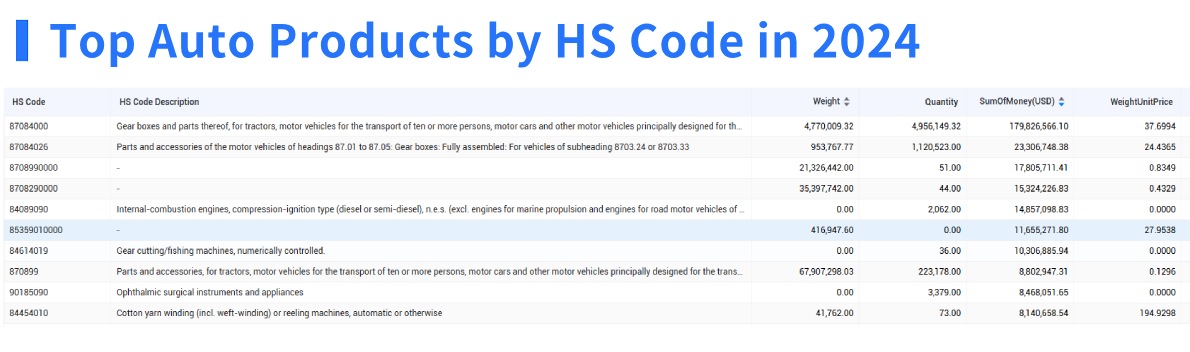
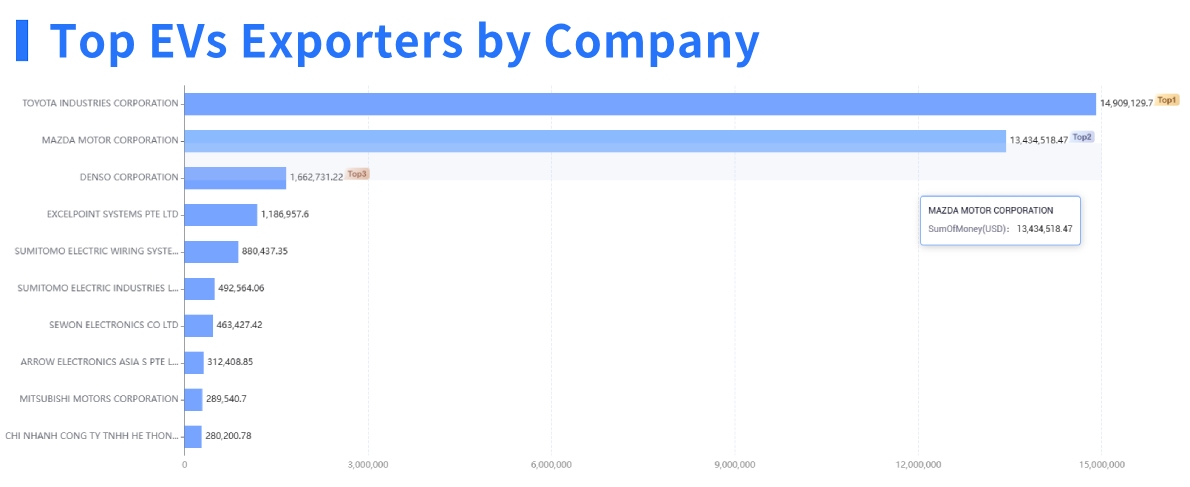
Japan’s exports are heavily concentrated in a few key industries, particularly automobiles, machinery, electronics, and chemicals. The country remains one of the world's largest car exporters, with automakers such as Toyota, Honda, and Nissan continuing to lead the global market.
In 2024, Japan's automobile exports saw a modest recovery, increasing by 3.6% in the first half of the year. This was largely driven by strong demand from North America and Europe, where Japan’s car manufacturers are seeing consistent growth despite the economic challenges.
Electronics and semiconductor exports have also performed well. Semiconductor exports, a vital part of Japan's technological prowess, rose by 5.3% in the first half of 2024, driven by demand from China, South Korea, and Taiwan. Japan is a key supplier of advanced semiconductor materials and manufacturing equipment, sectors that continue to see robust demand due to the global tech boom.
Machinery, including industrial robots and precision instruments, saw a slight increase in exports as well. These are critical components for many manufacturing industries globally, and Japan’s export of machinery reflects its strength in high-tech manufacturing.
>>> Get Japan's Trade Data by industries<<<
Rising Import Costs and Energy Dependence
On the import side, energy costs have remained a significant factor. Japan imports nearly all of its crude oil, liquefied natural gas (LNG), and coal, making it particularly vulnerable to global price fluctuations. In 2024, Japan’s imports of energy resources continued to rise, driven by high global energy prices and the country’s efforts to diversify its energy mix in the wake of the Fukushima disaster.
For example, Japan's LNG imports surged by 7.1% year-on-year in the first half of 2024, due to the increased demand for natural gas in the industrial and power sectors. This has been exacerbated by geopolitical instability, particularly in regions such as the Middle East and Eastern Europe, which has contributed to higher costs for energy imports.
In addition to energy, Japan also faces rising costs for raw materials, including metals and agricultural products. The global supply chain disruptions and inflationary pressures from the post-pandemic era have significantly impacted Japan’s import costs, contributing to the widening trade deficit.
>>> Get Japan's Trade Data by products<<<
The Role of China and the U.S. in Japan's Trade
China, Japan's largest trading partner, remains a critical market for Japan’s exports. Despite challenges posed by geopolitical tensions and China’s own economic slowdown, Japan's exports to China have remained relatively stable. The most recent figures show that Japan's exports to China fell by 1.2% in the first half of 2024, mainly due to reduced demand for electronic components and machinery. However, the trade volume still amounts to over ¥10 trillion ($70 billion) annually, illustrating the enduring importance of the Chinese market.
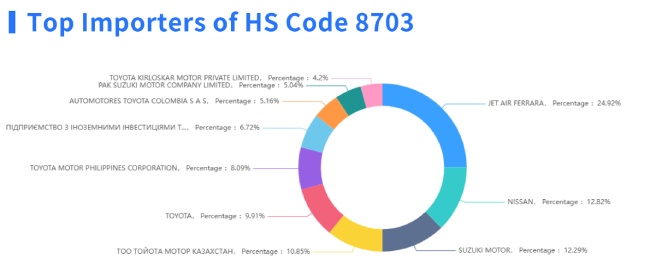
On the other hand, Japan's exports to the United States saw a notable increase of 4.3% in the first half of 2024. The U.S. continues to be a crucial market for Japanese automobiles, machinery, and high-tech products. The strong performance of the U.S. economy, combined with the ongoing trade and technology rivalry between the U.S. and China, has benefitted Japan, positioning it as a key supplier of critical technology and industrial products.
Future Outlook
Looking ahead to the latter half of 2024 and beyond, Japan’s trade prospects remain cautious yet optimistic. Japan’s industrial output, driven by the automotive and semiconductor sectors, is expected to continue its growth, but the outlook will largely depend on global demand and the economic recovery in key markets.
Category
Leave Message for Demo Request or Questions