
 Tendata AI
  Exhibition
 B2B Platforms
 Standalone Website
 Social Media
 Emails
 Trade Data Provider
 2026-06-05
Key Takeaways
· Raw trade data often contains outdated or incomplete information.
· Most customs records do not provide direct buyer contact details.
· Freight forwarders and logistics companies can create significant data noise.
· Single-country trade data provides only a partial market view.
· Tendata combines global trade intelligence, AI analysis, and buyer discovery tools to help exporters turn trade data into sales opportunities.

Overview
For many exporters and international trading companies, trade data has become one of the most valuable resources for finding buyers, analyzing markets, and monitoring competitors. Many businesses assume that once they gain access to trade data, they can immediately identify who is buying, how much they are purchasing, when they are importing, and which suppliers they are working with. However, reality is often very different.
Many companies invest heavily in a trade data platform only to discover that it generates little real business value. Sales teams frequently find that the information is outdated, buyer contacts are missing, and many listed companies are freight forwarders rather than genuine importers.
The issue is not that trade data lacks value. The issue is that most trade data available on the market is only raw information that requires further processing before it can support customer acquisition and business growth.
This article explores the common limitations of traditional trade data and explains how Tendata transforms customs records into actionable sales intelligence that helps exporters identify opportunities, reach decision-makers, and win more business.
The Main Challenges of Traditional Trade Data
While trade data remains an essential resource for exporters, raw customs records often present several challenges that limit their practical value.
Data Delays Reduce Business Opportunities
One of the most common issues with traditional trade data is timing. Most customs authorities publish shipment records after customs clearance, and significant delays can occur before those records become available through commercial databases.
As a result, exporters may identify potential buyers long after purchasing decisions have already been made. By the time outreach begins, the buyer may have completed procurement, changed suppliers, or shifted business priorities.
In highly competitive industries, relying on outdated trade data can mean missing valuable opportunities.
Company Names Without Decision Makers
Another major limitation of traditional trade data is the lack of contact information. While customs records often reveal who imported a product, they rarely provide access to purchasing managers, procurement directors, or other decision-makers.
This forces sales teams to spend hours searching LinkedIn, company websites, and business directories in an attempt to identify the right contact person.
Trade data may reveal who the buyer is, but it does not always provide a direct path to engagement.
Data Noise and Incomplete Market Visibility
Raw trade data frequently includes freight forwarders, customs brokers, logistics providers, and shipping agents that are not the actual buyers. Without proper data cleansing, sales teams can waste considerable time pursuing organizations that have no purchasing authority.
At the same time, many trade data platforms focus on a single country's imports or exports, creating an incomplete view of the global market. Businesses may see demand in one region without understanding how competitors from other countries are performing or how market dynamics are evolving worldwide.
These limitations make it difficult to extract meaningful insights from raw trade data alone.
Why Trade Data Needs More Than Just Shipment Records
Despite these challenges, trade data remains one of the most powerful resources available to exporters.
The real value of trade data is not simply knowing what was shipped. The value lies in understanding who is buying, why they are buying, how competitors are positioning themselves, and how to connect with decision-makers before competitors do. This is where Tendata creates a significant advantage.
Rather than functioning as a simple trade data database, Tendata combines global customs records, business intelligence, AI-powered analytics, and contact enrichment technologies to help exporters transform information into action.
How Tendata Turns Trade Data into Sales Opportunities
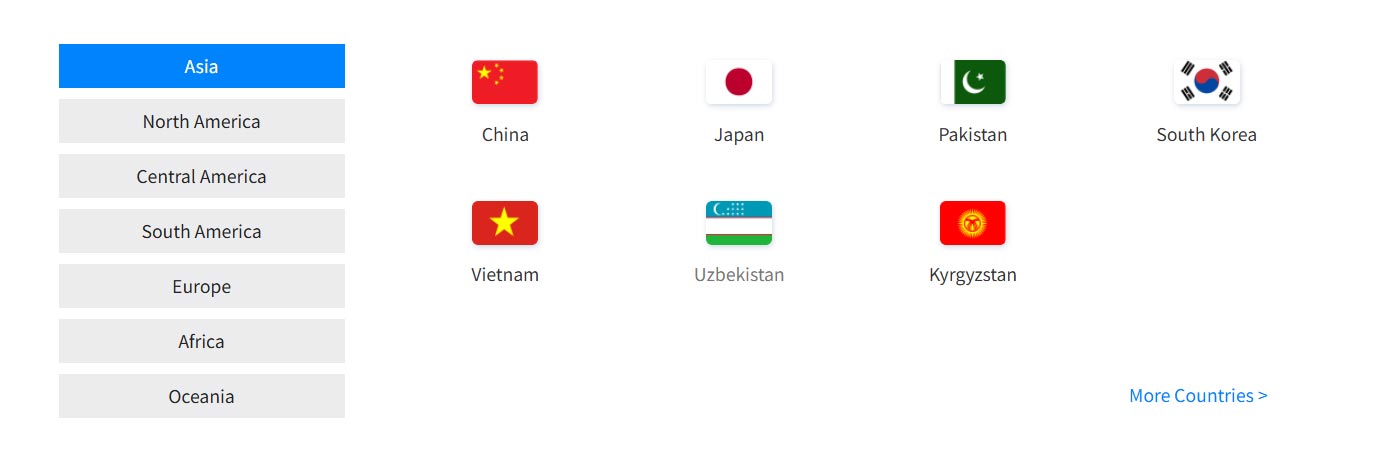
Global Trade Intelligence Across 228 Countries
One of Tendata's core strengths is its extensive global coverage.
Tendata integrates trade data from 228 countries and regions, allowing exporters to analyze international markets from a truly global perspective. Instead of viewing only a single country's import or export records, users can compare market demand, supplier distribution, import volumes, export trends, and competitive activity across multiple regions simultaneously.
This broader perspective helps exporters identify emerging opportunities, evaluate market potential, and avoid highly saturated markets before investing significant resources.
With a more complete view of global trade flows, businesses can make smarter decisions based on real market intelligence rather than assumptions.
>>> Click to View the Full List <<<
Identify Real Buyers Faster
Finding genuine buyers is one of the biggest challenges when working with traditional trade data.
Many shipment records contain freight forwarders, customs brokers, and logistics companies that are involved in transportation but are not actual purchasers of products. Contacting these organizations often results in wasted effort and low conversion rates.
Tendata addresses this challenge through AI-powered data cleansing and buyer verification technologies. The platform helps identify real importers and filters out irrelevant entities, enabling users to focus on companies with actual purchasing demand.
By reducing data noise and improving buyer accuracy, Tendata helps sales teams spend more time engaging qualified prospects and less time chasing unproductive leads.
Direct Access to Key Decision Makers
Knowing which company purchased a product is only the first step. The next challenge is finding the right person within that organization.
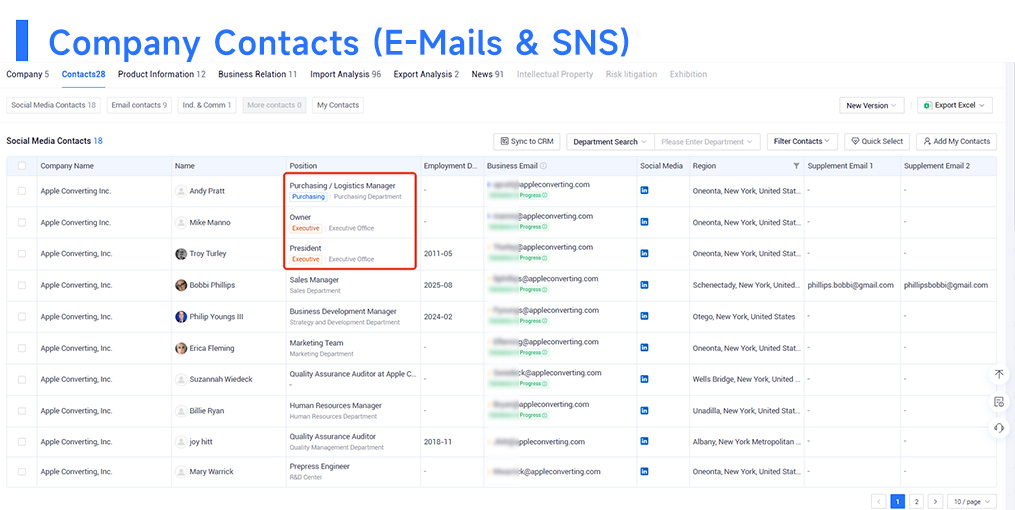
Tendata combines trade data with business intelligence databases and publicly available commercial information to help users identify purchasing managers, procurement directors, executives, and other key decision-makers.
Instead of spending hours researching contacts across multiple platforms, exporters can access valuable business information directly within the system.
This significantly shortens the prospecting process and enables faster, more targeted outreach efforts.
>>> Obtaining Customer Contact Information from Tendata <<<
Gain Competitive Intelligence Through Trade Data
Successful exporters understand that trade data is not only useful for finding customers—it is also a powerful tool for competitor analysis.
Tendata allows users to monitor competitor shipments, customer portfolios, export destinations, product categories, trading frequency, and market expansion activities.
These insights help businesses understand where competitors are growing, which customers they are serving, and which markets may offer untapped opportunities.
Rather than reacting to market changes after they occur, exporters can make proactive decisions based on real trade intelligence.
Why More Exporters Choose Tendata
As international competition becomes increasingly data-driven, access to trade data alone is no longer enough.
The companies that consistently win new business are those that can transform trade data into actionable intelligence, identify qualified buyers faster, and reach decision-makers more efficiently than their competitors.
Tendata helps exporters achieve these goals by combining:
· Global trade data from 228 countries and regions
· AI-powered buyer identification and data cleansing
· Decision-maker contact discovery
· Competitor monitoring and market intelligence
· Advanced market opportunity analysis
Rather than overwhelming users with unnecessary complexity, Tendata focuses on delivering the insights exporters need most to grow internationally.
Conclusion
Trade data remains one of the most valuable resources in global commerce, but raw customs records alone rarely generate results. Successful exporters need more than shipment data. They need verified buyers, decision-maker contacts, competitive intelligence, and a clear understanding of market opportunities. Traditional trade data can tell you what happened.
Tendata helps you understand why it happened, who was involved, and how to turn that information into your next business opportunity. By combining global trade intelligence, buyer discovery, competitor analysis, and AI-powered insights, Tendata transforms trade data into a practical engine for customer acquisition and business growth.
In today's competitive marketplace, the companies that succeed are not necessarily those with access to the most trade data—they are the ones that know how to turn trade data into results.
Category
Leave Message for Demo Request or Questions