 Tendata AI
  Exhibition
 B2B Platforms
 Standalone Website
 Social Media
 Emails
 Trade Data Provider
 2026-07-23
The short answer: Yes, they are.
Even today, B2B platforms remain one of the primary entry points for buyers searching for suppliers. Many procurement professionals still rely on industry platforms as their first step when sourcing new vendors—reviewing company profiles, product details, production capabilities, and application scenarios.
So the claim that “B2B platforms no longer work” isn’t entirely accurate.
Why Do Platforms Feel Harder Than Before?
If platforms are still relevant, why do so many exporters feel they’ve become increasingly difficult?
The reality is that many major platforms have entered a phase of intense competition and saturation.
1. Severe product homogeneity and price-driven competition
Search for industrial valves or mechanical components, and you’ll find thousands of nearly identical listings. Similar images, similar specifications. Buyers compare prices first, and the lowest bidder often wins—triggering a race to the bottom with shrinking margins and lower-quality inquiries.
2. Rising customer acquisition costs
As more suppliers join, organic visibility declines. To maintain exposure, companies must invest heavily in ads and ranking boosts. Over time, subscription fees and advertising costs eat into profits.
3. Low lead precision
Large, generalist platforms attract a broad mix of buyers—from small traders to occasional purchasers. High-value buyers with long-term demand and strong budgets are relatively limited.

Not All B2B Platforms Are the Same
While issues like price wars and homogeneity are real, they don’t apply to every platform.
In fact, many niche or vertical B2B platforms offer a very different dynamic.
Because most suppliers concentrate on large, general platforms, smaller industry-focused platforms tend to have:
Less competition, More specialized buyer audiences, Higher signal-to-noise ratio in inquiries
These platforms emphasize long-term visibility, structured company profiles, industry categorization, and precise search matching. Their operating logic aligns more closely with how industrial buyers in Europe and North America actually source suppliers.
Buyers on these platforms are often professionals—engineers, procurement managers, or manufacturers—who care more about:
Technical fit, Supplier credibility, Industry expertise
—not just price.
This type of environment reduces low-quality inquiries and allows suppliers to compete on capability rather than just cost, leading to more stable, long-term partnerships.
Why Smart Exporters Use Tendata
Beyond platform selection, an increasing number of exporters are using trade intelligence tools like Tendata to make more informed decisions before committing time and budget.
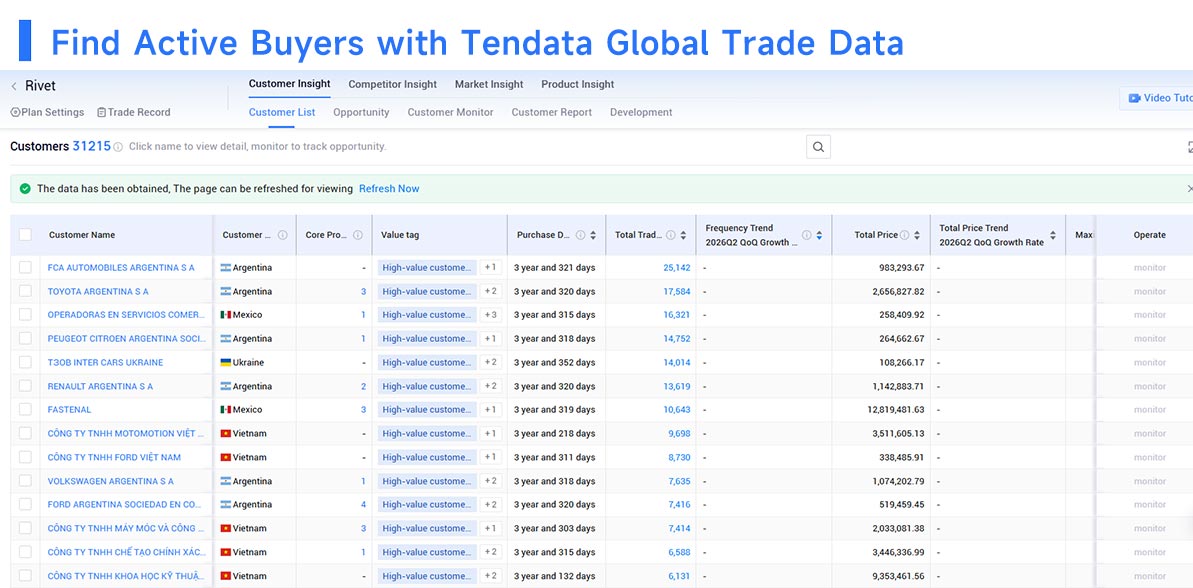
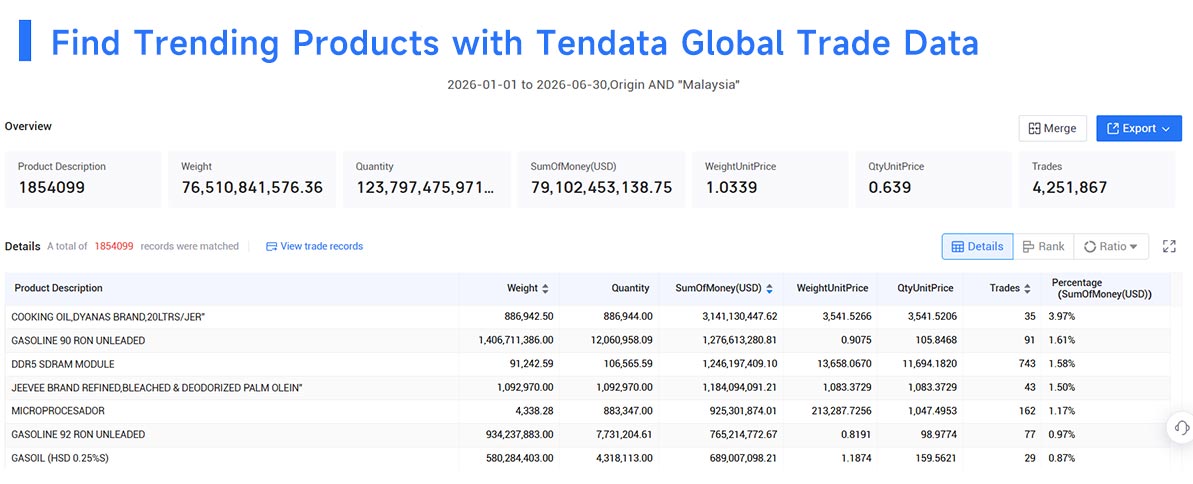
Tendata aggregates global import-export records, customs data, and company information from 228+ countries and regions. For industrial exporters, this means you can:
· Identify which countries and buyers are actively importing your product category
· Analyze competitors' shipment volume, pricing patterns, and destination markets
· Validate demand before investing in platform memberships or ad campaigns
Instead of guessing which platforms or markets to prioritize, exporters can use data to focus on:
· High-growth regions with real purchasing activity
· Verified buyers with consistent import history
· Markets where competition is less saturated
In short, platforms help you get seen, while tools like Tendata help you see more clearly.
Can You Still Rely Only on B2B Platforms?
For most mature exporters, the answer is increasingly no.
Today's leading companies are building multi-channel acquisition systems, where each channel plays a distinct role:
· Platforms bring initial visibility
· Your website builds trust and credibility
· SEO drives continuous inbound traffic from Google
· Trade data tools like Tendata provide market intelligence and precision targeting
These channels reinforce each other, creating a more stable and scalable pipeline for international growth.
A Smarter Way to Approach Platforms
The takeaway is not that B2B platforms are obsolete—but that the strategy needs to evolve.
For industrial exporters in particular, combining:
· More vertical, industry-aligned platforms
· A professional, trust-building website
· SEO and content for organic discovery
· Data-driven insights from tools like Tendata
can help you avoid ineffective competition and connect with genuinely qualified customers.
In other words, success today is not about abandoning platforms—it’s about using the right platforms, in the right way, within a broader, data-informed growth system.
Category
Leave Message for Demo Request or Questions