 Tendata AI
  Exhibition
 B2B Platforms
 Standalone Website
 Social Media
 Emails
 Trade Data Provider
 2026-07-14
There are many import export data suppliers on the market, and foreign trade professionals are overwhelmed: which import export data provider is actually the best? Today, we'll break down these import export data suppliers across four core dimensions — A, B, C, and D — to help you figure out which one is truly worth your investment.

A: Country & Data Coverage
Panjiva: Narrow Coverage, High Price
Panjiva, a supply chain intelligence platform under S&P Global, certainly has strong brand recognition.
However, its import export data coverage has clear limitations:
· Data concentrated in a few markets: Panjiva's core data mainly covers specific countries like the US, Brazil, and India, with limited global breadth. For foreign trade companies looking to expand into emerging markets or multi-country operations, this falls short.
· Extremely high price barrier: Panjiva does not publish pricing, but industry feedback suggests annual subscriptions start at $1,000+/month, with additional charges per country and feature module — making it unaffordable for most SMEs.
· Focuses on bill of lading data, lacks statistical and mirror data: Panjiva primarily relies on manifest/bill of lading data, leaving countries that rely on statistical summaries (such as China and some EU countries) poorly covered.
Volza: Large Volume, Inconsistent Quality
Volza claims to cover import export data from 200+ countries and regions with over 3 billion records, but actual usage reveals several issues:
·Inconsistent data cleaning: Users frequently report duplicate records, inconsistent units, and messy fields, requiring manual secondary processing that increases operational costs.
·Some countries' data is "all talk, no substance": Trustpilot reviews show that after subscribing, some users found certain countries had very few actual records, contradicting marketing claims.
· Complex interface, steep learning curve: Volza offers 30+ dashboards, but data presentation is not intuitive, requiring significant training for new users to become productive.
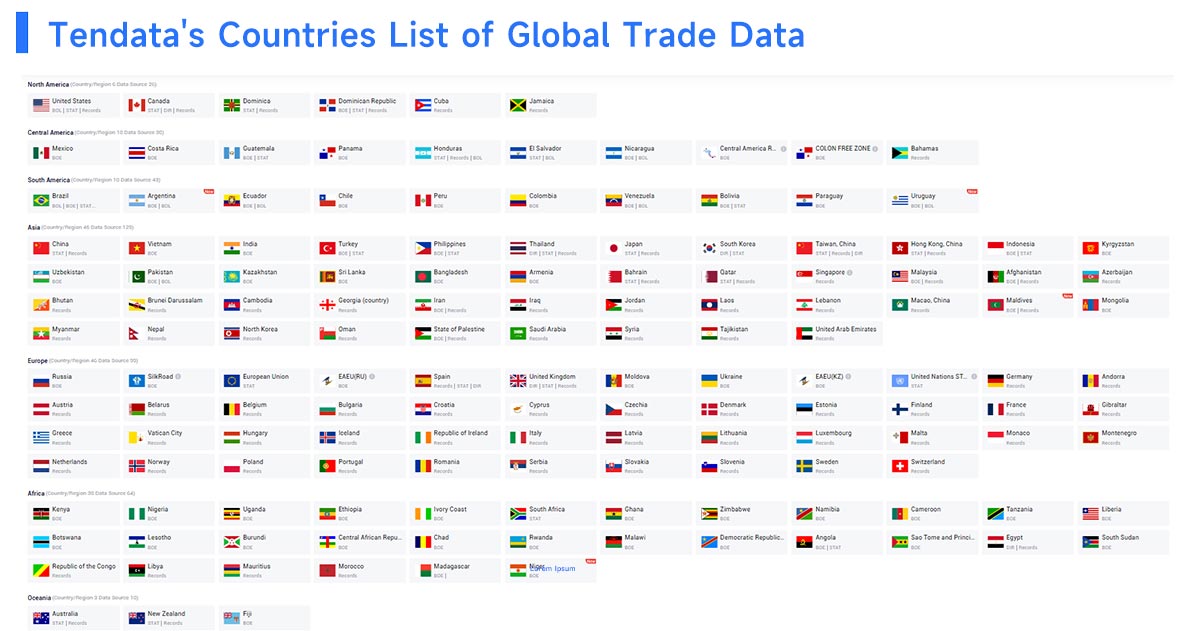
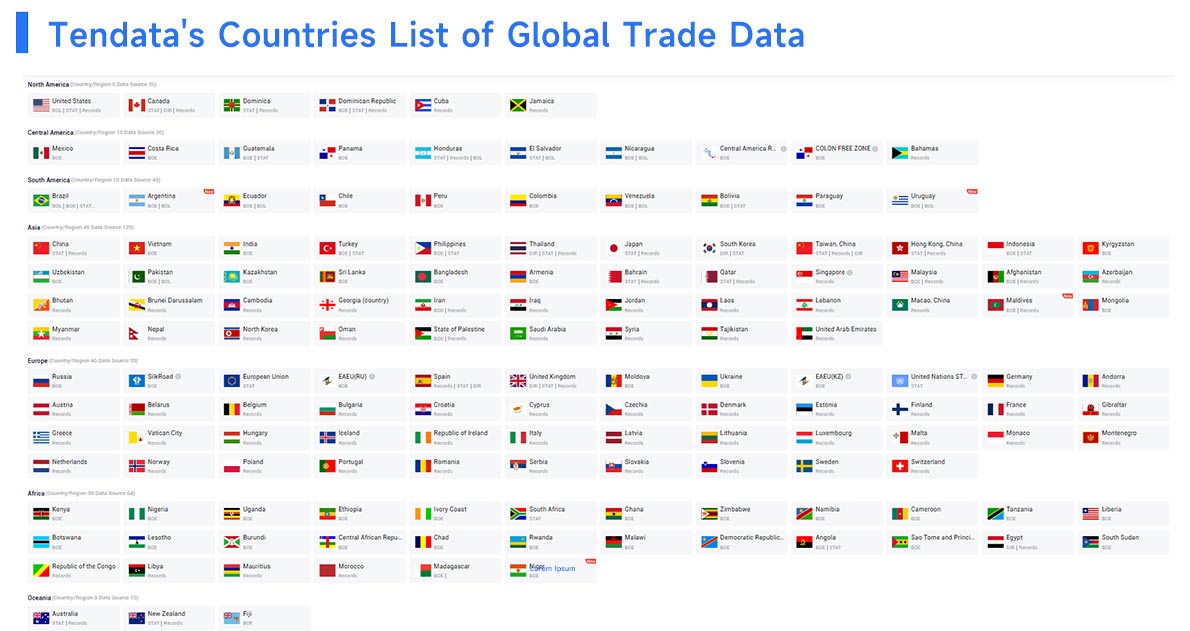
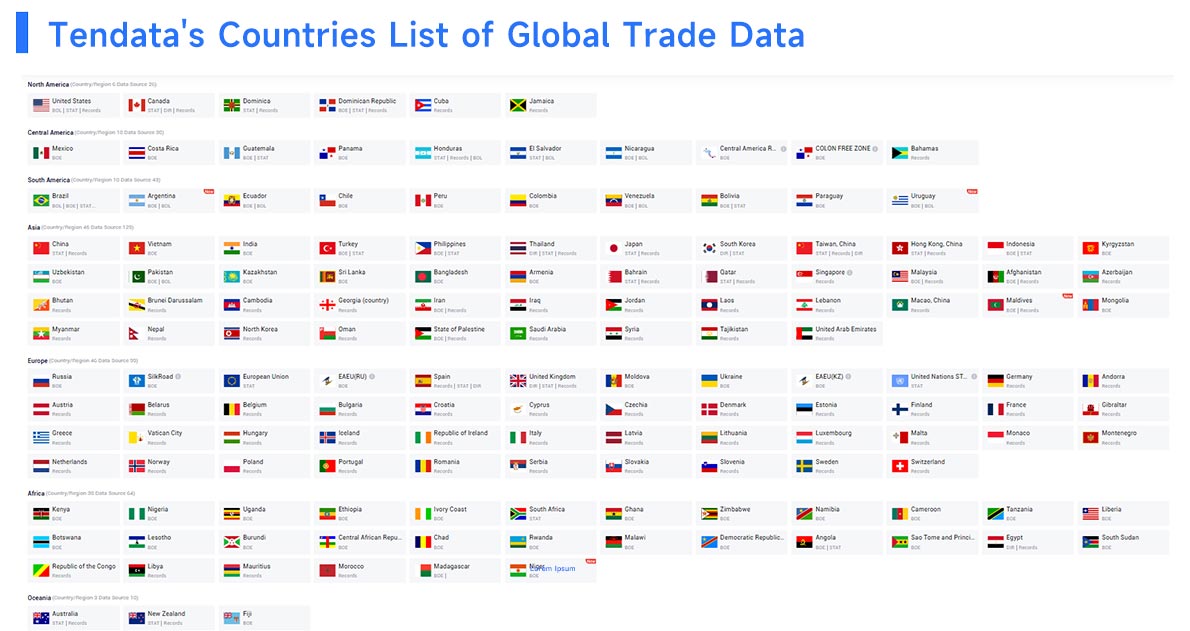
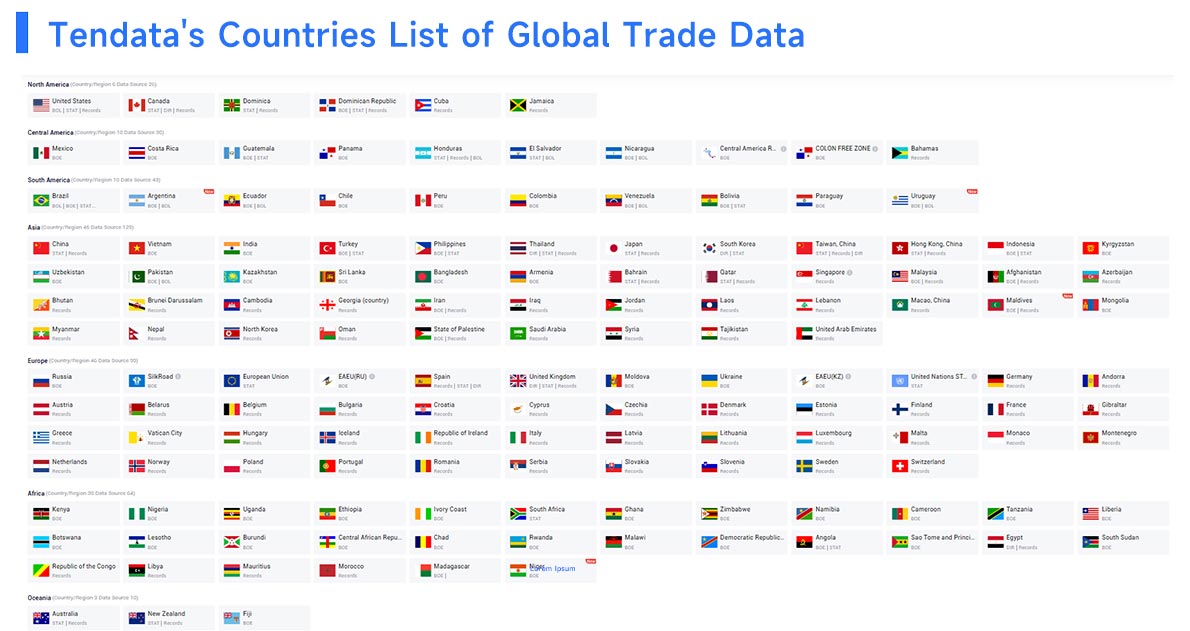
Tendata: 228+ Countries & Regions, First-Hand Data Sources
In comparison, Tendata's import export data coverage is clearly ahead:
· 228+ countries and regions worldwide: Covers four data types — bill of lading, customs declaration, statistical data, and mirror data — encompassing virtually every economy engaged in trade.
· First-hand authorized channels: Data comes directly from customs authorities, shipping companies, and official statistical agencies worldwide — no second-hand transcription, no model estimation, ensuring authority and accuracy from the source.
· 10+ billion real trade records: The underlying data scale far exceeds industry averages, and the platform is certified by the Shanghai Data Exchange, giving enterprises confidence in compliance and reliability.
>>> Get a Free Demo from Tendata <<<
B: Market Analysis Capabilities
Panjiva: Basic Analysis, Relies on Manual Interpretation
Panjiva provides basic supply chain visualization and cargo flow tracking, but:
· Simple analytical reports: Primarily presents bill of lading-level logistics information, lacking multi-dimensional market trend analysis, volume-price trends, buyer profiling, and other deep analytical features.
· No automated reporting: Users need to manually export data and analyze it themselves, which is inefficient.
Volza: Rich Dimensions, Weak Visualization
Although Volza offers 30+ dashboards:
· Poor visualization quality: Charts and graphs are relatively crude, and data insights are not intuitive — users often need training to use them effectively.
· Lacks AI-driven intelligent analysis: Still primarily focused on raw data queries, with no automated market opportunity identification or high-value buyer recommendations.
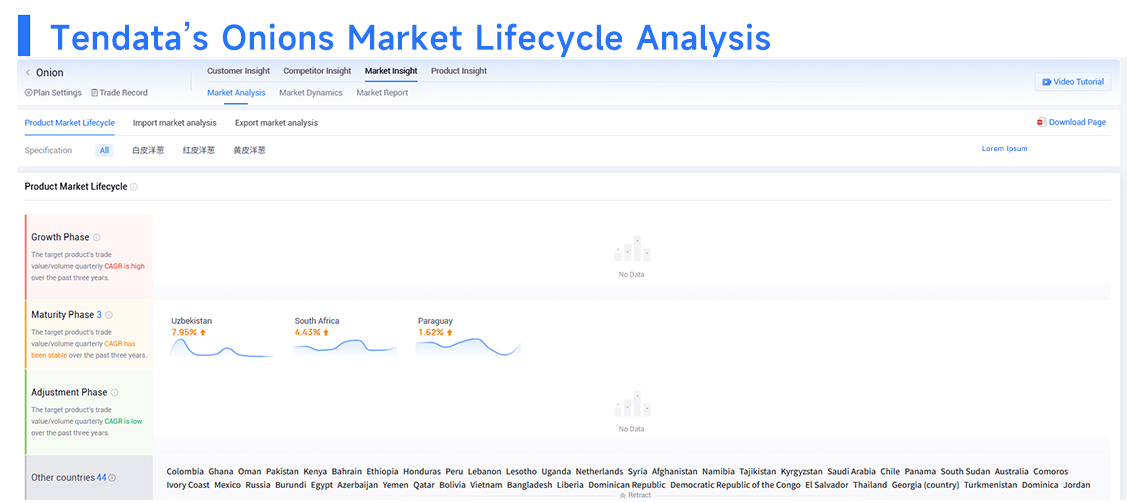
Tendata: Nearly 20 Types of Market Analysis Reports, One-Click Generation
Tendata's advantages in import export data market analysis are significant:
· Nearly 20 customized analysis reports: Supports global buyer analysis, volume and price trends, high-value market positioning, and other multi-dimensional statistical and visual analysis.
· AI-powered intelligent analysis: Tendata AI directly integrates with its own underlying customs data — not relying on third-party APIs — enabling automated market opportunity mining and competitor tracking.
· One-click report generation: What used to require tedious manual data downloading and analysis can now be done with a single click, dramatically reducing workload.
>>> Tendata’s Onions Market Lifecycle Analysis <<<
C: Competitor Analysis
Panjiva: Strong Supply Chain Tracking, Limited Competitive Intelligence
Panjiva has some advantages in tracking specific suppliers' cargo movements, but:
· Lacks systematic competitive benchmarking features: Cannot quickly generate comprehensive profiles of competitors' export market distribution, core client lists, or transaction trends.
· Opaque data update frequency: Data updates for some countries lag behind, affecting the timeliness of competitive intelligence.
Volza: Large Data Volume, Weak Competitive Analysis Tools
While Volza's import export data volume is large, its competitive analysis capabilities are lacking:
· No professional competitive benchmarking module: Users must manually filter and compare data, which is inefficient.
· Unstable data quality affects analysis accuracy: Duplicate records and messy fields can lead to biased competitive intelligence.
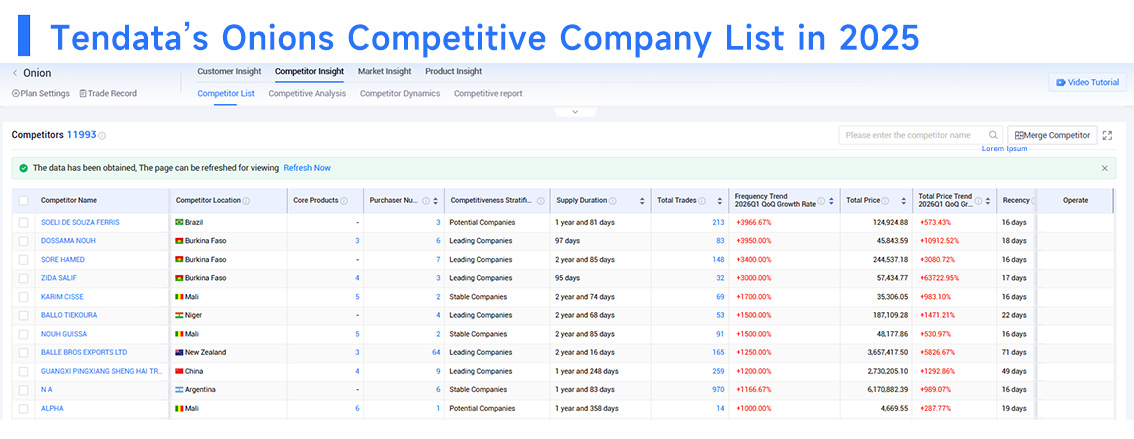
Tendata: Competitor Tracking + Benchmarking, All-in-One
Tendata's competitor analysis features are industry-leading:
· One-click capture of peers' export markets and clients: Through global import export data, you can quickly track every transaction detail of peer companies, presenting a complete buyer and supplier network.
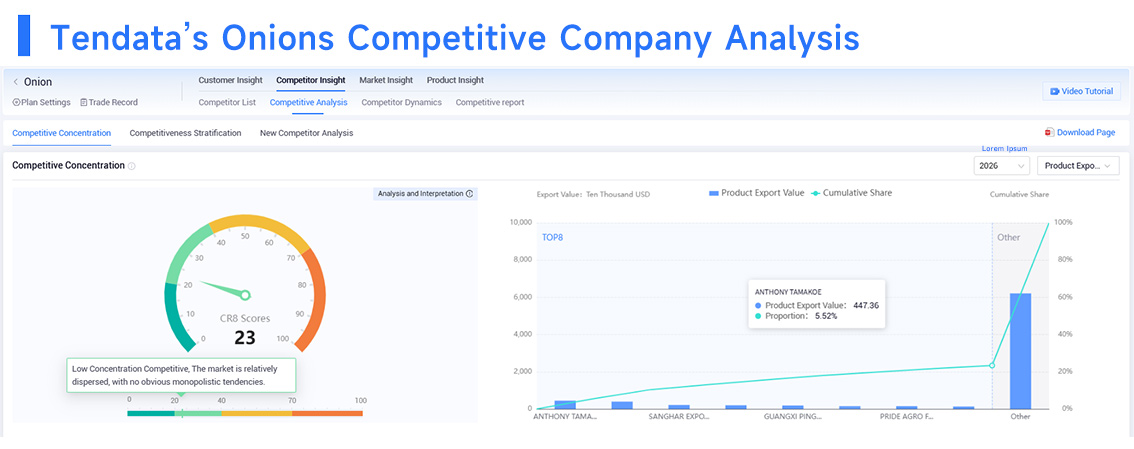
· Competitive benchmarking analysis: Supports multi-dimensional comparative analysis, helping companies precisely position themselves in the market and discover differentiated competitive opportunities.
· Real-time data updates: High-frequency data updates ensure the timeliness and accuracy of competitive intelligence.
>>> Tendata’s Onions Competitive Company List in 2025 <<<
>>> Tendata’s Onions Competitive Company Analysis <<<
D: Buyer Contact Information
Panjiva: No Contact Information Provided
Panjiva focuses on supply chain intelligence and does not provide buyer/supplier contact information. For companies whose core need is foreign trade client development, this is a fatal flaw — you know who is buying, but you can't reach them.
Volza: Limited Contact Information
Volza provides some consignee/shipper information, but:
· Incomplete contact details: Many records only include company names, missing phone numbers, emails, and key decision-maker information.
· Requires additional payment or manual research: Users often need to combine other tools to complete client outreach.
Tendata: CRM System + Contact Information, More Efficient Client Development
Tendata's advantages in client contact information are unmatched by other platforms:
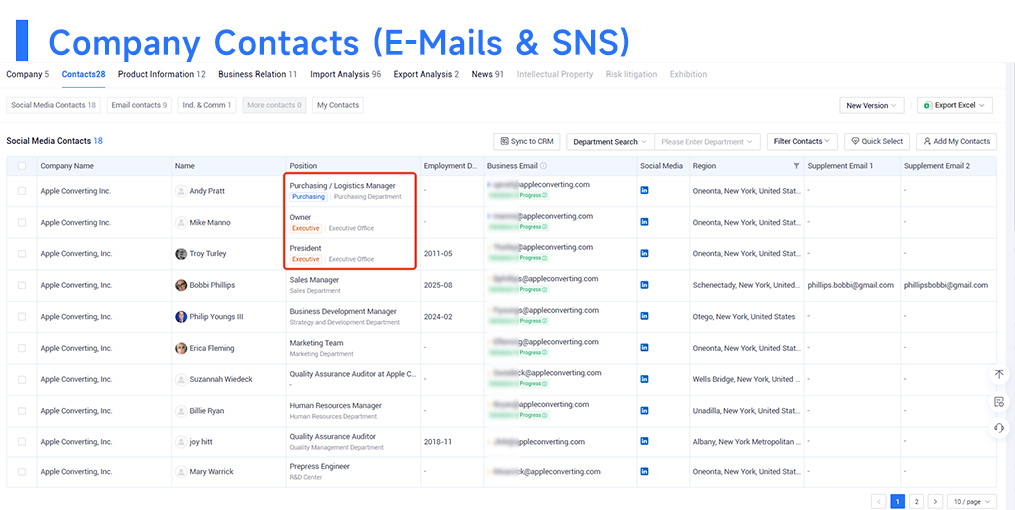
· Accurate contact details: Provides buyers'/suppliers' phone numbers, emails, websites, and other core contact information, helping foreign trade professionals directly reach decision-makers.
· Built-in CRM system: Tendata iTrader V6.0 includes a built-in CRM client management function, connecting the entire workflow from data query to client follow-up — no need to switch between multiple tools.
· Integrated business data: Combines import export data with corporate business profiles and trade records, helping foreign trade professionals comprehensively evaluate client strength and cooperation potential.
>>> Obtaining Customer Contact Information from Tendata <<<
Summary: Which import export data provider is the best? Tendata is the most cost-effective choice.
Category
Leave Message for Demo Request or Questions