 Tendata AI
  Exhibition
 B2B Platforms
 Standalone Website
 Social Media
 Emails
 Trade Data Provider
 2026-07-16
International trade is becoming increasingly complex. Companies are no longer competing only on product quality or pricing; they are also competing on how quickly they can understand markets, identify opportunities, and reach the right customers.
For exporters and importers, having access to reliable trade data has become an important advantage. Instead of making decisions based only on industry experience or limited market research, businesses can use real trade information to understand global demand, track industry movements, and discover potential business opportunities.
However, not all trade data provides the same value. Some sources are designed for general market research, while professional trade intelligence platforms provide deeper insights into buyers, suppliers, competitors, and supply chain activities.
This article explains what trade data is, where businesses can find it, and how platforms like Tendata help companies turn international trade information into practical growth strategies.
What Is Trade Data?
Trade data refers to information collected from international import and export activities. Whenever goods move between countries, related trade information is recorded, creating valuable insights into global commerce.
Depending on the data source, trade data may include product categories, HS codes, importing and exporting countries, shipment quantities, trade values, transportation details, and information about companies involved in transactions.
For businesses, the importance of trade data goes beyond simply understanding how much a product is traded globally. The real value comes from identifying market trends, discovering active buyers, analyzing competitor movements, and understanding how supply chains operate.
For example, a manufacturer planning to expand overseas can use trade data to determine which countries have increasing demand for its products, which companies are already importing similar goods, and where competitors are focusing their sales efforts.
Free Trade Data Sources for Market Research
Before investing in professional platforms, many businesses start with free trade data resources. These databases are useful for understanding global trade patterns, comparing markets, and analyzing product trends.
However, most free platforms focus mainly on aggregated statistics. They are excellent for macro-level research but usually do not provide detailed company information or direct customer development opportunities.
1. UN Comtrade
Website: https://comtradeplus.un.org/
UN Comtrade is one of the world's largest international trade databases. Managed by the United Nations, it provides import and export statistics from more than 200 countries and regions. Users can analyze trade flows by product category, HS code, and trading partner, making it a useful resource for understanding global market trends.
2. World Bank WITS
Website: https://wits.worldbank.org/
The World Integrated Trade Solution (WITS) combines international trade statistics, tariff information, and economic data from multiple sources. It is commonly used by researchers, governments, and businesses for studying trade policies and market conditions.
3. WTO Data Portal
Website: https://data.wto.org/
The World Trade Organization provides official international trade statistics through its data portal. It helps users review global trade developments, tariff information, and economic indicators.
4. ITC Trade Map
Website: https://www.trademap.org/
Developed by the International Trade Centre, Trade Map provides visual analysis of international trade performance. Companies often use it to evaluate export potential, compare markets, and identify products with strong growth opportunities.
5. USITC DataWeb
Website: https://dataweb.usitc.gov/
USITC DataWeb provides official U.S. import and export statistics. Users can search trade information by product, country, HS code, and other categories to better understand U.S. market activity.
6. Eurostat
Website: https://ec.europa.eu/eurostat
Eurostat is the official statistical office of the European Union. It provides detailed trade statistics covering both trade between EU member countries and international trade between the EU and other regions.
7. Statistics Canada
Website: https://www.statcan.gc.ca/
Statistics Canada provides official import and export statistics, allowing users to analyze Canadian trade activity by product category, trading partner, and time period.
8. Japan Customs Trade Statistics
Website: https://www.customs.go.jp/
Japan Customs publishes official import and export statistics that can be used to study Japanese trade flows and product-level market changes.
9. Korea International Trade Association (KITA)
Website: https://stat.kita.net/
KITA provides Korean trade statistics, including product information, trading partners, and market trends. It is widely used for analyzing South Korea's international trade activities.
10. Singapore Customs
Website: https://www.customs.gov.sg/
Singapore Customs provides official trade statistics and regulatory information, helping businesses understand Singapore's import and export environment.
The Limits of Free Trade Data
Free trade data is valuable for understanding market size and international trade trends, but it often has limitations when businesses want to generate sales opportunities.
For example, a company may discover that a country imports large quantities of a specific product. However, basic statistics usually cannot tell them which companies are purchasing those products, whether those buyers are still active, or who their current suppliers are.
For exporters, these details are critical. Finding the right customer requires more than knowing that demand exists. Businesses need to understand purchasing behavior, buying frequency, shipment history, and company background.
This is why many companies move from general trade statistics to professional trade intelligence platforms.
From Trade Data to Actionable Business Intelligence
Raw trade data alone does not automatically create business opportunities. The challenge is turning large amounts of information into meaningful insights.
A professional trade intelligence platform helps companies answer more practical questions:
· Which companies are actively importing my products?
· Which markets are growing faster than others?
· Who are my competitors selling to?
· Which buyers have stable purchasing patterns?
· Which prospects are worth contacting first?
By connecting trade records with company information and analytical tools, businesses can make international sales strategies more targeted and efficient.
How Tendata Helps Businesses Use Trade Data More Effectively
Tendata is a professional global trade data platform designed to help companies analyze international markets, monitor competitors, and identify potential customers.
Instead of spending significant time collecting information from different sources, businesses can use Tendata to access structured trade insights and discover opportunities based on actual import and export activities.
Understand Market Characteristics Before Entering New Regions
Entering a new market requires a clear understanding of local demand and competition.
Tendata helps businesses analyze global trade data to understand how products move across different countries and regions. By reviewing import trends, trading volumes, and market changes, companies can identify where demand is increasing and where expansion opportunities may exist.
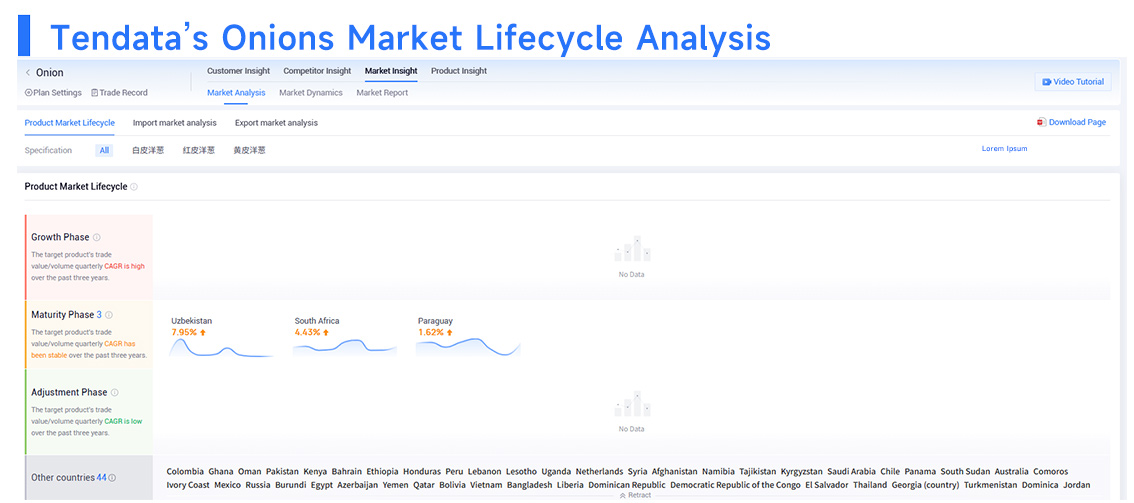
For example, an agricultural exporter can use HS Code 070310 (onions) to study international trade patterns. By analyzing which countries import onions regularly, how purchasing trends change, and which markets show growth potential, exporters can develop a more focused market entry strategy.
>>> Tendata’s Onions Market Lifecycle Analysis <<<
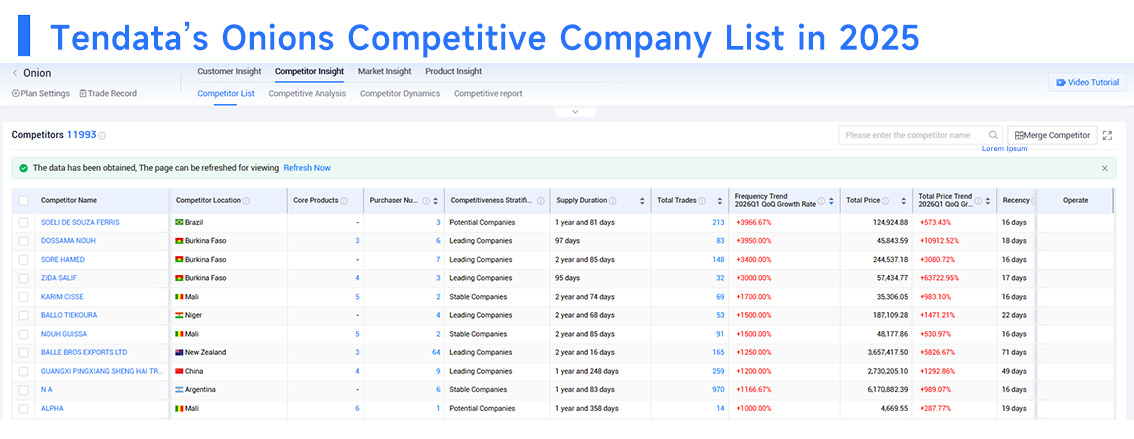
Analyze Competitors and Discover Market Gaps
Competitor research is another important application of trade data.
Many companies know who their competitors are, but they do not always know where those competitors are selling, how frequently they ship products, or which markets contribute most to their growth.
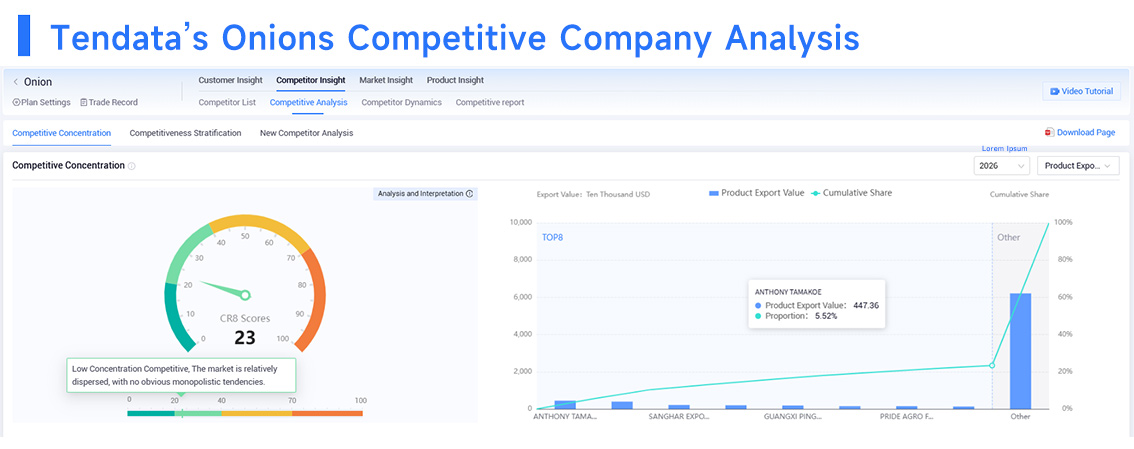
Tendata enables businesses to study competitor trade activities and understand supply chain movements. This information helps companies identify potential market gaps, improve their positioning, and create strategies based on real market behavior rather than assumptions.
For example, if competitors are successfully supplying certain buyers or regions, companies can analyze those patterns and explore similar opportunities.
>>> Tendata’s Onions Competitive Company List in 2025 <<<
>>> Tendata’s Onions Competitive Company Analysis <<<
Develop High-Quality Leads Through Real Purchasing Activities
One of the biggest challenges in international sales is finding buyers that actually have purchasing demand.
Traditional customer research methods often involve searching online directories, attending exhibitions, or sending large numbers of cold emails. These approaches can be time-consuming and often generate many low-quality leads.
Tendata uses trade data to help companies identify businesses with real import activity. By reviewing shipment history, purchasing frequency, product categories, and supplier relationships, exporters can focus their efforts on companies that are more likely to become valuable customers.
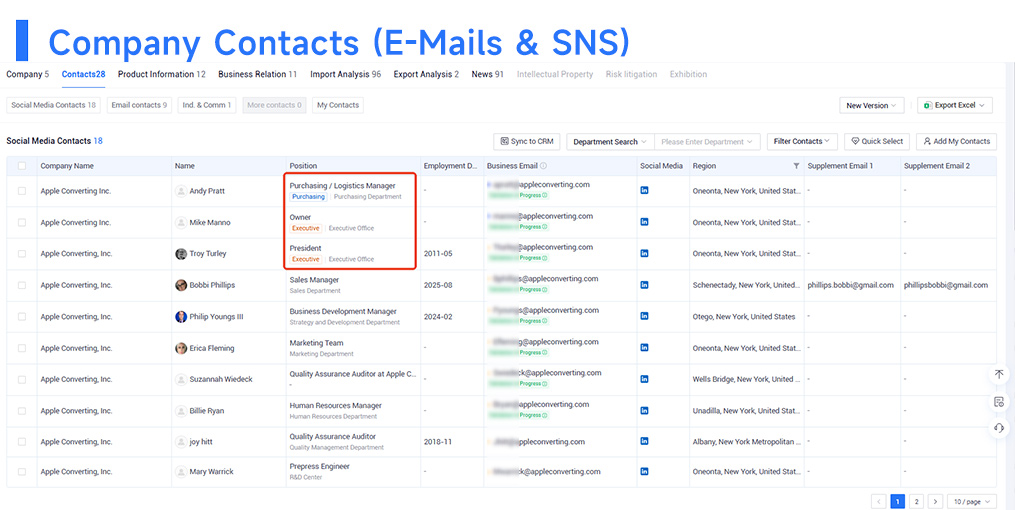
In addition, Tendata provides access to business contact information, including available emails, LinkedIn profiles, Facebook pages, and decision-maker information. This allows sales teams to move from research to direct communication more efficiently.
>>> Obtaining Customer Contact Information from Tendata <<<
Why Trade Data Is Becoming Essential for Global Business
The global marketplace changes quickly. New competitors enter industries, customer demand shifts, and supply chains continue to evolve.
Companies that rely only on traditional market knowledge may miss valuable opportunities. By using trade data, businesses can continuously monitor market movements and adjust their strategies based on real-world activity.
For exporters, this means finding better prospects and reducing time spent searching for customers. For importers, it means identifying reliable suppliers and understanding sourcing trends.
The role of trade data is not simply collecting information. It is helping businesses make smarter decisions in an increasingly competitive environment.
Summary
Trade data provides businesses with valuable insights into global markets, customer demand, and supply chain activities. Free resources such as UN Comtrade, WTO Data Portal, ITC Trade Map, and government trade databases are useful for basic market research, but they often lack the detailed company-level insights required for business development.
Tendata helps bridge this gap by combining global trade data with market analysis, competitor research, and buyer identification tools. Through deeper understanding of market characteristics, competitor behavior, and customer purchasing activities, businesses can develop more effective international strategies.
For companies looking to expand globally, reliable trade data is no longer just a research resource—it is a foundation for finding opportunities, reaching the right customers, and achieving sustainable growth.
Category
Leave Message for Demo Request or Questions