 Tendata AI
  Exhibition
 B2B Platforms
 Standalone Website
 Social Media
 Emails
 Trade Data Provider
 2026-07-16
In international business, having accurate information at the right time can make a significant difference. For exporters, importers, manufacturers, and logistics companies, understanding how products move across borders is essential for finding opportunities, managing competition, and building stronger supply chains. This is where shipment data becomes increasingly valuable.
By analyzing shipment data, businesses can gain visibility into global trade activities, including product movements, buyer and supplier relationships, shipment frequency, and market changes. Instead of relying only on assumptions or general market reports, companies can use real transaction information to make more informed decisions.
However, the usefulness of shipment data depends on the level of detail and analysis available. Basic shipping statistics can show overall trade activity, while professional trade intelligence platforms can reveal deeper insights such as active buyers, competitor strategies, and potential business opportunities.

What Is Shipment Data?
Shipment data refers to information generated when goods are transported from one country to another during international trade. It records the movement of products through different stages of the supply chain and helps businesses understand how global commerce operates.
Depending on the source, shipment data may include information such as product descriptions, HS codes, shipment dates, quantities, shipment values, ports, exporting companies, importing companies, and supplier relationships.
For companies involved in global trade, shipment data provides a practical view of real market activity. It shows not only what products are being traded but also who is participating in those transactions.
For example, a manufacturer looking for overseas customers can use shipment data to identify companies that are already importing similar products, understand their purchasing patterns, and discover potential markets with strong demand.
Free Shipment Data and Trade Research Resources
Businesses can access basic international shipping and trade information through several public databases. These resources are useful for understanding market trends and analyzing overall trade performance.
However, most free platforms focus on statistical trade information rather than detailed shipment records. They may show import and export volumes but usually provide limited information about individual companies, buyers, suppliers, or transaction histories.
Some commonly used free resources include:
1. UN Comtrade
Website: https://comtradeplus.un.org/
UN Comtrade provides international trade statistics from more than 200 countries and regions. It is widely used for analyzing product-level trade flows, import and export values, and global market trends.
2. ITC Trade Map
Website: https://www.trademap.org/
ITC Trade Map offers visual tools for analyzing trade performance, market share, and product opportunities. It is useful for companies conducting initial market research.
3. USITC DataWeb
Website: https://dataweb.usitc.gov/
USITC DataWeb provides official U.S. trade statistics and allows users to analyze imports and exports by product category, country, and HS code.
4. Eurostat
Website: https://ec.europa.eu/eurostat
Eurostat provides official European Union trade statistics, covering both internal EU trade and international transactions with global markets.
5. World Bank WITS
Website: https://wits.worldbank.org/
WITS combines trade statistics and tariff information from multiple international sources, supporting global market and policy analysis.
These resources are valuable starting points for understanding international trade. However, companies searching for customers, suppliers, or competitive intelligence often require more detailed shipment data.
Why Businesses Need More Than Basic Shipping Statistics
Knowing that a country imports a certain product is useful, but it does not always answer the questions businesses need to make sales decisions.
For example, an exporter may discover that demand for a product is increasing in a target country. However, they may still need to know:
· Which companies are importing this product?
· How often do these companies purchase?
· Who are their current suppliers?
· Are these buyers actively sourcing today?
· What shipment volumes do they usually purchase?
These questions cannot usually be answered through general trade statistics.
The real value of shipment data comes from understanding actual commercial activities. By analyzing shipment records, businesses can identify companies with proven purchasing behavior instead of spending time contacting unknown prospects.
Turning Shipment Data Into Business Opportunities
Modern companies are increasingly using shipment data as a strategic tool rather than simply a source of information.
For exporters, it provides a way to discover potential buyers and understand market demand. For importers, it helps identify reliable suppliers and monitor industry developments. For manufacturers, it provides insights into competitors and global supply chain movements.
The challenge is that international trade generates massive amounts of data every day. Without proper tools, manually analyzing shipment records can be time-consuming and difficult. This is where professional trade intelligence platforms provide greater value.
How Tendata Helps Businesses Leverage Shipment Data
Tendata is a global trade intelligence platform that helps businesses analyze international shipment data, discover potential customers, and understand market activities more efficiently.
By combining global shipment records with company information and analytical tools, Tendata enables users to move beyond basic research and develop more targeted business strategies.
Identify Market Opportunities Through Shipment Analysis
Before entering a new market, companies need to understand where demand exists and how purchasing activities are changing.
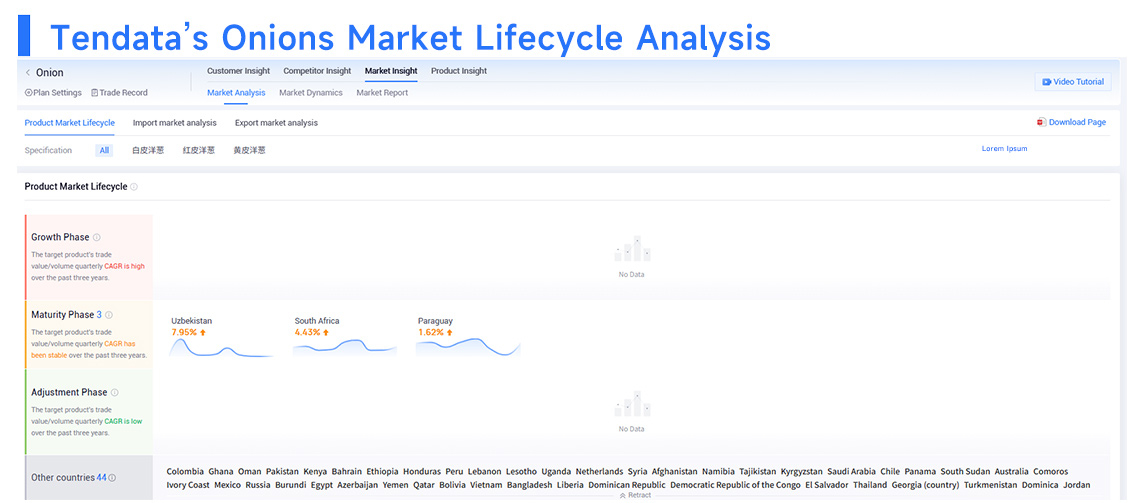
Tendata allows businesses to analyze shipment data across different countries, products, and industries. By reviewing shipment trends, companies can identify growing markets, evaluate demand patterns, and determine which regions are worth investing in.
For example, an exporter of agricultural products can analyze HS Code 070310 (onions) to discover which countries frequently import onions, which companies are active buyers, and how purchasing activities change over time.
This helps businesses avoid entering markets blindly and instead focus on opportunities supported by real trade activity.
>>> Tendata’s Onions Market Lifecycle Analysis <<<
Monitor Competitors Through Real Shipment Activities
Understanding competitors is essential for developing successful international strategies.
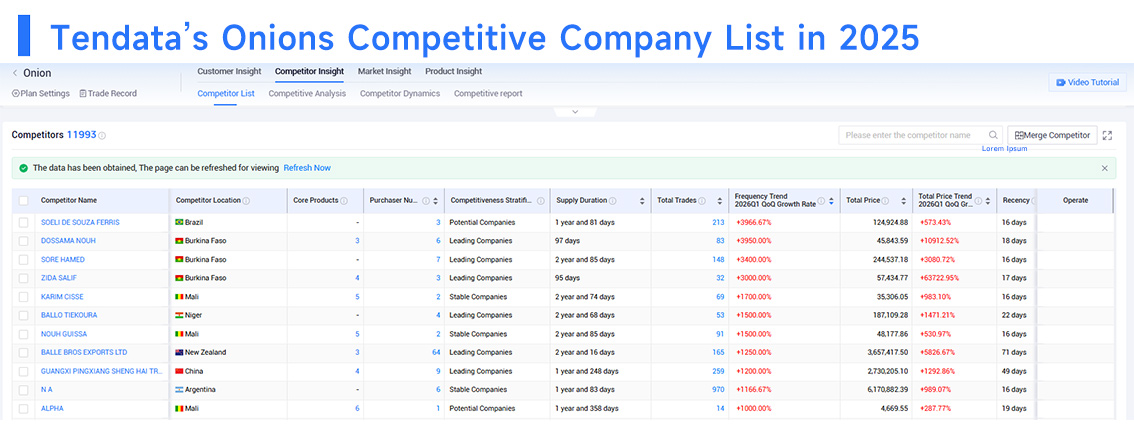
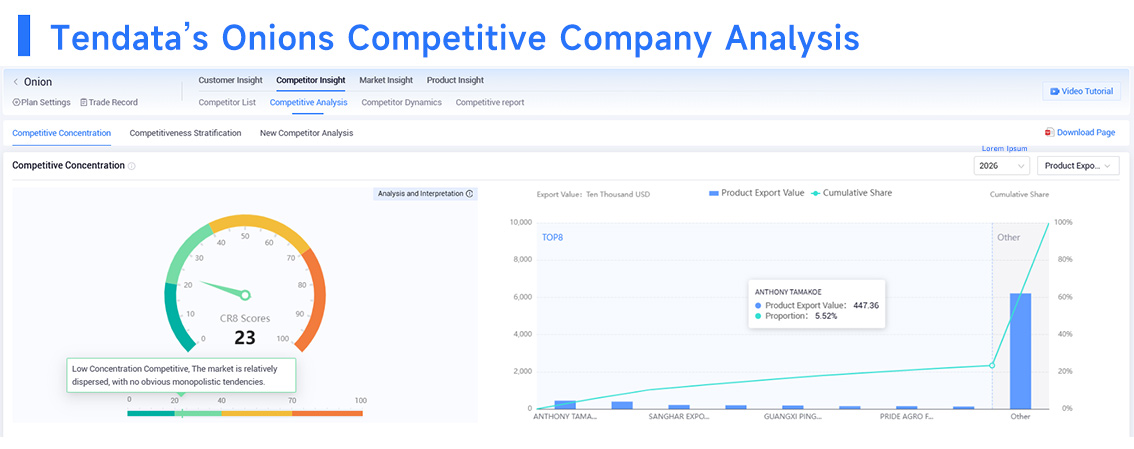
Many companies know their competitors but have limited visibility into their global operations. Shipment data provides a clearer picture of competitor activities by showing where products are shipped, which markets they serve, and how frequently transactions occur.
With Tendata, businesses can analyze competitor supply chains, identify their major markets, and discover potential opportunities that may have been overlooked.
This information helps companies improve pricing strategies, explore new regions, and better understand industry competition.
>>> Tendata’s Onions Competitive Company List in 2025 <<<
>>> Tendata’s Onions Competitive Company Analysis <<<
Find Qualified Buyers Based on Purchasing Behavior
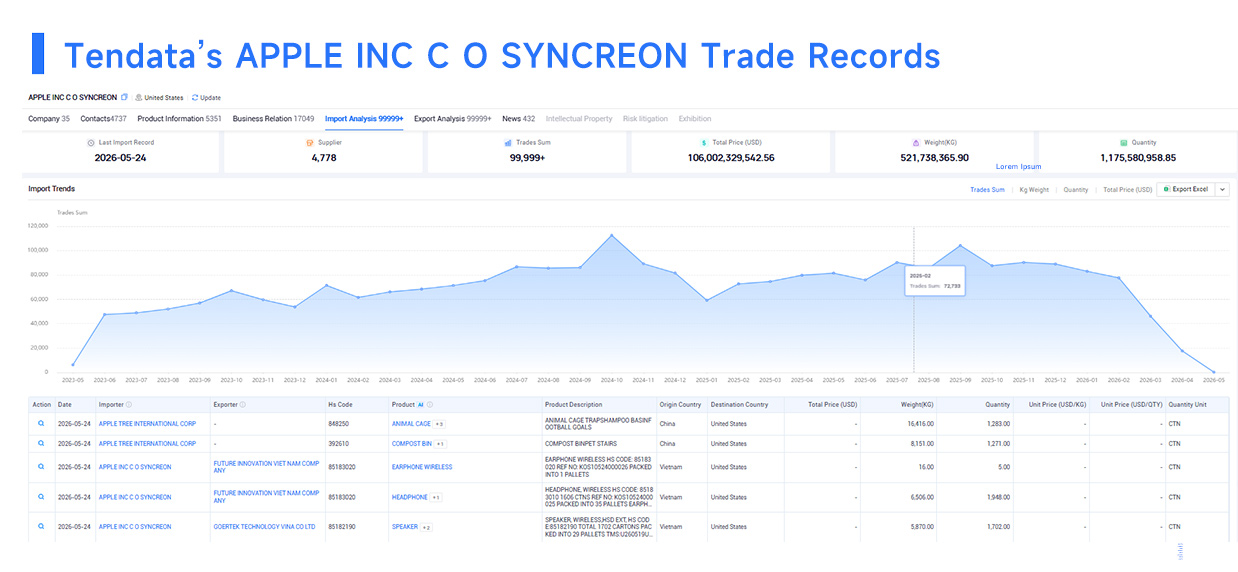
One of the biggest advantages of professional shipment data is the ability to identify companies that already demonstrate buying activity.
Instead of building prospect lists based only on company websites or directories, businesses can focus on organizations with verified import records.
Tendata helps users evaluate potential buyers through shipment history, purchasing frequency, product demand, and supplier relationships.
This makes customer development more efficient because sales teams can prioritize prospects with stronger commercial potential.
>>> Get a Free Demo from Tendata <<<
Connect Shipment Data With Contact Information
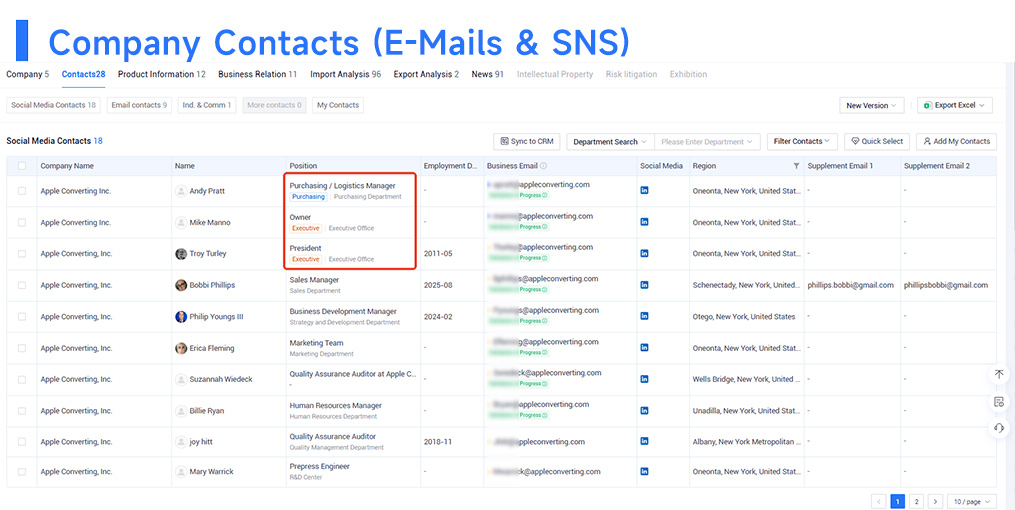
Finding a potential buyer is only the first step. Reaching the right person inside the company is equally important.
Tendata integrates shipment data with a business contact database, helping users access available company information such as email addresses, LinkedIn profiles, Facebook pages, and decision-maker details.
This connection between trade activity and contact information allows businesses to create more personalized outreach campaigns and improve communication efficiency.
>>> Click to Explore Customer List <<<
Why Shipment Data Matters in Modern Global Trade
Global supply chains are becoming more transparent and data-driven. Companies that understand market movements faster often have a stronger competitive advantage.
Shipment data allows businesses to move beyond traditional market research by showing actual trade activities happening around the world.
Instead of asking where opportunities might exist, companies can analyze where purchasing activities are already happening.
For exporters, this means finding more relevant buyers. For importers, it means identifying better suppliers. For businesses entering new markets, it provides valuable guidance for making expansion decisions.
Summary
Shipment data has become an important resource for companies involved in international trade. While free trade databases can help businesses understand general market trends, they often lack the detailed transaction information needed for customer development and competitive analysis.
Tendata provides a professional solution by combining global shipment data with company insights, market analysis, and buyer identification tools. By helping businesses understand purchasing behavior, monitor competitors, and discover qualified prospects, Tendata transforms complex trade records into practical business opportunities.
For companies seeking to expand internationally, reliable shipment data provides the visibility needed to make smarter decisions, reach the right partners, and build stronger global trade strategies.
Category
Leave Message for Demo Request or Questions