
 Tendata AI
  Exhibition
 B2B Platforms
 Standalone Website
 Social Media
 Emails
 Trade Data Provider
 2026-07-20
Expanding into international markets is no longer just about finding a distributor or attending a trade fair. Today's most successful exporters rely on real market intelligence to decide where to sell, which customers to target, and how to stay ahead of the competition. One of the most valuable sources of that intelligence is import data.
By studying import data, businesses can see which products are entering specific markets, how demand changes over time, and which countries are increasing their purchases. More importantly, detailed import data can help companies identify active importers, evaluate buying behavior, and uncover new business opportunities that may not be visible through traditional market research.
Whether you're entering a new market or expanding your customer base, understanding import data can help you make more confident business decisions.

What Is Import Data and Why Is It Important?
Import data consists of records created when products enter a country through customs. These records document international trade activities and provide valuable information about cross-border transactions.
Depending on the country and the source, import data may include product descriptions, HS codes, shipment values, quantities, countries of origin, ports, shipment dates, and sometimes importer or exporter information.
Unlike market forecasts, import data reflects real purchasing activity. It allows businesses to understand which products are actually being imported, how frequently transactions occur, and how international demand evolves over time.
Because of its accuracy and practical value, import data has become an essential resource for exporters, manufacturers, wholesalers, sourcing specialists, and market analysts.
10 Free Platforms to Access Import Data
Companies that are beginning international market research don't always need paid tools immediately. Several government agencies and international organizations provide free access to official trade statistics and import data.
Although these resources focus primarily on macro-level trade analysis, they are useful for understanding market size and import trends.
1. General Administration of Customs of China (GACC)
Website: https://stats.customs.gov.cn/
China's official customs statistics platform provides searchable import and export statistics by HS code, country, and reporting period, with downloadable reports available.
2. UN Comtrade
Website: https://comtradeplus.un.org/
Managed by the United Nations, UN Comtrade offers one of the world's largest collections of international trade statistics, covering more than 200 countries and regions.
3. ITC Trade Map
Website: https://www.trademap.org/
Trade Map provides detailed trade statistics, product comparisons, and market analysis tools that help businesses evaluate international opportunities.
4. ImportYeti
Website: https://www.importyeti.com/
ImportYeti gives users free access to U.S. ocean shipment records, allowing searches by importer, supplier, and shipment history.
5. USITC DataWeb
Website: https://dataweb.usitc.gov/
The U.S. International Trade Commission provides official import and export statistics searchable by country, product, HS code, and reporting period.
6. UK Trade Info
Website: https://www.uktradeinfo.com/
The UK's official trade statistics portal offers detailed import and export information across numerous industries and commodities.
7. Eurostat
Website: https://ec.europa.eu/eurostat
Eurostat publishes official trade statistics covering both trade within the European Union and trade between the EU and the rest of the world.
8. Observatory of Economic Complexity (OEC)
Website: https://oec.world/
OEC visualizes international trade through interactive charts, making it easier to understand global trade patterns and product competitiveness.
9. Japan Customs Trade Statistics
Website: https://www.customs.go.jp/
Japan Customs provides official import and export statistics with searchable trade information by product and trading partner.
10. Korea International Trade Association (KITA)
Website: https://stat.kita.net/
KITA provides detailed South Korean trade statistics, including historical trade data, major trading partners, and product-level analysis.
How Businesses Use Import Data in Practice
Every international expansion begins with questions.
Which countries are buying my products?
Is demand increasing or declining?
When do buyers usually place orders?
Which markets are already well supplied?
Import data helps answer these questions by providing measurable evidence instead of assumptions.
For example, an exporter of home appliances can compare import trends across multiple countries to determine where demand is growing. A manufacturer of industrial equipment can analyze import volumes to prioritize high-potential markets before investing in overseas sales activities.
Even logistics providers and supply chain managers use import data to understand shipping flows and identify changes in sourcing patterns.
Why Public Import Data Doesn't Tell the Whole Story
Official trade statistics are an excellent starting point, but they often stop at market-level information.
A public database may show that a country imported millions of dollars' worth of machinery during the past year, yet it usually won't explain which companies placed those orders or whether they are still actively importing.
For exporters trying to build customer lists, this creates a major gap.
Knowing market size is useful, but identifying real buyers is far more valuable.
Professional import data platforms bridge this gap by connecting trade records with company-level intelligence, making it possible to understand purchasing behavior instead of just import volumes.
How Tendata Helps Businesses Make Better Use of Import Data
Tendata is a professional global trade intelligence platform that transforms import data into practical business insights.
Instead of requiring users to collect information from multiple websites, Tendata brings together customs records, market intelligence, and business information within a single platform.
This allows companies to move from research to customer development much more efficiently.
Compare International Markets More Effectively
Choosing the right export destination often determines whether an expansion strategy succeeds.
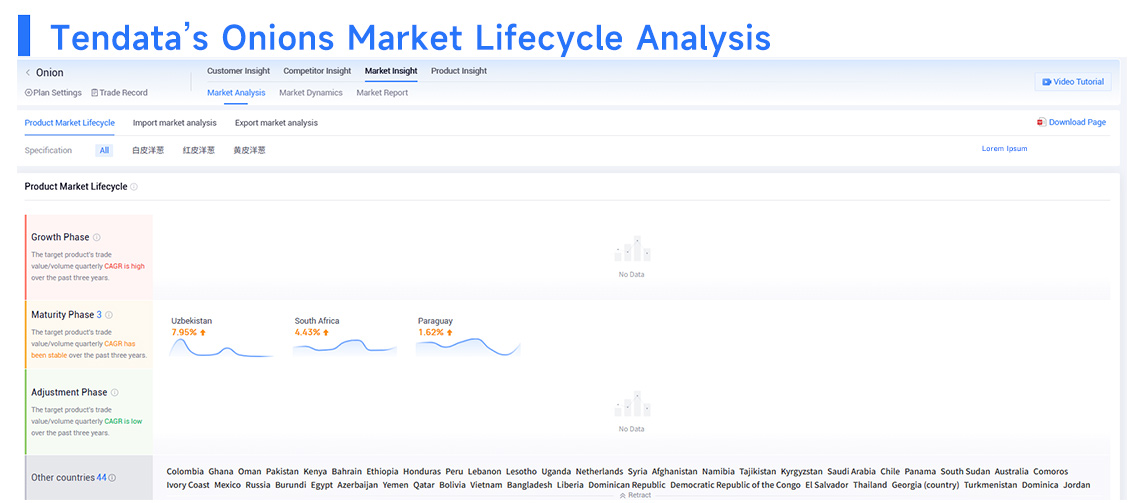
Tendata allows users to analyze import data by country, product category, industry, and HS code, making it easier to compare market demand across different regions.
For example, exporters of onions can search HS Code 070310 to identify countries with stable import demand, compare long-term purchasing trends, and evaluate future market potential.
This helps businesses focus their resources on markets supported by real trade activity.
>>> Tendata’s Onions Market Lifecycle Analysis <<<
Track Industry Competition
Markets change constantly, and competitor strategies often change with them.
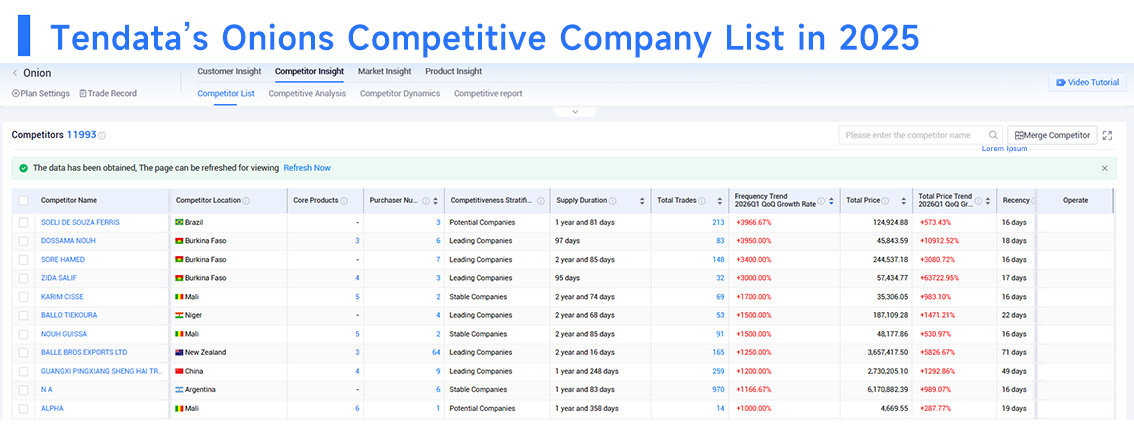
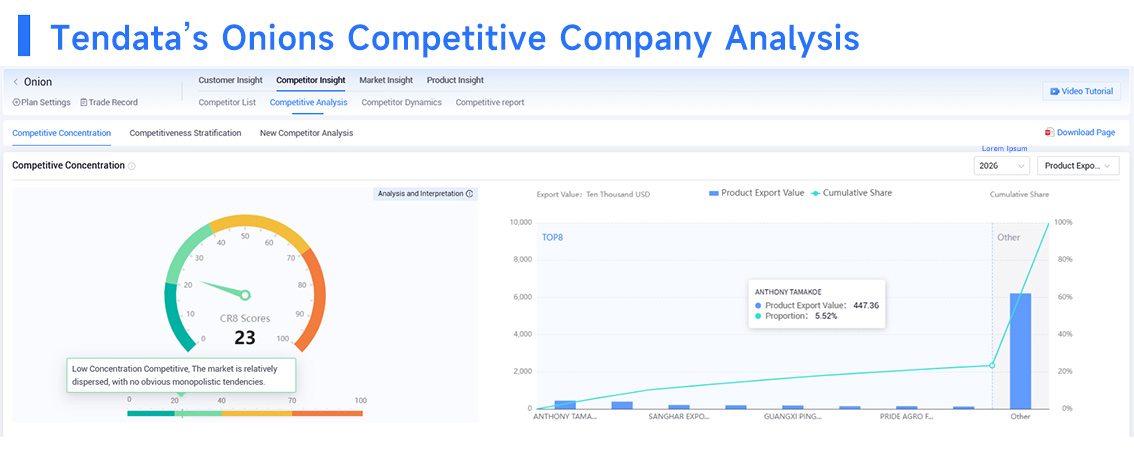
Using Tendata's import data, businesses can observe where competitors are selling, how frequently products enter specific markets, and how trading relationships develop over time.
These insights help companies identify market gaps, evaluate competitive pressure, and adjust their international strategies based on actual trade movements rather than speculation.
>>> Tendata’s Onions Competitive Company List in 2025 <<<
>>> Tendata’s Onions Competitive Company Analysis <<<
Identify Buyers Ready to Purchase
One of the greatest strengths of detailed import data is its ability to reveal active buyers.
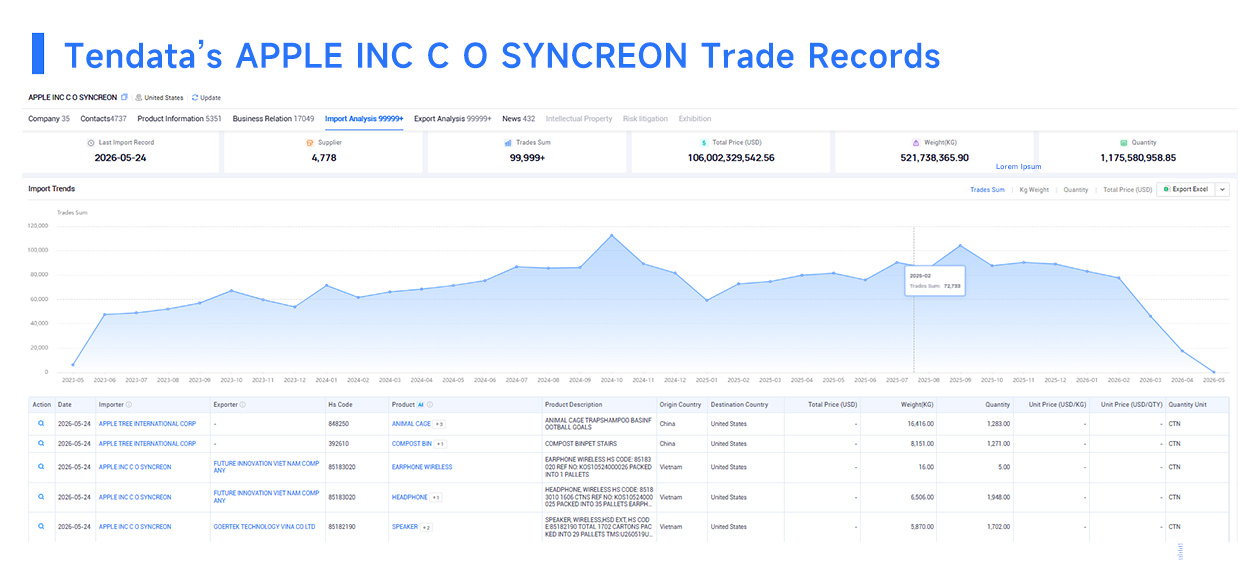
Instead of relying on business directories or search engines, Tendata enables users to identify companies with verified import histories.
Businesses can review purchasing frequency, shipment records, buying quantities, and supplier relationships before contacting potential customers. This allows sales teams to focus on prospects with demonstrated purchasing demand instead of cold outreach to unqualified leads.
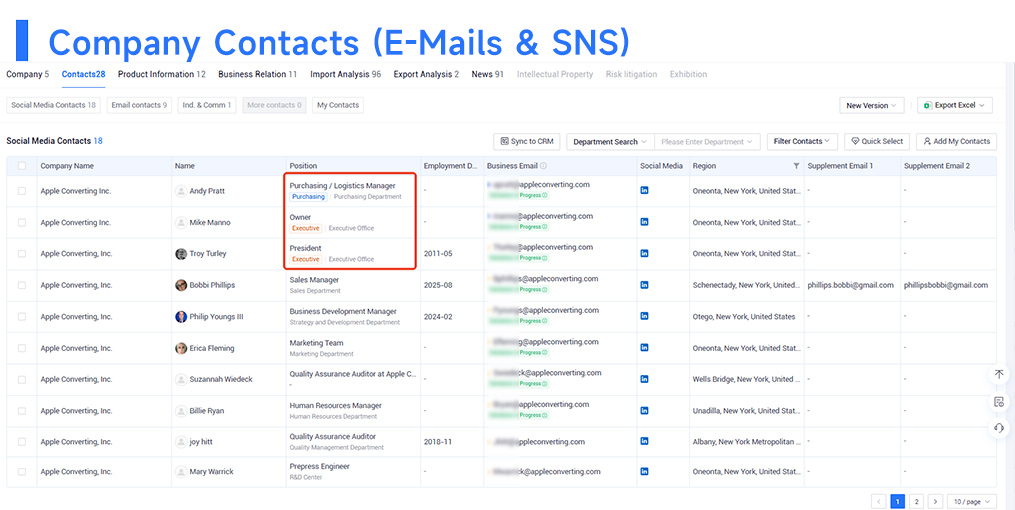
>>> Obtaining Customer Contact Information from Tendata <<<
Turn Trade Records Into Sales Opportunities
Finding a buyer is only the beginning of the sales process.
Tendata enhances import data by integrating available business contact information, including company email addresses, LinkedIn profiles, Facebook pages, and other public business resources.
With both trade intelligence and contact information available in one place, businesses can develop more targeted outreach campaigns and connect with decision-makers more efficiently.
>>> Get a Free Demo from Tendata <<<
Summary
Import data provides businesses with a reliable way to understand global demand, evaluate market opportunities, and identify potential customers. Free platforms such as UN Comtrade, ITC Trade Map, USITC DataWeb, Eurostat, and other official customs databases are excellent resources for learning about international trade and market trends.
For companies that want to go beyond statistics, Tendata combines comprehensive import data with buyer intelligence, competitor analysis, market research, and business contact information. By transforming customs records into actionable commercial insights, Tendata helps businesses identify qualified buyers, explore new markets, and build stronger international growth strategies.
Category
Leave Message for Demo Request or Questions