
 Tendata AI
  Exhibition
 B2B Platforms
 Standalone Website
 Social Media
 Emails
 Trade Data Provider
 2026-07-20
Expanding into international markets is no longer just about finding countries with high demand. Successful businesses also need to understand who is buying, where competitors are selling, and how trade patterns are evolving. This is why import export data has become an essential resource for exporters, manufacturers, trading companies, and sourcing professionals.
Unlike general market reports, import export data is based on real customs records and cross-border transactions. It helps businesses move beyond assumptions by showing how products flow through global markets. Whether you're evaluating a new region or searching for qualified buyers, import export data provides the evidence needed to support smarter business decisions.
The good news is that businesses can start with free trade databases and later adopt professional platforms as their research needs become more advanced.

What Is Import Export Data?
Import export data is the information generated when goods are imported into or exported from a country. Customs authorities collect these records as part of international trade management, creating a valuable source of market intelligence.
Depending on the country and data provider, import export data may include product descriptions, HS codes, shipment values, quantities, trading partners, shipment dates, ports, and, in some cases, importer and exporter details.
Because these records come from actual trade transactions, import export data offers businesses a realistic view of global commerce. It allows companies to evaluate demand, compare markets, and identify trade opportunities using real-world evidence instead of estimates.
10 Free Platforms to Access Import Export Data
For companies conducting early-stage market research, many official organizations provide free access to import export data and trade statistics. Although these resources generally focus on country-level analysis rather than commercial intelligence, they remain valuable research tools.
1. General Administration of Customs of China (GACC)
Website: https://stats.customs.gov.cn/
China's official customs statistics platform offers searchable import and export data by HS code, country, and reporting period, with downloadable statistical reports.
2. UN Comtrade
Website: https://comtradeplus.un.org/
The United Nations maintain UN Comtrade and provides one of the largest collections of international trade statistics, covering over 200 countries and regions.
3. ITC Trade Map
Website: https://www.trademap.org/
Trade Map provides detailed trade statistics, market share analysis, and product comparisons that help businesses evaluate international markets.
4. ImportYeti
Website: https://www.importyeti.com/
ImportYeti gives users free access to U.S. ocean shipment records, making it possible to search importers, suppliers, and shipment histories.
5. USITC DataWeb
Website: https://dataweb.usitc.gov/
The U.S. International Trade Commission offers official trade statistics with flexible search options based on products, countries, and HS classifications.
6. UK Trade Info
Website: https://www.uktradeinfo.com/
The UK's official trade portal provides detailed import and export statistics covering numerous industries and commodities.
7. Eurostat
Website: https://ec.europa.eu/eurostat
Eurostat publishes official trade statistics for the European Union, supporting both intra-EU and international trade analysis.
8. Observatory of Economic Complexity (OEC)
Website: https://oec.world/
OEC presents global trade information through interactive visualizations that make it easy to understand international trade flows and market structures.
9. Japan Customs Trade Statistics
Website: https://www.customs.go.jp/
Japan Customs provides official import and export statistics that can be searched by commodity, trading partner, and reporting period.
10. Korea International Trade Association (KITA)
Website: https://stat.kita.net/
KITA offers official South Korean trade statistics, including product-level analysis, historical trade data, and information about major trading partners.
What Questions Can Import Export Data Answer?
Businesses often collect import export data because they need answers that ordinary market reports cannot provide.
For example, before entering a new market, a company may want to know whether imports are increasing or whether local demand has remained stable over several years. An exporter might compare multiple countries to determine where purchasing activity is growing the fastest.
Historical import export data also helps businesses identify seasonal trends. If imports consistently increase during a particular quarter each year, manufacturers can plan production schedules more effectively and exporters can begin customer outreach before purchasing cycles begin.
These insights reduce uncertainty and improve strategic planning.
Why Free Trade Databases Aren't Always Enough
Public trade databases are excellent resources for understanding overall market conditions, but they are designed primarily for statistical analysis.
Imagine discovering that a country's imports of food processing equipment have increased significantly over the last three years. While free import export data platforms confirm the trend, they generally won't identify which companies are responsible for those purchases or whether those businesses continue importing today.
Without company-level information, exporters often spend weeks researching prospects manually.
Professional trade intelligence platforms solve this problem by connecting customs records with buyer information, trading history, and commercial insights.
How Tendata Helps Businesses Turn Import Export Data Into Growth
Tendata is a global trade intelligence platform that helps businesses use import export data more effectively.
Instead of presenting raw customs records alone, Tendata organizes trade information into practical insights that support market expansion, competitor research, and customer acquisition.
Compare Global Markets Before Making Decisions
Every market has different characteristics. Some grow steadily over many years, while others experience only short-term demand.
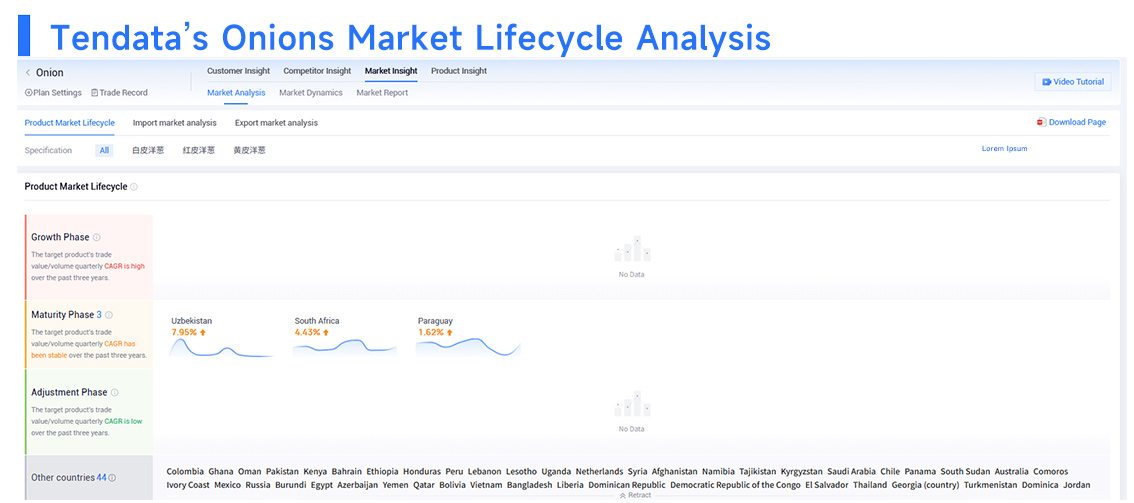
Tendata allows users to analyze import export data by country, industry, product category, and HS code, making it easier to compare multiple markets before investing time and resources.
For example, businesses exporting onions can analyze HS Code 070310 to compare demand across different countries and identify markets with consistent purchasing activity.
This helps companies choose markets with stronger long-term potential.
>>> Tendata’s Onions Market Lifecycle Analysis <<<
Understand How Competitors Operate Internationally
Trade records provide valuable insights into competitor behavior.
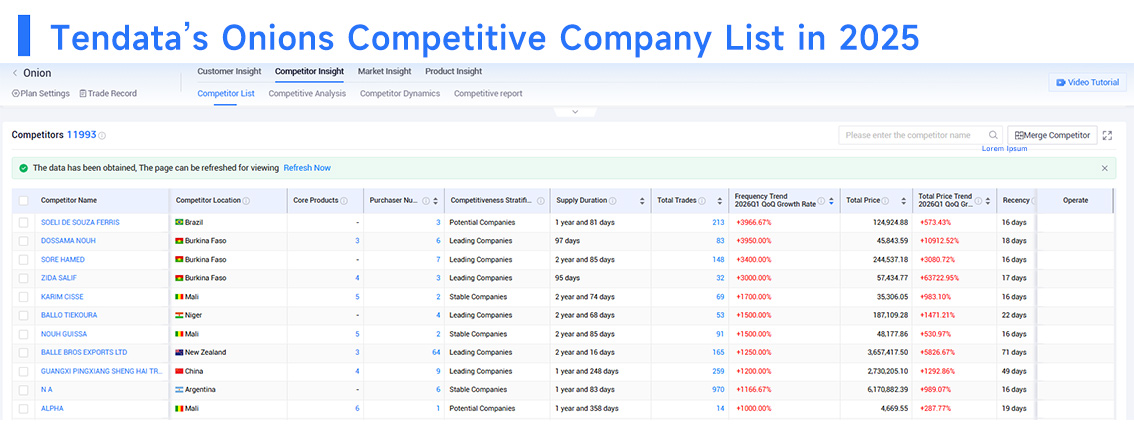
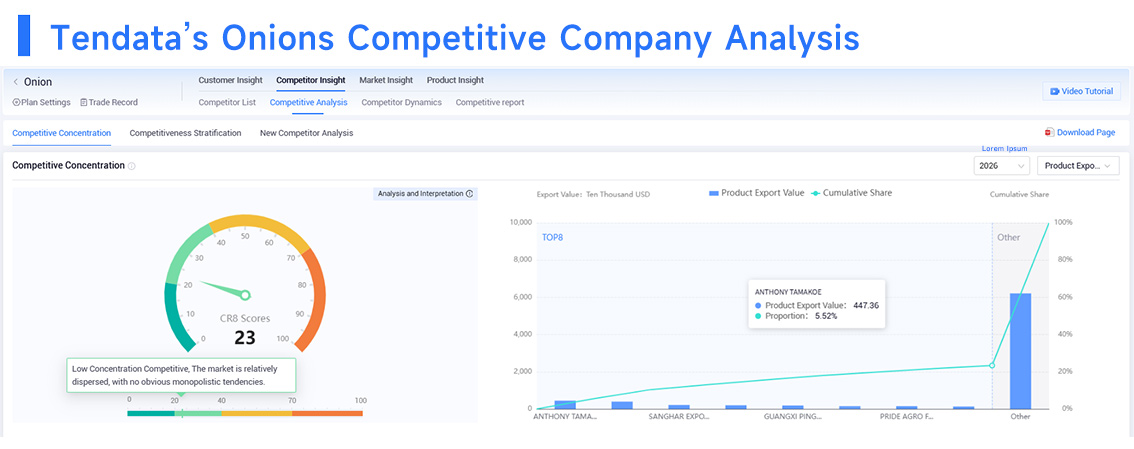
Using Tendata, businesses can analyze import export data to see where competitors are exporting, how often they ship products, and which markets appear to be their primary focus.
Rather than relying on public announcements or limited online information, companies gain a clearer understanding of actual commercial activity, making competitive analysis far more effective.
>>> Tendata’s Onions Competitive Company List in 2025 <<<
>>> Tendata’s Onions Competitive Company Analysis <<<
Reach Buyers More Efficiently
Research becomes much more valuable when businesses can immediately contact qualified prospects.
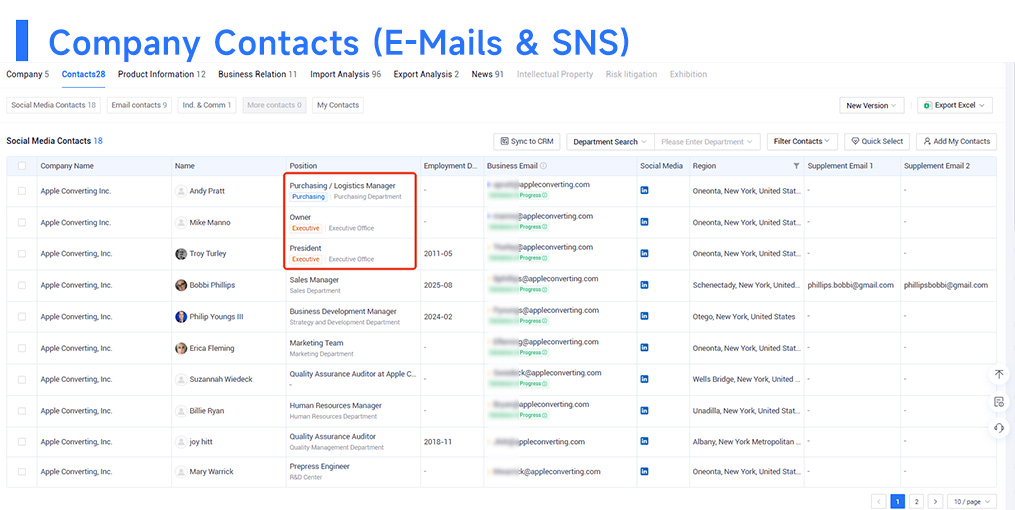
Tendata integrates import export data with available company contact information, including business email addresses, LinkedIn profiles, Facebook pages, and other publicly available business details.
This allows sales teams to personalize outreach based on a company's trading history while reaching decision-makers more efficiently.
>>> Obtaining Customer Contact Information from Tendata <<<
Summary
Import export data is one of the most practical resources for businesses involved in international trade. Free platforms such as UN Comtrade, ITC Trade Map, USITC DataWeb, Eurostat, and other official customs databases provide valuable trade statistics that help companies understand market trends and evaluate international opportunities.
For businesses seeking deeper commercial intelligence, Tendata combines comprehensive import export data with market analysis, competitor monitoring, buyer discovery, and business contact information. By transforming customs records into actionable business insights, Tendata helps companies identify qualified prospects, explore new markets, and build stronger global growth strategies.
Category
Leave Message for Demo Request or Questions