 Tendata AI
  Exhibition
 B2B Platforms
 Standalone Website
 Social Media
 Emails
 Trade Data Provider
 2026-07-21
International trade has become increasingly competitive, making accurate information more valuable than ever. Before entering a new market, launching a new product, or approaching overseas buyers, businesses need reliable evidence to support their decisions. This is where trade data plays a critical role.
Rather than relying solely on market reports or online searches, companies can use trade data to understand global trade flows, identify promising markets, monitor industry developments, and evaluate supply chain activity. For exporters, importers, manufacturers, and sourcing professionals, trade data provides a practical way to reduce uncertainty and improve decision-making.
Today, businesses can access trade data through both free public resources and professional trade intelligence platforms. Each serves a different purpose depending on the level of detail required.

What Is Trade Data?
Trade data is the information generated from international import and export transactions. Customs authorities, statistical agencies, and international organizations collect these records to document the movement of goods between countries.
A typical trade data record may include product descriptions, HS codes, trade values, shipment quantities, trading partners, countries of origin and destination, and reporting periods. Some commercial databases also provide company-level shipment records and trading histories.
Because it reflects actual cross-border transactions, trade data helps businesses evaluate markets based on facts rather than assumptions.
10 Free Trade Data Platforms Worth Exploring
Many organizations around the world publish free trade data and customs statistics. While these resources are generally intended for macroeconomic analysis rather than customer prospecting, they are excellent tools for market research and product analysis.
1. World Integrated Trade Solution (WITS)
Website: https://wits.worldbank.org/
Developed by the World Bank, WITS provides access to international trade statistics, tariff information, and analytical tools for comparing countries and products.
2. World Trade Organization (WTO) Data Portal
Website: https://data.wto.org/
The WTO offers official international trade statistics, tariff data, and reports covering global merchandise and services trade.
3. Statistics Canada – Canadian International Merchandise Trade
Website: https://www150.statcan.gc.ca/
Statistics Canada publishes official Canadian import and export statistics categorized by products and trading partners.
4. Australian Bureau of Statistics (ABS)
Website: https://www.abs.gov.au/
The ABS provides Australia's official international trade statistics, including imports, exports, commodities, and country-level trade performance.
5. France Customs (RITA)
Website: https://www.douane.gouv.fr/
France's customs authority offers official customs regulations, tariff information, and national trade statistics.
6. Germany Federal Statistical Office (Destatis)
Website: https://www.destatis.de/
Destatis publishes Germany's official foreign trade statistics covering exports, imports, and international economic indicators.
7. Singapore Customs Statistics
Website: https://www.customs.gov.sg/
Singapore Customs provides official trade statistics, tariff schedules, and customs information for businesses engaged in international trade.
8. Mexico Tax Administration Service (SAT)
Website: https://www.sat.gob.mx/
Mexico's SAT publishes information related to registered importers and exporters, customs procedures, and selected trade statistics.
9. Indonesia Directorate General of Customs and Excise
Website: https://www.beacukai.go.id/
Indonesia's customs authority provides official customs regulations and national import/export statistical information.
10. India Department of Commerce – Export Import Data Bank
Website: https://tradestat.commerce.gov.in/
India's official trade portal offers detailed import and export statistics searchable by product, country, and reporting period.
How Companies Use Trade Data Beyond Market Research
Most businesses first encounter trade data when researching export opportunities, but its value extends far beyond comparing trade volumes.
For example, procurement teams can use trade data to understand where raw materials are sourced globally and identify alternative supply markets. Manufacturers can evaluate whether demand for a particular product is expanding across multiple countries before increasing production capacity.
Financial institutions, logistics providers, and consulting firms also rely on trade data to monitor industry performance and assess global supply chain developments.
In other words, trade data supports decisions throughout the entire international business process—not just sales.
Why Public Trade Data Has Commercial Limitations
Although official databases are highly reliable, they are designed primarily for statistical reporting.
A company researching the electronics industry may discover that exports to Southeast Asia have increased over the past five years. While this information is useful, it doesn't explain which businesses are driving that growth, who their customers are, or how frequently transactions occur.
For exporters trying to develop new customers, that missing information often becomes the biggest obstacle.
Without company-level visibility, businesses still need to spend considerable time identifying buyers, verifying purchasing activity, and collecting contact information manually.
How Tendata Transforms Trade Data Into Business Intelligence
Tendata is a global trade intelligence platform built to help businesses extract greater value from trade data.
Instead of presenting raw customs statistics alone, Tendata organizes trade information into practical commercial insights that support market expansion, competitor analysis, and customer acquisition.
The platform enables businesses to move beyond simple data collection and make faster, more informed decisions.
Understand Market Potential Before Expanding
Choosing the right market is one of the most important decisions in international trade.
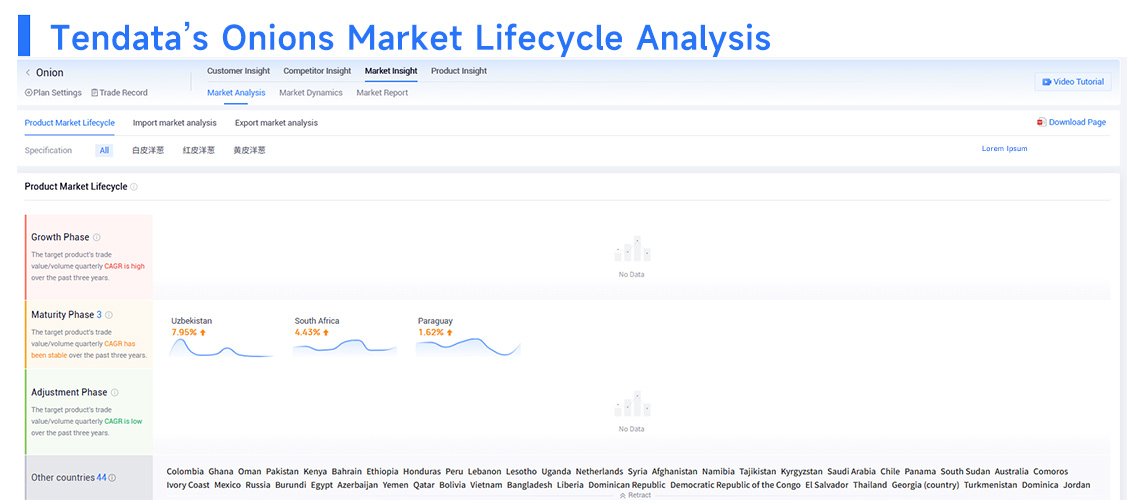
Using Tendata, businesses can analyze trade data by country, product, industry, and HS code to compare demand across different markets.
For example, exporters of onions can search HS Code 070310 to identify countries with consistent import demand, evaluate historical purchasing trends, and determine which markets offer the strongest long-term opportunities.
This helps companies allocate sales resources more effectively.
>>> Tendata’s Onions Market Lifecycle Analysis <<<
Data Source: Tendata Platform
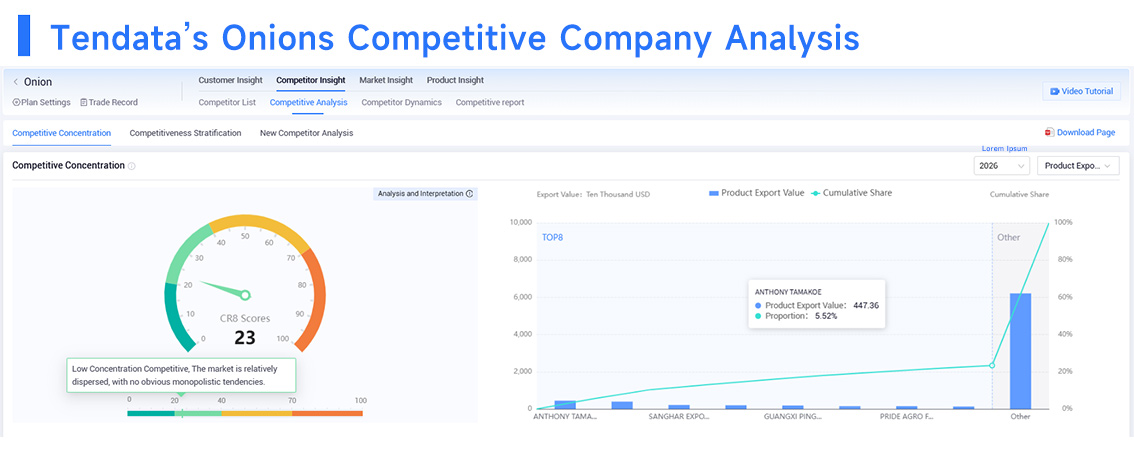
Learn From Competitors' Trade Activity
Every shipment tells a story about market competition.
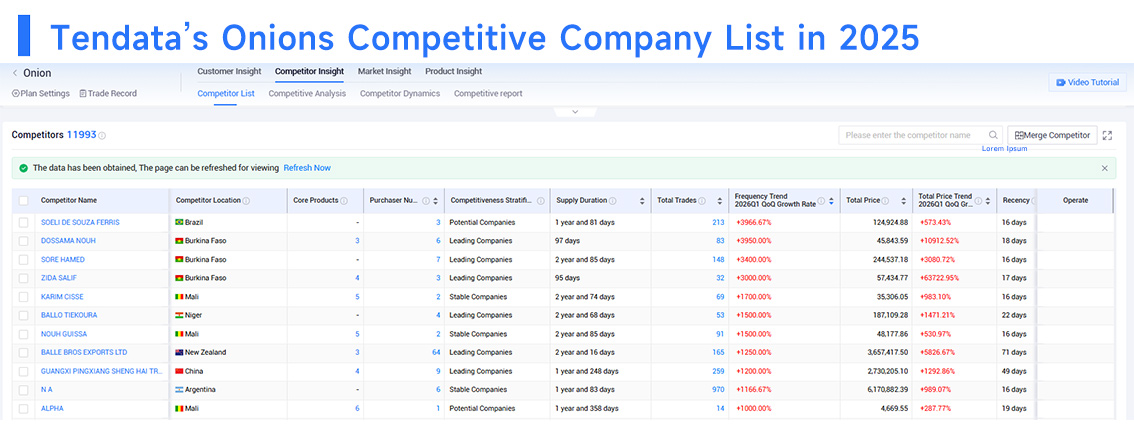
Tendata enables users to analyze trade data to understand where competitors are active, how frequently they export, and which markets they prioritize.
These insights help businesses identify market gaps, benchmark their own performance, and develop strategies based on real commercial activity rather than assumptions.
>>> Tendata’s Onions Competitive Company List in 2025 <<<
Data Source: Tendata Platform
>>> Tendata’s Onions Competitive Company Analysis <<<
Data Source: Tendata Platform
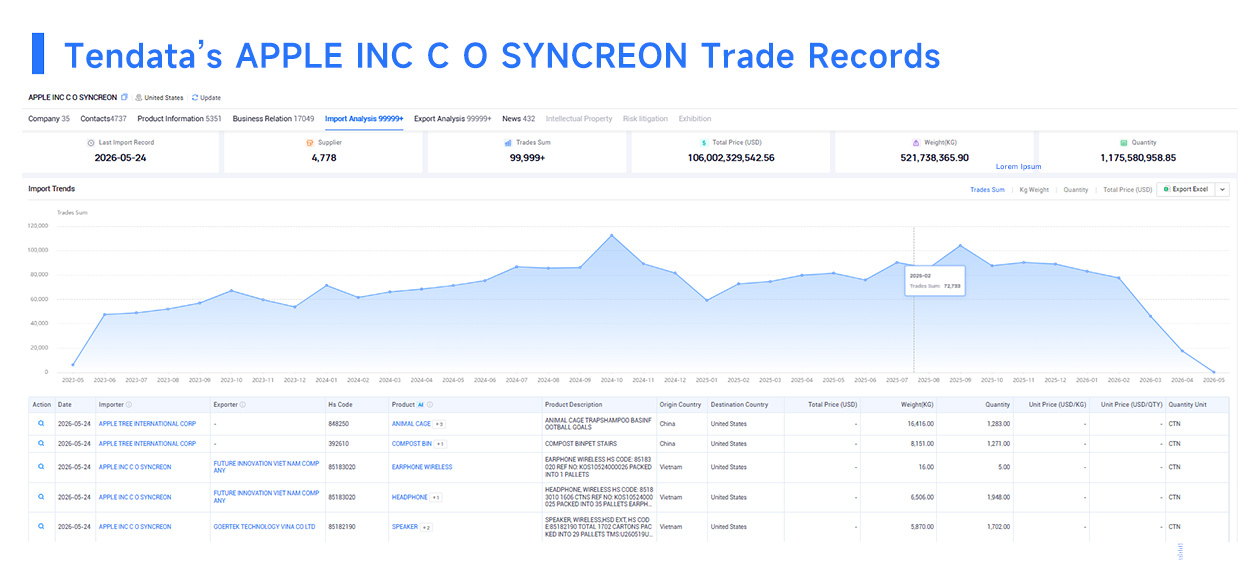
Build Customer Lists Based on Actual Purchasing Behavior
Instead of searching randomly for overseas companies, businesses can use Tendata's trade data to identify importers that have already demonstrated purchasing demand.
Users can evaluate transaction frequency, shipment history, supplier relationships, and historical buying behavior before beginning customer outreach.
This approach significantly improves lead quality while reducing time spent on manual research.
>>> Get a Free Demo from Tendata <<<
Data Source: Tendata Platform
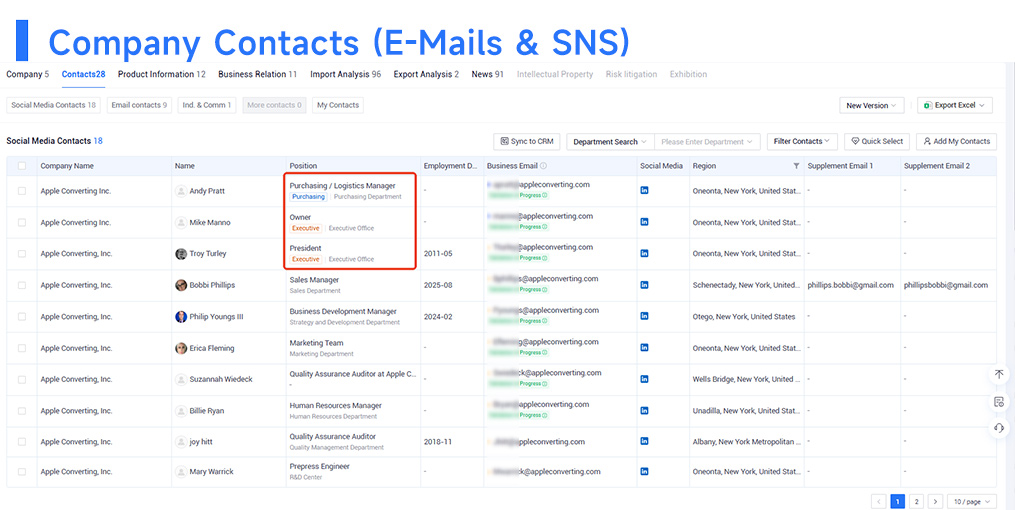
In addition, Tendata integrates available business contact information—including company email addresses, LinkedIn profiles, Facebook pages, and other public resources—making it easier to reach key decision-makers.
>>> Obtaining Customer Contact Information from Tendata <<<
Data Source: Tendata Platform
Summary
Trade data helps businesses understand international markets, monitor industry trends, evaluate competitors, and discover new commercial opportunities. Free resources such as WITS, the WTO Data Portal, Statistics Canada, the Australian Bureau of Statistics, Destatis, and other government databases provide valuable trade statistics for market analysis.
For companies that need deeper commercial insights, Tendata combines comprehensive trade data with market intelligence, competitor research, buyer identification, and business contact information. By turning customs records into actionable business intelligence, Tendata enables exporters, manufacturers, and trading companies to make smarter decisions and achieve sustainable growth in global markets.
Category
Leave Message for Demo Request or Questions