 Tendata AI
  Exhibition
 B2B Platforms
 Standalone Website
 Social Media
 Emails
 Trade Data Provider
 2026-07-21
Breaking into overseas markets is exciting, but it also comes with uncertainty. Which countries have growing demand? Where are competitors expanding? Which products are gaining momentum in international trade? Instead of relying on assumptions, businesses can answer these questions by analyzing export data.
Because export data is based on real cross-border trade transactions, it gives exporters, manufacturers, wholesalers, and trading companies a clearer understanding of global business activity. It helps companies evaluate market potential, identify industry trends, and make more informed expansion decisions.
Businesses can begin with free public resources to understand market conditions, while companies looking for customer acquisition and competitor intelligence often turn to professional trade platforms for more detailed insights.

What Is Export Data?
Export data consists of records generated when goods leave a country and are shipped to international markets. These records are collected by customs authorities and statistical agencies to monitor global trade and support economic reporting.
Depending on the source, export data may include commodity descriptions, HS codes, export values, shipment quantities, destination countries, reporting periods, ports, and transportation details. Some commercial databases also organize shipment records by company, allowing businesses to analyze exporter performance and trading relationships.
Since export data reflects actual international transactions, it provides businesses with objective information for evaluating markets and planning international growth.
10 Free Sources for Export Data Research
If you're conducting preliminary market research, several government agencies and international organizations provide free access to export data and related trade statistics. While these resources generally focus on macro-level analysis rather than company-level shipment records, they remain valuable starting points.
1. United Nations Industrial Development Organization (UNIDO) Statistics
Website: https://stat.unido.org/
UNIDO offers industrial production and manufacturing trade statistics that help businesses understand export performance across industries.
2. International Trade Administration (ITA)
Website: https://www.trade.gov/
The U.S. International Trade Administration publishes export market reports, country commercial guides, and industry-specific trade information.
3. Export.gov Market Intelligence Archive
Website: https://www.export.gov/
This archive contains market reports, export guidance, and country-specific business information for U.S. exporters.
4. International Trade Centre Export Potential Map
Website: https://exportpotential.intracen.org/
Export Potential Map estimates export opportunities by comparing market demand with a country's export capabilities.
5. WTO Tariff & Trade Data
Website: https://tariffdata.wto.org/
The WTO provides tariff schedules and international trade indicators that support export market analysis.
6. European Commission Open Data Portal
Website: https://data.europa.eu/
The EU Open Data Portal includes trade, customs, transportation, and economic datasets published by European institutions.
7. COMESA Trade Information Portal
Website: https://comesa.int/
The Common Market for Eastern and Southern Africa publishes regional trade information, customs procedures, and trade statistics.
8. ASEAN Trade Repository
Website: https://atr.asean.org/
The ASEAN Trade Repository provides trade regulations, tariff schedules, customs procedures, and regional trade information.
9. Saudi Arabia General Authority for Statistics
Website: https://www.stats.gov.sa/
Saudi Arabia's official statistics agency publishes merchandise export and import statistics across multiple industries.
10. Türkiye Statistical Institute (TurkStat)
Website: https://data.tuik.gov.tr/
TurkStat provides official Turkish foreign trade statistics, including exports, imports, and commodity-level trade reports.
Why Export Data Is More Than Just Trade Statistics
Many businesses use export data simply to compare countries, but it can support much broader strategic decisions.
For instance, manufacturers can evaluate whether international demand for their products is becoming more diversified or concentrated in a few markets. Trading companies can monitor shifts in export destinations to anticipate new sourcing opportunities, while logistics providers can better understand changes in international shipping demand.
Historical export data also helps businesses recognize long-term trends that may not be visible through quarterly market reports alone.
This makes export data an important resource for strategic planning rather than just statistical analysis.
The Gap Between Public Data and Commercial Intelligence
Free government databases provide reliable national trade statistics, but they are not designed to support business development.
Suppose official reports show that exports of renewable energy equipment have increased rapidly. Those reports can explain which countries are growing, but they rarely identify the companies involved, their overseas customers, or how frequently shipments occur.
As a result, exporters still need to spend significant time researching buyers and verifying opportunities through other channels.
Businesses focused on customer acquisition typically require more detailed trade intelligence than public statistics can provide.
How Tendata Helps Businesses Get More Value From Export Data
Tendata is a global trade intelligence platform that transforms export data into practical business insights.
Instead of displaying customs statistics alone, Tendata combines international trade records with market intelligence, competitor analysis, and customer discovery tools to help businesses make faster and more informed decisions.
Compare International Markets With Real Trade Activity
Market selection should be based on measurable demand rather than assumptions.
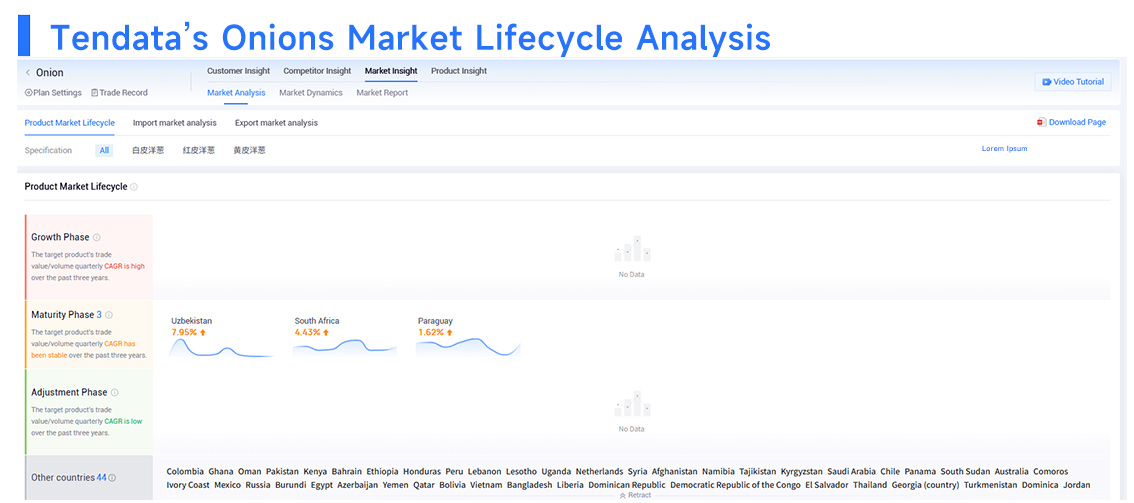
Tendata enables businesses to analyze export data across countries, industries, products, and HS codes, making it easier to compare long-term market performance.
For example, exporters of onions can use HS Code 070310 to evaluate export destinations, identify countries with consistent import demand, and focus on markets with sustainable growth.
This helps companies prioritize investment where opportunities are strongest.
>>> Tendata’s Onions Market Lifecycle Analysis <<<
Data Source: Tendata Platform
Monitor Competitor Strategies
Understanding competitor activity is one of the most valuable applications of export data.
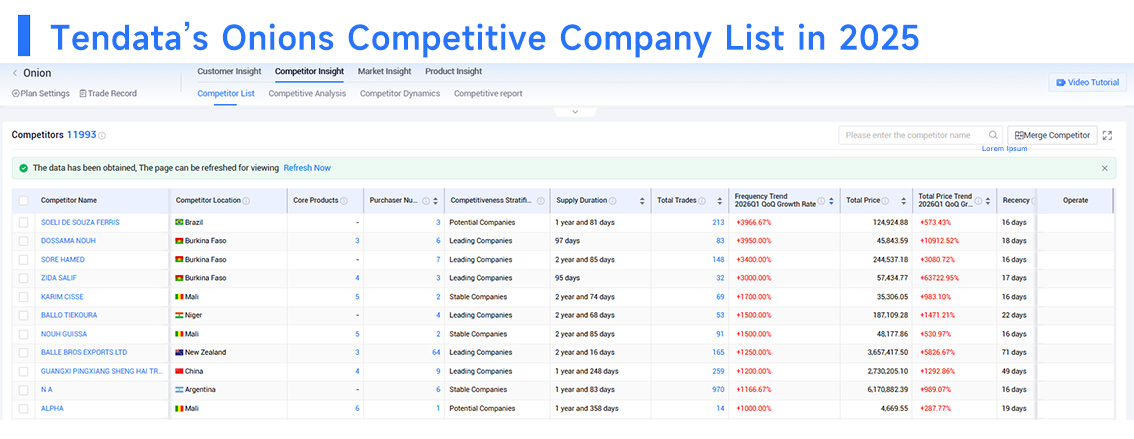
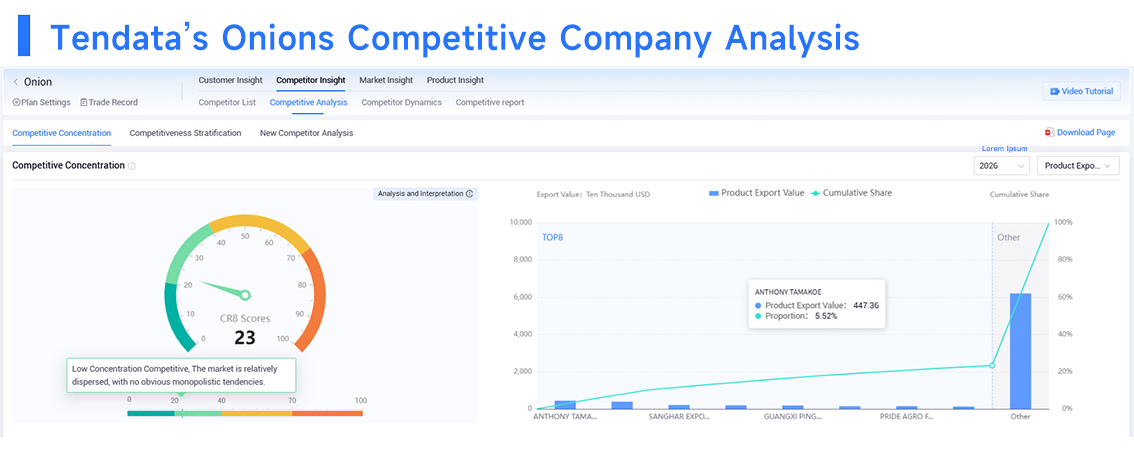
Using Tendata, businesses can analyze competitor shipment frequency, export destinations, historical trade activity, and market distribution.
These insights allow companies to benchmark their own performance while identifying regions that may offer untapped opportunities.
Instead of guessing where competitors are succeeding, businesses can rely on verified trade records.
>>> Tendata’s Onions Competitive Company List in 2025 <<<
Data Source: Tendata Platform
>>> Tendata’s Onions Competitive Company Analysis <<<
Data Source: Tendata Platform
Find Buyers Supported by Real Trade Records
Professional export data is especially valuable for international sales teams.
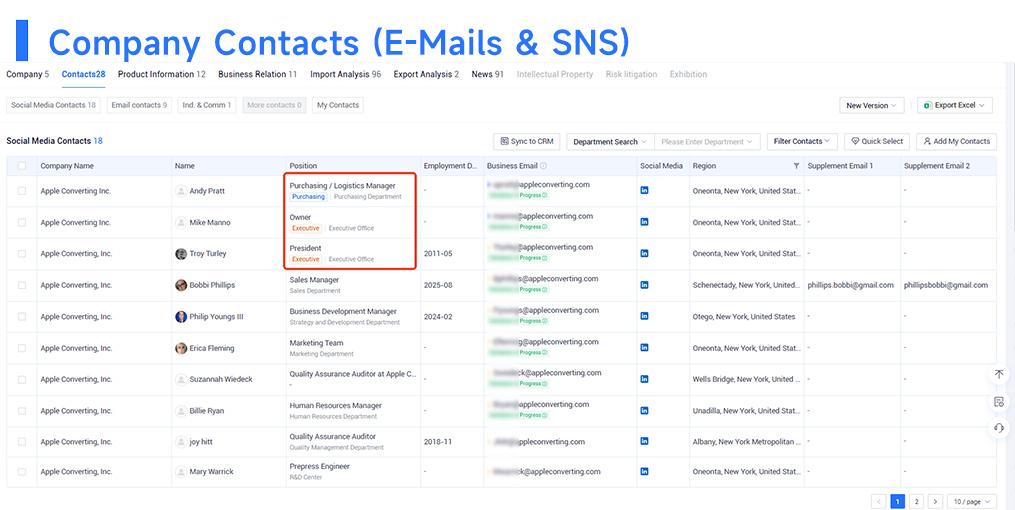
Tendata enables users to identify importers with verified purchasing histories, allowing businesses to focus on companies that already buy similar products.
Sales teams can review shipment frequency, purchasing volume, supplier relationships, and procurement behavior before reaching out.
To simplify business development, Tendata also integrates available company contact information, including business email addresses, LinkedIn profiles, Facebook pages, and other public business resources, making it easier to connect with decision-makers.
>>> Obtaining Customer Contact Information from Tendata <<<
Data Source: Tendata Platform
Summary
Export data provides businesses with valuable insights into international trade, helping them evaluate markets, monitor competitors, and identify growth opportunities. Free resources such as UNIDO Statistics, the International Trade Administration, Export Potential Map, the ASEAN Trade Repository, and other official platforms provide useful trade information for market research and strategic planning.
For businesses seeking deeper commercial intelligence, Tendata combines comprehensive export data with market analysis, competitor monitoring, buyer identification, and business contact information. By turning customs records into actionable insights, Tendata helps exporters discover qualified customers, expand into promising markets, and build stronger international sales strategies.
Category
Leave Message for Demo Request or Questions