
 Tendata AI
  Exhibition
 B2B Platforms
 Standalone Website
 Social Media
 Emails
 Cases
Cases
 2026-03-19
If you are engaged in import and export, you have likely encountered challenges such as: collecting numerous business cards at trade exhibitions with little follow-up response, experiencing unexpected declines in repeat orders from existing clients without clear reasons, or attempting to enter new markets without sufficient visibility into competitor activities—often relying on intuition rather than data.
At Shanghai Yinuo Instrument Co., Ltd., Shirley and her team hold a clear philosophy:
While there are no shortcuts in international trade, there are more efficient, data-driven approaches that outperform blind effort.
By using digital tools to ensure every business development activity is targeted and evidence-based, the company has achieved annual revenues of RMB 300 million, ranking among the top three enterprises in China's instrumentation industry.

1. Prioritizing High-Quality Buyers: Achieving a 3x Increase in Conversion Rates
Established in 1993, Shanghai Yinuo Instrument Co., Ltd. is an integrated industrial and trading enterprise specializing in the R&D, manufacturing, and distribution of flow instruments, system control instruments, and related equipment.

With over two decades of experience in international trade, the company has continuously refined its customer acquisition strategies. Upon joining the company, Sales Manager Shirley quickly recognized the inefficiencies inherent in traditional prospecting methods.
“In the early years, we relied heavily on trade shows, collecting hundreds of business cards daily. Our team would spend weeks following up via calls and emails, yet response rates remained extremely low. In many cases, extended communication revealed that prospects had no actual purchasing intent, resulting in significant time wasted on low-value leads.”
This “mass outreach” model proved increasingly ineffective in a competitive global market. Manual screening not only lacked efficiency but also introduced a high risk of misjudgment.
Five years ago, Shirley proposed adopting the Tendata platform, marking a turning point in the company's business development efficiency.

“Initially, the goal was simply to reduce inefficiencies. Today, data analysis has become the starting point of every salesperson's daily workflow.”
Currently, after acquiring leads from exhibitions, the team conducts structured background analysis through Tendata before initiating outreach, focusing on two key criteria:
· Whether the prospect has procured relevant products within the past three years
· Their sourcing regions and purchasing frequency
“At one exhibition, we engaged with a Southeast Asian prospect who showed strong interest in our products. However, Tendata data revealed that the client had consistently sourced low-end instruments from India over the past year, whereas our products are positioned in the mid-to-high-end segment. This indicated a clear mismatch,” Shirley explained.
“Previously, we might have invested significant time in follow-up discussions. Now, we can make early-stage qualification decisions and allocate resources to high-potential clients, improving our conversion rate by at least three times.”
2. From Passive Follow-Up to Data-Driven Engagement
In international trade, unresponsive prospects following initial inquiries are a common challenge. Without clear visibility, it is difficult to determine whether the issue lies in communication channels or lack of genuine demand.
Previously, Yinuo's team relied on repeated follow-ups or discontinued engagement. With Tendata, they now apply data validation to assess client intent and prioritize actions accordingly.
“We once received an inquiry from a U.S. client regarding high-precision system control instruments. After submitting detailed technical documentation and quotations, we received no response for a week. Instead of abandoning the lead, we analyzed their procurement data through Tendata and found that the client had been sourcing similar products from South Korea, with a 30% increase in import volume over the previous three months. This clearly indicated active demand.”
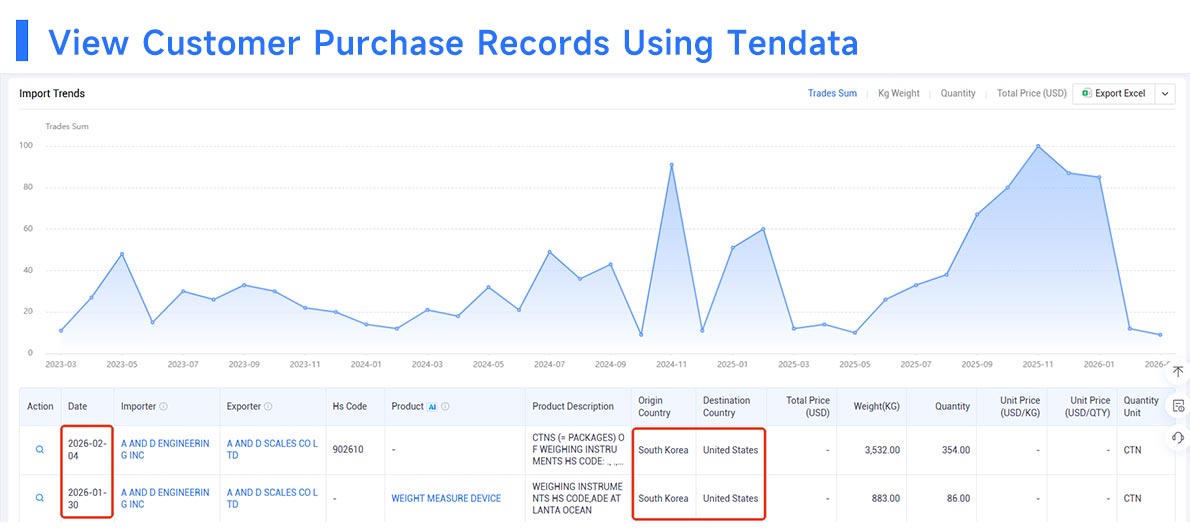
Based on this insight, the team identified the client's WhatsApp contact and initiated a concise, value-oriented communication:
“We understand that you are currently sourcing high-precision control instruments. Our products offer comparable performance to Korean brands, with localized after-sales support and approximately 20% cost advantages.”
This targeted approach resulted in an immediate response and ultimately led to a long-term partnership.
In addition to new client acquisition, Tendata has enhanced the company's ability to manage existing accounts.
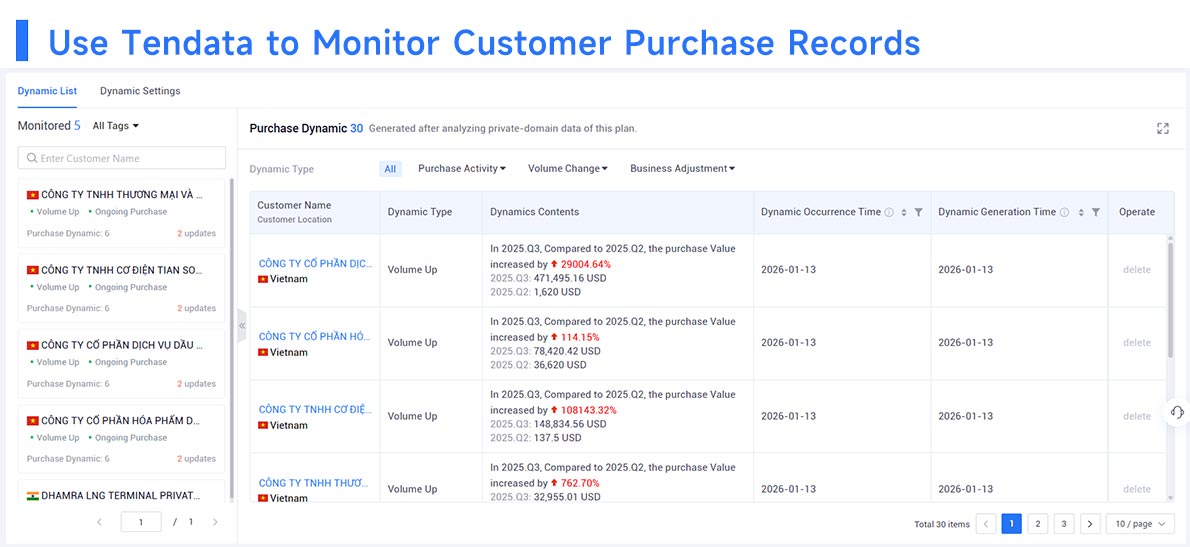
“We monitor key clients' import activity. For instance, a long-term client in India experienced a 40% decline in import volume during Q2 last year. Rather than waiting for feedback, we proactively engaged the client and discovered they were evaluating local suppliers to reduce costs. We responded by optimizing bulk pricing and shortening delivery lead times, which not only retained the client but also expanded our share of their procurement.”
3. Competitive Intelligence: Defining Strategic Direction Through Data
“Manufacturers must maintain external market awareness. Without understanding competitor dynamics, it is easy to lose strategic positioning.”
Historically, competitive intelligence in the import-export sector relied on fragmented market feedback. Today, Tendata enables comprehensive and structured analysis of competitor activities.
For example, Yinuo had traditionally focused on Southeast Asian markets. However, data analysis revealed that a competitor had tripled exports to Mexico within six months and introduced products tailored to local industrial standards.
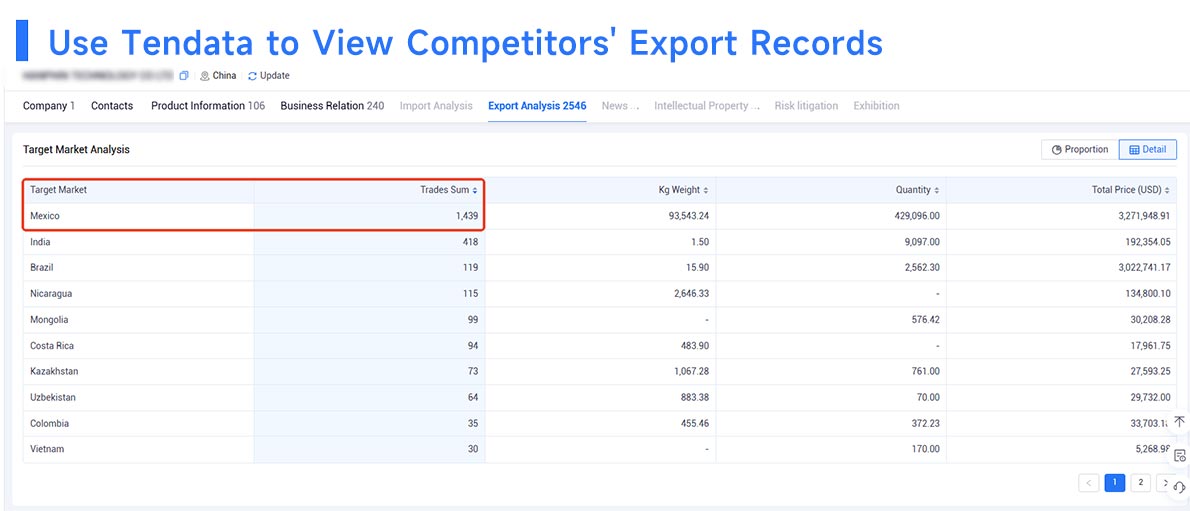
“This indicated that our competitor had already implemented localization strategies for the American market, while our standard products lacked competitiveness,” Shirley noted.
In response, Yinuo adjusted product specifications—including voltage configurations and interface standards—and collaborated with local distributors to enhance after-sales service capabilities. Within three months, the company achieved significant growth in its Mexican market orders.
Tendata also facilitates multi-channel client engagement.
“Previously, if email outreach failed, alternative contact options were limited. Now, we can access LinkedIn and Facebook profiles through Tendata, enabling direct communication with decision-makers and significantly improving response rates.”
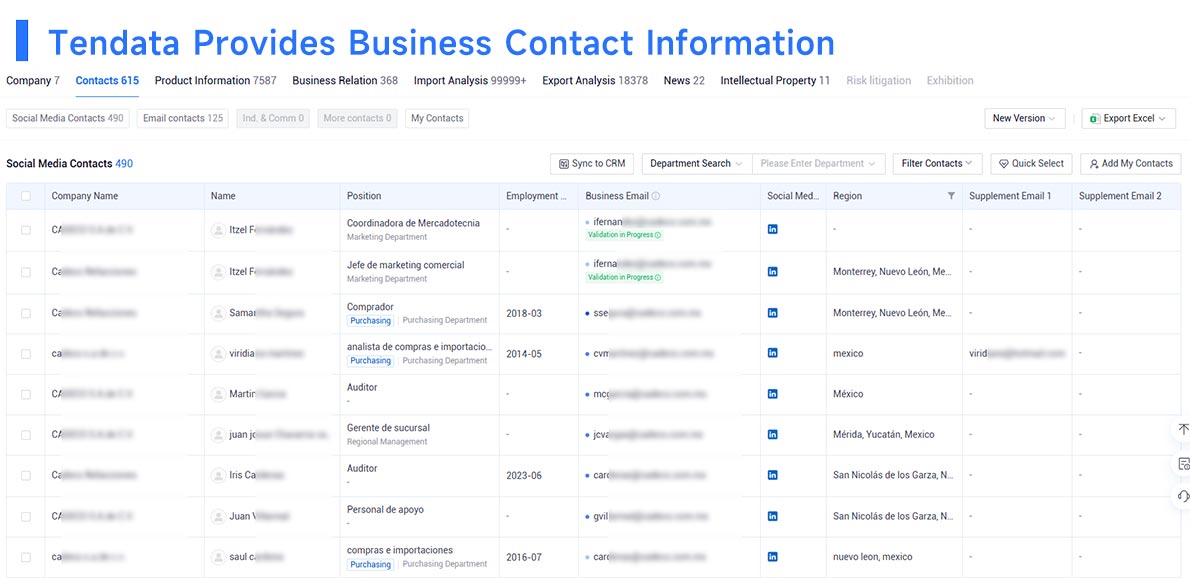
In one case, after receiving an inquiry via Made-in-China.com with no email response, Shirley identified the client on LinkedIn and initiated direct outreach:
“We understand you are sourcing flow instruments. We have relevant industry case studies and would be pleased to share our product catalog for your reference.”
The client responded promptly, resulting in an order valued at RMB 500,000.
Conclusion
Shanghai Yinuo's growth from a small manufacturing enterprise in 1993 to a company with RMB 300 million in annual revenue is the result of systematic, data-driven decision-making rather than chance.
Across key operational areas—including:
· Client qualification
· Inquiry follow-up
· Key account management
· Competitive analysis
The company has consistently applied digital tools to replace guesswork with actionable insights.
As Shirley summarized:
“International trade once felt like navigating in the dark. With data, it becomes a transparent and structured process. We can accurately assess client credibility, understand competitor strategies, and define our own direction. This allows us to eliminate inefficiencies and focus exclusively on high-probability opportunities.”
For traditional enterprises, digital transformation is not about following trends—it is a strategic necessity to remain competitive in an evolving global marketplace.
Category
Leave Message for Demo Request or Questions