
 Tendata AI
  Exhibition
 B2B Platforms
 Standalone Website
 Social Media
 Emails
 Cases
Cases
 2026-03-30
Recently, I had tea with a few business owners. We talked about team management, and a shared concern came up: young employees today are hard to manage—they lack drive and leave right on time.
I just smiled and didn't respond. Because I know the truth: it's not that young people are difficult—it's that many management approaches are already outdated. A strong team isn't defined by headcount or who works the latest. It's about mindset, efficiency, and strategy.

01 Don't Use Our Past to Judge Their Present
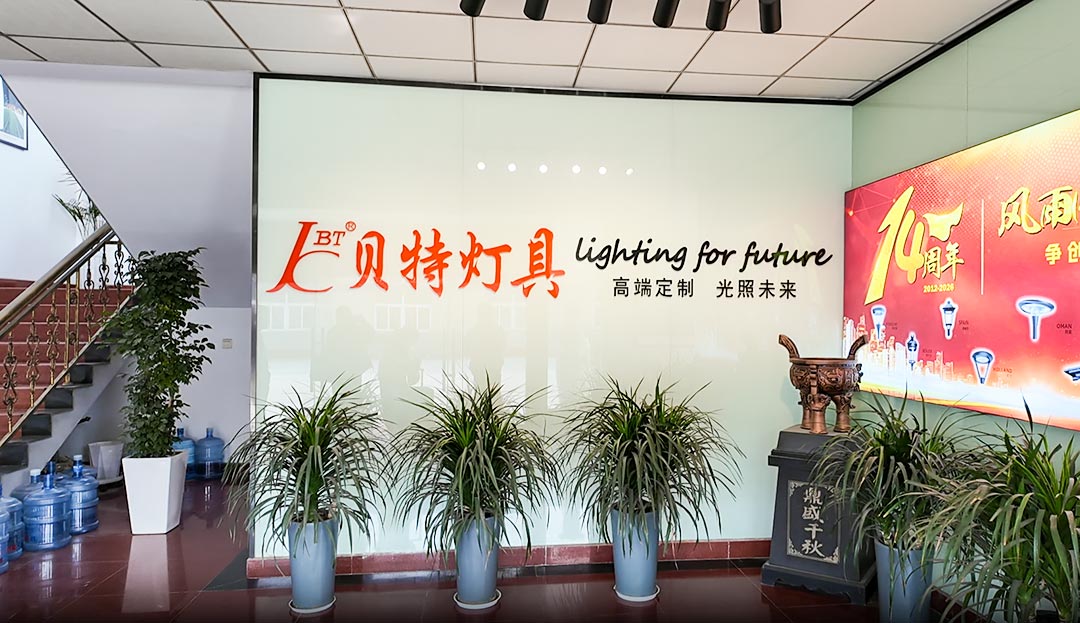
Our company, Changzhou Better Lighting Manufacturing Co., Ltd., specializes in lighting production, mold processing, and import-export business. Our main markets include Europe, Southeast Asia, South America, as well as North Africa and the Middle East.
People often ask me:“Mr. Jin, don't you think young people today lack the drive we had back then?”
To be honest, things are different now.
Back in our time, many of us came from rural backgrounds with very little. We had one goal: make money, buy a house, and change our lives. There was no such thing as “rest.” Even during holidays, we were sending emails and chasing orders non-stop.
But today's generation is different. Many grew up locally with housing and financial support already in place. The pressure to survive isn't the same. Expecting them to work like ascetics isn't realistic—or necessary.
Times have changed, and so should our mindset.
Now, I give my entire team full weekends off. I don't see this as indulgence—it's understanding. Young people deserve to work happily and live well. Their advantage isn't in grinding long hours, but in being creative and quick to adapt.
Look at today's social media marketing—TikTok, Facebook, Instagram. That's their domain. For people like us from traditional import-export, it's hard to keep up. So I focus on support—providing resources and backing them up while they take the lead.
As long as they have integrity, work responsibly, and create value for the company, whether they work overtime every day doesn't matter. No company can afford lazy people—but a good company knows how to energize smart ones.
02 Don't Mistake Overtime for Real Efficiency
In the past, we found customers through trade shows and directories. Now everyone uses data. But many people misunderstand one thing: they think having data means customers will come automatically.
That's not true.
Finding a customer list is only the first step. Understanding the logic behind the data is what really drives results.
Our team uses Tendata for market development, and new employees and experienced ones use it very differently. That's exactly why our efficiency has improved.
For New Employees: Focus on Expansion
I teach them not to focus only on “purchase volume.”
For example, we produce outdoor lighting. Many customs records simply say “Outdoor Light.” But that doesn't tell you whether the buyer needs street lights, garden lights, or floodlights.
So we combine Tendata's product classification with further verification—checking the client's website or even their social media (LinkedIn, Facebook). What are they promoting? What images are they posting?
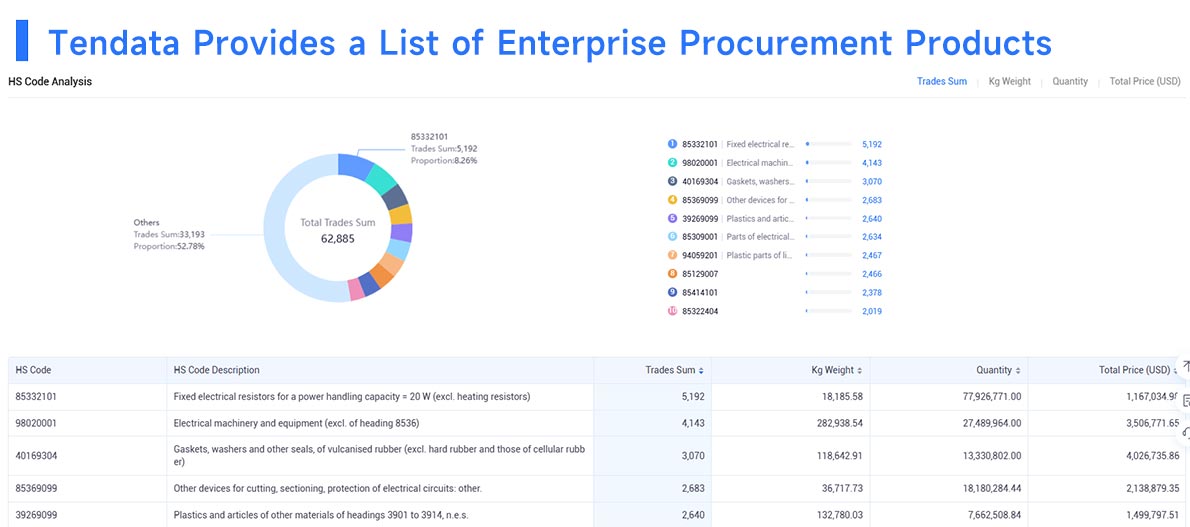
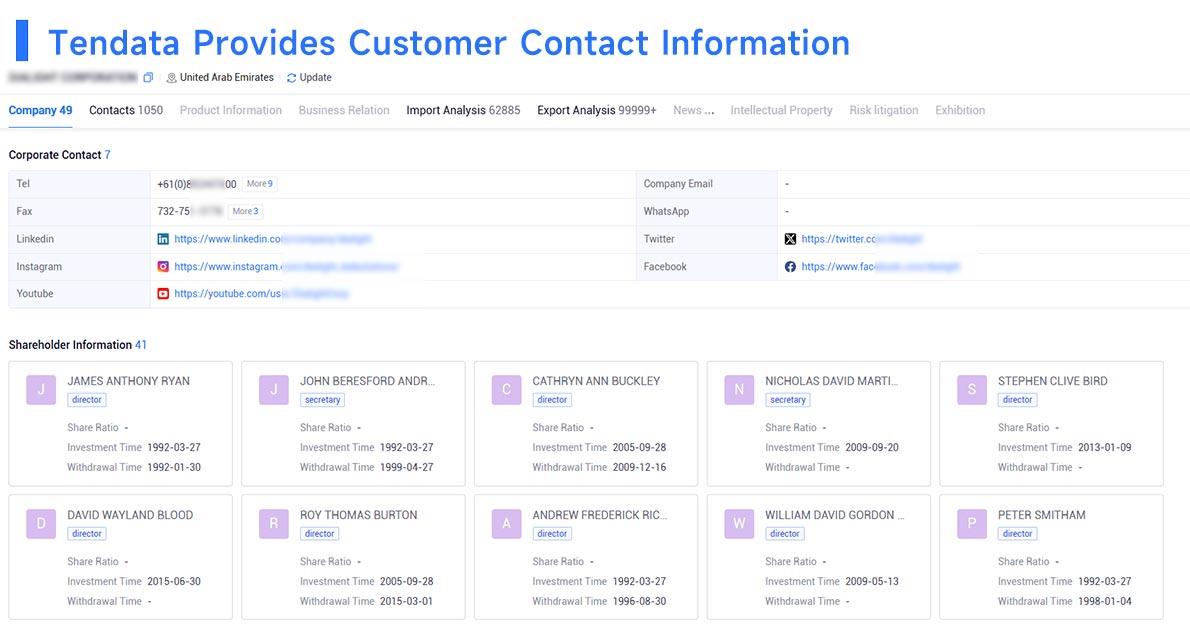
Data accuracy depends on your interpretation—not just exporting a spreadsheet.
For Experienced Employees: Focus on Strategy and Defense
We already know our existing clients. So what is data for?
To monitor competitors and analyze customer purchasing behavior.
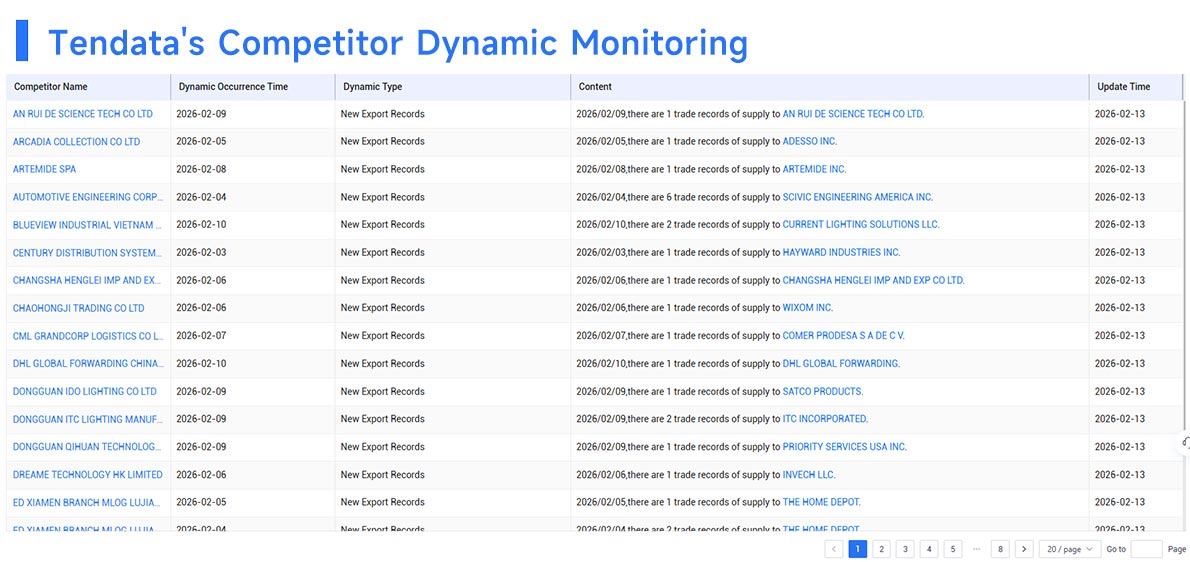
Once, a client we had worked with for 3–4 years was taken by a competitor offering lower prices. In the past, I might have panicked or blindly cut prices.
This time, we used Tendata to analyze the competitor's shipment records and combined that with feedback from the client's boss. We found that the client had changed procurement managers, who introduced a new supplier focused on ultra-low pricing.
With that insight, we acted immediately:
· Target The Decision-Maker: We spoke directly with the company owner, bypassing the procurement manager.
· Precise Product Development: Using our supply chain advantage, we developed a new product line tailored to the client's target price.
· Data Validation: By continuously monitoring the client's import data, we confirmed whether our new products re-entered their purchasing list.
The result? The client came back.
Trade shows combined with data are also a powerful approach. At a recent exhibition in Russia, we used Tendata in advance to screen active local buyers, understand their needs, and assess cooperation potential.
At the event, our communication was highly targeted. Many clients showed strong interest on the spot. With continued follow-up supported by data, we successfully converted leads into real deals. The results were far more solid than before.
Today, competition isn't just about offering the lowest price—it's about sharp insights into market trends, customer needs, and competitor strategies.
Losing a client isn't the worst thing. Not knowing why you lost them is.
Tools are just weapons. How you use them is what determines the outcome.
03 My Business Philosophy: Keep the Company Lean, Expand the Market, Refine the Product
This has been my core strategy for years: keep the company lean, expand the market, and refine the product.
(1) Keep the Company Lean
By “lean,” I don't mean shrinking the company. I mean avoiding bloated teams, complicated processes, and unnecessary hiring.
Instead of relying on large sales teams sending mass messages, we focus on efficiency.
In the past, finding clients required a lot of time and effort. Now, with Tendata's intelligent analysis, we can quickly identify customers who truly match our business and have real demand.
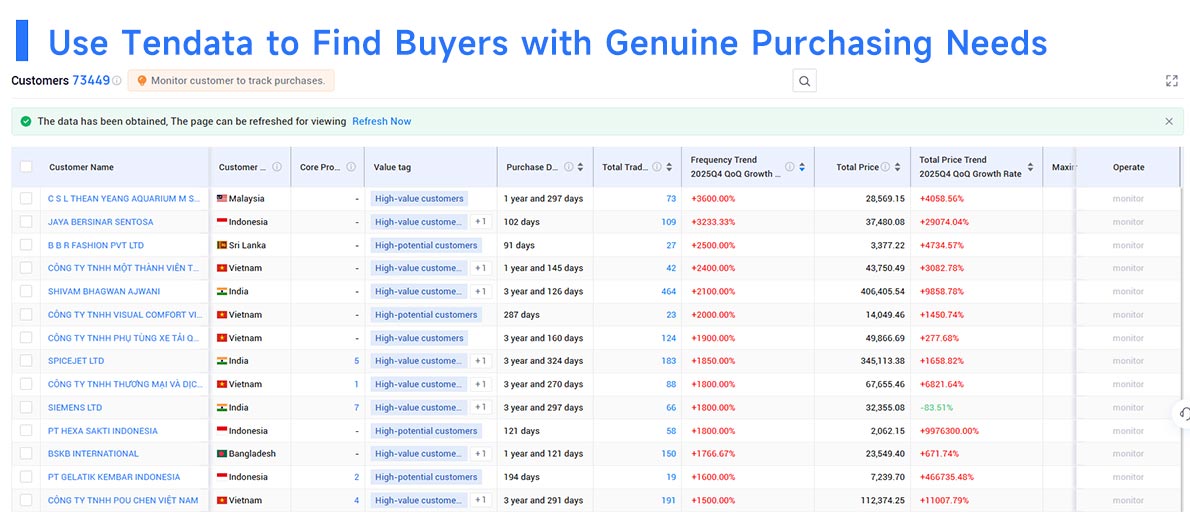
We don't chase every customer. We focus on niche clients in outdoor lighting. They may not be the biggest, but they are specialized and aligned with our strengths.
With the right tools, even a small team can operate efficiently. A smaller team is also more agile and responsive.
(2) Expand the Market
Your vision shouldn't be limited to a few regions.
We used to focus only on Europe and the US, thinking South America and Southeast Asia were too risky. Now, through global trade flow analysis, we can clearly see which emerging markets are experiencing rapid demand growth.
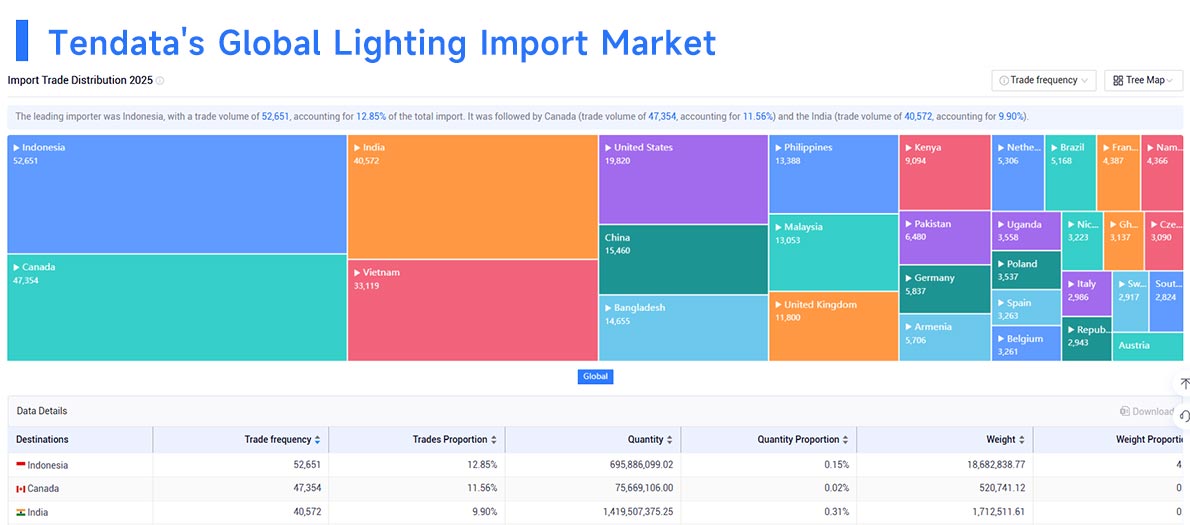
For example, in South America, we identified through Tendata that certain countries reduced import tariffs on specific garden lights, while purchase volumes increased for three consecutive quarters.
Data doesn't lie—it tells you where the money is.
With these insights, we have the confidence to enter markets others hesitate to explore.
Market boundaries are no longer defined by courage, but by your ability to interpret data.
(3) Refine the Product
Product strategy isn't based on guesswork—it's driven by data.
What new products should we develop each year? We rely on keyword trend analysis and best-selling product tracking.
Tendata shows that in the past six months, “solar smart sensor lights” have seen a surge in both search volume and purchasing volume in Europe and the US, while traditional wired lighting is slowing down.
That's a clear signal.
We immediately aligned our supply chain resources to focus on this segment—minimizing cost and maximizing product stability.
At the same time, we analyze competitors through data:
· What products are they launching?
· Who are their customers?
· What price range are they targeting?
Knowing both yourself and your competitors ensures long-term success.
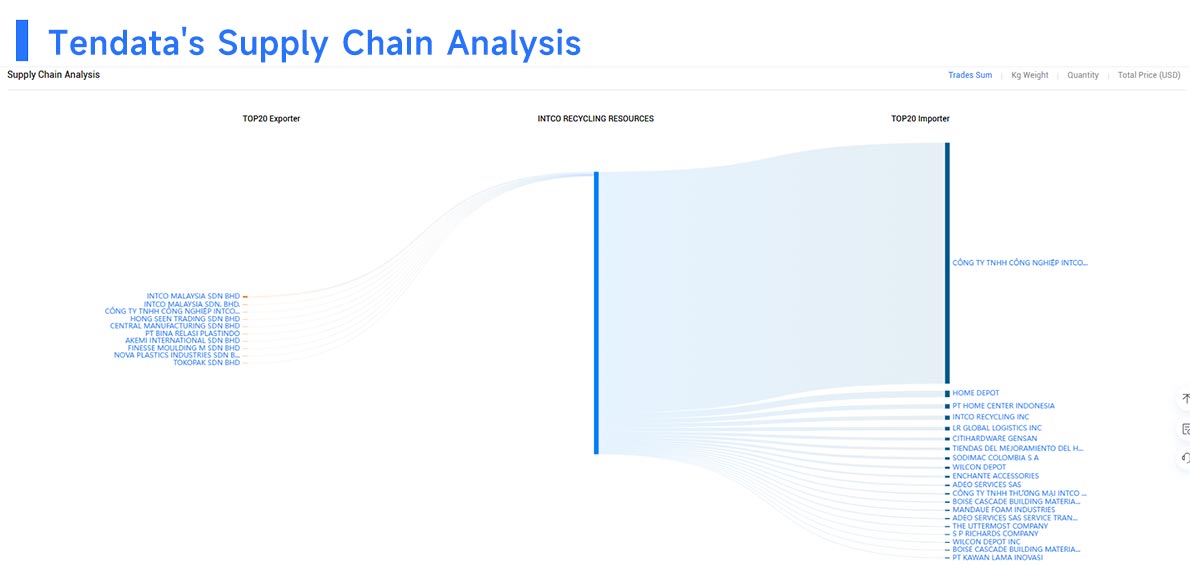
We don't try to do everything. We specialize. When customers think of a certain type of garden light, we want our company to be the first name that comes to mind.
“Small but specialized” is a strategic discipline—and data is what sustains it.
Conclusion
We continue to deepen our use of digital tools like Tendata:
New employees use it to quickly build customer pipelines and solve the “where to find clients” problem
Experienced employees use it for in-depth analysis and competitive monitoring
As a general manager, I use it for macro-level decisions—choosing which countries to focus on and which markets to exit
When we face challenges, we actively communicate with Tendata's support team and participate in their training programs.
With the right methods, efficiency improves—and so does the success rate.
Even if we only develop 3–5 high-quality clients per year through data, generating millions in revenue, that's more than enough for a small team to thrive.
Import-export has never been easy.
In the past, three people competed for one opportunity. Now, it's thirty.
So I understand why some young people choose to “step back.” It's not laziness—it's increased competition and fewer opportunities.
But precisely because it's harder, we must stay open and embrace change.
As a salesperson, your job isn't to complain—it's to build real capabilities: mastering the supply chain and understanding the human logic behind data.
As a business owner, my role isn't to push people from behind—it's to hold up an umbrella and create a platform where they can truly perform.
Category
Leave Message for Demo Request or Questions