 Trade Data Provider
 2026-06-05
Key Points
· Most import export database tools contain delayed and incomplete customs data
· Contact information is usually missing, making lead conversion difficult
· A large portion of records are logistics intermediaries, not real buyers
· Market visibility is often one-sided and lacks competitive intelligence
· High pricing often bundles unnecessary features
· Tendata enhances an import export database with AI cleaning, contact enrichment, and global coverage

Overview: The Hidden Truth Behind an “Import Export Database”
In global trade, many companies believe that buying an import export database is the fastest way to unlock international buyers. The logic seems simple: once you have an import export database, you can instantly see who is buying what, in which country, and at what volume.
But in reality, most users quickly discover a painful gap between expectation and execution.
After investing in an import export database, many teams report the same outcome: outdated records, irrelevant contacts, and no real sales results. The problem is not the concept of an import export database itself—it is the quality, structure, and usability of the data product being used.
This article breaks down the five core weaknesses of traditional customs data systems and explains how Tendata transforms raw trade records into actionable sales intelligence.
1. Data Delay: Your Import Export Database Is Always Late
One of the biggest flaws in any traditional import export database is time lag. Customs data is typically released weeks or even months after shipment clearance.
By the time you extract leads from your import export database, those buyers may have already completed their procurement cycles. In other words, you are acting on historical data in a real-time market.
2. Missing Contacts: Companies Without Decision-Makers
Most import export database platforms only provide company names, shipment details, and volumes.
However, they rarely include:
· Email addresses
· Phone numbers
· Procurement contacts
This creates a major bottleneck. A import export database may tell you who bought the product, but not who to talk to inside the company.
Sales teams are forced to manually search LinkedIn or corporate websites, significantly reducing efficiency.
3. High Noise Ratio: Freight Forwarders Masked as Buyers
Another major issue in a typical import export database is data contamination.
A large portion of entries are:
· Freight forwarders
· Customs brokers
· Logistics intermediaries
These are not real end buyers.
As a result, sales teams waste time contacting irrelevant entities, believing their import export database leads are qualified when they are not.
4. Limited Market View: You Only See Half the Picture
Many import export database systems provide only partial visibility—either export-side or import-side data for a single country.
This creates a distorted market understanding.
For example, you might see strong demand in one country, but your import export database does not show:
· Competing suppliers from Vietnam, India, or Turkey
· Global price pressure
· Shifting trade routes
Without a global perspective, decision-making becomes reactive rather than strategic.
5. High Cost, Low Utilization
Many commercial import export database platforms are expensive, often bundled with advanced modules that most SMEs never use.
Companies end up paying for:
· Supply chain risk systems
· Enterprise dashboards
· Complex analytics tools
While only needing one thing: qualified leads from an import export database.
This mismatch leads to poor ROI and low adoption.
How Tendata Transforms the Import Export Database Model
Unlike traditional tools, Tendata restructures the entire import export database workflow into an actionable intelligence system.
Instead of raw data, it delivers cleaned, enriched, and sales-ready insights.
1. AI-Powered Data Cleaning
Tendata filters out intermediaries and keeps only real buyers within the import export database, improving lead accuracy significantly.
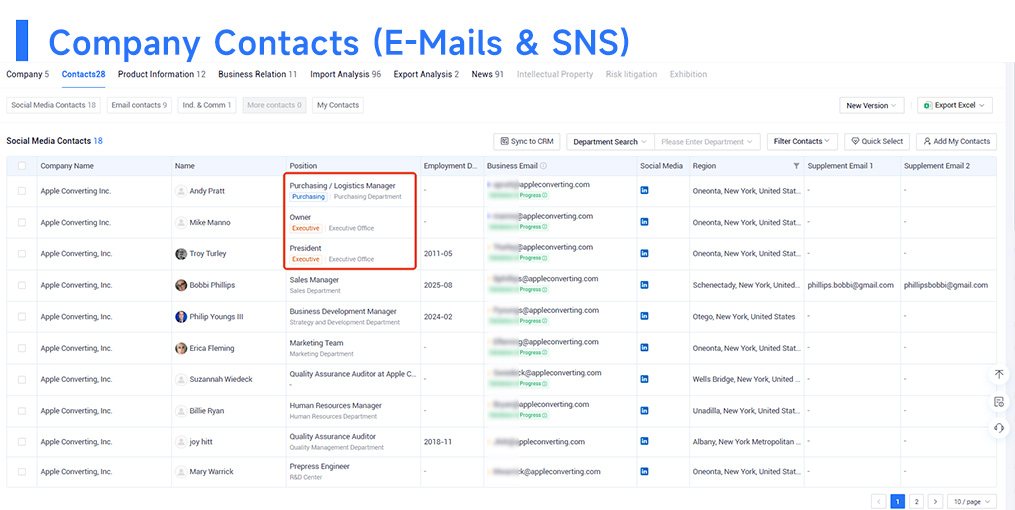
2. Contact Enrichment Engine
By integrating trade data with business intelligence sources, Tendata enhances each import export database record with:
· Procurement emails
· Phone numbers
· Decision-maker profiles
This solves the biggest pain point in traditional systems.
>>> Obtaining Customer Contact Information from Tendata <<<
3. Global Trade Intelligence
Tendata aggregates data from 228 countries, allowing users to analyze global supply chains directly within the import export database.
You can compare:
· Market size
· Competitor share
· Pricing trends
· Trade flows
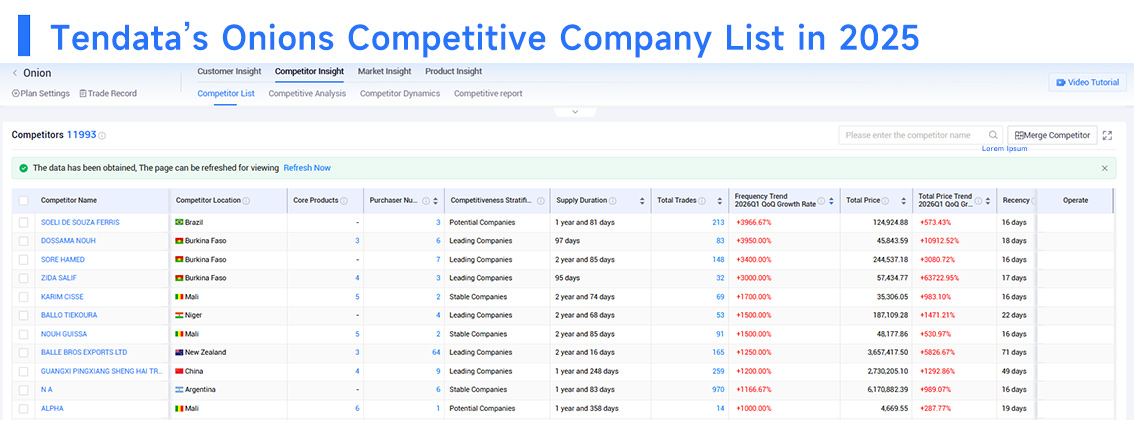
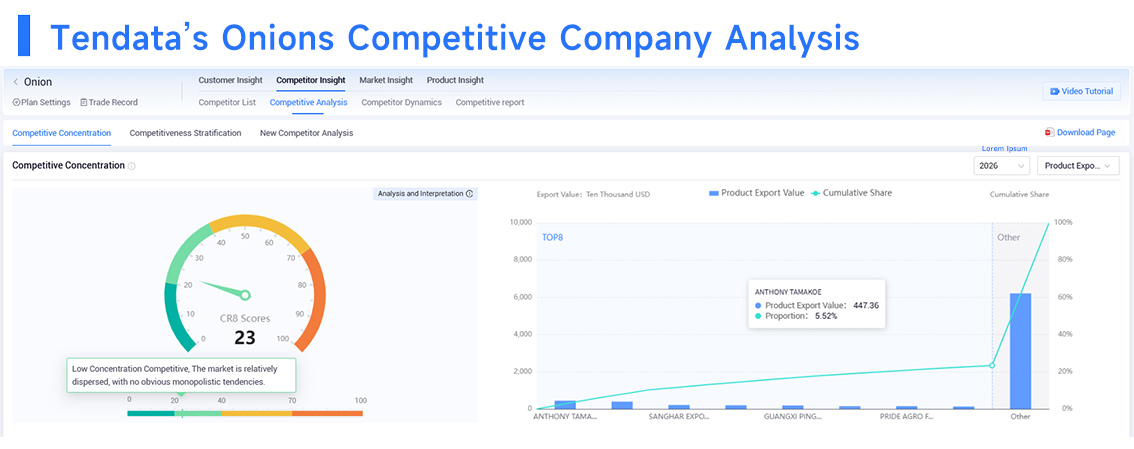
4. Competitive Tracking
With Tendata, you can input competitor names and extract their entire trading history from the import export database, including:
· Buyer networks
· Shipment frequency
· Market expansion patterns
Example: Using HS code 070310 (onions) to explore competitive company.
>>> Tendata’s Onions Competitive Company List in 2025 <<<
>>> Tendata’s Onions Competitive Company Analysis <<<
5. Smarter Pricing Model
Instead of forcing users to pay for unnecessary enterprise features, Tendata focuses on core import export database functionality that sales teams actually use.
Why Tendata Is Different from Traditional Providers
Most legacy platforms fall into two extremes:
· Too expensive for SMEs
· Too complex for real sales use
Tendata positions itself in the middle: a practical, intelligence-driven import export database built for execution, not just analysis.
Compared with traditional systems, it turns an import export database from static records into a real-time decision engine.
Summary
The reality is simple: not all import export database platforms are created equal. Most fail because they stop at raw customs data. They show shipments but not people, volumes but not opportunities, history but not strategy. A modern import export database must do more than display information—it must generate actionable leads. That is where Tendata stands out. By combining global trade data, AI enrichment, and decision-maker mapping, it transforms the import export database from a passive lookup tool into an active sales system.
If your current import export database only gives you names and numbers, you are not using intelligence—you are only using fragments of it. The competitive edge in global trade today is no longer access to data, but the ability to convert an import export database into real revenue opportunities.
Category
Leave Message for Demo Request or Questions