
 Trade Data Provider
 2026-06-09
Key Points
· A verified import export database is essential for accurate analysis
· Claude is strong at interpreting structured import export database data
· AI alone cannot solve sourcing and contact gaps in an import export database
· Tendata completes the workflow with data enrichment and contact mapping

Overview
AI is now deeply integrated into global trade workflows. In particular, Claude has become a useful tool for interpreting an import export database, helping users turn raw trade records into structured insights for market development, competitor analysis, and customer targeting.
However, AI alone is not enough. Real value comes from combining Claude’s analytical ability with high-quality trade intelligence platforms such as Tendata, which provides structured, verified, and continuously updated import-export records.
This guide explains how to use Claude effectively with an import export database, and how Tendata fills the critical gaps in real-world execution.
Step 1: Build a Reliable Import Export Database Foundation
Any meaningful analysis starts with a clean import export database.
A complete import export database includes:
· Importers and exporters
· Product-level shipment details
· Trade volumes and quantities
· Country-to-country flows
· Historical transaction behavior
To ensure accuracy, most professionals rely on platforms like Tendata, which aggregates customs bill-of-lading data from 228+ countries.
Without a verified import export database, downstream AI analysis will be unreliable.
Step 2: Use Claude to Extract High-Value Insights
Once the import export database is ready, upload it into Claude and use structured prompts.
Example:
“From this import export database, list the top 10 importers and exporters over the past 6 months, ranked by volume, and highlight increasing or decreasing trade frequency.”
Claude is particularly effective at:
· Ranking entities in an import export database
· Detecting trends and anomalies
· Summarizing large datasets quickly
At this stage, the import export database becomes a decision-support tool rather than raw records.
Step 3: Advanced Market and Supply Chain Analysis
Claude can further analyze deeper patterns inside an import export database.
Example prompt:
“Analyze this import export database for seasonal demand, supplier-country distribution, and intermediary trading behavior.”
This enables:
· Identification of seasonal cycles in the import export database
· Mapping of supply chain structures
· Detection of indirect traders or intermediaries
· A well-analyzed import export database reveals both market demand and structural opportunity.
Limitations of Using Only Claude
Despite its strengths, Claude alone cannot fully operationalize an import export database:
· No direct access to real customs import export database
· Data cleaning challenges (inconsistent company names, formats)
· No contact or decision-maker information
· No real-time monitoring of import export database
· File size and context limitations
This creates a gap between analysis and execution.
How Tendata Completes the Import Export Database Workflow
Tendata addresses these limitations by turning raw import export database into actionable business intelligence.
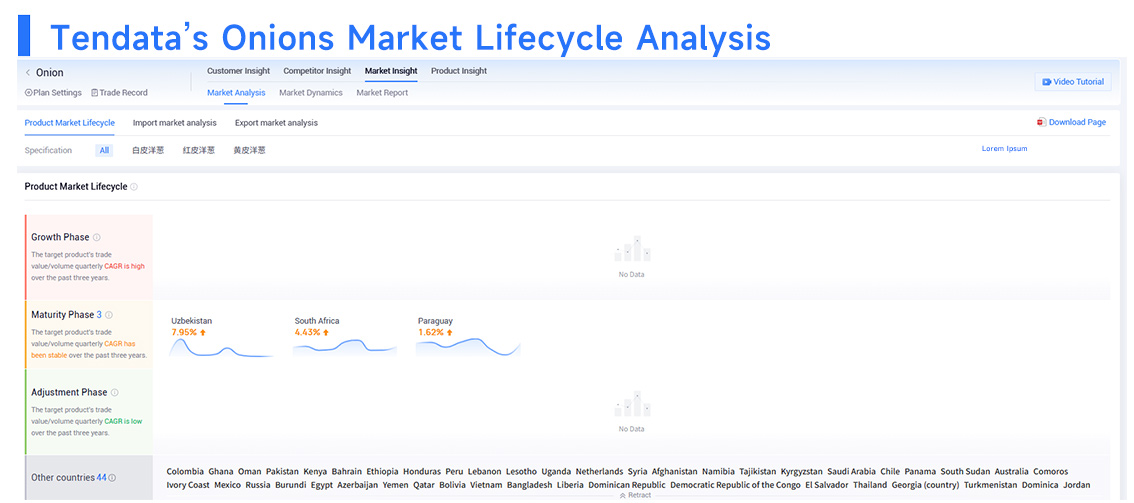
1. Market cycle insights from import export database
Tendata analyzes long-term import export database trends to reveal:
· Seasonal demand patterns
· Price sensitivity ranges
· Emerging high-growth markets
This helps users interpret the import export database strategically rather than descriptively.
Example: Using HS code 070310 (onions) to explore market lifecycle.
>>> Tendata’s Onions Market Lifecycle Analysis <<<
2. Competitor intelligence from import export database
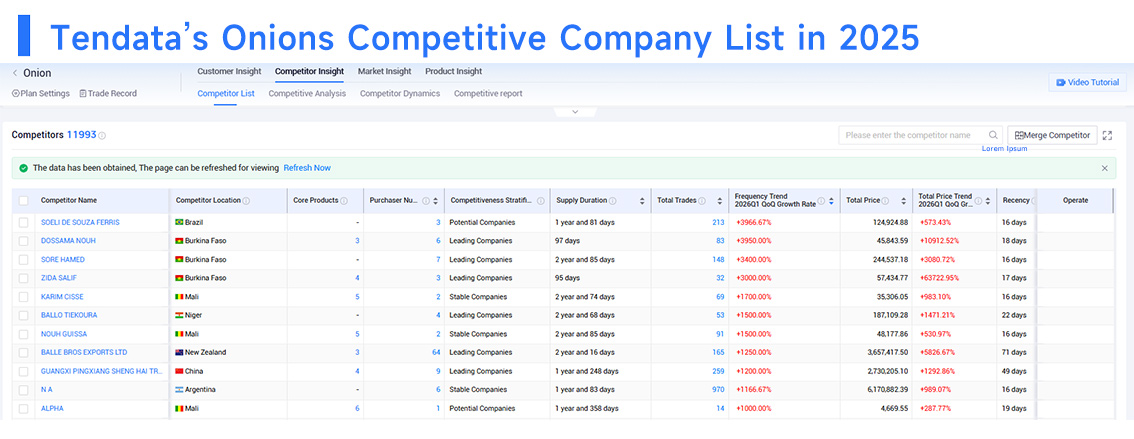
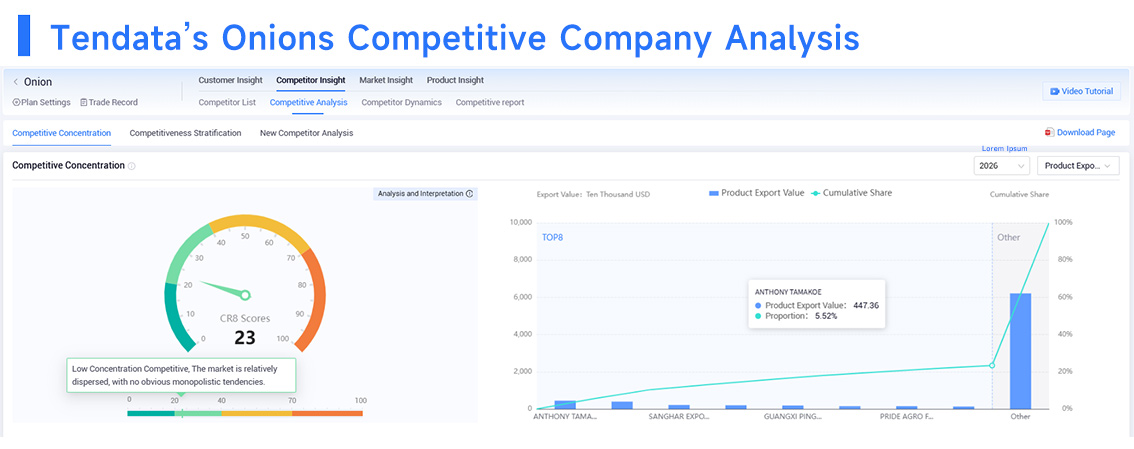
Tendata enables users to track competitors directly within the import export database:
· Identify where competitors are shipping
· Monitor buyer relationships
· Detect customer shifts and risks
This turns the import export database into a competitive tracking system.
>>> Tendata’s Onions Competitive Company List in 2025 <<<
>>> Tendata’s Onions Competitive Company Analysis <<<
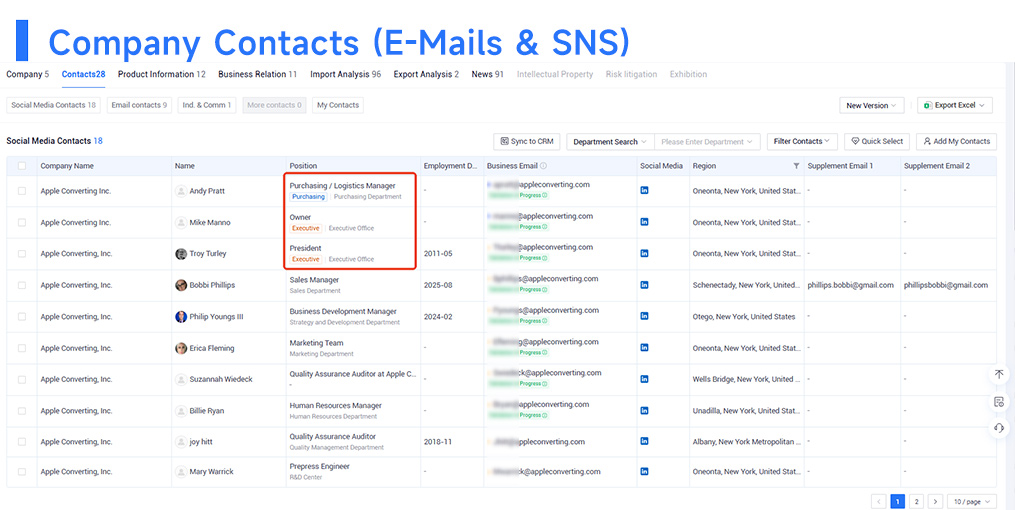
3. Turning import export database into real leads
Unlike basic tools, Tendata links each import export database record to real business identities:
· Company profiles
· Decision-maker contacts
· Emails and phone numbers
· LinkedIn and corporate websites
This closes the gap between import export database insights and sales execution.
>>> Obtaining Customer Contact Information from Tendata <<<
Summary
An import export database only becomes valuable when it is properly structured, analyzed, and activated.
Claude helps transform the import export database into insights. Tendata transforms those insights into real business opportunities by providing verified data, competitive intelligence, and direct contact access.
Together, they turn the import export database from passive information into an active customer acquisition engine.
Category
Leave Message for Demo Request or Questions