 Trade Data Provider
 2026-06-09
Key Points
· Analyze buyer behavior and shipping patterns using shipment data
· Track competitors' customers and logistics activities
· Identify seasonal demand and shipping cycles
· Detect supplier-switching opportunities among importers
· Combine DeepSeek's AI capabilities with Tendata's global shipment data database
· Access verified buyer contact information for customer development

Overview
AI has become an indispensable tool for international trade professionals. Whether analyzing markets, tracking competitors, or identifying potential buyers, AI helps businesses make faster and smarter decisions.
One of the most valuable applications today is analyzing shipment data. By studying actual shipping records, businesses can uncover buyer purchasing patterns, monitor competitor activity, optimize logistics strategies, and identify new sales opportunities.
While DeepSeek can quickly process and interpret shipment data, the quality of the analysis ultimately depends on the quality of the data source. This is where Tendata provides a significant advantage.
How to Analyze Shipment Data with DeepSeek
Step 1: Define Your Objective
Before analyzing shipment data, clarify what you want to achieve.
For example:
· Identify a competitor's major customers and shipping frequency
· Verify whether a potential buyer imports regularly
· Understand logistics trends in a target market
· Discover importers that may be changing suppliers
· A clear objective helps DeepSeek generate more accurate and actionable insights.
Step 2: Upload Shipment Data and Ask Targeted Questions
After exporting shipment data from Tendata, upload the file to DeepSeek and use prompts such as:
· Analyze Competitor Activity
Analyze all shipment records related to supplier ABC Company. Identify major consignees, shipment frequency, average shipment volume, and recent shipment trends.
· Evaluate Buyer Stability
Review shipment records for consignee XYZ Importers. Analyze purchasing frequency, supplier diversity, and recent procurement activity.
· Discover Logistics Patterns
Based on the shipment data, identify the main export ports used for Product A shipments to the U.S. West Coast and estimate average transit times.
· Identify Supplier Changes
Find importers that recently began sourcing from new suppliers compared with their historical shipment records.
DeepSeek can quickly summarize large volumes of shipment data and highlight key business opportunities.
Step 3: Generate Logistics Recommendations
Once the analysis is complete, DeepSeek can help translate shipment data into actionable strategies.
For example:
Based on historical shipment data for Product A exported to Germany, identify peak purchasing periods, average transit times, and recommended inventory planning schedules.
This helps businesses improve production planning, inventory management, and logistics efficiency.
Limitations of Using DeepSeek Alone
Although DeepSeek is a powerful analytical tool, it has several limitations when working with shipment data.
· No Native Data Source
DeepSeek does not provide its own customs or logistics database. Users must obtain reliable shipment data elsewhere.
· Data Processing Constraints
Large shipment data files often contain thousands of records and may require segmentation before analysis.
· Inconsistent Company Names
Importers and exporters frequently appear under different name formats, making accurate consolidation challenging.
· No Contact Information
DeepSeek can identify buyers and suppliers but cannot provide verified contact details.
· No Continuous Monitoring
Because shipment data updates daily, users must repeatedly collect and upload new records for analysis.
How Tendata Maximizes the Value of Shipment Data
Tendata combines global trade intelligence with continuously updated shipment data, helping businesses turn analysis into action.
1. Market and Logistics Analysis
Tendata helps users uncover patterns hidden within historical shipment data.
Key capabilities include:
· Identifying peak shipping seasons
· Comparing export port performance
· Analyzing destination port distribution
· Monitoring long-term trade trends
These insights provide a stronger foundation for AI-driven forecasting and decision-making.
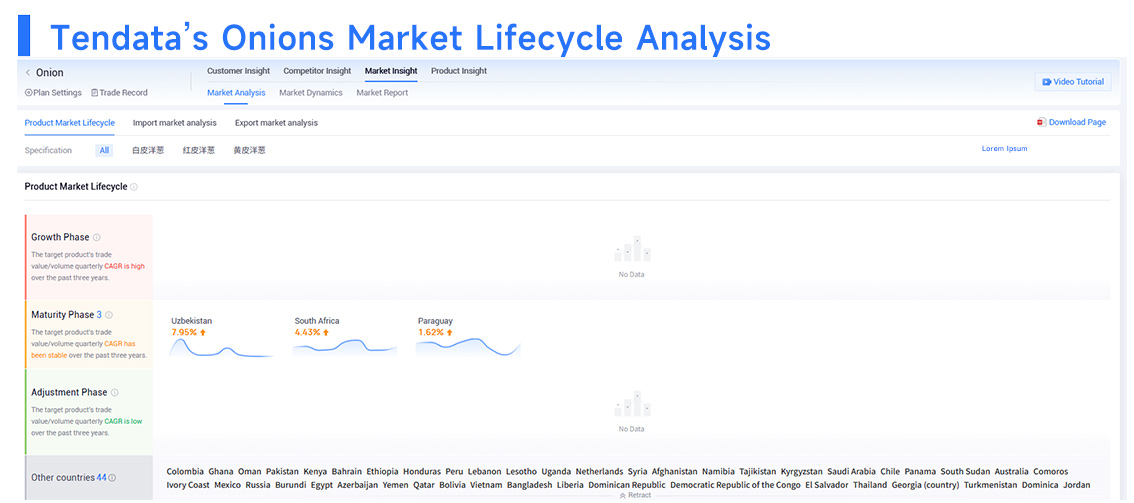
Example: Using HS code 070310 (onions) to explore trade dynamics.
>>> Tendata’s Onions Market Lifecycle Analysis <<<
2. Competitor Monitoring
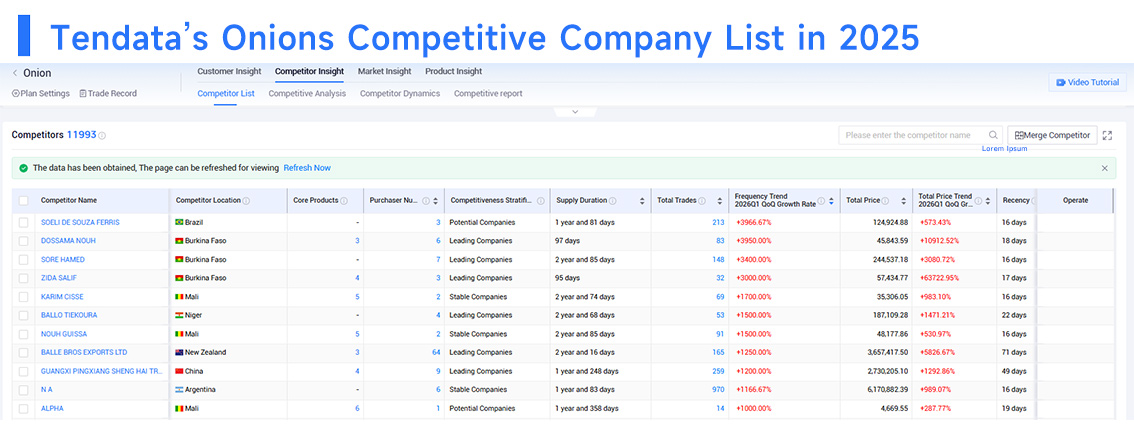
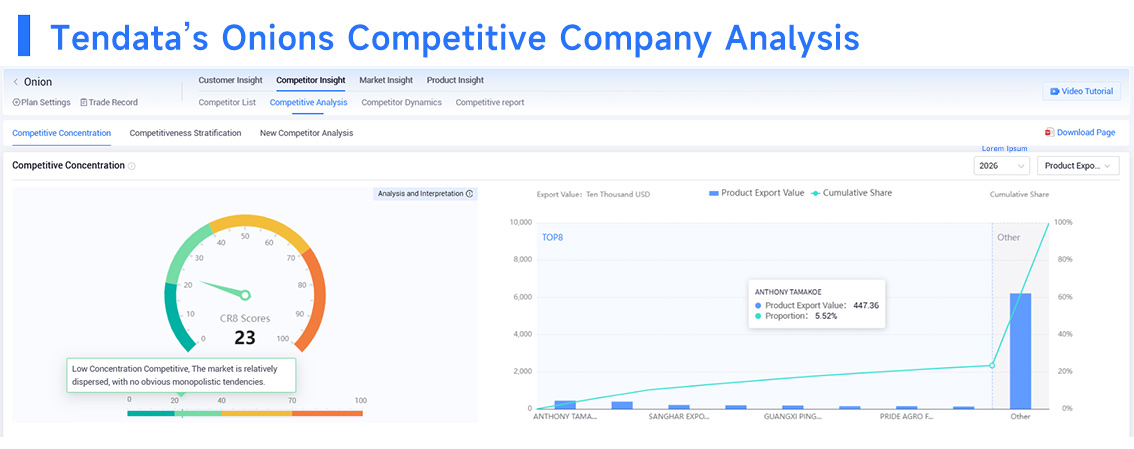
Tendata enables businesses to analyze competitor activity through real shipment data.
Users can:
· Track competitor shipments and major customers
· Identify newly acquired buyers
· Monitor shipment frequency and volume changes
· Evaluate competitor market coverage
When combined with DeepSeek, this information becomes powerful competitive intelligence.
>>> Tendata’s Onions Competitive Company List in 2025 <<<
>>> Tendata’s Onions Competitive Company Analysis <<<
3. Buyer Contact Discovery
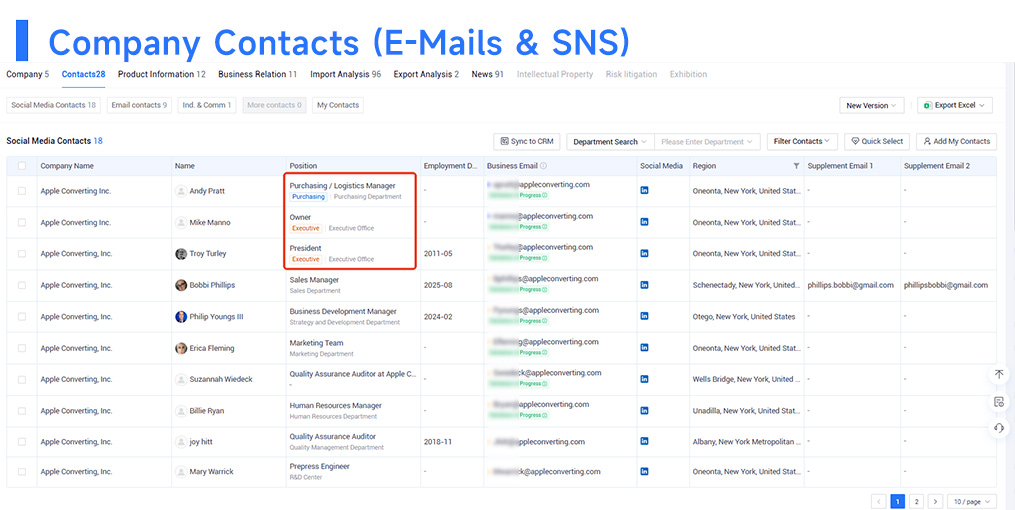
Traditional shipment data reveals who is buying and selling, but not how to reach them.
Tendata connects shipment records with detailed company profiles, including:
· Company websites
· Business information
· Key decision-makers
· Verified email addresses
· Phone numbers
· Social media profiles
This allows businesses to move directly from shipment data analysis to customer outreach.
>>> Obtaining Customer Contact Information from Tendata <<<
Summary
DeepSeek makes shipment data analysis faster and more accessible, helping businesses identify market opportunities, monitor competitors, and optimize logistics operations.
However, AI is only as effective as the data behind it. Tendata provides the high-quality global shipment data, market intelligence, and buyer contact resources needed to transform analysis into measurable business growth.
By combining DeepSeek's analytical power with Tendata's extensive trade database, importers and exporters can gain deeper market insights, improve customer acquisition, and build a stronger competitive advantage in global trade.
Category
Leave Message for Demo Request or Questions