 Trade Data Provider
 2026-06-09
Key Takeaways
· Use real export data to understand market demand and buyer behavior.
· Use ChatGPT to analyze large volumes of trade records quickly.
· Identify high-potential markets, customer opportunities, and competitive trends.
· Use Tendata to access verified export data, competitor intelligence, and buyer contact information.
· Combine AI insights with trade intelligence to improve customer development efficiency.
Overview
In today's increasingly competitive global market, exporters have access to more information than ever before. However, access to information alone does not create opportunities. The real advantage comes from knowing how to transform data into actionable insights.
Among the many resources available to exporters, export data remains one of the most valuable. Real export records reveal where products are being shipped, which markets are growing, who the active buyers are, and how purchasing patterns change over time. When combined with AI tools like ChatGPT, export data becomes a powerful asset for market analysis, customer development, and strategic planning.
Yet AI is only as effective as the data behind it. Without reliable trade records and ongoing market intelligence, analysis can quickly lose its value. This is why more exporters are combining ChatGPT with Tendata, using verified global trade data to support smarter business decisions.
Why Export Data Matters
Many exporters still rely heavily on trade shows, B2B marketplaces, and referrals to find new customers. While these channels remain important, they often provide only a partial view of the market.
Export data offers something different: direct visibility into real international trade activity. Instead of guessing where demand exists, exporters can see which countries are importing specific products, which companies are buying them, how often purchases occur, and how market demand evolves over time.
This information helps businesses make decisions based on actual transactions rather than assumptions. Whether the goal is entering a new market, identifying potential buyers, or evaluating competitors, export data provides a much stronger foundation for decision-making.
Using ChatGPT to Analyze Export Data
The first step is obtaining reliable export data. Professional trade intelligence platforms such as Tendata provide access to global customs records and shipment data covering more than 200 countries and regions. By searching a product, company, or industry, exporters can access detailed trade records that include buyers, destinations, shipment quantities, values, and transaction dates. Once the export data is downloaded in Excel or CSV format, it can be uploaded directly into ChatGPT for analysis.
For example, an exporter might ask:
"Analyze this export data and identify the top destination countries by export value during the past six months. Indicate whether each market is growing, declining, or stable."
Within seconds, ChatGPT can process thousands of records and produce a clear summary. Instead of manually reviewing spreadsheets, exporters can quickly identify growing markets, declining regions, seasonal demand patterns, and major customer concentrations.
The analysis can then be taken further. After identifying the strongest destination markets, ChatGPT can help classify them based on purchasing behavior and market characteristics. Some countries may generate large shipment volumes but relatively low margins, while others may import smaller quantities at significantly higher prices. Certain regions may also show rapid growth, signaling emerging opportunities before competitors fully enter the market.
Beyond market analysis, export data can also be used to build buyer profiles. By reviewing a company's purchasing history, shipment frequency, and order volumes, ChatGPT can help estimate procurement cycles, supplier loyalty, purchasing trends, and potential business priorities. These insights enable exporters to approach prospects with more relevant offers and stronger value propositions.
As a result, export data becomes much more than a collection of shipment records—it becomes a source of market intelligence that supports customer development and sales strategy.
Where ChatGPT Falls Short
Although ChatGPT is highly effective at analyzing information, it is not a trade database.
It cannot independently access global customs records or shipment data, meaning exporters must provide the underlying export data themselves. In addition, trade records often contain inconsistent company names, abbreviations, and multilingual product descriptions that may require cleaning before analysis.
Another challenge is that analysis alone does not create business opportunities. Even if ChatGPT identifies promising buyers, it does not provide direct access to decision-makers or verified contact information. Furthermore, international trade is constantly changing, and AI cannot automatically monitor new transactions, emerging competitors, or shifting market conditions without updated data inputs.
For these reasons, AI works best when paired with a professional trade intelligence platform.
How Tendata Complements Export Data Analysis
Tendata helps exporters bridge the gap between raw export data and real business opportunities. By combining global trade intelligence with powerful search and analysis capabilities, it enables businesses to move beyond simple data collection and focus on growth.
Market Intelligence
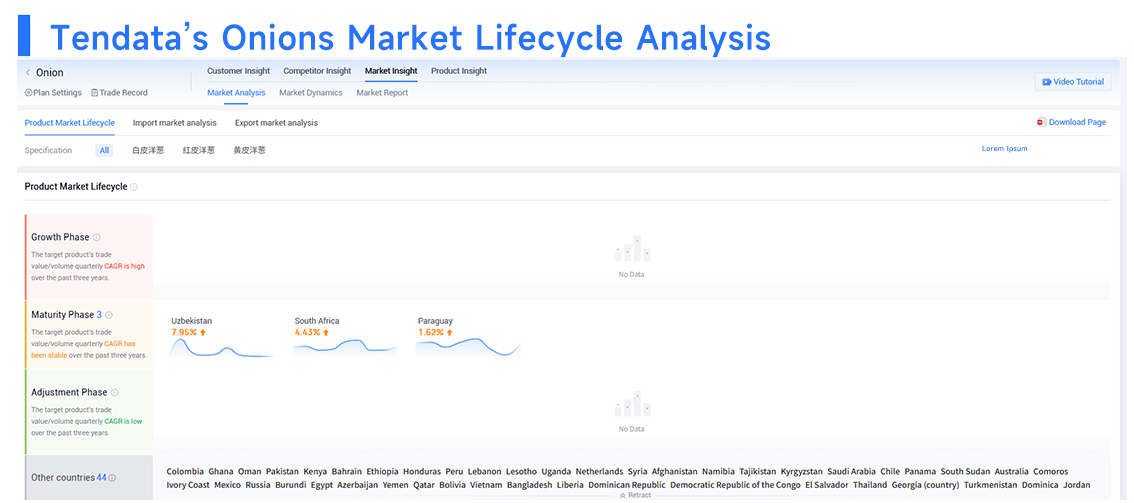
One of the most valuable applications of export data is understanding market trends. Tendata allows exporters to analyze historical shipment activity, identify seasonal demand patterns, monitor pricing changes, and compare market performance across countries.
For example, by reviewing several years of export data, businesses can identify peak buying seasons, anticipate demand fluctuations, and discover emerging markets before they become highly competitive. These insights provide valuable context that can then be further interpreted using ChatGPT to generate reports, forecasts, and market-entry strategies.
>>> Tendata’s Onions Market Lifecycle Analysis <<<
Competitor Tracking
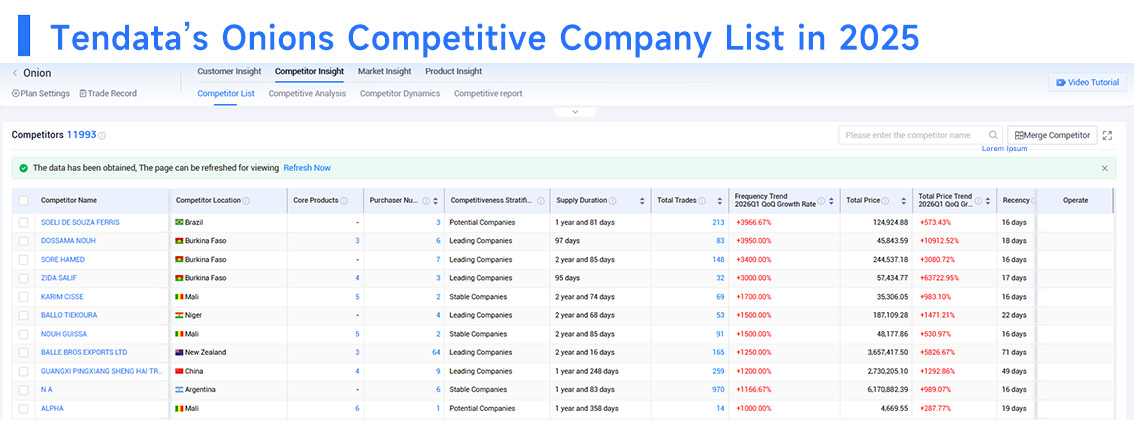
Export data is equally valuable for understanding competitors.
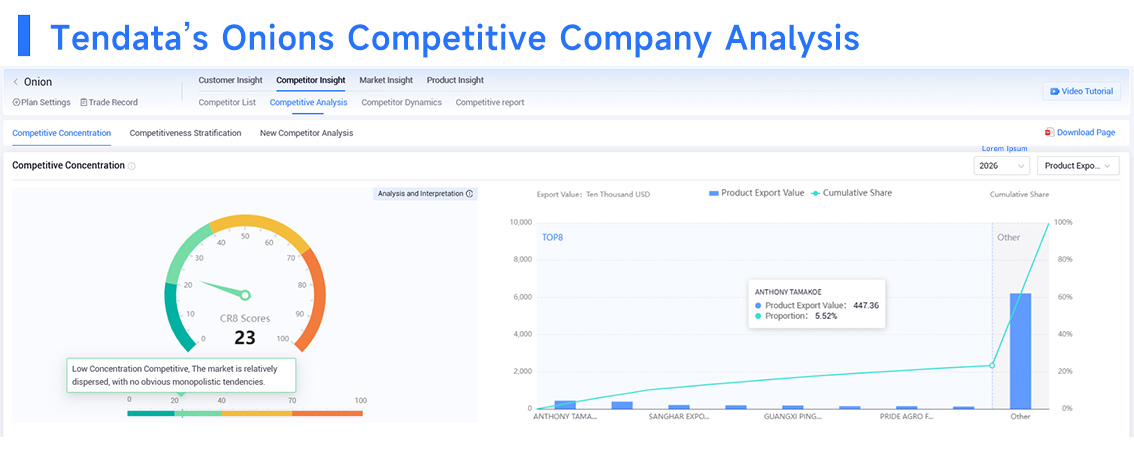
With Tendata, exporters can track where competitors are shipping products, which customers they serve, and how their shipment volumes change over time. This visibility helps businesses evaluate market share, identify competitive threats, and uncover opportunities that may otherwise go unnoticed.
In many cases, exporters also use import and export records to monitor customer purchasing behavior. If an existing customer begins sourcing from new suppliers, the change becomes visible through trade data, allowing sales teams to react before relationships weaken.
When combined with ChatGPT's ability to summarize and interpret large datasets, competitor monitoring becomes significantly more efficient and actionable.
>>> Tendata’s Onions Competitive Company List in 2025 <<<
>>> Tendata’s Onions Competitive Company Analysis <<<
Buyer Discovery and Contact Information
Finding qualified buyers is only half the challenge. Reaching them is often much harder.
Many trade data providers offer shipment information but provide little insight into the companies behind the transactions. Tendata addresses this issue by connecting export data with detailed company intelligence.
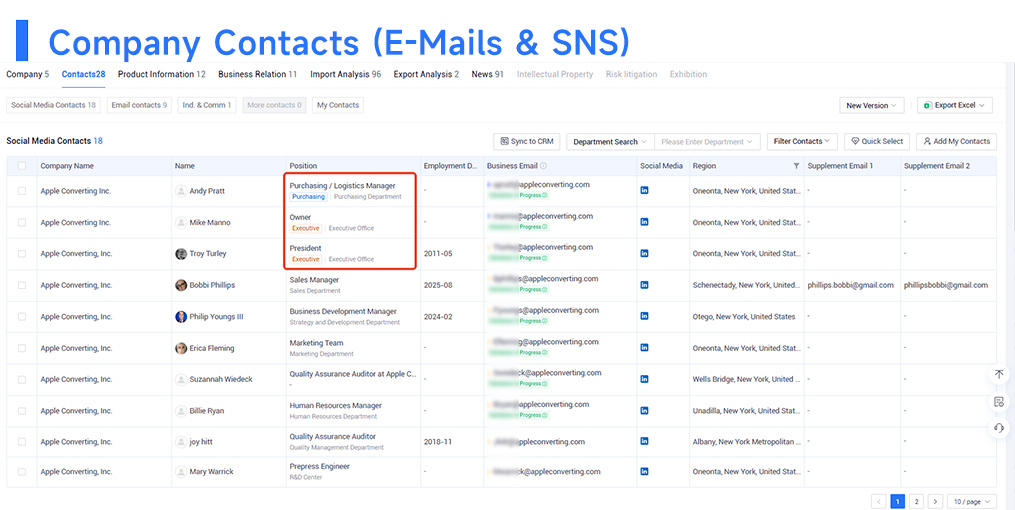
Users can access company profiles, business information, official websites, key decision-makers, email addresses, phone numbers, LinkedIn profiles, and other valuable contact details. This allows exporters to move directly from market analysis to customer outreach without spending hours searching for contact information across multiple platforms.
Once a target buyer has been identified through Tendata, ChatGPT can assist in creating personalized outreach emails, sales messages, and follow-up strategies, helping exporters engage prospects more effectively.
>>> Obtaining Customer Contact Information from Tendata <<<
Summary
In an increasingly data-driven trading environment, export data has become one of the most effective tools for market analysis and customer development. It provides direct visibility into real trade activity, helping exporters identify demand, understand buyers, evaluate competitors, and uncover new opportunities.
ChatGPT enhances the value of export data by transforming complex trade records into clear insights, buyer profiles, and strategic recommendations. However, successful analysis still depends on access to reliable information and ongoing market intelligence.
This is where Tendata delivers significant value. By providing comprehensive global export data, competitor tracking, market trend analysis, and verified buyer contact information, Tendata gives exporters the foundation they need to act on AI-generated insights.
For companies looking to expand internationally, the combination of ChatGPT and Tendata offers a practical and scalable approach to market analysis, customer development, and long-term business growth.
Category
Leave Message for Demo Request or Questions