 Tendata AI
  Exhibition
 B2B Platforms
 Standalone Website
 Social Media
 Emails
 Trade Data Provider
 2026-07-22
Every international business decision carries a degree of uncertainty. Should you expand into a new country? Is demand for your product increasing or slowing down? Which overseas markets deserve more attention? Rather than relying on assumptions, successful companies answer these questions with trade data.
Today, trade data has become one of the most valuable resources for exporters, manufacturers, importers, and sourcing professionals. It provides a factual view of global commerce, helping businesses understand market trends, evaluate trade performance, and identify growth opportunities before making important investments.
Whether you're researching a new market or refining an existing export strategy, trade data provides the evidence needed to make more confident decisions.

What Is Trade Data?
Trade data refers to the information generated from international imports and exports. Customs authorities, government agencies, and international organizations collect these records to document the movement of goods between countries.
Depending on the source, trade data may include product descriptions, HS codes, trade values, shipment quantities, countries of origin and destination, reporting periods, and commodity classifications. Some commercial platforms further organize these records by company, making it easier to identify buyers, suppliers, and historical trading relationships.
Because it is based on real customs declarations, trade data provides a reliable picture of international business activity.
10 Free Sources of Trade Data
If you're conducting preliminary market research, the following platforms offer free access to official trade data and international trade statistics. Although they are generally designed for macroeconomic analysis rather than customer prospecting, they provide valuable insights into global trade patterns.
1. EU Access2Markets Statistics
Website: https://trade.ec.europa.eu/access-to-markets/
In addition to tariff information, Access2Markets provides trade statistics, import requirements, and market access information for EU-related trade.
2. WTO Global Trade Data Portal
Website: https://globaltradedata.wto.org/
The World Trade Organization publishes global trade indicators, merchandise trade statistics, and tariff-related information.
3. World Bank Data Catalog
Website: https://datacatalog.worldbank.org/
The World Bank's Data Catalog contains thousands of international datasets covering trade, logistics, customs performance, and economic development.
4. UN SDG Global Database
Website: https://unstats.un.org/sdgs/
The United Nations Sustainable Development Goals database includes international trade indicators alongside global development statistics.
5. FAO FAOSTAT Crops and Livestock Trade
Website: https://www.fao.org/faostat/
FAOSTAT provides official agricultural import and export statistics covering hundreds of commodities worldwide.
6. Observatory of Economic Complexity Data Download
Website: https://oec.world/
OEC offers downloadable international trade datasets together with interactive trade visualizations and product rankings.
7. UK Office for National Statistics – Trade
Website: https://www.ons.gov.uk/
The UK's Office for National Statistics publishes official trade statistics covering goods, services, and international economic performance.
8. New Zealand Ministry of Foreign Affairs and Trade
Website: https://www.mfat.govt.nz/
MFAT provides trade reports, export market information, and international trade resources for New Zealand businesses.
9. Statistics Iceland – External Trade
Website: https://statice.is/
Statistics Iceland publishes official merchandise trade data covering imports, exports, and trading partners.
10. Statistics Estonia – Foreign Trade
Website: https://www.stat.ee/
Statistics Estonia provides official international trade statistics categorized by products, industries, and trading partners.
How Businesses Use Trade Data in Daily Operations
The value of trade data extends far beyond measuring import and export volumes.
Exporters use trade data to identify countries where demand is steadily increasing. Procurement teams evaluate sourcing markets by comparing long-term import trends. Manufacturers monitor changes in international demand before adjusting production capacity, while consulting firms rely on trade data to advise clients on global market opportunities.
Because trade data reflects actual business activity, it provides practical insights that support operational as well as strategic decision-making.
Why Free Trade Data Isn't Enough for Customer Development
Official trade databases are highly reliable, but they are primarily designed for economic reporting rather than sales prospecting.
For example, public trade data may reveal that imports of industrial pumps have grown rapidly in a particular region. However, it generally won't identify the companies purchasing those products, their purchasing frequency, or their supplier relationships.
Without this information, businesses still need to spend significant time searching for buyers manually.
For companies focused on international customer acquisition, detailed commercial intelligence becomes much more valuable than country-level statistics alone.
How Tendata Helps Businesses Turn Trade Data Into Results
Tendata is a professional global trade intelligence platform that helps companies unlock the full commercial value of trade data.
Instead of requiring businesses to collect information from multiple databases, Tendata combines customs records, market analysis, competitor intelligence, and customer discovery into one integrated platform.
This allows businesses to move from research to business development much more efficiently.
Analyze Markets Before Expanding
Every export market has different purchasing patterns.
Using Tendata, businesses can analyze trade data by country, product, industry, and HS code to compare demand across multiple regions.
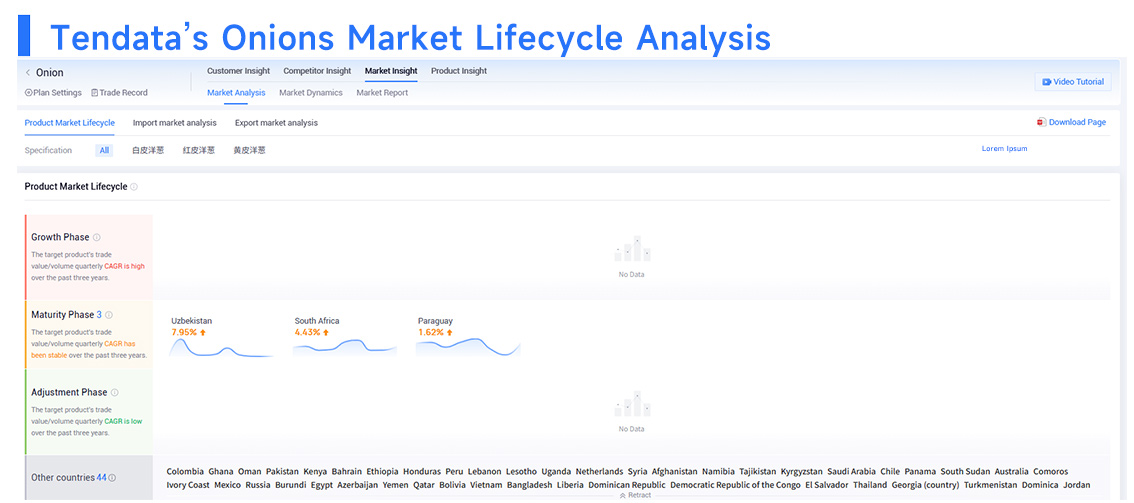
For example, exporters of onions can analyze HS Code 070310 to identify countries with stable import demand, compare historical purchasing trends, and prioritize markets that offer long-term growth potential.
This helps companies invest their sales resources more effectively.
>>> Tendata’s Onions Market Lifecycle Analysis <<<
Data Source: Tendata Platform
Understand Competitor Performance
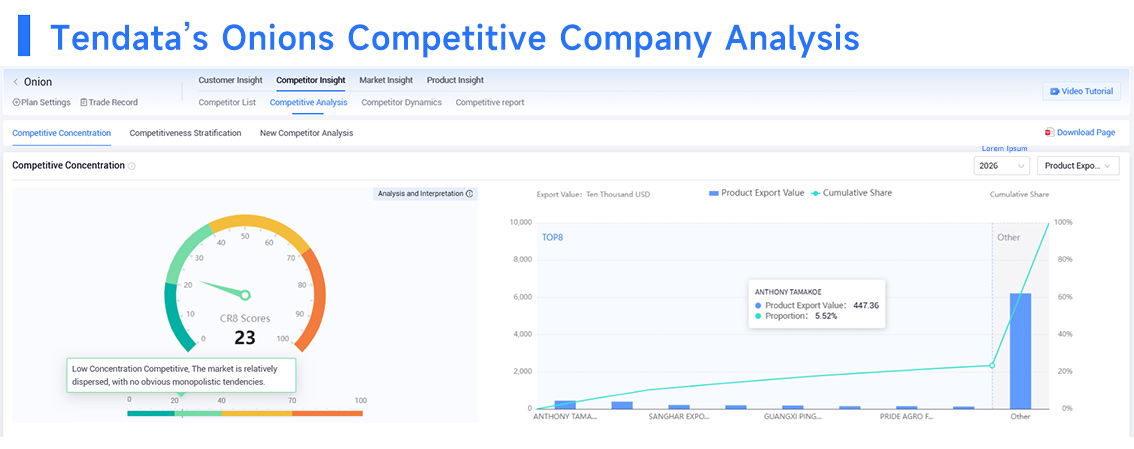
Professional trade data allows businesses to benchmark themselves against competitors using verified shipment records.
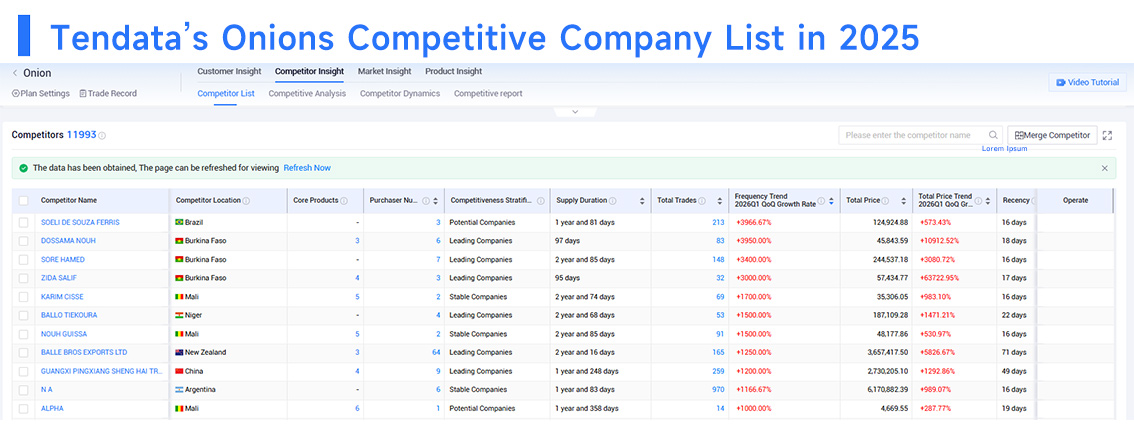
With Tendata, users can monitor competitor export destinations, shipment frequency, market coverage, and historical trade activity.
These insights help businesses identify competitive advantages, recognize market gaps, and refine international sales strategies using real commercial evidence.
>>> Tendata’s Onions Competitive Company List in 2025 <<<
Data Source: Tendata Platform
>>> Tendata’s Onions Competitive Company Analysis <<<
Data Source: Tendata Platform
Reach Qualified Buyers More Efficiently
One of the greatest strengths of Tendata is its ability to transform trade data into qualified sales opportunities.
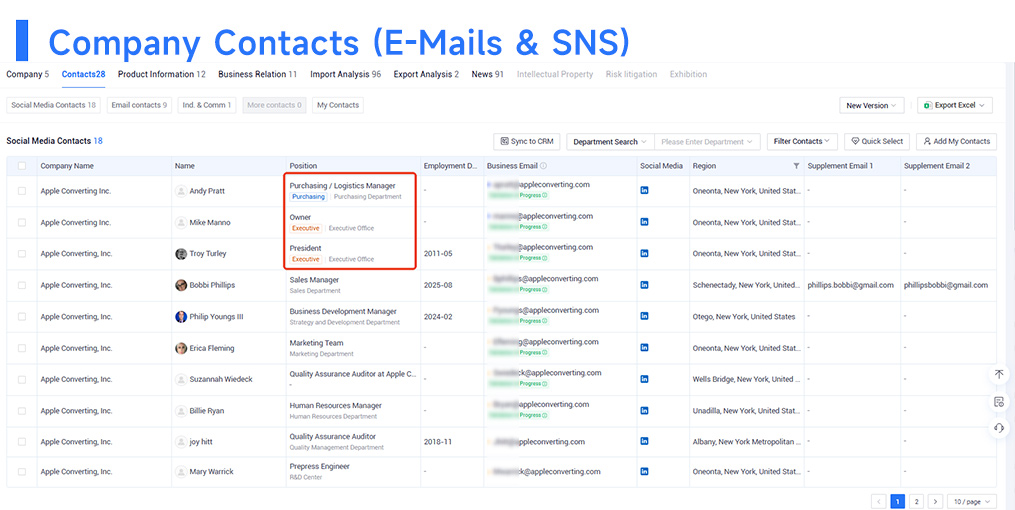
Businesses can identify importers with verified purchasing histories, review shipment frequency, evaluate supplier relationships, and understand buying behavior before making contact.
To simplify customer development, Tendata also integrates available company contact information, including business email addresses, LinkedIn profiles, Facebook pages, and other public business resources, enabling sales teams to reach decision-makers more efficiently.
>>> Obtaining Customer Contact Information from Tendata <<<
Data Source: Tendata Platform
Summary
Trade data is an essential resource for businesses involved in international commerce. It helps companies understand market trends, evaluate global demand, monitor competitors, and make informed strategic decisions. Free resources such as the World Bank Data Catalog, FAOSTAT, the UK Office for National Statistics, Statistics Estonia, and other official platforms provide valuable trade statistics for market research.
For businesses seeking deeper commercial intelligence, Tendata combines comprehensive trade data with market analysis, competitor monitoring, buyer discovery, and business contact information. By turning customs records into actionable business insights, Tendata helps exporters and manufacturers identify new opportunities, build stronger customer pipelines, and achieve sustainable international growth.
Category
Leave Message for Demo Request or Questions