
 Tendata AI
  Exhibition
 B2B Platforms
 Standalone Website
 Social Media
 Emails
 Trade Data Provider
 2026-07-27
Expanding into overseas markets is a major milestone for many businesses, but success depends on more than simply finding new customers. Companies also need to understand where demand is increasing, which products are performing well, and how competitors are positioning themselves across different regions. This is where export data becomes an essential business resource.
Rather than relying on assumptions or outdated market reports, export data allows companies to analyze real international trade activity. It helps exporters validate market opportunities, monitor industry trends, and make more informed decisions before investing time and resources in a new market.
Whether you're a manufacturer, exporter, trading company, or sourcing specialist, export data can provide valuable insights throughout every stage of global business development.

What Is Export Data?
Export data refers to the official records created when goods leave a country and enter international markets. These records are collected by customs authorities and government agencies to support trade administration, customs clearance, and national trade statistics.
Depending on the source, export data may include product descriptions, HS codes, shipment quantities, export values, destination countries, ports, transportation methods, and reporting periods.
Professional trade intelligence platforms further enhance export data by organizing records according to companies, products, and industries, allowing businesses to identify market trends and analyze international trading relationships.
Because it is based on verified customs declarations, export data offers businesses a reliable view of global trade activity.
10 Free Resources for Export Data Research
Businesses that are exploring new markets can begin with free government and international trade resources. Although these platforms mainly provide statistical information rather than detailed buyer-level shipment records, they are useful for understanding export performance and market trends.
1. New Zealand Trade Dashboard
Website: https://www.stats.govt.nz/
Statistics New Zealand publishes trade dashboards covering merchandise exports, imports, and major trading partners.
2. Irish Central Statistics Office (CSO)
Website: https://www.cso.ie/
Ireland's CSO provides official international trade statistics categorized by products, countries, and industries.
3. Statistics Finland Foreign Trade
Website: https://stat.fi/
Statistics Finland offers detailed foreign trade reports and merchandise export statistics.
4. Statistics Norway External Trade
Website: https://www.ssb.no/
Norway's official statistics bureau publishes import and export data across multiple industries.
5. Statistics Denmark
Website: https://www.dst.dk/
Statistics Denmark provides comprehensive foreign trade statistics and export performance reports.
6. Statistics Netherlands (CBS)
Website: https://www.cbs.nl/
CBS publishes official Dutch trade statistics, including exports by commodity and destination.
7. Austria Statistics (Statistik Austria)
Website: https://www.statistik.at/
Austria's national statistics office provides merchandise trade reports and export indicators.
8. Portugal Statistics (INE Portugal)
Website: https://www.ine.pt/
INE Portugal publishes official foreign trade statistics covering imports, exports, and economic indicators.
9. Belgium Statbel
Website: https://statbel.fgov.be/
Belgium's statistical office provides international merchandise trade reports and export statistics.
10. Luxembourg Statistics (STATEC)
Website: https://statistiques.public.lu/
Luxembourg's statistics portal offers economic indicators and international trade data.
Why Export Data Is More Valuable Than Traditional Market Research
Many businesses rely on industry reports when evaluating overseas markets. While these reports provide useful background information, they often reflect estimates or survey results rather than actual commercial activity.
Export data, on the other hand, is generated from real international transactions.
Businesses can analyze export data to identify countries with growing demand, compare trade performance across regions, evaluate product competitiveness, and monitor long-term changes in global markets.
Because it reflects actual export activity, export data provides a stronger foundation for strategic planning and international expansion.
Why Free Export Data Isn't Enough for Business Development
Official trade databases are excellent resources for understanding national export performance, but they are not designed to help companies acquire customers.
For example, a government database may indicate that exports of industrial valves have increased significantly over the past three years. However, it typically cannot answer questions that sales teams care about:
· Which companies are purchasing these products?
· Which suppliers currently serve those buyers?
· How often do those companies import similar products?
· Are they actively sourcing new suppliers?
Without these commercial insights, businesses still need to conduct extensive manual research before contacting potential customers.
Professional trade intelligence platforms bridge this gap by transforming statistical trade information into practical sales intelligence.
How Tendata Helps Businesses Get More Value From Export Data
Tendata is an all-in-one global trade intelligence platform that helps businesses convert export data into measurable business opportunities.
Instead of collecting information from multiple databases, companies can access trade records, buyer insights, competitor intelligence, and AI-powered analysis through a single platform.
Evaluate Export Markets With Confidence
Choosing the right market requires understanding actual purchasing demand.
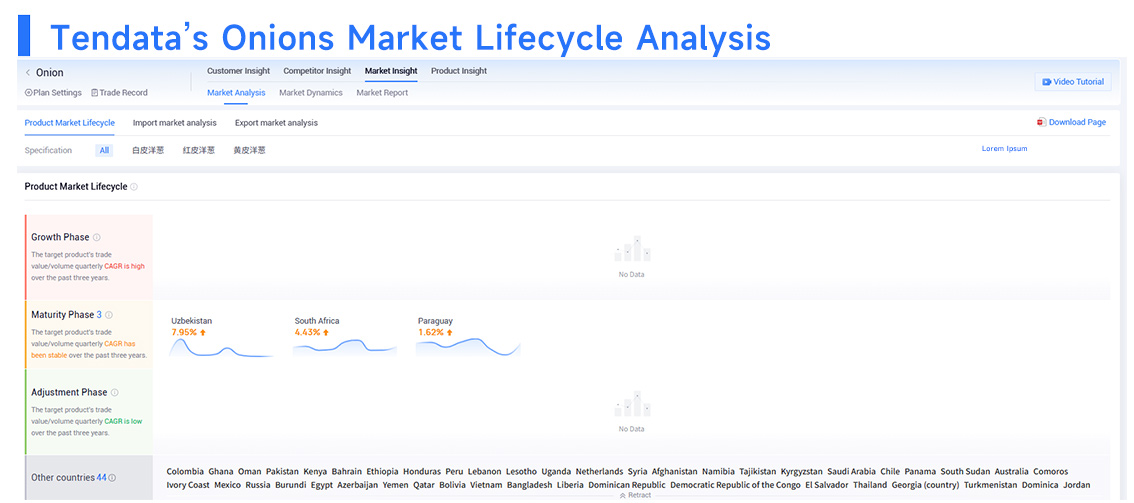
Tendata allows businesses to analyze export data by country, industry, product category, and HS code, making it easier to compare market performance across different regions.
For example, exporters of onions can search HS Code 070310 to identify countries with stable import demand, evaluate long-term purchasing trends, and focus on markets with sustainable growth potential.
>>> Tendata’s Onions Market Lifecycle Analysis <<<
Data Source: Tendata Platform
Benchmark Competitors Using Real Trade Records
Understanding competitor performance is essential for developing successful export strategies.
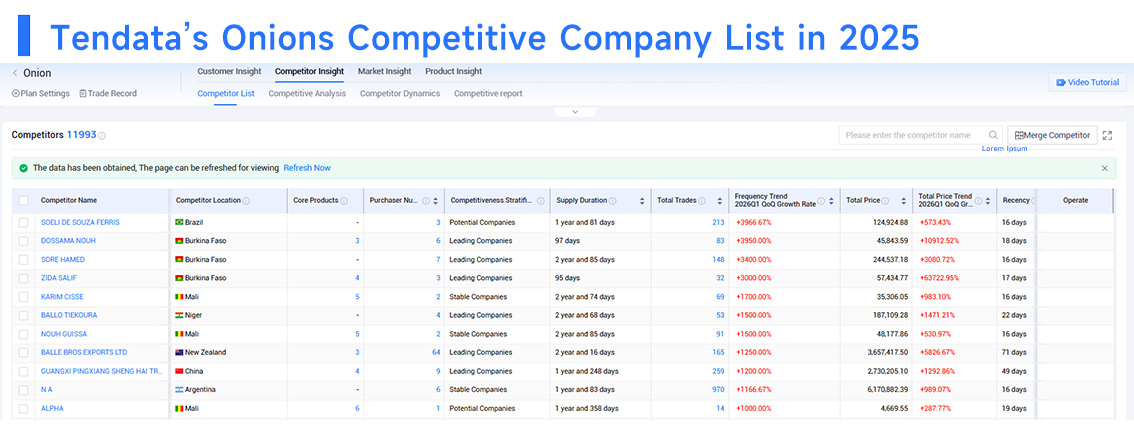
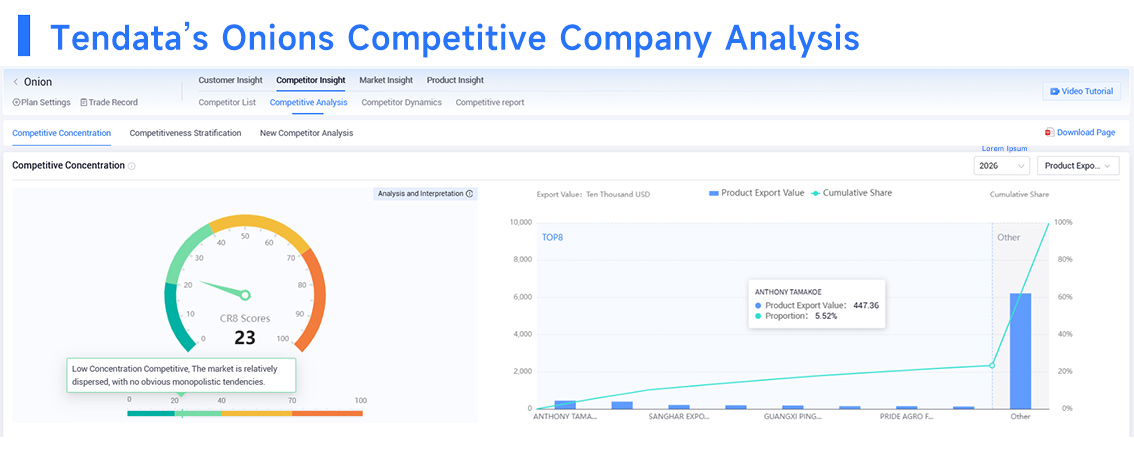
With Tendata, businesses can analyze competitors' shipment frequency, destination markets, exported products, and historical trading activity through verified export data.
These insights help companies identify market gaps, evaluate competitive positioning, and uncover new growth opportunities.
>>> Tendata’s Onions Competitive Company List in 2025 <<<
Data Source: Tendata Platform
>>> Tendata’s Onions Competitive Company Analysis <<<
Data Source: Tendata Platform
Reach Buyers With Verified Purchasing Histories
Finding overseas buyers becomes much more effective when using real trade records instead of generic business directories.
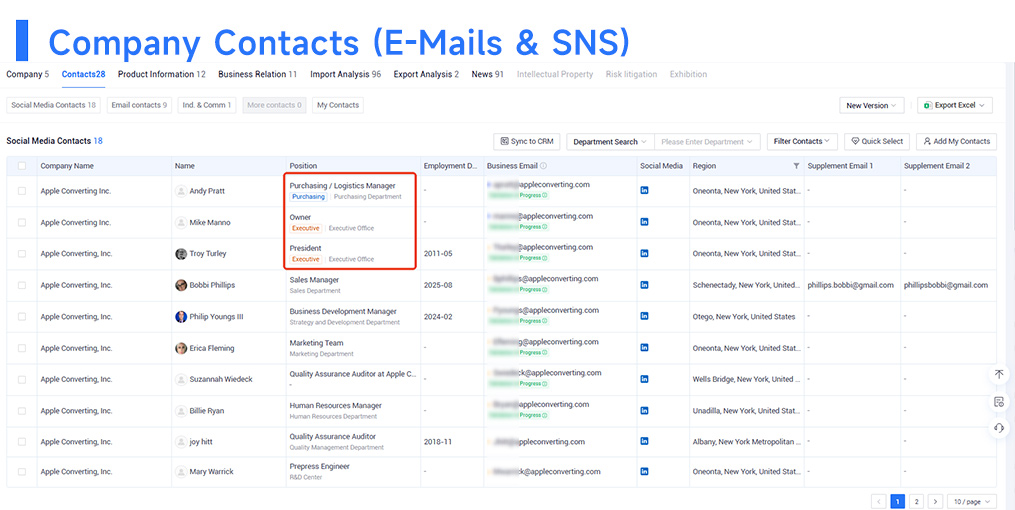
Tendata enables users to identify buyers through verified export data, analyze purchasing frequency, supplier relationships, and procurement patterns, and evaluate whether a prospect matches their target customer profile.
To support efficient outreach, the platform also provides available company contact information, including business email addresses, LinkedIn profiles, Facebook pages, and other public business resources.
>>> Obtaining Customer Contact Information from Tendata <<<
Data Source: Tendata Platform
Use Tendata AI to Accelerate International Sales
International customer development often requires significant research and preparation.
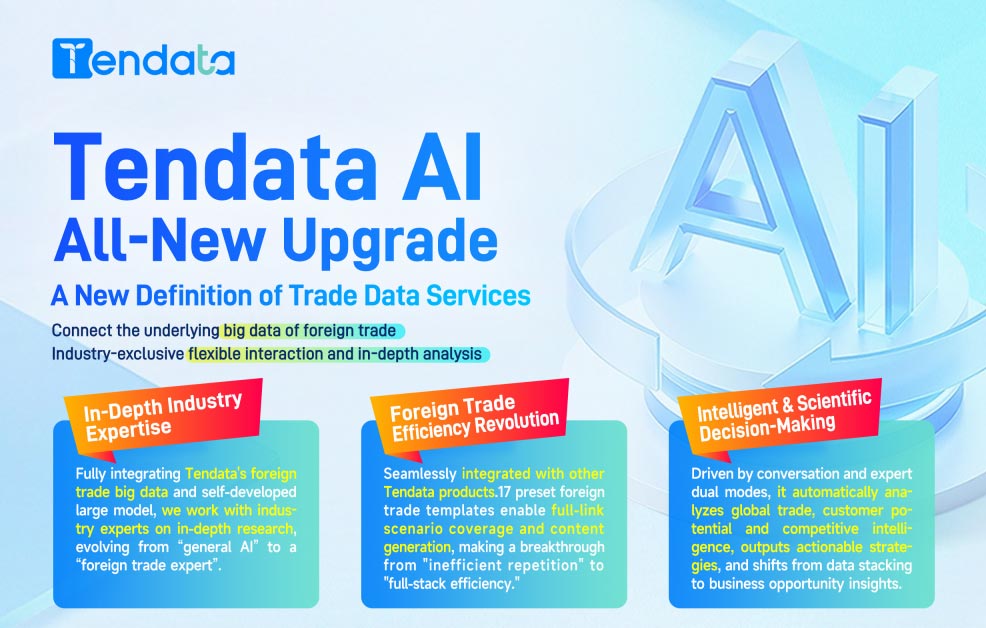
Tendata integrates AI-powered tools that help businesses analyze buyer behavior, identify high-potential prospects, prioritize leads, and generate personalized outreach emails based on verified trade activities.
This allows sales teams to spend less time researching and more time building relationships with qualified buyers.
>>> Get a Free Demo from Tendata <<<
Summary
Export data is an essential resource for companies looking to expand internationally, evaluate new markets, monitor competitors, and identify qualified buyers. Free resources such as Statistics Netherlands, Statistics Denmark, Statistics Norway, Statbel, and Statistics Finland provide valuable support for market research and understanding global trade trends.
For businesses seeking deeper commercial intelligence, Tendata combines comprehensive export data with buyer discovery, competitor analysis, market insights, AI-powered recommendations, and business contact information. By turning customs records into actionable business intelligence, Tendata helps exporters make smarter decisions, develop stronger sales pipelines, and achieve sustainable growth in global markets.
Category
Leave Message for Demo Request or Questions