 Tendata AI
  Exhibition
 B2B Platforms
 Standalone Website
 Social Media
 Emails
 Trade Trends News
 2025-12-22
This article was published more than a month ago. Analysts say the decision, announced at the COP30 climate summit, signals growing risks for Australia's reliance on fossil fuel exports.
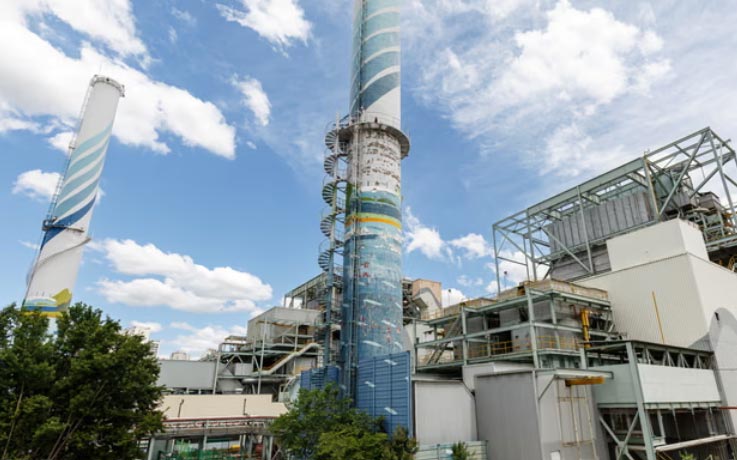
The Australian government has been urged to prepare for a gradual reduction in thermal coal exports and to accelerate the development of green industries, after one of Australia's major international customers signed an agreement to shut down all coal-fired power plants by 2040.
South Korea, Australia's fourth-largest market for thermal coal, announced at the COP30 climate conference in Brazil that it would join the Powering Past Coal Alliance, a coalition of around 60 countries and 120 sub-national governments, companies, and organizations committed to phasing out coal.
South Korea's Minister for Climate, Energy and Environment, Kim Sung-hwan, said the move demonstrated the country's commitment to “accelerating a just and clean energy transition.”
The Northeast Asian country has the world's seventh-largest coal-fired power capacity and is the fourth-largest importer of thermal coal globally, after China, India, and Japan, accounting for about 8% of global trade. Coal-fired power generates roughly 30% of South Korea's electricity.
“Transitioning from coal to clean energy is not only critical for the climate, but will also help Korea—and all countries—enhance energy security, strengthen business competitiveness, and create thousands of jobs,” Kim said in a statement.
The pledge requires South Korea to shut down 62 coal-fired power plants, with closure dates already set for 40 of them. Analytics firm Kpler estimates that Australia will sell about A$2.3 billion (US$1.5 billion) worth of thermal coal to South Korea this year.
James Bowen, head of consultancy ReMap Research, said South Korea's decision would send a strong signal across the Asia-Pacific region.
“Continuing to rely on fossil fuel exports in the medium to long term is a risky strategy for Australia,” he said.
Bowen cited Australian Treasury modelling showing that, regardless of where Australia sets its national emissions targets, the value of fossil fuel exports is expected to fall by around 50% over the next five years. In the last financial year, Australian coal mines recorded total thermal coal sales of A$32 billion.
“South Korea's decision should prompt Australia to show leadership by discussing a timetable for phasing out fossil fuels, while also helping regional neighbours embrace clean energy,” Bowen said.
Tim Buckley, director of Climate Energy Finance, described South Korea's announcement as “excellent news,” saying it showed Australia's trading partners were “responding to climate science and their treaty obligations.”
“Australia needs to shift its export focus toward future low-emissions industries—particularly green iron and aluminium, critical minerals, and lithium hydroxide—to help our major trading partners achieve their decarbonisation goals,” he said.
Australia is not a member of the Powering Past Coal Alliance, but the government aims to lift the share of renewable electricity generation from about 42% last year to 82% by 2030.
In recent days, political debate in Australia has focused on the federal opposition abandoning bipartisan support for a 2050 net-zero emissions target, and stating that it would subsidise coal-fired power if it wins the 2028 federal election.
South Korea has faced criticism for abandoning a 100% renewable energy target and for slow action on the climate crisis. Climate Action Tracker has said that for South Korea's policies to align with the Paris Agreement, the country should phase out coal power by 2030, followed shortly by gas-fired power.
South Korea is also a major importer of metallurgical coal used in steelmaking. The country has a substantial fleet of nuclear and gas-fired power plants, each supplying around 30% of its electricity.
Australia is the world's second-largest exporter of thermal coal, after Indonesia, and the largest exporter of metallurgical coal. Alongside the United States and Qatar, it is also one of the world's largest exporters of liquefied natural gas, another fossil fuel.
Category
Leave Message for Demo Request or Questions