 Tendata AI
  Exhibition
 B2B Platforms
 Standalone Website
 Social Media
 Emails
 Trade Trends News
 2026-02-28
The European Union is currently in discussions about joining the Comprehensive and Progressive Agreement for Trans-Pacific Partnership (CPTPP), a trade bloc that already includes Canada.
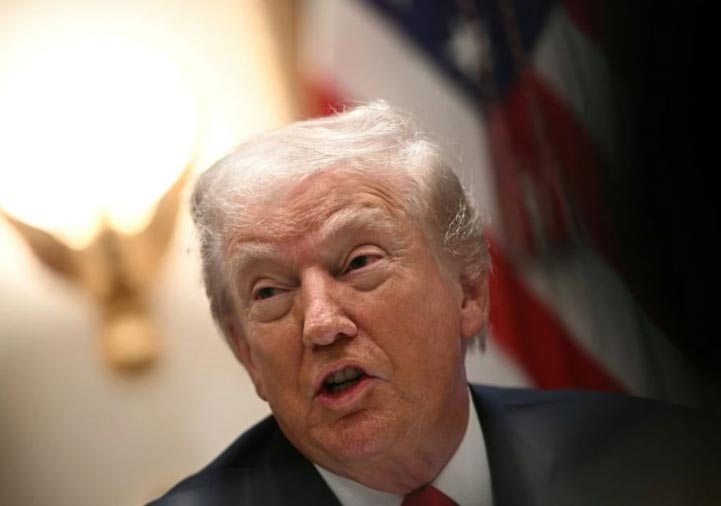
One of last year’s most underreported stories was the sharp surge in Canadian exports to the United Kingdom. The increase was so significant that the UK has become Canada’s second-largest export market, surpassing China.
In the first 11 months of 2025, Canadian exports to the UK reached $42.5 billion, compared with $31 billion to China. That represents an increase of nearly 60%, largely driven by a spike in gold exports (Canada is a major gold producer, while the UK is a global gold trading hub). At the same time, agricultural products, clean technology, and aerospace exports also recorded solid growth.
This shift is particularly noteworthy amid reports from Washington suggesting that President Donald Trump has privately considered withdrawing from the free trade agreement with Canada and Mexico, which is up for renewal this year.
Overall, the uncertainty created by Trump’s trade policies has led to a 5% decline in Canadian exports to the United States in the 11 months ending in November. However, growth in the UK, the EU, and the Asia-Pacific region has offset much of that loss. In November, the U.S. accounted for 68% of Canada’s exports — still high, but significantly lower than in previous years.
On Monday, Politico reported that the European Union and the 12-member CPTPP bloc — which includes Canada, the UK, Japan, Mexico, Vietnam, Malaysia, Australia, Peru, Chile, Brunei, Singapore, and New Zealand — have launched exploratory talks on forming a new trade partnership.
This aligns with what Canadian Prime Minister Mark Carney described at the World Economic Forum in Davos as middle powers working together — because “if you’re not at the table, you’re on the menu.” He specifically noted that Canada is actively working to build bridges between the CPTPP and the EU.
According to Politico, the idea has been welcomed in Tokyo, Berlin, and London. Skeptics point out that nearly a decade after Canada’s trade agreement with the EU came into force, 10 member states have yet to ratify it. Nevertheless, Canadian exports to the EU in 2024 were 57% higher than in 2015, suggesting such agreements do yield tangible results.
In recent weeks, there has been a growing perception that the political winds are shifting against Trump. He increasingly appears to be more bluster than substance, lacking either the preparation or the capacity to follow through on many of his threats.
Trump may warn of withdrawing from the U.S.–Canada–Mexico Agreement (USMCA), but Canada’s newly appointed chief trade negotiator, Janice Charette, is a seasoned political veteran who understands that brinkmanship is often a tactic to gain leverage.
Business groups and members of Congress would likely resist such a move. Last week, the House of Representatives voted against punitive measures targeting Canada, with six Republicans joining Democrats in support. Although the vote fell short of the two-thirds majority required to override a presidential veto, a withdrawal vote on the USMCA might reach that threshold.
Moreover, ahead of the midterm elections, Trump is already under heavy pressure over the rising cost of living.
The Congressional Budget Office recently reported that 95% of the cost of Trump’s tariff policies has been borne by American consumers and businesses. The effective tariff rate is now 13 percentage points higher than in 2024.
The report concluded that these policies, along with retaliatory actions by major trading partners, would temporarily increase inflation, reduce real investment, lower GDP levels, and decrease employment compared to a scenario without changes in trade policy.
Meanwhile, the Yale Budget Lab estimates that tariffs cost the average American household approximately $1,400.
Trump has previously threatened to raise tariffs to 100% if Canada signs a trade agreement with China, to increase tariffs on Canadian aircraft if Canada does not approve Gulfstream jets, and to refuse to open the Gordie Howe International Bridge.
A year ago, such threats might have rattled members of Parliament. Today, they are often met with skepticism. Few believe Trump will actually withdraw from the USMCA.
There will undoubtedly be tough negotiations. U.S. Trade Representative Jamieson Greer is seeking higher regional content requirements to boost domestic auto production, improved market access for American agricultural products — particularly dairy — stronger protections for the U.S. tech sector, and agreements to secure critical minerals.
At least this resembles a negotiation rather than a shakedown.
Last week, the far-right outlet Breitbart News interviewed Conservative MP Jamil Jivani, who traveled to Washington to meet his longtime friend, Vice President JD Vance.
Jivani told Breitbart that “anti-American sentiment” among Canadian officials was harming national interests. He acknowledged that “Canada’s economy is struggling,” citing the loss of 52,000 private-sector jobs in January. He called for dialogue between the two countries so that expanding auto-sector employment in Canada would not be seen as an opportunity cost, but rather as a way to support manufacturing growth in both nations.
However, the broader obstacle to this perspective may not be hysteria among Canadian officials.
Canada has seen more prosperous times, and some of its recent difficulties stem from the disruption caused by Trump’s trade policies. Yet the country remains resilient.
Jivani did not mention that full-time employment in Canada increased by 149,000 last month compared to a year earlier.
As Carney put it, Trump has attempted to weaponize economic integration as a tool of coercion.
But as Canada diversifies its trade relationships and reduces its exposure to retaliation, the strategic balance appears to be shifting away from the president.
Category
Leave Message for Demo Request or Questions