 Tendata AI
  Exhibition
 B2B Platforms
 Standalone Website
 Social Media
 Emails
 Trade Trends News
 2026-01-07
The year 2025 has been a bumper year for crops. Strong harvests of corn, soybeans, and wheat have met growing global demand and, overall, kept prices in check.
However, demand has become a greater source of uncertainty as trade tensions have intensified. In an effort to rebalance its trade deficit, the United States has engaged in trade confrontations with countries around the world, particularly China.
The twin themes of rising global production and mounting trade pressure are likely to continue shaping agricultural markets next year. But looking ahead to 2026, where is supply most likely to be abundant?
A Global Grain Boom
Global wheat supplies are often inflated by China’s large stockpiles, but this is not the case in the 2025/26 season. For the first time in several years, most of the world’s major wheat exporters have enjoyed strong harvests, with wheat production up at least 10% from the 2024/25 season.
As a result, global wheat inventories excluding China surged by 13.5% in 2025/26—the largest annual increase in 16 years. Including China, global stocks rose by just 6%.
By late 2025, Chicago wheat prices rebounded after falling below $5 per bushel for the first time in five years.
The corn market presents a more complex picture. The U.S. Department of Agriculture (USDA) forecasts that global corn inventories in 2025/26 will fall to a 12-year low, but excluding China, stocks would rise to a six-year high.
According to early USDA estimates, declining profitability could ultimately push U.S. wheat acreage in 2026/27 to a record low, while planted area in Russia—the world’s largest exporter—may also decline.
U.S. Soybean Export Share Plunges
In early 2025, U.S.–China trade tensions escalated again, causing U.S. soybean exports to China to stall by midyear and triggering a six-month export drought.
By late 2025, activity resumed after Washington and Beijing reached a truce and set targets for China to purchase U.S. soybeans. However, most evidence suggests China does not actually need these supplies, and the targets for 2025–2028 are unlikely to provide sufficient support for U.S. farmers.
U.S. soybean market share has been under pressure for years, falling sharply after the 2018 trade war with China during President Donald Trump’s first term.
Since then, Brazil—the world’s largest soybean exporter—has increased production by 40% and is poised for another record harvest in 2025/26, benefiting from tensions between China and the United States. The USDA projects that the U.S. share of global soybean exports will drop to a record low of 24% in 2025/26, while Brazil’s share is expected to reach a record 60%.
U.S. soybean acreage is projected to rebound in 2026/27 from historically low levels in 2025/26, but persistent geopolitical risks leave considerable uncertainty around planting decisions.
The United States Remains King of Corn
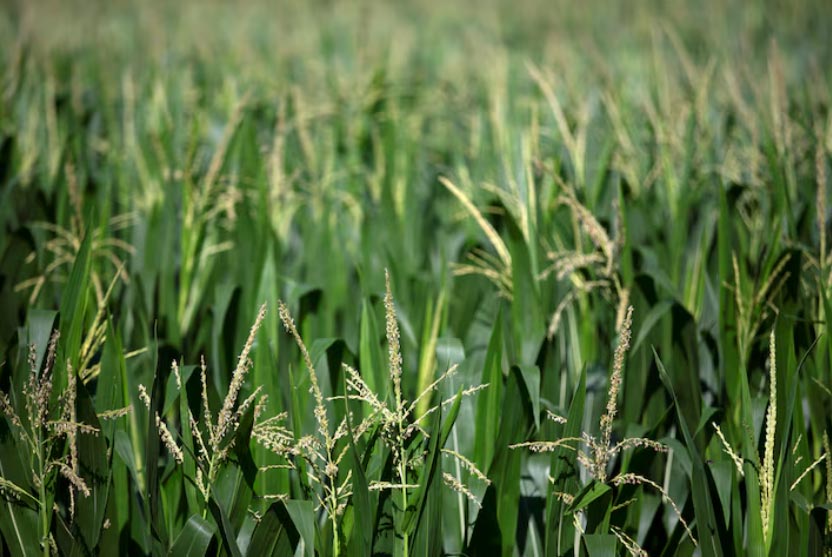
Although the U.S. share of global agricultural exports may be declining, corn is not to blame. Driven by weak soybean markets and strong global demand for corn, U.S. corn acreage in 2025/26 is approaching 99 million acres, the highest level in 89 years.
Moreover, U.S. corn production in 2025/26 is expected to exceed the USDA’s trendline for the first time in seven years. Fortunately for farmers, this massive output has been matched by robust demand, which was already strong in 2024/25.
Just three years ago, U.S. corn exporters appeared to be permanently losing ground to Brazil. Today, the United States has firmly taken control of the 2025/26 corn trade, with an estimated 40% share of global exports, compared with Brazil’s 21%.
U.S. corn exports have remained exceptionally strong over the past year, setting weekly records following the most recent harvest. The USDA forecasts that U.S. corn exports in 2025/26 will rise 12% above last year’s peak.
While U.S. corn acreage is expected to remain historically high in 2026/27, declining livestock inventories have clouded the outlook for feed demand, potentially weighing on corn prices next year.
Will Beef Still Be on the Menu?
Yes. U.S. consumers continue to show strong demand for beef and appear willing to pay higher prices.
After years of drought and elevated feed costs forced ranchers to liquidate herds, the U.S. cattle inventory fell to a 75-year low in 2025. As a result, several major U.S. beef processing plants have announced closures in 2026.
U.S. cattle futures and beef prices surged this year, yet consumers showed little resistance. At the wholesale level, average monthly beef prices in the second half of 2025 were nearly 20% above previous record highs.
Meanwhile, the USDA projects that total U.S. beef consumption in 2025 could approach record levels, even if per-capita consumption remains below historical peaks.
However, with supplies almost certainly constrained and inflationary pressures building, demand may soften slightly in 2026.
U.S.–China Agricultural Trade Falls to a 20-Year Low
Despite efforts by the Trump administration to revive U.S. agricultural exports, China sharply reduced purchases from the United States this year, including soybeans, corn, cotton, sorghum, and beef.
In the first nine months of 2025, U.S. exports of agricultural and related products to China totaled just under $8 billion. Adjusted for inflation, this marked a 20-year low and a 54% year-on-year decline.
China is not the only factor. In inflation-adjusted terms, total U.S. agricultural exports to other countries have been slowly declining for at least the past decade, though high prices have masked this trend. The decline reflects both intensifying global competition and shifts in consumption patterns.
Given recent agreements between Washington and Beijing, these trade flows will remain in focus for at least the next three years, with a high degree of uncertainty almost certain to persist.
One key reason for skepticism about expectations that Beijing will significantly increase purchases of U.S. agricultural products is China’s slowing economic growth, a trend expected to continue into next year.
Category
Leave Message for Demo Request or Questions