
 Tendata AI
  Exhibition
 B2B Platforms
 Standalone Website
 Social Media
 Emails
 Trade Data Provider
 2026-06-05
Key Points
· Raw import data often contains timing discrepancies that distort purchasing cycle analysis.
· Official customs records rarely provide decision-maker contact information.
· Unprocessed trade data includes freight forwarders and intermediaries that create significant noise.
· Professional data platforms enrich, clean, and verify customs records.
· Tendata combines trade intelligence, market analysis, competitor monitoring, and buyer contact discovery into one platform.

Overview
For many exporters, obtaining import data feels like gaining access to the ultimate shortcut for finding buyers and understanding global trade flows. The logic seems straightforward: if you know who is importing a product, you can identify potential customers and generate more business opportunities.
While customs and bill-of-lading records remain one of the most valuable sources of trade intelligence, many companies make a costly mistake—they rely entirely on raw import data without understanding its limitations.
The reality is that most official customs data is incomplete, difficult to use, and often misleading when applied directly to sales and market development strategies. Without proper processing, businesses may waste resources targeting the wrong companies, misjudge market demand, and miss valuable opportunities.
This article explores the three major weaknesses of raw customs data and explains how professional trade intelligence platforms like Tendata transform ordinary import data into actionable business intelligence.
The Three Fundamental Problems with Official Import Data
Many exporters assume customs statistics are completely accurate and sufficient for customer development. However, industry studies and practical experience reveal several critical shortcomings.
1. Timing Gaps and Reporting Distortions
Customs authorities typically record trade transactions based on customs clearance dates, while economic accounting often follows ownership transfer dates.
Why This Matters
As a result, trade activities may appear in official statistics at different times than when actual purchasing decisions occurred. Multinational companies, contract manufacturing arrangements, and internal corporate transfers can further complicate timing accuracy.
For exporters relying on import data to predict customer purchasing cycles, this discrepancy can lead to incorrect assumptions about reorder frequency, buying seasons, and market demand trends.
Key Takeaway
Raw customs records may tell you when goods crossed a border, but not necessarily when purchasing decisions were made.
2. The Biggest Weakness: No Contact Information
This is perhaps the most frustrating limitation of traditional import data.
Due to privacy regulations, official customs records generally do not include:
· Buyer email addresses
· Phone numbers
· Procurement managers
· Decision-makers
· Executive contacts
The Real Problem
You may know that a company imported your product category. You may even know shipment values and supplier relationships.
But you still have no practical way to contact the person responsible for purchasing.
As a result, sales teams often spend countless hours searching through websites, social media platforms, and professional networks hoping to identify the right contact.
Key Takeaway
Knowing who imported a product is valuable. Knowing who makes the purchasing decision is what actually generates sales.
3. Data Noise and Lack of Cleansing
Industry reports suggest that inaccurate or incomplete trade information causes significant losses for many businesses every year.
Raw import data frequently includes:
· Freight forwarders
· Customs brokers
· Logistics companies
· Consolidators
· Trading intermediaries
These organizations often appear as shipment participants even though they are not the actual end buyers.
The Consequence
Without proper filtering, your sales team may spend weeks contacting logistics providers rather than genuine product importers.
This creates:
· Lower prospecting efficiency
· Higher customer acquisition costs
· Reduced conversion rates
· Wasted sales resources
Key Takeaway
Not every company listed in customs records is a potential customer.
How Professional Data Providers Transform Import Data into Business Intelligence
The solution is not to stop using import data.
Instead, exporters need platforms capable of converting raw trade records into meaningful commercial intelligence.
Professional providers achieve this through three major processes.
Data Cleaning and Buyer Identification
Advanced AI models and verification systems help distinguish actual buyers from freight forwarders, customs brokers, and intermediaries.
The result is a cleaner database focused on genuine purchasing organizations.
Data Enrichment
This is where the real value emerges.
By integrating customs records with commercial databases and publicly available business information, enriched import data can include:
· Corporate email addresses
· Direct phone numbers
· Company websites
· LinkedIn profiles
· Executive information
· Procurement contacts
Faster Updates and Visualization
Modern platforms also improve usability through:
· Trade trend dashboards
· Market growth analysis
· Import volume visualization
· Supplier relationship mapping
· Competitive intelligence reports
These capabilities make import data significantly easier to interpret and apply.
Common Challenges with Traditional Trade Intelligence Platforms
Several established providers offer customs and trade intelligence solutions.
Some focus heavily on analytics and alert systems but can be expensive for small and medium-sized exporters.
Others provide comprehensive enterprise-level supply chain intelligence but often include complex features that many exporters rarely use.
For growing businesses, the challenge is finding a platform that delivers practical value without excessive costs or unnecessary complexity. This is where Tendata offers a compelling alternative.
Why Tendata Stands Out
Rather than simply providing another database, Tendata focuses on transforming import data into actionable sales opportunities.
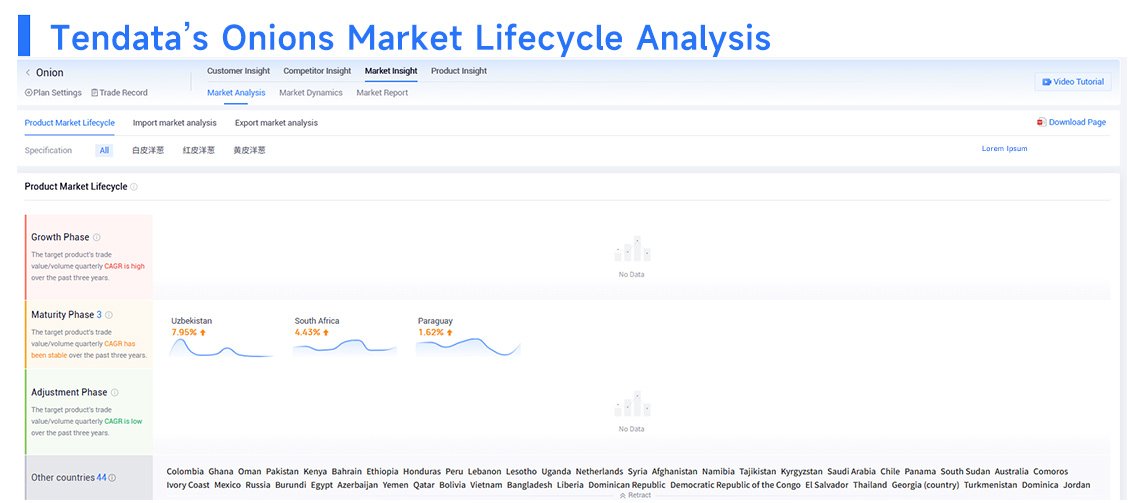
1. Market Analysis That Eliminates Guesswork
Many platforms simply display shipment records.
Tendata goes further by helping users understand:
· Import growth trends
· Market demand fluctuations
· Price ranges
· Major destination ports
· Historical trade performance
Instead of guessing which markets deserve attention, exporters can use Tendata to identify emerging opportunities backed by real trade data. Example: Using HS code 070310 (onions) to explore trade dynamics.
>>> Tendata’s Onions Market Lifecycle Analysis <<<
Result
Smarter market selection and more confident expansion strategies.
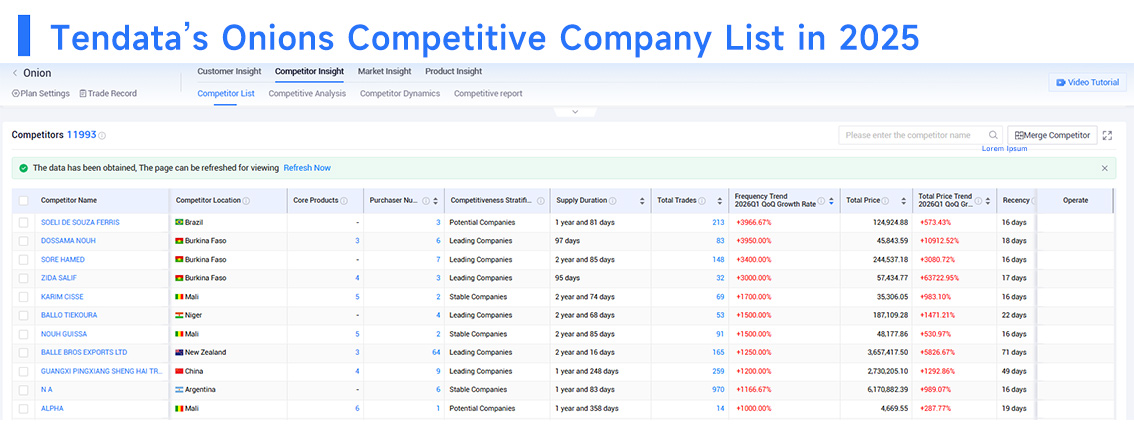
2. Deep Competitor Intelligence
Successful exporters don't just monitor buyers—they monitor competitors.
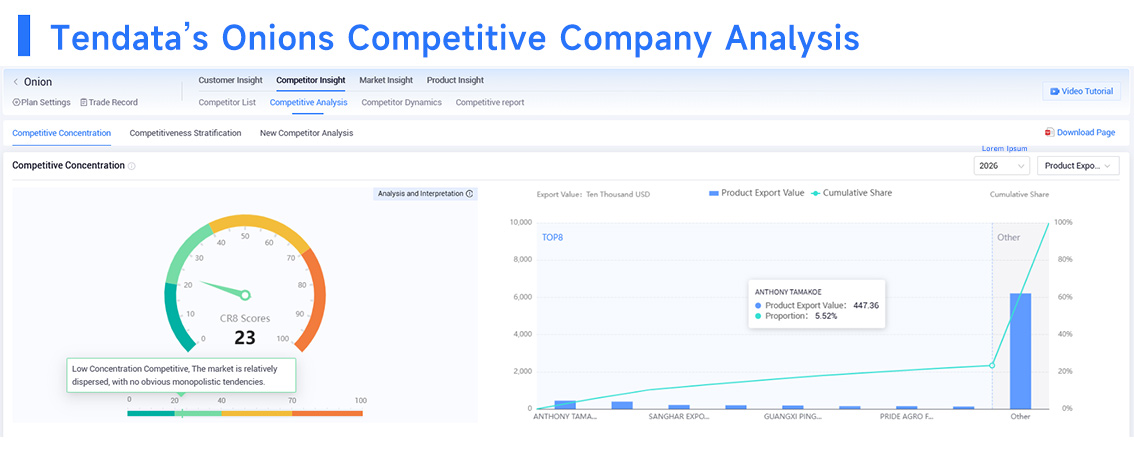
Using Tendata, companies can analyze:
· Competitor export records
· Major customer relationships
· Shipment frequency
· Market penetration patterns
· Product movement trends
By leveraging enriched import data and export intelligence, businesses gain a clearer understanding of how competitors win and retain customers.
>>> Tendata’s Onions Competitive Company List in 2025 <<<
>>> Tendata’s Onions Competitive Company Analysis <<<
Result
More effective positioning and stronger customer acquisition strategies.
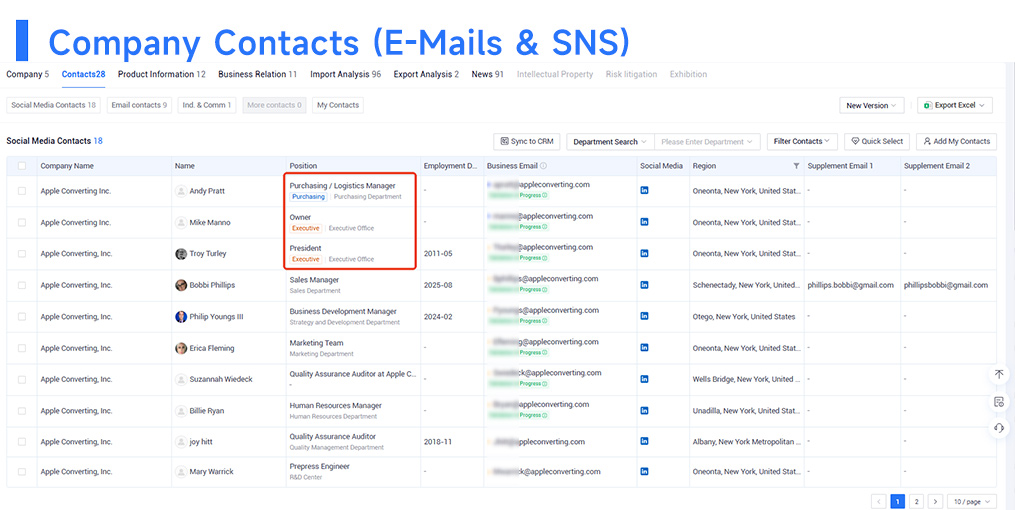
3. Direct Access to Decision-Makers
This is arguably Tendata's most valuable capability.
Traditional import data tells you which company imported a product.
Tendata helps identify the people behind those purchasing decisions.
Through the integration of:
· Trade data
· Commercial databases
· Public business information
· AI-powered matching technology
Users can access relevant contacts such as:
· Purchasing managers
· CEOs
· Procurement directors
· Technical managers
· Business development executives
>>> Obtaining Customer Contact Information from Tendata <<<
Result
Instead of spending hours searching for contacts, sales teams can move directly into outreach and customer development.
This significantly shortens the path from data discovery to business opportunity.
Summary
Raw import data remains one of the most valuable resources available to exporters. However, relying solely on unprocessed customs records is no longer enough in today's highly competitive global marketplace.
The most successful exporters are no longer collecting data—they are extracting intelligence from it.
By addressing the major weaknesses of traditional customs information, including timing issues, missing contacts, and data noise, platforms like Tendata help businesses transform ordinary import data into meaningful commercial opportunities.
The difference is simple: Raw customs data tells you what happened.
Tendata helps you understand why it happened, who was involved, and how to turn that knowledge into your next customer.
For companies seeking faster growth, more qualified leads, and higher prospecting efficiency, the evolution from basic import data to actionable trade intelligence may be one of the most important competitive advantages available today.
Category
Leave Message for Demo Request or Questions