
 Trade Data Provider
 2026-06-15
Alibaba Is a Major Traffic Entry Point, but Most Sellers Don’t Know How to Use It: A Real Perspective from a Japanese Exporter
From the perspective of an exporter, I’ll explain how overseas buyers actually view Alibaba International.
If you ask me,“Is Alibaba International still worth doing?”
My answer is straightforward: yes.
However, as platform regulations become increasingly strict, it is no longer a place where you can easily and effortlessly acquire new customers.
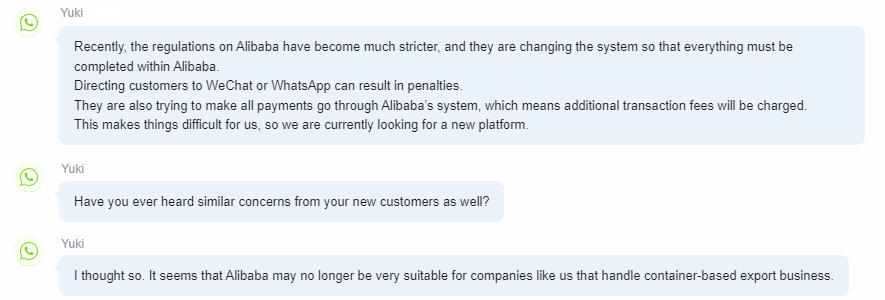
The deeper you get into operating on Alibaba, the more you begin to notice that there are certain structural issues the platform itself cannot fully solve.
1.Alibaba International still has strong value and remains a “default entry point” for many global buyers
This is something many Chinese companies tend to underestimate.
When overseas buyers first think about “finding suppliers, products, or factories in China,” the first name that often comes to mind is still Alibaba. This point is crucial.
It implies that:
·The platform has strong global recognition
·Many sourcing journeys begin there
·It naturally owns the “initial search entry” advantage
·It remains a primary starting point for cross-border sourcing, OEM, ODM, and sample testing
If you look at YouTube content about Amazon FBA, private label, product sourcing, or importing, you’ll notice a common pattern:
Many creators teaching Amazon businesses still default to Alibaba when explaining where to find Chinese suppliers.
A simple search for “Alibaba” on YouTube clearly shows its presence among global entrepreneurs, buyers, and cross-border sellers.
So if someone asks me, “Does Alibaba International still have value?”
My answer is: Yes, absolutely.
But the real issue is—
2.The problem is not that Alibaba doesn’t work, but that many companies have turned themselves into interchangeable options
This is the core issue I’ve observed over the years.
Many Chinese businesses complain that:
·Competition is getting more intense
·Inquiry quality is declining
·Buyers only care about price
·Customers constantly negotiate down
·There are too many competitors
·Advertising costs keep rising
·Alibaba is becoming harder to operate
However, from a buyer’s perspective, the reality is quite harsh: many stores look almost identical.
When you browse through 10, 20, or even 50 supplier pages, you often see:
·Very similar product image styles
·No brand identity in main images
·Titles stuffed with specs but lacking search logic
·Product pages without structure or clear reading flow
·Store homepages that feel neglected
·Inconsistent and messy visual design
·Copywriting that reads like machine translation
·Selling points limited to “we have a factory,” “we are professional,” “OEM supported”
·Reviews that feel unnatural or even suspicious
·Store design that fails to build any brand impression
From a global buyer’s perspective, the conclusion becomes simple:“They all look the same.”
And once buyers reach that conclusion, what happens next is predictable: Price becomes the only deciding factor.
This is not a platform issue. It is a positioning issue.
If your business appears to buyers as:
·A replaceable supplier
·A replicable factory
·A product page with no clear differentiation
·A store with no memorable identity
·A presentation lacking trust-building elements
Then buyers will naturally fall back to the most basic decision logic: Whoever is cheaper gets contacted first.
3. Alibaba’s current mechanism is amplifying the problem of homogenization
This is something many businesses have not fully realized yet.
Today, buyer behavior on the platform increasingly follows a pattern like this:
·Search for a product
·Browse a list of suppliers
·Quickly filter out those that appear unprofessional
·Send RFQs or bulk inquiries
·Let the system distribute the request to multiple suppliers
·Receive many quotations in a short time
·Compare price, MOQ, lead time, and response speed first
·Then decide who to engage further
In essence, the platform is optimizing for price comparison efficiency.
Under this mechanism, if your product presentation, branding, store structure, and communication lack differentiation, you are likely to be pulled into a risky competition model:
You are no longer competing on brand value, but on who comes closest to offering the lowest price.
When a business stays in this position for too long, the typical outcomes are:
·More inquiries, but lower quality
·Many quotations, but low conversion rates
·Customers come quickly and leave just as fast
·Orders rely heavily on lower pricing
·Revenue may grow, but margins shrink
·Operations get busier, while the brand becomes weaker
Many business owners assume this is a platform issue.
However, from a global buyer’s perspective, a more accurate view is: Alibaba is simply amplifying problems that already exist.
4. The real question is not whether to use Alibaba, but what exactly you are selling on it
Many companies believe they are selling products, but from an overseas buyer’s perspective, it is more nuanced.
On Alibaba, what you are truly selling is usually one of the following:
(1)A low-cost, interchangeable option
If your page consists mainly of specs, pricing, and generic factory messaging, then you are essentially offering a replaceable, price-driven option.
(2)Reliable execution capability
If your page is well-structured, your communication is professional, your delivery logic is clear, and your product presentation is layered, buyers will perceive you as a dependable partner.
(3)A trustworthy brand image
If your visuals are consistent, your content shows clear judgment, and your store feels like a brand built for international markets rather than a basic supplier listing, then you are selling more than just products.
(4)Reduced decision-making cost
This is a critical but often overlooked factor.
Overseas buyers are not only concerned about high prices; they are more worried about:
·Choosing the wrong supplier
·Wasting time
·Inefficient communication
·Inconsistency between samples and bulk orders
·Unreliable lead times
·Complicated after-sales issues
·Unsustainable long-term cooperation
Therefore, a strong Alibaba store is not just about displaying products.
It should make buyers feel that working with you saves time, reduces effort, and minimizes risk.
This is why companies with similar products and pricing can still have vastly different conversion results.
5.The five most common critical issues on Alibaba, from an overseas buyer’s perspective
This is the part I want to address more directly.
(1)Titles are written for yourself, not for search
Many product titles look like this:
Factory Direct High Quality Custom OEM ODM Best Price XXX
They contain many keywords, but lack real search logic:
·Overloaded with specs but missing core intent-driven keywords
·Weak understanding of how overseas buyers actually search
The result:
·Poor search matching
·Low click-through rates
·Reduced visibility
·Even when shown, they fail to attract clicks
A title is not for self-expression; it is for buyers who are actively searching.
(2)Product pages lack structure and only pile up information
The issue is not insufficient content, but disorganized content.
When buyers land on a page, they should quickly understand:
·What the product is
·What scenarios it fits
·How it differs from alternatives
·What type of clients you serve
·Whether you specialize in OEM or ODM
·What your core strengths are
·Why they should contact you
However, many pages simply present:
·Lots of images
·Lots of specifications
·Lots of certifications
·Lots of factory photos
·Lots of generic descriptions
This does not build trust; it only dumps information.
(3)Store homepage is underutilized as a brand asset
Many companies invest in opening a store but neglect the homepage.
From a buyer’s perspective, the homepage should:
·Establish initial brand perception
·Show that this is not a temporary listing
·Clearly communicate core categories and strengths
·Help buyers understand your business quickly
·Signal long-term commitment to international markets
If the homepage is template-based, cluttered, and lacks structure, you are effectively giving up a key branding opportunity.
(4)English is understandable but not persuasive
This is extremely common.
Many companies use grammatically correct English, but lack persuasive power.
The key differences are:
·Translation is not communication
·Communication is not persuasion
·Persuasion is what builds trust
Common issues include:
·Direct translation
·Strong “Chinglish” tone
·Lack of familiar business language
·Missing commercial context
·Poor reading experience
The result:Buyers understand the content, but do not trust it.
(5)Treating Alibaba as the only channel instead of building a system
This is the most important point.
Many businesses fall into a binary mindset: platform or website.
But mature global trade strategies are never either-or.
A stronger structure is:
Platform + website + content + branding + long-term assets
Because:
·Platforms generate initial traffic
·Websites build and deepen trust
·Content drives search visibility and education
·Social media maintains ongoing presence
·Email and remarketing enable long-term conversion
If you rely only on platforms, you are essentially building traffic for them.
If you rely only on a website without traffic sources, growth is difficult.
A sustainable approach is to connect all these elements into one integrated system.
6.From Passive to Proactive
If you want higher-quality inquiries, better conversion rates, fewer price-only buyers, stronger brand perception, and a more sustainable international business, then simply “setting up a store, running ads, and waiting for inquiries” is not enough.
Relying solely on Alibaba’s passive inquiry model is far from sufficient. Even with a combination of platform tools, the optimal approach is to actively reach out and acquire customers. This is also why many businesses start with Alibaba but eventually invest in import-export data.
Because ultimately, knowing both your market and your customers is what gives you a real competitive edge.
Import export data does far more than just provide a list of potential clients or their contact details. It allows you to understand whether a buyer has real purchasing demand, their historical pricing, and even their existing supplier network. In other words, you gain access to a much deeper layer of customer insight.
>>Know More about Features of Import Export Data<<
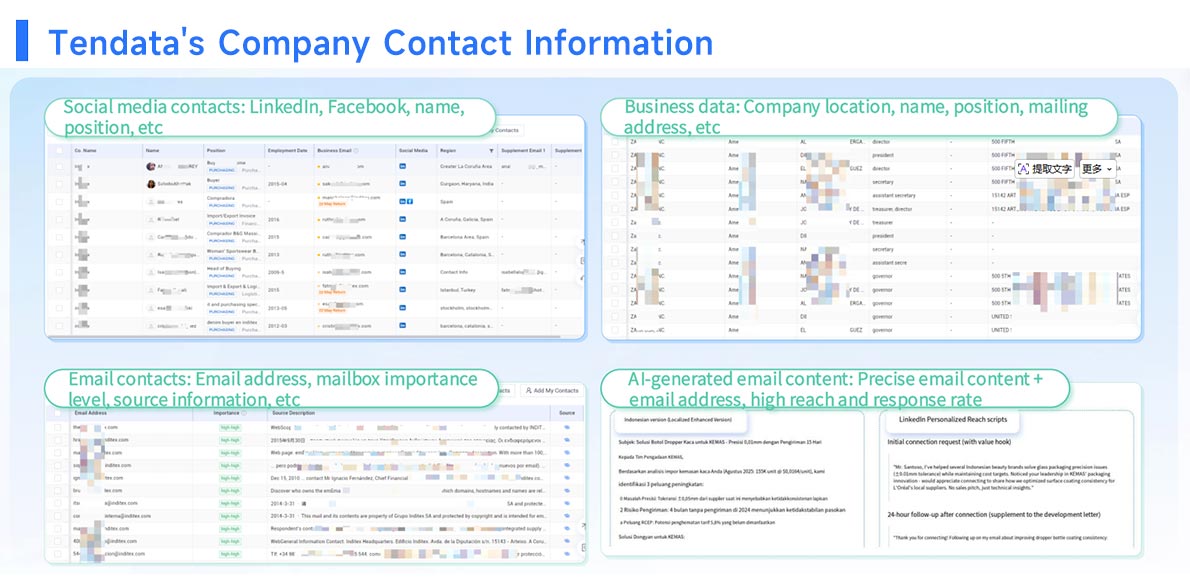
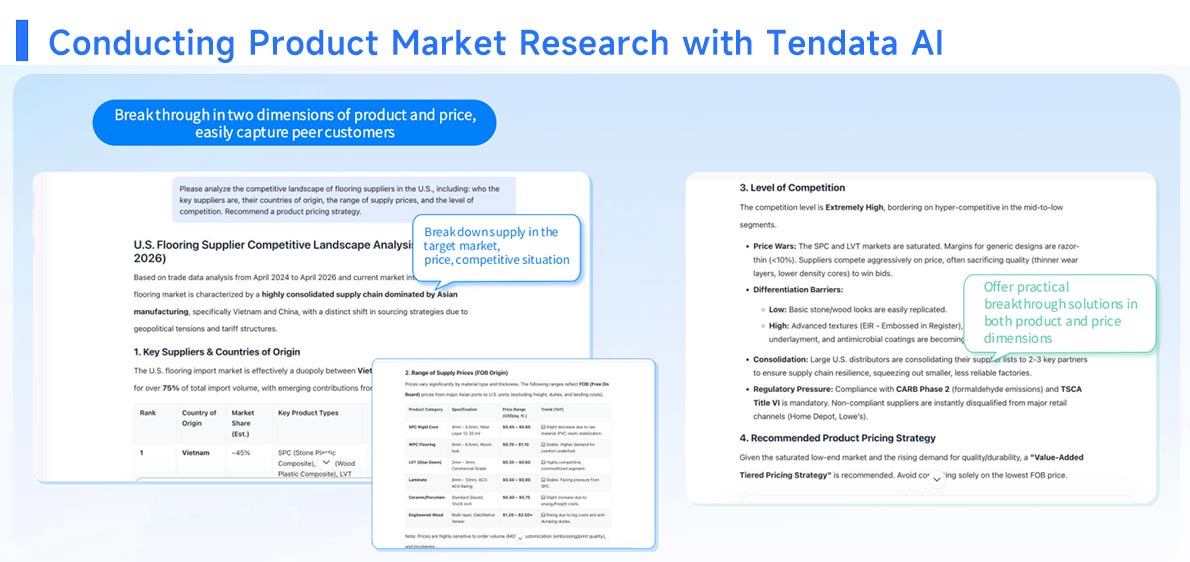
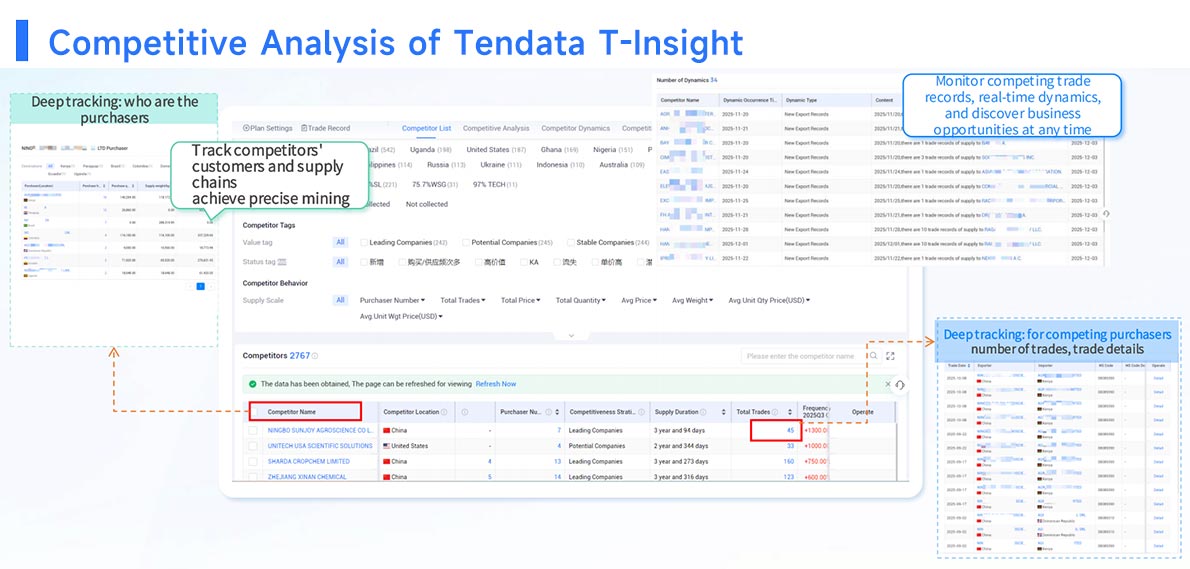
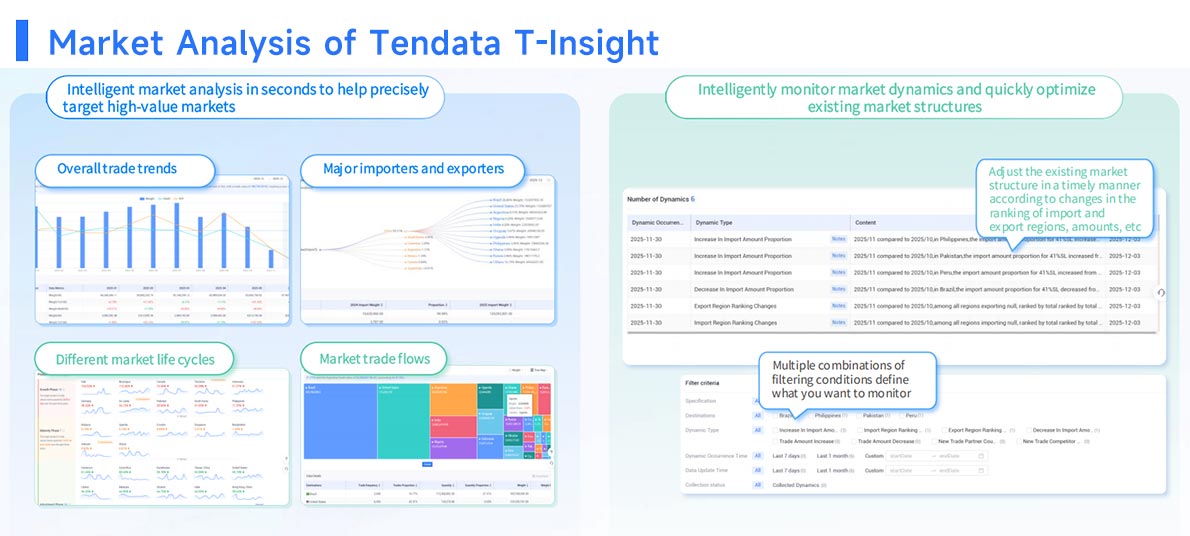
When you combine brand building with real, data-driven customer needs, you can engage buyers in a much more targeted and effective way—instead of casting a wide net online and getting pulled into price competition. Among countless similar suppliers, your goal is to stand out.
What truly resonates with overseas buyers is often:
·Whether your product presentation is professional
·Whether it clearly reflects real application scenarios
·Whether it feels like a brand that is seriously operating in the global market
·Whether it helps reduce cost or risk
Buyers are rarely convinced by the fact that “you have a factory.”
More often, they are convinced because “your product genuinely fits their needs.”
Category
Leave Message for Demo Request or Questions