 Tendata AI
  Exhibition
 B2B Platforms
 Standalone Website
 Social Media
 Emails
 Trade Data Provider
 2025-09-23
Import-Export Trade Data Is Not a “One-Size-Fits-All” Template – Huge Differences Across Countries
First, let's clarify a basic point: not every country's trade data can be used to “find customers.” Many people mistakenly believe that “global trade data is the same everywhere, and once you buy it, you can directly scrape customer contact details.” That assumption is wrong from the start.
The level of openness of import-export trade data varies dramatically across countries.
For example, China's trade data does not disclose buyer or seller details, let alone contact information. What's available are only macro-level figures such as import/export volumes, quantities, and port declarations. This type of data is useful for market trend analysis: say you export furniture, you could learn that “in the past six months, solid wood furniture exports from East China grew 20%” or that “most shipments went to Southeast Asia.” This helps you gauge demand and direction, but you'll never find details like “which Chinese supplier sold furniture to which foreign buyer.”
Some countries, however, release more detailed data. For instance, the U.S., U.K., and Australia publish trade records that include company names on both sides of a transaction. A record might show, “A U.S. company imported 10 containers of textiles from a Chinese exporter.” In such cases, you can see both the buyer's and seller's company names. But even here, note that direct contact details (emails, phone numbers, buyer names) are almost never disclosed. The company name is usually the maximum you'll get.
Other countries are even more restrictive. Many EU nations follow GDPR regulations, which limit data disclosure. In these cases, even company names may not be visible—only product categories and approximate trade volumes are shown. So, if you're asking, “Why can't I find customers in the trade data I bought?” the answer might simply be that the target market doesn't publicly release that kind of information at all.

Where Do “Contact Details” in Domestic Trade Data Software Come From?
This is the question most people care about. Since many countries don't openly publish contact details, where do domestic trade data platforms get those emails and phone numbers?
Here's the hidden truth: those contacts are often not part of the official trade data. They are usually “supplemented” by the software provider afterward.
How is this done? Quite simply: the provider takes the company names disclosed in trade records and uses automated tools to crawl information from sources like Google, LinkedIn, and business directories. For example, if the trade record shows a U.S. buyer called ABC Trading, the system will search online for that company, scrape the email and phone number from its official website, or attempt to extract them from other public sources.
Another method is secondary data aggregation. Some international firms (commonly in countries like India) aggregate import-export records from multiple countries and then enrich them by purchasing business directories or scraping additional public data. They bundle this “enriched dataset” with company names, emails, phone numbers, and sometimes even buyer names, and resell it to domestic trade data providers—who then mark it up again before selling to import-export businesses.
The Pitfall of “Supplemented” Contact Details
The problem with this approach is inconsistency in data quality. Sometimes the contacts you get are just generic emails (e.g., [email protected] or [email protected]). Sending messages there usually leads nowhere—they may go unread, or they're filtered by reception staff long before reaching any purchasing decision-maker.
In other cases, the scraped details are outdated. You call a number and hear, “We stopped selling that product years ago,” or your email bounces back because the address is no longer valid. In such scenarios, you've wasted time and effort.
How to Ensure Customer Contact Information Is Reliable?
The answer is simple: choose a trusted platform. Companies like Dun & Bradstreet and Tendata have been tested and verified by thousands of clients. The contacts you get from these platforms are not random crawled data—they've been validated multiple times to ensure deliverability.
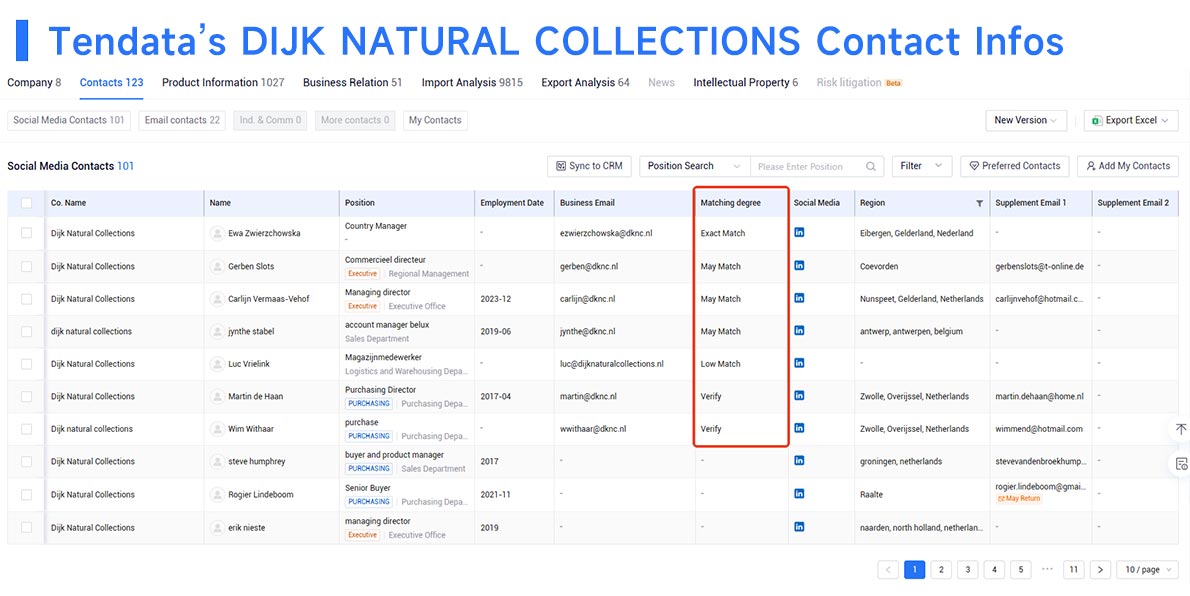
For example, when you search DIJK NATURAL COLLECTIONS in Tendata, you'll find not just a list of contact details, but also clear annotations: the contact person's name, job title, phone number, email address, and whether that information has been re-verified by the platform. You can even see the estimated deliverability rate, helping you prioritize high-quality leads.
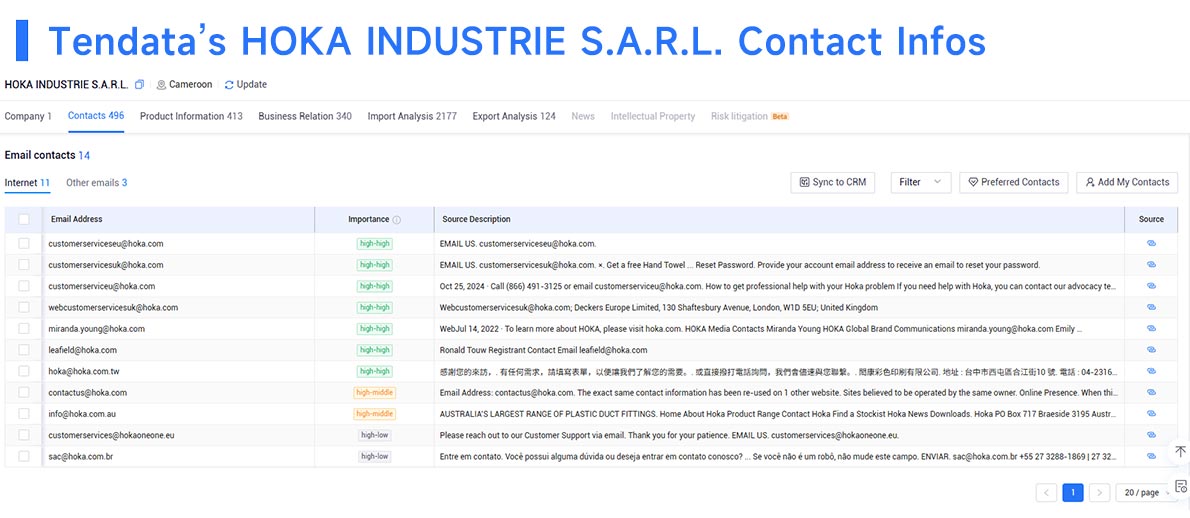
Similarly, searching HOKA INDUSTRIE S.A.R.L. in Tendata ensures that no matter how the contact was sourced, it has undergone secondary verification. Browsing its contact list reveals not just raw details, but structured, reliable data—giving you confidence when reaching out to potential clients.
Category
Leave Message for Demo Request or Questions