
 Tendata AI
  Exhibition
 B2B Platforms
 Standalone Website
 Social Media
 Emails
 Trade Data Provider
 2026-07-16
For companies involved in international trade, information is often the difference between winning a customer and missing an opportunity. Whether you're expanding into a new market, searching for reliable buyers, or monitoring competitors, having access to an accurate import export database can make the entire process more efficient.
Today, there are countless websites claiming to offer trade information. Some focus on public trade statistics, while others provide detailed shipment records and business intelligence. The challenge isn't finding an import export database—it's choosing one that delivers data you can actually use.
This article explains what an import export database is, what features matter most, and how businesses use platforms like Tendata to support international growth.

What Is an Import Export Database?
An import export database is a platform that collects, organizes, and analyzes international trade records from customs authorities, government agencies, and other reliable sources. Instead of browsing multiple websites for scattered information, businesses can access trade records through a single system.
Depending on the provider, an import export database may include shipment details, product descriptions, HS codes, importing and exporting companies, trade values, countries of origin and destination, shipment dates, and historical trading records.
For businesses, this information provides a much clearer understanding of how products move through global markets. It also helps answer practical questions such as which countries have growing demand, which companies are active buyers, and how competitors are expanding into new regions.
Why More Companies Are Using an Import Export Database
International trade has become increasingly data-driven. Companies are expected to make faster decisions while navigating changing supply chains, fluctuating demand, and growing competition.
Instead of relying only on trade fairs, online searches, or referrals, many exporters now use an import export database as part of their daily business development process.
For example, before entering a new market, a company can review historical import records to understand purchasing trends. Before contacting a potential customer, the sales team can verify whether that company has imported similar products recently. Before adjusting pricing, managers can analyze competitor shipment activity to understand market dynamics.
An import export database provides a factual foundation for these decisions, reducing uncertainty and improving efficiency.
Free Databases vs. Professional Import Export Database Platforms
Businesses often begin their research with free trade databases published by governments or international organizations. Resources such as UN Comtrade, ITC Trade Map, Eurostat, and USITC DataWeb provide valuable statistics for understanding trade volumes and market trends.
These platforms are excellent for macro-level analysis, but they are not designed for customer development.
In most cases, free databases do not provide detailed company-level shipment records, buyer purchasing histories, supplier relationships, or business contact information. Users may spend considerable time combining data from multiple sources before they can identify potential opportunities.
A professional import export database, on the other hand, is designed for commercial use. Rather than presenting only trade statistics, it helps businesses identify real companies involved in international trade and understand how those companies buy and sell products over time.
What Makes a Good Import Export Database?
Not every import export database offers the same level of value. When evaluating a platform, businesses should look beyond the size of the database and consider how effectively the information supports decision-making.
One important factor is data coverage. A useful platform should include records from multiple countries and industries so that users can analyze international markets rather than isolated regions.
Another key consideration is search flexibility. Being able to search by product name, HS code, company, country, or supplier allows businesses to approach research from different angles depending on their objectives.
Historical data is equally important. Looking at trade activity over several years makes it easier to identify long-term trends instead of reacting to temporary market fluctuations.
Finally, an import export database becomes much more valuable when it connects trade records with company profiles and contact information. This transforms market research into practical sales opportunities.
How Tendata Helps Businesses Get More Value From an Import Export Database
Tendata is a global trade intelligence platform built around a comprehensive import export database. Rather than simply displaying shipment records, it helps businesses interpret trade information and apply it to customer development, market analysis, and competitive research.
Instead of switching between different websites and spreadsheets, users can explore global trade activities through one integrated platform.
Understand Market Demand Before Making Business Decisions
One of the most common mistakes in international expansion is entering a market without fully understanding local demand.
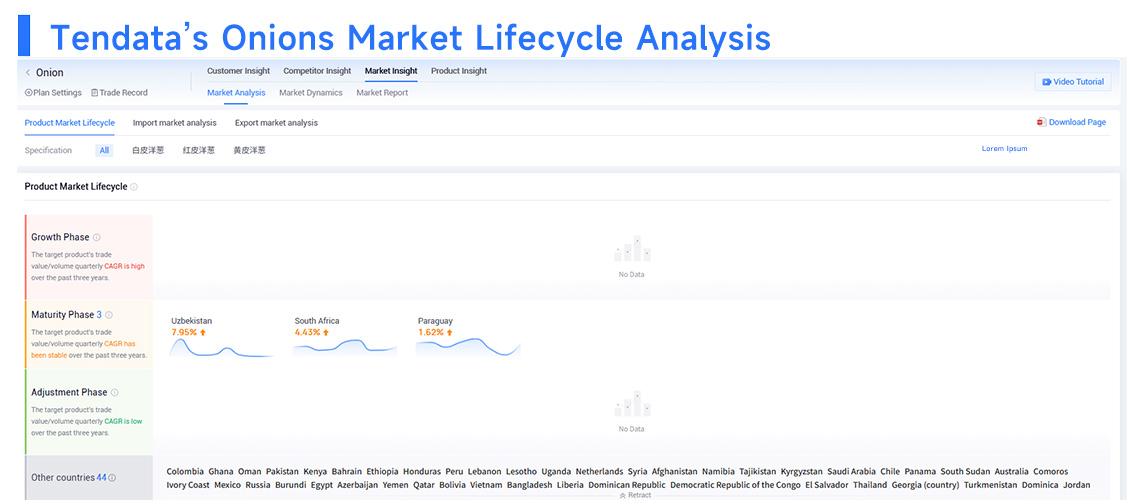
Tendata allows businesses to analyze product movements across different countries, helping them evaluate whether demand is stable, seasonal, or growing. Companies can also compare multiple markets before deciding where to focus their sales efforts.
For example, a company exporting onions can analyze HS Code 070310 to understand which countries consistently import the product, how purchasing volumes change over time, and which regions offer stronger long-term potential.
This type of analysis enables businesses to prioritize markets based on real trade activity rather than assumptions.
>>> Get a Free Demo from Tendata <<<
Learn From Competitor Trade Activity
Competitor analysis is another area where an import export database provides significant value.
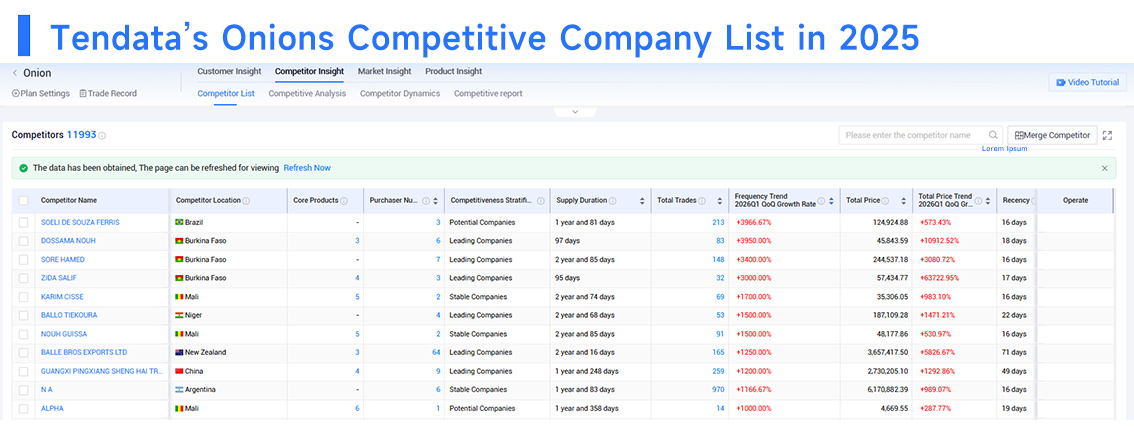
Instead of relying only on public company information, businesses can study actual trading behavior. Shipment records reveal where competitors are selling, how frequently they export, and which markets appear to be their priorities.
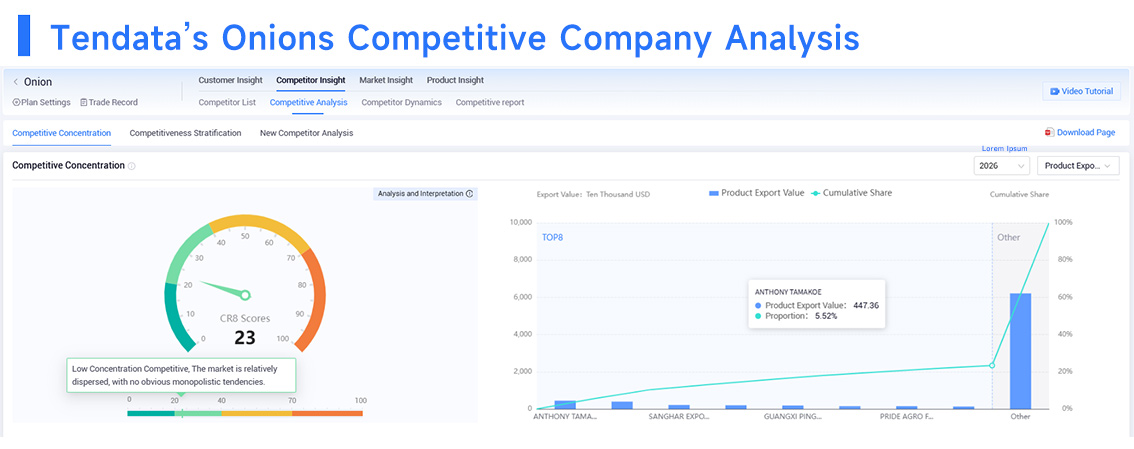
Tendata makes it easier to organize this information, helping users identify market opportunities that competitors may have overlooked or recognize successful strategies that can be adapted to their own business.
Understanding competitor activity also supports better pricing decisions and more accurate market positioning.
>>> Get a Free Demo from Tendata <<<
>>> Get a Free Demo from Tendata <<<
Identify Buyers With Genuine Purchasing Demand
Many sales teams spend considerable time contacting companies that have little or no interest in their products.
Tendata helps solve this problem by allowing users to search for businesses with verified import histories. Instead of building prospect lists from directories alone, companies can identify organizations that have already demonstrated purchasing demand through actual trade records.
Users can review buying frequency, shipment history, supplier relationships, and product categories before deciding which prospects deserve priority. This makes customer development more focused and improves the efficiency of international sales efforts.
Reach the Right Decision-Makers Faster
Finding a qualified buyer is only part of the sales process. Establishing contact with the appropriate decision-maker is equally important.
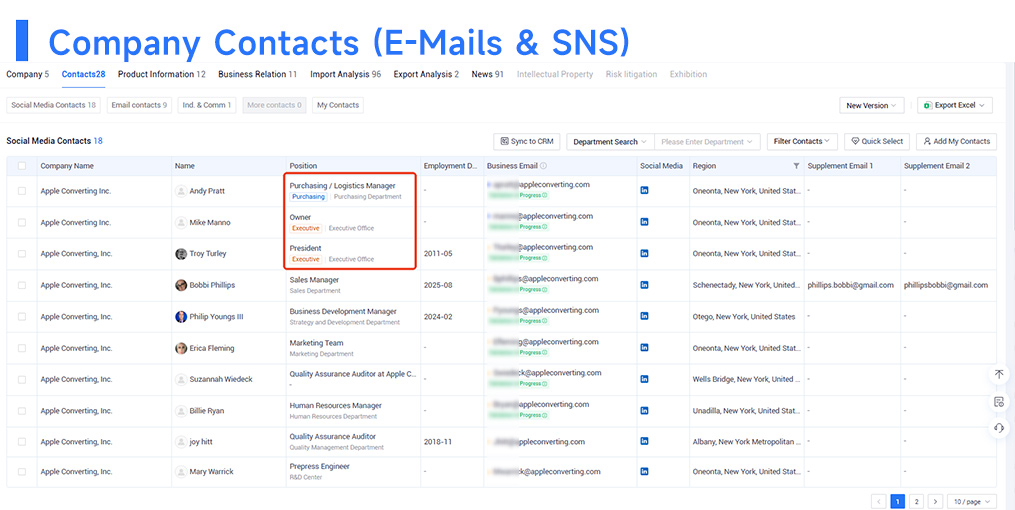
Tendata enhances its import export database by integrating available business contact information, including company email addresses, LinkedIn profiles, Facebook pages, and other publicly available business details.
This allows exporters to move from research to outreach more quickly while tailoring their communication based on a company's actual trading activities.
>>> Get a Free Demo from Tendata <<<
Why an Import Export Database Is a Long-Term Investment
International trade is constantly evolving. New suppliers enter the market, customer demand changes, and global supply chains adjust to economic conditions.
Companies that rely only on occasional market research may struggle to keep up with these changes. By using an import export database regularly, businesses can monitor market developments, discover new opportunities, and respond more quickly to changing customer demand.
Rather than treating trade information as a one-time research project, successful exporters increasingly view it as an ongoing business resource that supports smarter planning and more effective customer acquisition.
Summary
An import export database is more than a collection of trade records—it is a strategic tool that helps businesses understand global markets, evaluate competitors, and identify qualified buyers.
While free trade databases are useful for general market analysis, companies seeking actionable business intelligence often require more comprehensive solutions.
Tendata combines a powerful import export database with market insights, competitor analysis, and buyer discovery capabilities, enabling businesses to make better-informed decisions and develop international customers more efficiently. By turning global trade information into practical business intelligence, Tendata helps exporters and importers build stronger, data-driven growth strategies.
Category
Leave Message for Demo Request or Questions