
 Tendata AI
  Exhibition
 B2B Platforms
 Standalone Website
 Social Media
 Emails
 Trade Data Provider
 2026-07-17
Expanding into overseas markets has never been easier, but identifying the right opportunities has become far more challenging. Businesses need to know where demand is growing, which products are selling well, who the major buyers are, and how competitors are performing. Making these decisions without reliable information often leads to wasted time and missed opportunities.
This is why customs data has become one of the most valuable resources for exporters, importers, manufacturers, and sourcing professionals. By analyzing customs data, companies can better understand international trade flows, evaluate market demand, monitor competitors, and identify qualified business prospects.
The good news is that there are many ways to access customs data. Free government databases are ideal for market research, while professional trade intelligence platforms provide deeper insights for customer development and competitive analysis.

What Is Customs Data?
Customs data is the information recorded when goods pass through customs during international trade. Every shipment generates records that reflect real import and export activities, making customs data one of the most reliable sources for understanding global markets.
Depending on the country and the source, customs data may include product descriptions, HS codes, shipment dates, quantities, trade values, countries of origin and destination, and in some cases, information about importers and exporters.
Because it reflects actual trade transactions instead of estimates or surveys, customs data allows businesses to make decisions based on real market activity.
10 Free Customs Data Platforms Worth Exploring
For companies conducting market research, several government agencies and international organizations provide free access to customs data and trade statistics. Although these platforms usually focus on aggregated trade information rather than detailed company-level shipment records, they are excellent starting points for understanding international markets.
1. General Administration of Customs of China (GACC) Statistics Platform
Website: https://stats.customs.gov.cn/
China's official customs statistics platform provides authoritative import and export data that can be searched by HS code, trading partner, and reporting period. Users can also download statistical reports for further analysis.
2. UN Comtrade
Website: https://comtradeplus.un.org/
Managed by the United Nations, UN Comtrade covers trade statistics from more than 200 countries and regions. It is one of the world's most comprehensive public customs data resources for analyzing international trade.
3. ITC Trade Map
Website: https://www.trademap.org/
Developed by the International Trade Centre, Trade Map helps businesses compare international markets through trade statistics, market share analysis, and visualization tools.
4. ImportYeti
Website: https://www.importyeti.com/
ImportYeti provides free access to U.S. ocean shipment records, allowing users to search importers, suppliers, and shipment histories based on publicly available bill of lading information.
5. USITC DataWeb
Website: https://dataweb.usitc.gov/
The U.S. International Trade Commission provides official import and export statistics that can be filtered by product, country, HS code, and other trade classifications.
6. UK Trade Info
Website: https://www.uktradeinfo.com/
The UK's official trade statistics portal offers detailed information on British imports and exports, including product-level trade data and post-Brexit trade statistics.
7. Eurostat
Website: https://ec.europa.eu/eurostat
Eurostat provides official trade statistics covering trade between European Union member states as well as trade between the EU and the rest of the world.
8. Observatory of Economic Complexity (OEC)
Website: https://oec.world/
OEC presents global trade information through interactive charts and visualizations, making it easy to explore market trends, product competitiveness, and international trade flows.
9. Japan Customs Trade Statistics
Website: https://www.customs.go.jp/
Japan Customs publishes detailed import and export statistics that can be searched by commodity and trading partner, making it useful for analyzing Japanese market activity.
10. Korea International Trade Association (KITA)
Website: https://stat.kita.net/
KITA provides official South Korean trade statistics, including product categories, trading partners, and historical trade performance.
How Tendata Turns Customs Data Into Business Opportunities
Tendata is an all-in-one global customs data platform designed for companies that want to move beyond basic trade research.
Rather than simply displaying import and export statistics, Tendata organizes global trade records into practical business intelligence that supports market expansion, competitor analysis, and customer acquisition.
Understand Markets Before Entering Them
Every successful international expansion begins with understanding the market.
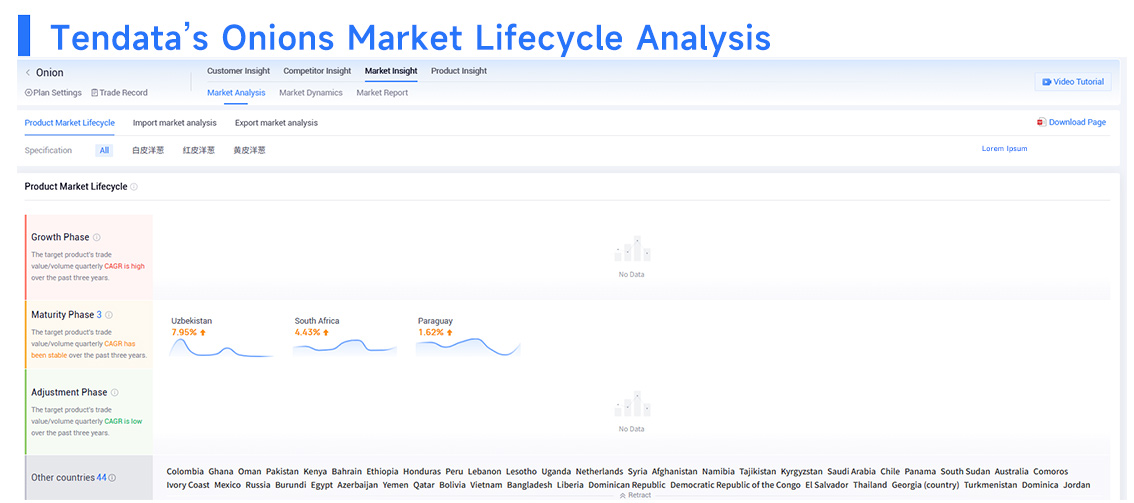
Tendata allows users to analyze customs data by product, HS code, country, and industry. This helps businesses evaluate demand trends, compare markets, and identify regions with long-term growth potential.
For example, companies exporting onions can analyze HS Code 070310 to understand which countries import the product most consistently, how demand has changed over time, and where future opportunities may exist.
Instead of relying on assumptions, businesses can base expansion plans on actual trade activity.
>>> Tendata’s Onions Market Lifecycle Analysis <<<
Monitor Competitors More Effectively
Competitor research becomes much more valuable when it is based on real shipment records.
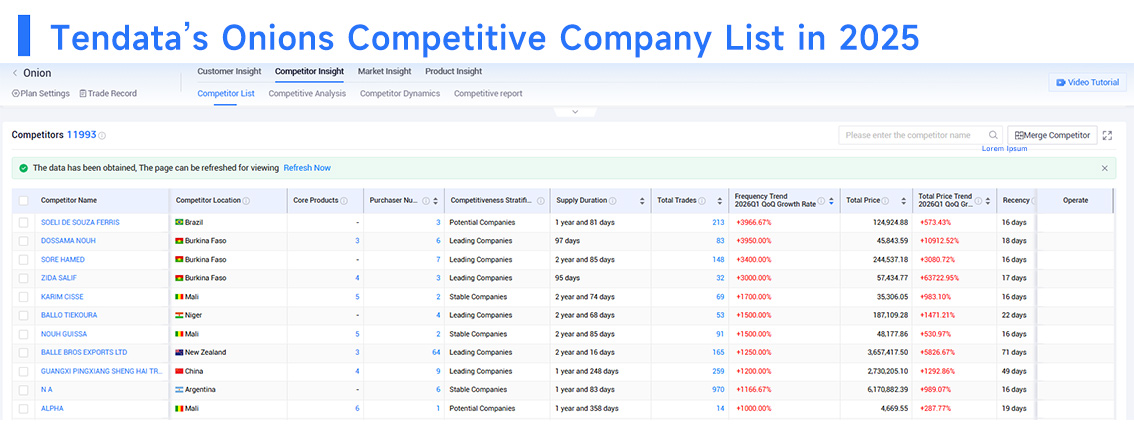
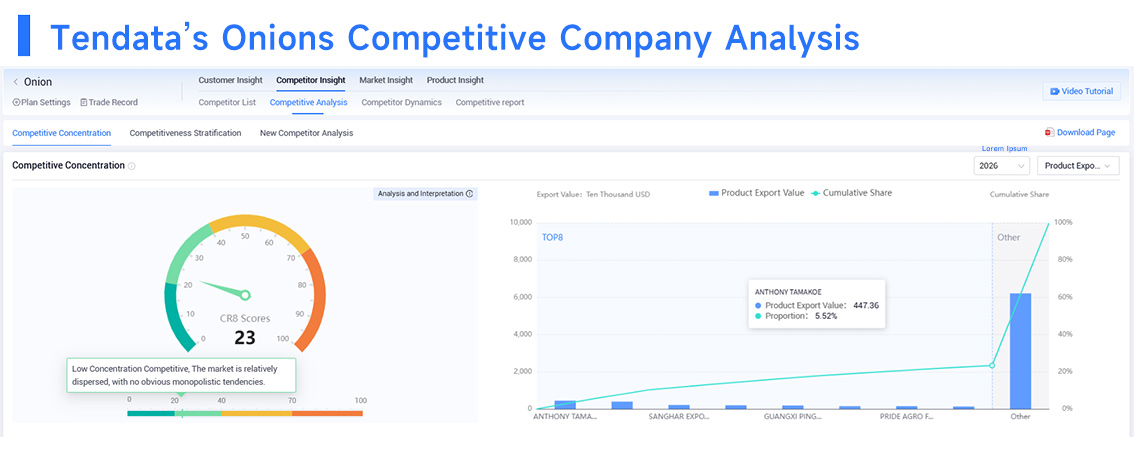
Using Tendata's customs data, companies can study competitor export destinations, shipment frequency, trading relationships, and market focus. These insights reveal how competitors operate internationally and help businesses identify opportunities that may otherwise be overlooked.
This information supports better pricing strategies, market positioning, and long-term planning.
>>> Tendata’s Onions Competitive Company List in 2025 <<<
>>> Tendata’s Onions Competitive Company Analysis <<<
Find Buyers That Match Your Products
One of the biggest challenges in international sales is identifying buyers with genuine purchasing demand.
Tendata enables businesses to search for importers based on actual customs data, making it easier to discover companies that regularly purchase relevant products.
Users can review purchasing history, buying frequency, order volumes, and supplier relationships before deciding which prospects deserve attention.
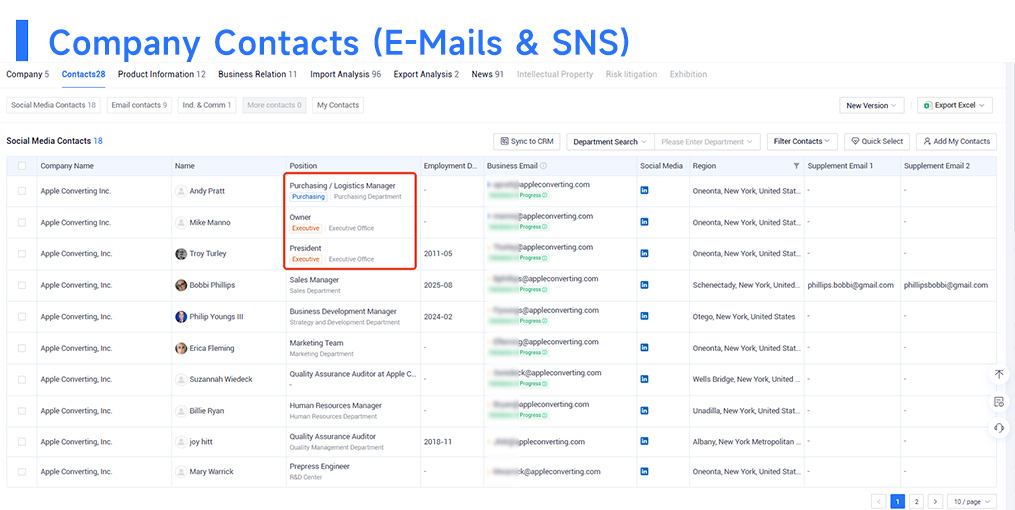
In addition, Tendata includes a built-in business contact database with available company emails, LinkedIn profiles, Facebook pages, and other decision-maker information, helping sales teams connect with qualified buyers more efficiently.
>>> Obtaining Customer Contact Information from Tendata <<<
Summary
Customs data is one of the most reliable sources of information for understanding international trade. Free government databases such as UN Comtrade, ITC Trade Map, USITC DataWeb, Eurostat, and other official platforms provide valuable trade statistics that support market research and industry analysis.
For businesses focused on customer acquisition and international expansion, however, detailed commercial intelligence is equally important.
Tendata combines comprehensive customs data with market analysis, competitor monitoring, buyer identification, and business contact information, allowing companies to move from research to action. By turning global trade records into practical business insights, Tendata helps exporters and importers identify better opportunities, reach qualified buyers, and compete more effectively in today's international marketplace.
Category
Leave Message for Demo Request or Questions