 Tendata AI
  Exhibition
 B2B Platforms
 Standalone Website
 Social Media
 Emails
 Trade Data Provider
 2026-07-17
Making the right decisions in international trade requires more than industry experience. Companies need reliable information to understand where products are moving, which markets are growing, and how competitors are expanding their business. This is why shipment data has become one of the most valuable resources for exporters, importers, manufacturers, and sourcing professionals.
Unlike general market reports, shipment data reflects actual trade transactions. It allows businesses to see what products are being shipped, where they are going, and how global supply chains are changing over time. Whether you're looking for new customers or evaluating overseas markets, shipment data provides a clearer picture of international trade.
This guide explains what shipment data is, where you can access it for free, and how professional platforms like Tendata help businesses gain deeper commercial insights.

What Is Shipment Data?
Shipment data refers to records generated when goods are transported across international borders. These records are collected by customs authorities and other trade-related organizations, providing valuable information about global import and export activities.
Depending on the source, shipment data may include product descriptions, HS codes, shipment dates, quantities, trade values, countries of origin and destination, ports, and, in some cases, the names of importers and exporters.
Because it reflects real shipments instead of estimates or surveys, shipment data is widely used to analyze market demand, monitor industry trends, and understand global supply chains.
For businesses entering new markets, this information provides a much stronger foundation for decision-making than relying solely on public reports or industry assumptions.
10 Free Platforms for Shipment Data and Trade Research
If you're beginning your international market research, several government agencies and international organizations provide free access to shipment data or official trade statistics. Although most of these platforms focus on aggregated customs information rather than detailed commercial intelligence, they are excellent starting points.
1. General Administration of Customs of China (GACC)
Website: https://stats.customs.gov.cn/
China's official customs statistics platform provides import and export data searchable by HS code, trading partner, and reporting period. It also supports downloading statistical reports.
2. UN Comtrade
Website: https://comtradeplus.un.org/
Managed by the United Nations, UN Comtrade is one of the world's largest international trade databases, covering more than 200 countries and regions with detailed trade statistics.
3. ITC Trade Map
Website: https://www.trademap.org/
ITC Trade Map provides trade statistics together with visualization tools that help businesses analyze export performance, market share, and global trade flows.
4. ImportYeti
Website: https://www.importyeti.com/
ImportYeti allows users to search U.S. ocean shipment records using publicly available bill of lading data, making it useful for researching importers and suppliers.
5. USITC DataWeb
Website: https://dataweb.usitc.gov/
The U.S. International Trade Commission provides official trade statistics that can be searched by product, country, HS code, and other trade classifications.
6. UK Trade Info
Website: https://www.uktradeinfo.com/
The UK's official trade statistics portal provides detailed information on imports and exports, supporting market analysis across different industries.
7. Eurostat
Website: https://ec.europa.eu/eurostat
Eurostat offers comprehensive trade statistics for European Union member states and international trade involving the EU.
8. Observatory of Economic Complexity (OEC)
Website: https://oec.world/
OEC presents international trade information through interactive charts and visualizations, making complex trade patterns easier to understand.
9. Japan Customs Trade Statistics
Website: https://www.customs.go.jp/
Japan Customs publishes official import and export statistics that can be searched by commodity and trading partner.
10. Korea International Trade Association (KITA)
Website: https://stat.kita.net/
KITA provides detailed South Korean trade statistics, including historical data, trading partners, and product-level analysis.
What Can Shipment Data Tell Your Business?
Businesses often think of shipment data as simply a record of imports and exports, but its value extends much further.
By studying historical shipment activities, companies can identify markets where demand is increasing, compare trade performance between countries, and recognize seasonal purchasing patterns. Shipment records also help businesses understand how products move through international supply chains and whether certain regions are becoming more important for specific industries.
For exporters, shipment data can also reveal which markets consistently import products similar to their own, providing useful guidance when selecting target countries for expansion.
Why Free Shipment Data Isn't Always Enough
Free trade databases are excellent for understanding overall market trends, but they are rarely designed to support business development.
Suppose an exporter discovers that a country has significantly increased imports of industrial equipment. Public trade statistics can confirm the market trend, but they usually cannot answer practical sales questions.
Which companies are placing those orders?
How often do they import?
Who are their current suppliers?
Are these buyers still actively purchasing today?
Without these answers, businesses often spend considerable time researching potential customers manually.
This is where professional shipment data platforms become much more valuable.
How Tendata Helps Businesses Turn Shipment Data Into Sales Opportunities
Tendata is a global trade intelligence platform built to help companies use shipment data more effectively.
Rather than simply displaying shipment records, the platform combines trade information with business intelligence, allowing users to identify market opportunities, analyze competitors, and develop high-quality customer leads.
Understand Market Demand Before Expanding
Every successful international expansion begins with market research.
Tendata enables businesses to analyze shipment data across products, countries, and industries, helping them understand where demand is growing and where long-term opportunities exist.
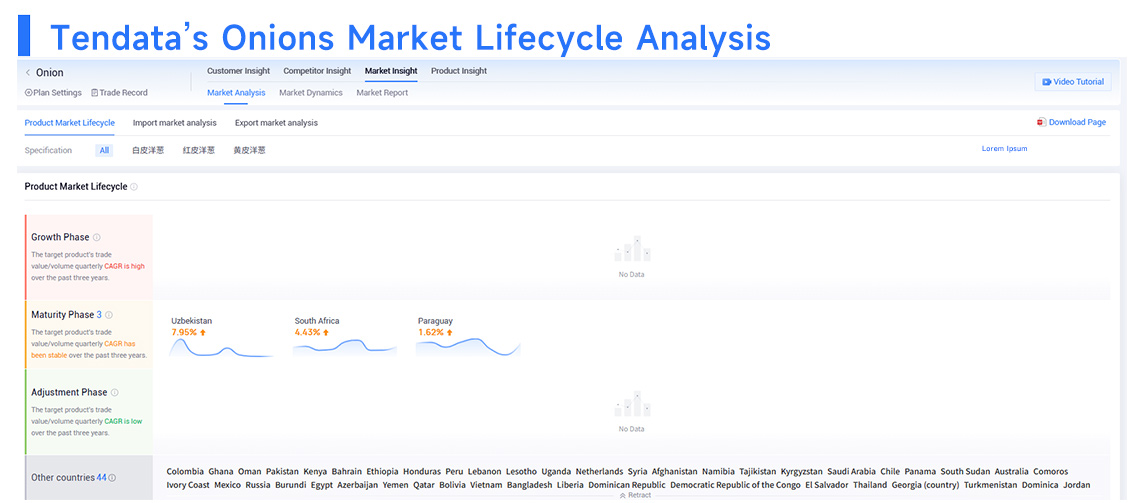
For example, an agricultural exporter can analyze HS Code 070310 (onions) to identify countries with consistent import demand, compare purchasing trends over time, and evaluate which markets deserve greater attention.
This allows businesses to make investment decisions based on real trade activity rather than market speculation.
>>> Tendata’s Onions Market Lifecycle Analysis <<<
Learn From Competitor Shipment Records
Competitor analysis is another important application of shipment data.
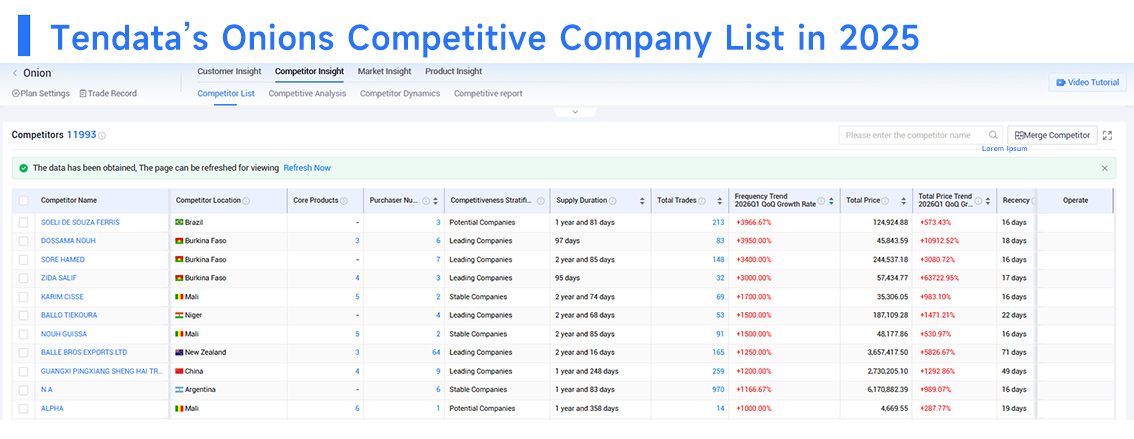
By studying shipment histories, companies can gain valuable insights into competitor markets, export destinations, trading frequency, and supply chain relationships.
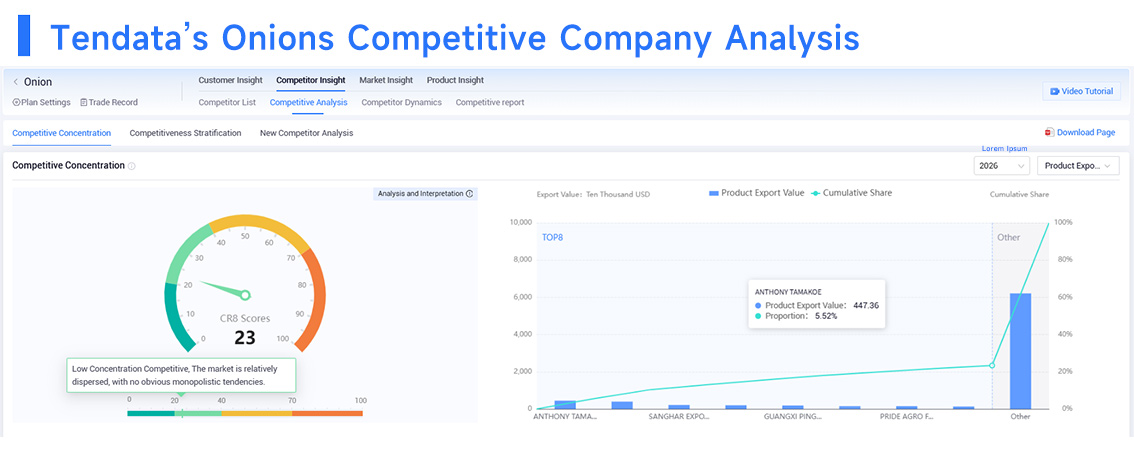
Tendata organizes this information into searchable reports, making it easier to understand competitor strategies and identify opportunities that may not be immediately obvious through traditional market research.
This helps businesses improve market positioning and make more informed strategic decisions.
>>> Tendata’s Onions Competitive Company List in 2025 <<<
>>> Tendata’s Onions Competitive Company Analysis <<<
Find Buyers With Verified Purchasing Activity
One of the greatest advantages of professional shipment data is the ability to identify companies that are already purchasing products similar to yours.
Instead of relying only on business directories or internet searches, Tendata enables users to search companies based on actual shipment records.
Businesses can review purchasing history, shipment frequency, order quantities, and supplier relationships before deciding which prospects to contact.
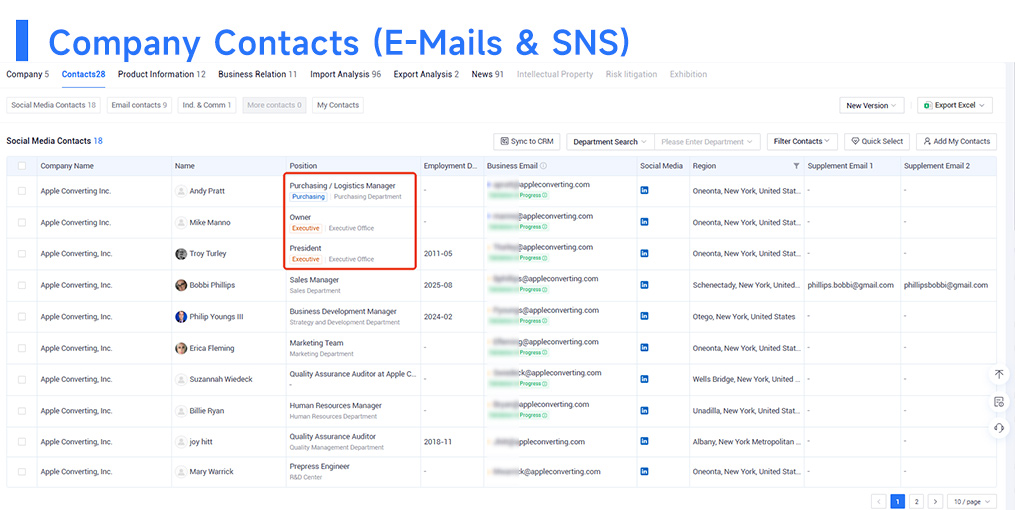
The platform also connects shipment records with available business contact information, including company email addresses, LinkedIn profiles, Facebook pages, and other public resources, helping sales teams begin customer outreach more efficiently.
>>> Obtaining Customer Contact Information from Tendata <<<
Why Shipment Data Has Become a Strategic Business Resource
Global trade continues to evolve rapidly, and companies need reliable information to stay competitive.
Shipment data provides a transparent view of international trade activities, helping businesses understand where products are moving, how markets are changing, and which companies are actively participating in global commerce.
Instead of relying solely on experience or assumptions, businesses can use real shipment records to support market expansion, customer development, and competitive analysis.
As international competition grows, companies that make better use of shipment data are often better positioned to discover opportunities before their competitors.
Summary
Shipment data provides businesses with valuable insights into international trade, helping them understand market demand, monitor competitors, and identify qualified buyers. Free resources such as UN Comtrade, ITC Trade Map, USITC DataWeb, Eurostat, and other official customs databases are excellent starting points for market research.
For companies that require deeper commercial intelligence, Tendata combines comprehensive shipment data with market analysis, competitor monitoring, buyer discovery, and business contact information. By transforming shipment records into actionable insights, Tendata helps businesses make smarter decisions, improve customer acquisition, and strengthen their position in global markets.
Category
Leave Message for Demo Request or Questions