
 Tendata AI
  Exhibition
 B2B Platforms
 Standalone Website
 Social Media
 Emails
 Trade Data Provider
 2026-07-16
Growing an international business requires more than a good product. Companies also need to understand where opportunities exist, how competitors are performing, and which markets are showing long-term demand. Without reliable information, expanding into new countries often involves unnecessary risk.
This is why export data has become an essential business resource. By analyzing real export activities, companies can gain valuable insights into global trade flows, identify emerging markets, and better understand how products move across international supply chains.
Whether you're a manufacturer, exporter, distributor, or sourcing professional, export data can help you make more informed decisions and build a stronger international growth strategy.

What Can Export Data Tell You?
Unlike general market reports that summarize industry trends, export data reflects actual trading activity. It records goods leaving one country for another and provides businesses with a clearer picture of international commerce.
Depending on the country and data source, export data may include product descriptions, HS codes, shipment dates, export values, quantities, destination countries, ports, exporters, and other trade-related information.
Because these records are based on real shipments, export data allows businesses to see what is happening in the market instead of relying solely on forecasts or surveys.
For example, if a company manufactures packaging equipment, it can use export data to identify which countries are receiving increasing shipments, which suppliers dominate those markets, and where new opportunities may be developing.
Why Export Data Is Valuable Beyond Market Research
Many companies initially use export data to understand overall trade volumes. While this provides useful background information, its practical value extends much further.
Businesses can use export records to monitor changes in international demand, evaluate industry competition, and identify regions experiencing rapid growth.
More importantly, export data helps companies answer strategic questions before making major business decisions.
Is the market becoming more competitive?
Are competitors entering new countries?
Which products are experiencing stronger international demand?
Are there export destinations that remain underserved?
Having access to this information allows companies to reduce uncertainty and prioritize markets with greater confidence.
Free Sources of Export Data
Businesses can access basic export data through a variety of public databases maintained by governments and international organizations.
Some of the most widely used sources include UN Comtrade, ITC Trade Map, WTO Data Portal, USITC DataWeb, Eurostat, and national customs agencies. These platforms provide official statistics covering thousands of products across hundreds of countries.
They are particularly useful for studying export trends, comparing markets, and analyzing trade volumes over time.
However, most public databases focus on aggregated statistics. While they provide valuable macro-level insights, they often lack the detailed company-level information needed for business development.
For companies looking to identify customers, evaluate competitors, or monitor supplier relationships, professional trade intelligence platforms provide much greater value.
From Export Data to Competitive Intelligence
One of the most powerful applications of export data is competitor analysis.
Companies often know who their competitors are but have limited visibility into how those competitors operate internationally.
By studying export records, businesses can identify where competitors are shipping products, which destination markets generate the most business, and how their export activities change over time.
This information provides valuable clues about market priorities, pricing strategies, and expansion plans.
Instead of reacting after competitors establish a strong presence, businesses can identify market trends earlier and adjust their own strategies accordingly.
How Tendata Helps Businesses Unlock the Value of Export Data
Tendata is a global trade intelligence platform that helps businesses transform export data into practical commercial insights.
Rather than simply providing shipment records, Tendata combines trade information with analytical tools that support market research, competitor analysis, and customer development.
This enables companies to move beyond data collection and focus on making better business decisions.
Discover Export Markets With Long-Term Potential
Not every growing market offers sustainable opportunities.
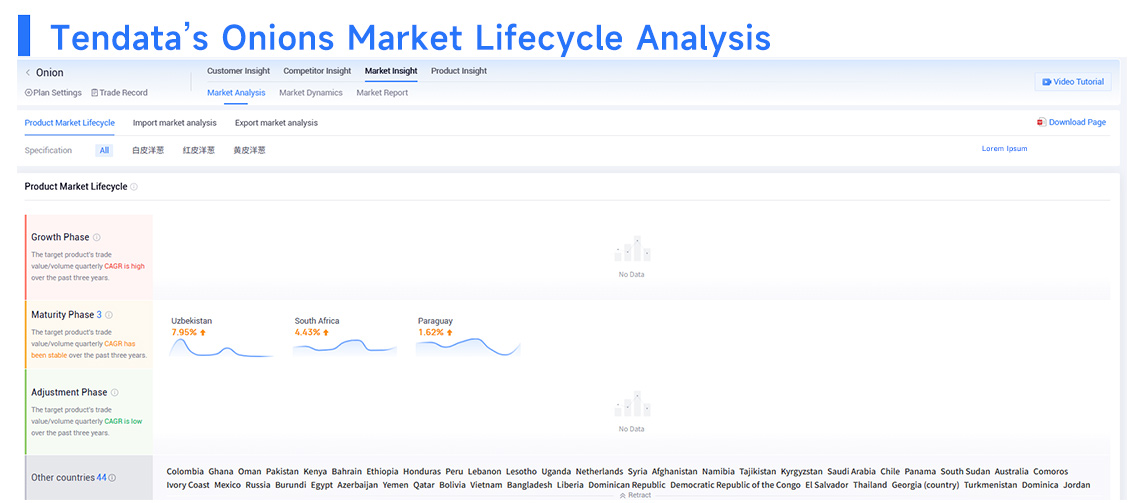
Tendata allows businesses to analyze export data by product, country, and industry to evaluate long-term demand rather than temporary market fluctuations.
For example, a company exporting agricultural products can analyze HS Code 070310 (onions) to compare export destinations, understand historical trade patterns, and identify countries with stable purchasing demand.
This helps businesses allocate resources more effectively and avoid entering markets with limited growth potential.
>>> Get a Free Demo from Tendata <<<
Monitor Competitor Performance
Understanding competitor activity is often just as important as understanding customer demand.
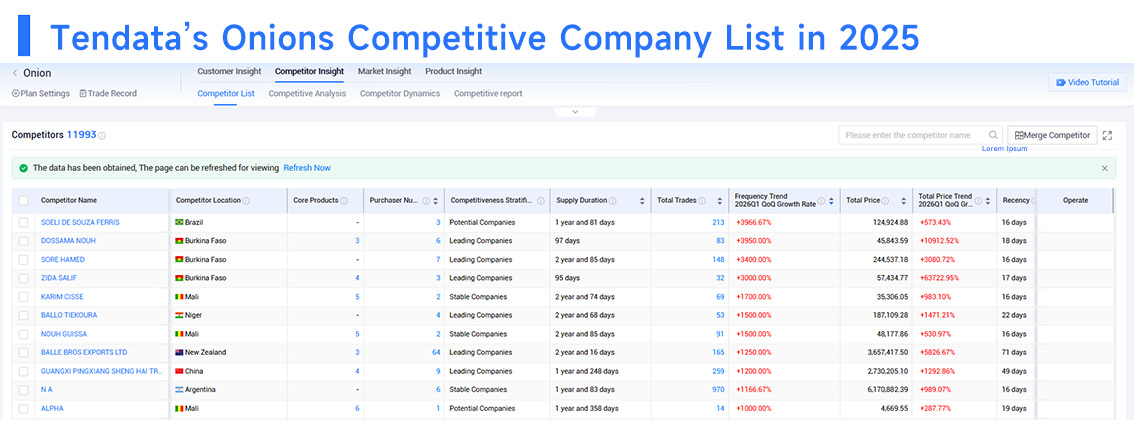
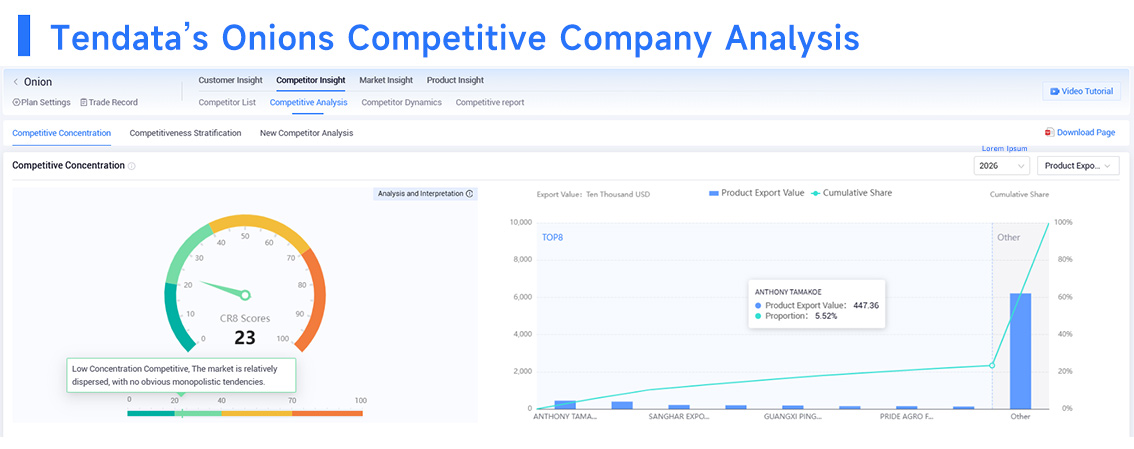
Through Tendata's export data, businesses can examine competitor shipment frequency, destination markets, and export history to gain a better understanding of their international strategies.
These insights help companies identify competitive gaps, evaluate market saturation, and recognize opportunities where demand remains underserved.
Rather than relying on public announcements or industry rumors, companies can make decisions based on actual trading activities.
>>> Get a Free Demo from Tendata <<<
>>> Get a Free Demo from Tendata <<<
Identify Potential Overseas Buyers
Although export data primarily focuses on outbound shipments, it can also help businesses identify companies involved in international trade networks.
By analyzing export destinations and trading relationships, exporters can gain a better understanding of market participants and identify organizations that may become future customers or strategic partners.
Tendata makes this process more efficient by organizing trade records into searchable company profiles, allowing users to evaluate historical trading activities before beginning customer outreach.
Connect Trade Insights With Business Contacts
Finding promising opportunities is only the first step in international business development.
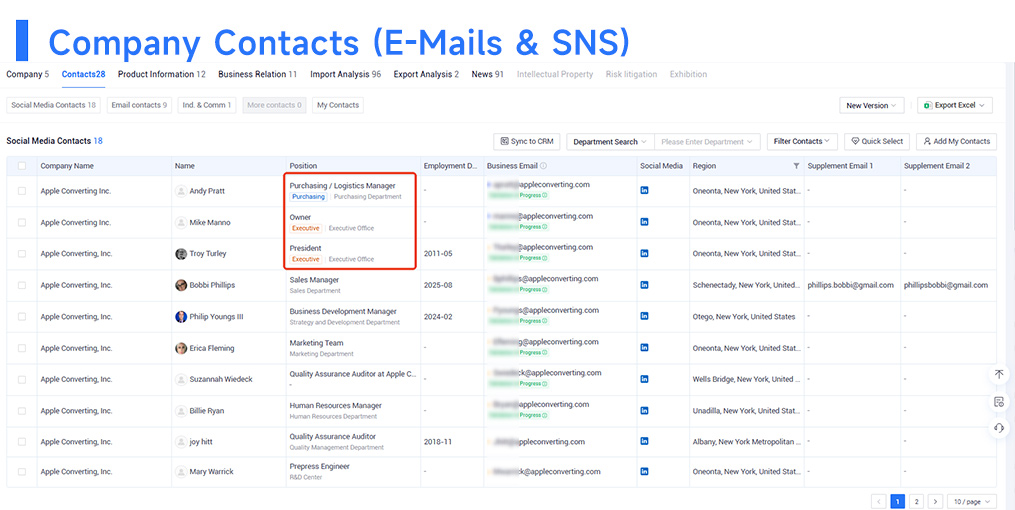
Tendata enhances export data by integrating available business contact information, including company email addresses, LinkedIn profiles, Facebook pages, and other public business resources.
This allows businesses to move directly from research to communication while tailoring their outreach based on real trading history.
Sales teams can spend less time searching for information and more time building meaningful business relationships.
>>> Get a Free Demo from Tendata <<<
Summary
Export data is much more than a record of international shipments. It provides businesses with valuable insights into global markets, competitor activities, and industry trends, helping companies make better-informed decisions.
While public trade databases are useful for understanding overall export statistics, businesses seeking deeper commercial intelligence often require more advanced solutions.
Tendata combines comprehensive export data with market analysis, competitor monitoring, and business intelligence tools, enabling exporters and manufacturers to identify promising markets, understand industry dynamics, and develop stronger international growth strategies. By turning trade records into actionable insights, Tendata helps businesses compete more effectively in today's global marketplace.
Category
Leave Message for Demo Request or Questions