 Tendata AI
  Exhibition
 B2B Platforms
 Standalone Website
 Social Media
 Emails
 Trade Data Provider
 2025-10-17
Global trade data primarily comes from foreign bills of lading (B/L) and customs declaration records.
Think about it — if you were a buyer, would you openly disclose all your supplier information, contact details, and detailed purchase data? Probably not.
That’s exactly why global trade data is inherently incomplete. In addition, due to the sensitive nature of trade data, many countries do not publicly release it at all.

1. Data Incompleteness and Missing Contact Information
Because of this lack of openness, trade records often don’t include direct contact details.
In fact, in most cases, 8 or 9 out of 10 bills of lading contain no contact information at all, meaning that you have to rely on third-party tools to locate accurate buyer contacts.
So, why do many data providers claim their databases include contact details?
That’s because some companies perform deep data mining — searching company names on Google, LinkedIn, and other public platforms to find buyer emails, job titles, or decision-maker information.
However, even that has its limitations. For instance, in countries like Russia or Vietnam, where bills are often written in local languages, data extraction becomes difficult.
Since customs data is manually entered by customs officers, inconsistencies in company names may occur — resulting in multiple records that actually belong to the same importer or exporter.
2. Why Developing Clients from Trade Data Is So Challenging
Now you might understand — global trade data clients are all 100% real importers.
They already have suppliers, many of whom they’ve worked with for years.
Offering a small discount is unlikely to sway them, because the larger the buyer, the more they value supply stability.
Even if you finally manage to contact them — and they reply — you’re likely just one of many potential suppliers on their list.
That means you’ll need patience, professionalism, and persistence to build trust over time.
In short, developing clients from trade data is difficult, but not impossible.
Many large corporations invest heavily in data sources, and their success depends on their own internal strength — competitive pricing, reliable delivery, and professional service.
If your company lacks these advantages, your trade data outreach results will naturally be limited.
3. Why Choose a Reliable Trade Data Provider Like Tendata
If you still want to explore client development through trade data, it’s crucial to choose a legitimate and reliable provider — such as Tendata.
Tendata offers several key advantages:
(1)Mirror Data in Addition to Open Data
Tendata not only covers all countries with open trade data, but also provides mirror data — derived from import data that can be used to infer export records (and vice versa).
This makes the data more complete and valuable for analysis.
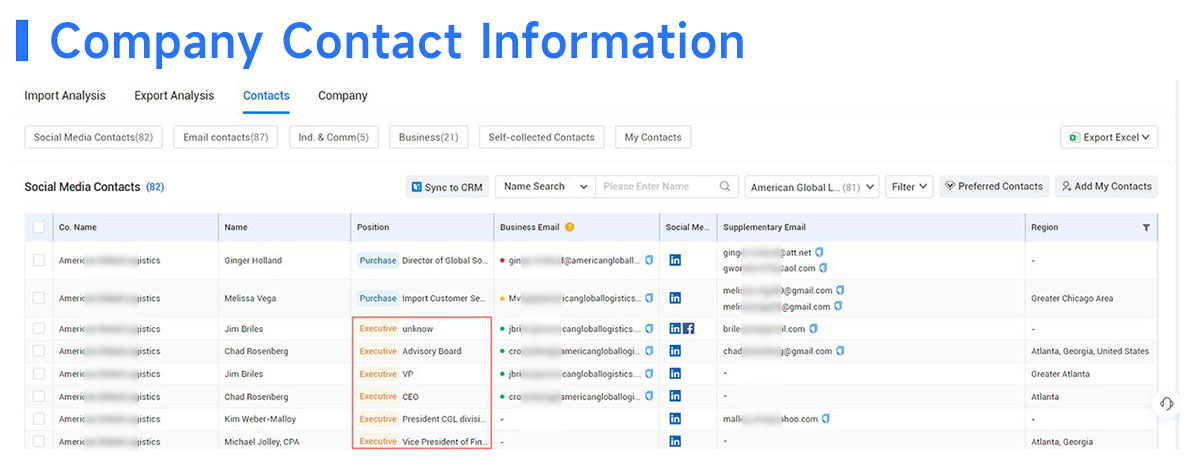
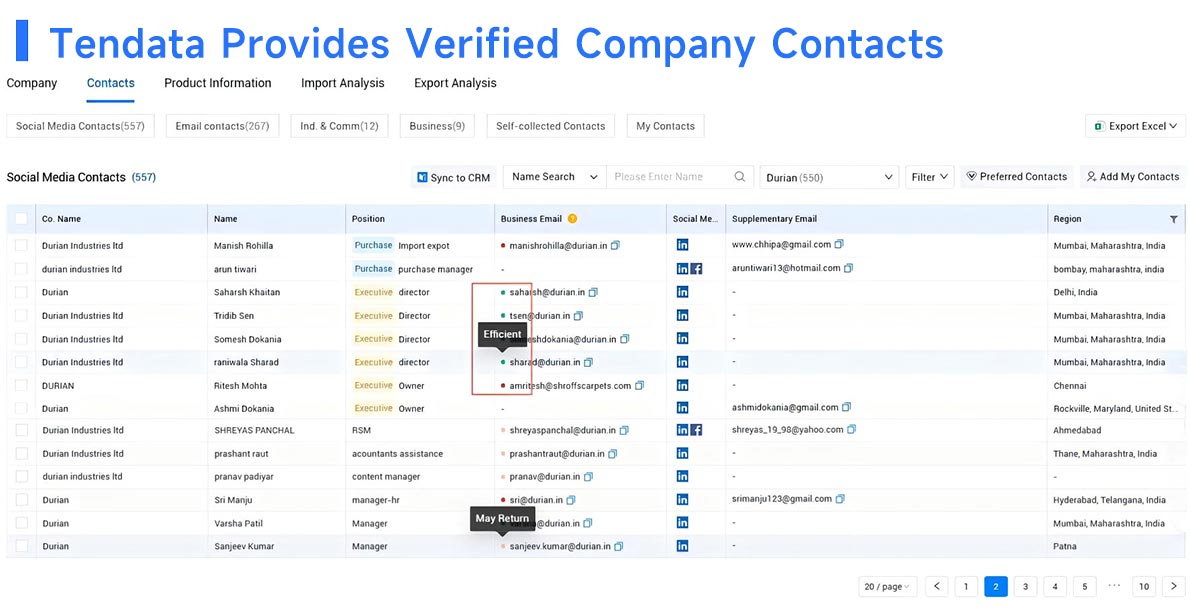
(2)Pre-Mined Contact Information
Unlike many providers that require users to search for contacts manually, Tendata has already pre-extracted buyer contacts — including email addresses and company details — even for non-English regions.
This saves users significant time and effort.
(3)Data Cleaning and Standardization
Tendata performs data cleaning to eliminate duplicates and inconsistencies, allowing users to conduct trade analysis with clearer, standardized data instead of raw, messy records.
Conclusion
Global trade data is a powerful resource — but it’s not a magic shortcut.
Understanding its limitations, working with reliable sources, and taking a long-term approach are the real keys to success in global business development.
🔗 Explore more at www.tendata.com
Category
Leave Message for Demo Request or Questions