
 Tendata AI
  Exhibition
 B2B Platforms
 Standalone Website
 Social Media
 Emails
 Trade Data Provider
 2025-10-22
By using global trade data, importers and exporters can analyze target markets, gain insights into industry trends, monitor competitors, and—most importantly—quickly identify qualified buyers. It has become one of the most essential tools for efficiently expanding into international markets.
However, many people fail to use trade data effectively, so it doesn't deliver its full potential in practice.
Today, free global trade data is quite limited, and the update speed often lags behind market needs. Therefore, if you want to obtain more accurate and comprehensive customer information, it's far more convenient to purchase global trade data from a professional platform.
I personally use Tendata's Global Trade Database, which offers an excellent balance of price and performance. It covers a wide range of countries and even provides verified contact information, making client research and outreach much more efficient.
Below, I'll share several practical ways to use global trade data to develop overseas importers—hopefully helping you expand your vision and succeed further in international trade.

Step 1: Search Global Trade Data
Enter your target keyword or HS code. For example, let's use "GLASS ARTWARE" to look for potential clients.
The search results show valuable details such as the importer's name, quantity, weight, and transaction value—all of which help you understand the client's purchasing scale and potential.
Step 2: Find Contact Information
You can also use platforms like LinkedIn to find company details.
For example, if you search "MEINHART KABEL ÖSTERREICH GMBH", you'll find that the company has an official LinkedIn page with over 200 employees, plus a link to its website.
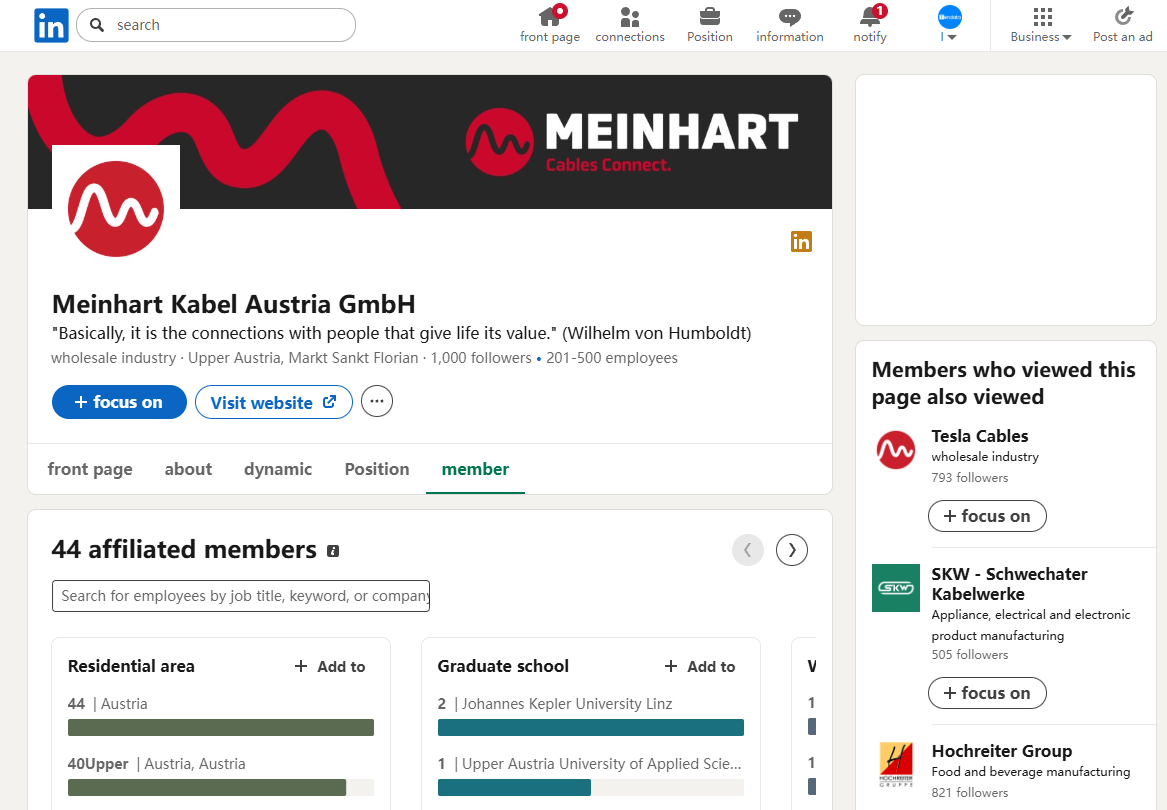
Visiting their site gives you a quick understanding of the company's profile.
But how can you quickly identify the decision-maker to contact?
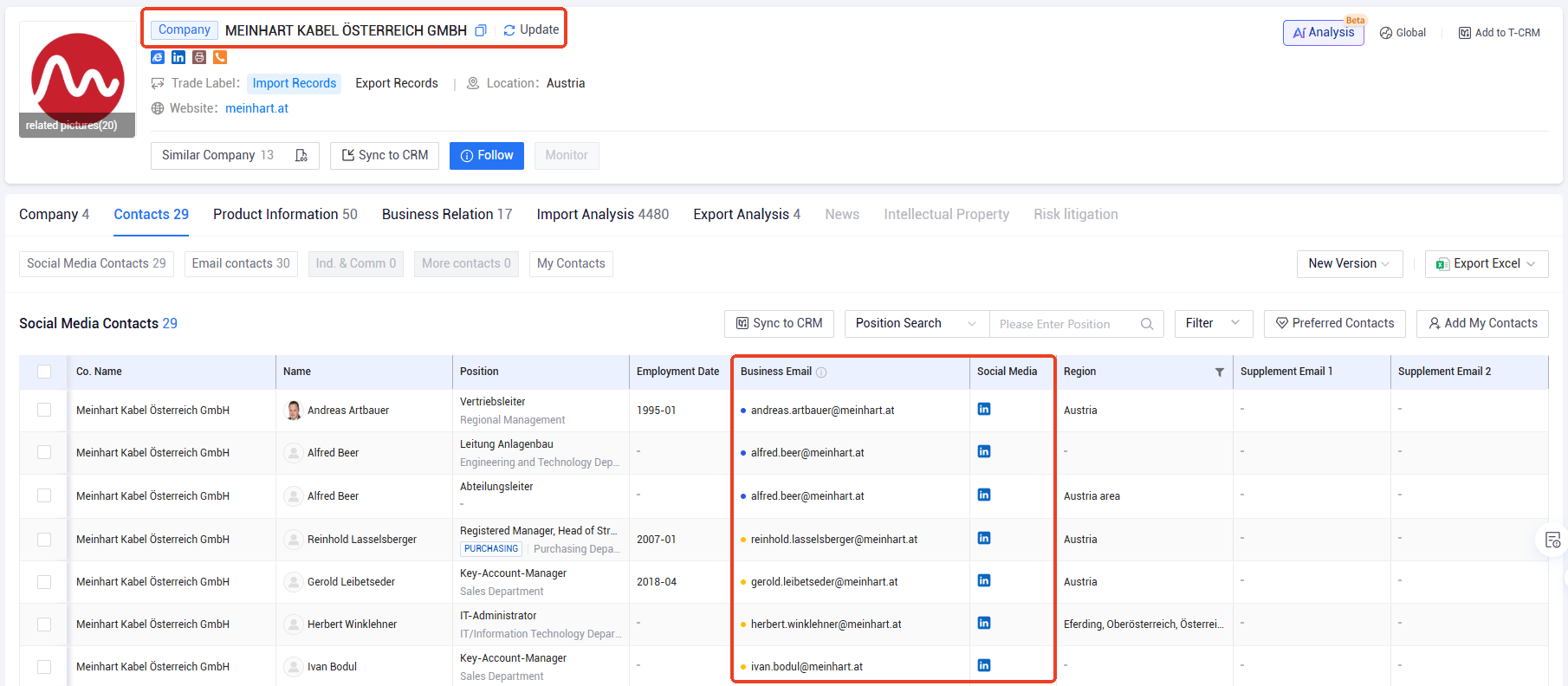
That's where Tendata's Contact Information feature is incredibly powerful.
Simply search for the company on Tendata, open the "Contact Info" tab, and you'll see direct access to the decision-makers' LinkedIn profiles, emails, and even other verified social media accounts—allowing you to connect through multiple channels and engage more effectively to convert potential deals.
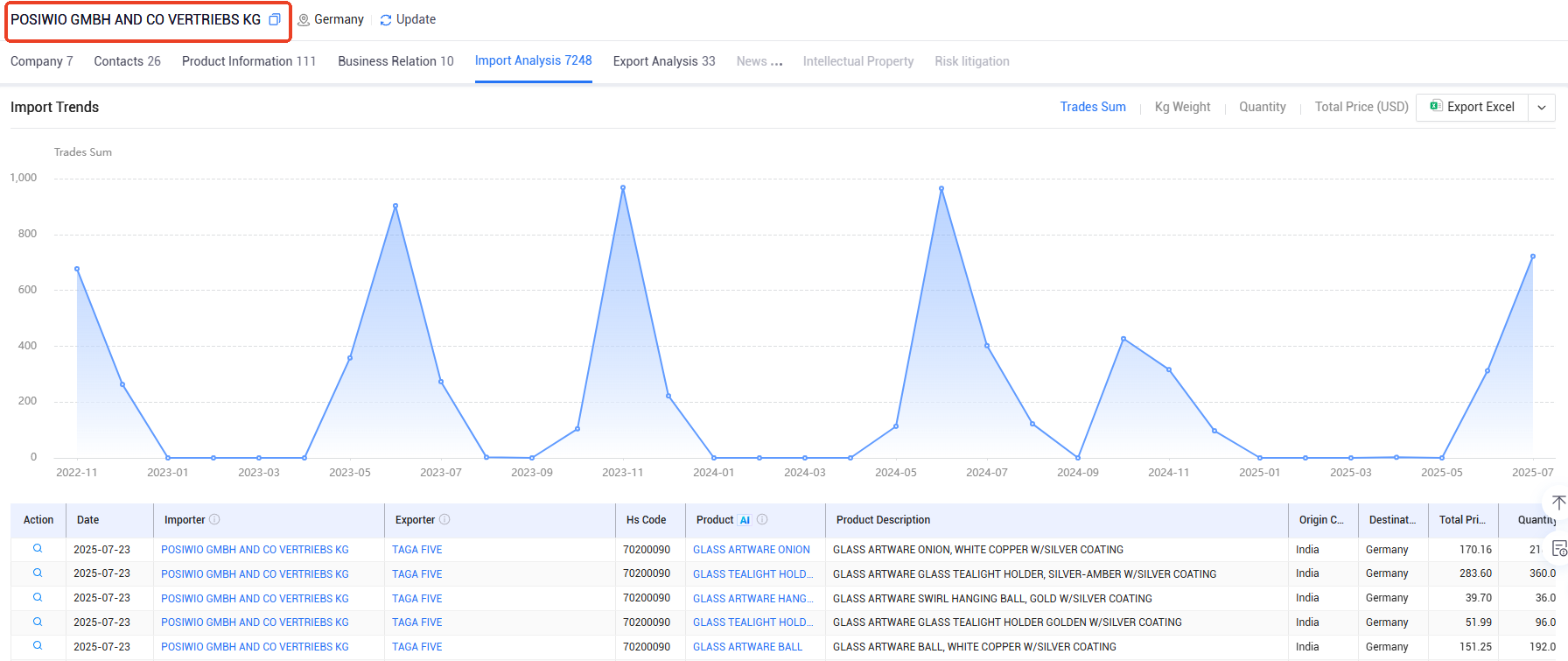
You can also input another company name, for example "POSIWIO GMBH & CO VERTRIEBS KG", to see its full trade records—including partners, quantities, weights, transaction values, and detailed customs declarations. This also helps uncover their verified contact information.
Want to know which overseas importers your competitors are currently working with?
Simply enter your competitor's company name to continuously track their export activity, understand their buyers' details, purchasing habits, and demand trends. Remember—their clients could easily become your target customers too!
Step 3: Key Suggestions
1. Try multiple relevant keywords when searching on the platform to reach a broader range of potential clients within your industry.
2. When viewing trade data from non-English-speaking countries, use translation tools to easily understand and analyze the information.
3. After identifying a contact, check their LinkedIn or other professional profiles to learn about their background, experience, and achievements—this helps you personalize your approach.
The more you understand, the better you can communicate and build meaningful business relationships.
Finally, make sure to gather as much company and industry intelligence as possible.
The deeper your insights, the stronger your foundation for expanding your global trade network and achieving long-term success.
Category
Leave Message for Demo Request or Questions