
 Tendata AI
  Exhibition
 B2B Platforms
 Standalone Website
 Social Media
 Emails
 Trade Data Provider
 2025-10-24
This guide explains step-by-step how to reach global importers through social media engagement, smart search engine tactics, and professional trade data platforms. Understand how to produce valuable content, use advanced Google operators, and leverage trade databases like Tendata to target the right overseas buyers and grow your export business.

1. Overseas Social Media
You can try using overseas social media platforms. Google advertising combined with social media marketing is currently one of the mainstream ways to find importers.
Popular social networks used by foreign audiences include Facebook, WhatsApp, Twitter, LinkedIn, TikTok, Pinterest, Instagram, Tumblr, and VK, among others.
There are two key points when using social media:
·Create high-quality content.
·Engage and interact through links and conversations.
When you already have good content, adding friends or followers becomes easier, because importers are more likely to recognize your value.
Traffic on Instagram (INS) is relatively limited, so we recommend focusing more on TikTok and YouTube video formats instead.
2. Using Search Engines to Find Importers
When using Google Search, you need to understand a few search techniques. If you only type a single keyword, most of what you'll find will be ads.
The most common search engines are Google, Bing, and Yahoo.
Useful Google search operators include:
·site: — restricts searches to a specific domain.
·inurl: — searches for pages containing specific words in the URL. Helpful when looking for resources, contact, or help pages.
·intext: — searches for text within the page body only (ignores title, URL, etc.).
·intitle: — searches for pages with specific keywords in the title.
·filetype: — searches for files with a specific extension (e.g., PDF, XLS).
·link: — shows all pages linking to a specific URL.
Typical keyword combinations include:
Product keyword + importer/buyer/company/wholesaler/retailer/vendor/email domain/company suffix
Then, in Google's advanced settings, exclude companies from your own country. Analyze and filter the results, and you'll be able to identify your target foreign importers.
3. Global Trade Data
Currently, there are two main ways to obtain global trade data — free sources and paid platforms.
Free Sources:
(1) China: General Administration of Customs – http://www.customs.gov.cn/
(2) United Kingdom: UK Government Data – https://data.gov.uk/
(3) France: French Government Data – https://www.data.gouv.fr/en/
(4) Russia: Federal State Statistics Service – https://rosstat.gov.ru/
(5) Australia: Australian Bureau of Statistics – https://www.abs.gov.au/
(6) Japan: Statistics Bureau – http://www.stat.go.jp/
(7) South Korea: Statistics Korea – http://kostat.go.kr/portal/eng/index.action
(8) Germany: Federal Statistical Office – https://www.destatis.de/EN/Home/_node.html
(9) World Trade Organization: https://www.wto.org/english/res_e/statis_e/statis_e.htm
(10) UN Comtrade Database: https://comtrade.un.org/
(11) European Data Portal: https://www.europeandataportal.eu/en
(12) Eurostat: https://ec.europa.eu/eurostat/web/main/data/database
However, free trade data generally have limitations — smaller datasets, slower updates, and less detailed information.
Because they're open to everyone, competition is higher, and developing leads is much more difficult.
Paid Sources
Paid trade data platforms update more frequently, provide more complete and detailed datasets, and make development work much easier. They're also far more useful for market analysis.
Moreover, paid platforms often include company contact information, which free databases don't provide.
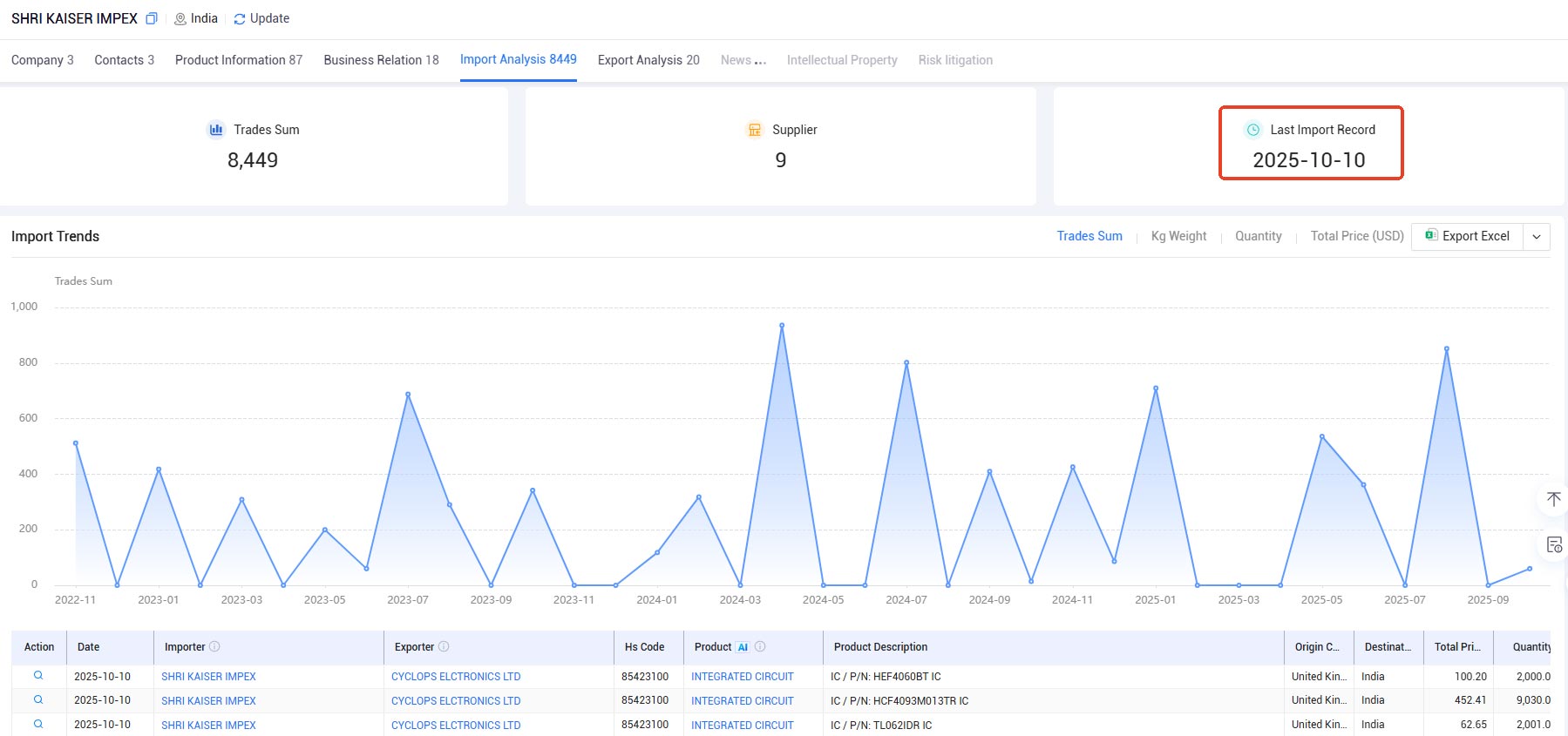
For example, on the Tendata Global Trade Platform, if you search for “CANDLE HOLDER importers,” you can find a list of relevant companies.
From there, you can filter and target companies suitable for your business, such as SHRI KAISER IMPEX.
By clicking on the company, you can view its historical trade records, latest transactions (updated to October 2025), and other detailed information — including suppliers, purchase prices, imported products, main HS codes, ports used, and more.
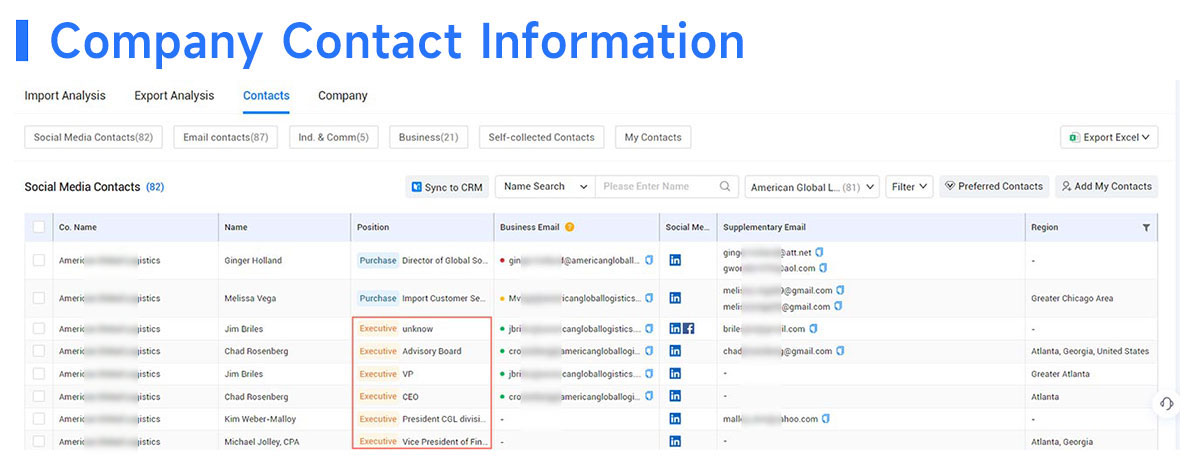
The platform also provides company contact details, helping importers and exporters reach the right clients efficiently.
Summary
Developing importer leads requires learning many skills, but persistence is the most important.
Use multiple methods simultaneously — if you can't find importers, it's often because you haven't fully mastered the techniques.
Many people only know the methods in theory but don't know how to apply them accurately.
You should learn from experienced colleagues, study shared tips and strategies, and continually refine your follow-up and conversion skills.
As your number of importer contacts grows, you'll gradually understand how to tailor different follow-up approaches for different importers.
Category
Leave Message for Demo Request or Questions