 Tendata AI
  Exhibition
 B2B Platforms
 Standalone Website
 Social Media
 Emails
 Trade Data Provider
 2025-12-12
Global trade data is detailed information recorded by the customs authorities of various countries during import and export trade activities, documenting real-world trade occurrences. Global trade data is absolutely one of the indispensable tools for importers and exporters, and a sharp weapon for developing customers.
Through global trade data, you can find key information such as the true importers, purchasing volume, and purchasing frequency of a specific product. Global trade data is available on both free and professional paid platforms.

Free Global Trade Data Channels (Most provide customs statistics):
1. USITC DataWeb:
Official U.S. import and export data, allows searching for enterprise-level transaction records.
Website: https://dataweb.usitc.gov/
2. Mexico Trade Data:
Official data from the Ministry of Economy of Mexico, supports search by HS code.
Website: https://www.economia.gob.mx/datamexico/
3. Brazil Comex Stat:
Brazil's import and export department database, includes names of importing and exporting companies.
Website: http://comexstat.mdic.gov.br/
4. France Douanes:
France's global trade data, allows downloading detailed import and export reports.
Website: https://www.douane.gouv.fr/
5. Nigeria Customs Service:
Provides import duty tariffs, importer registration requirements, a list of prohibited imports, and FAQs for port clearance.
Website: https://www.customs.gov.ng/
Of course, besides these free public data sources, you can also use professional global trade data platforms to identify potential customers that match your product characteristics and market needs.
Before Using Global Trade Data, We Must First Ask Ourselves:
· Which countries does my product mainly export to? (What is the HS code?)
· Who are my competitors? Which countries are they mainly exporting to?
· Which new market do I hope to open up? Or which existing market do I hope to gain more share in?
By clarifying these questions, we can better use global trade data to find the desired information.
When using global trade data, we can search by Customs Code (HS Code), product name, importer name, or exporter name.
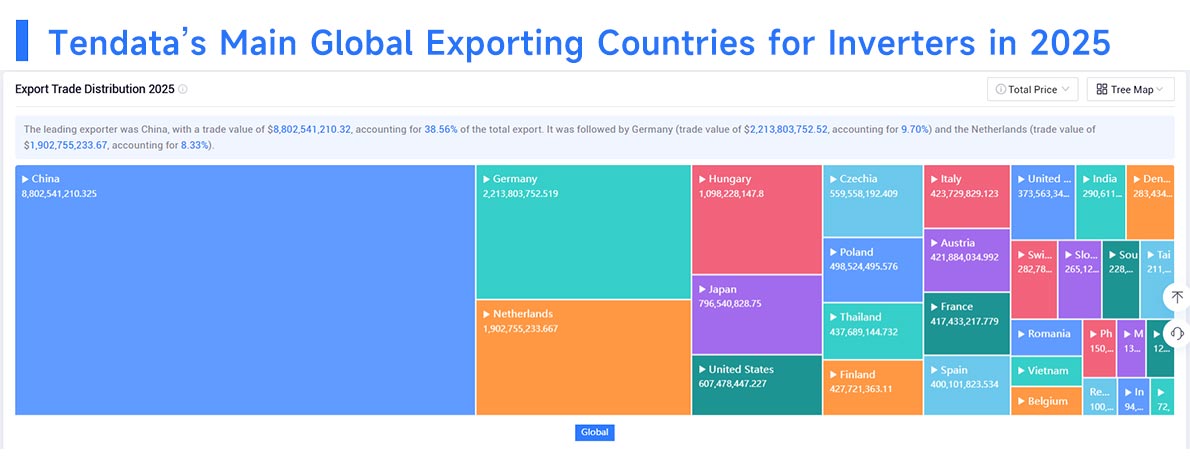
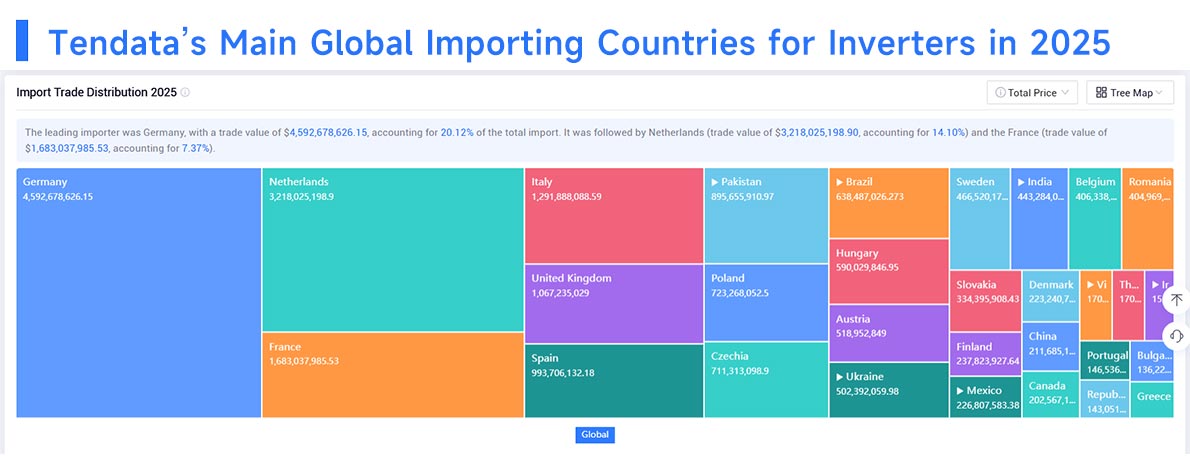
Taking the most common HS Code as an example, if you open the Tendata global trade data platform and enter the product code (taking Inverter as an example), you can clearly see that this year, besides China, the main exporting countries for Inverter also include Germany, the Netherlands, Hungary, and Japan; the popular export markets include Germany, France, Italy, and the UK, primarily in Europe. We can select target markets based on this real data.
>>Get A Free Demo with Tendata<<
How to open up the export market to Europe?
By using Tendata's global trade data to find precise buyers of Inverter, we can filter out potential customers based on information such as the buyer's scale, purchasing frequency, and unit price. Taking Germany, one of the current hot markets, as an example, we can find precise Inverter buyers in Germany through the global trade data.
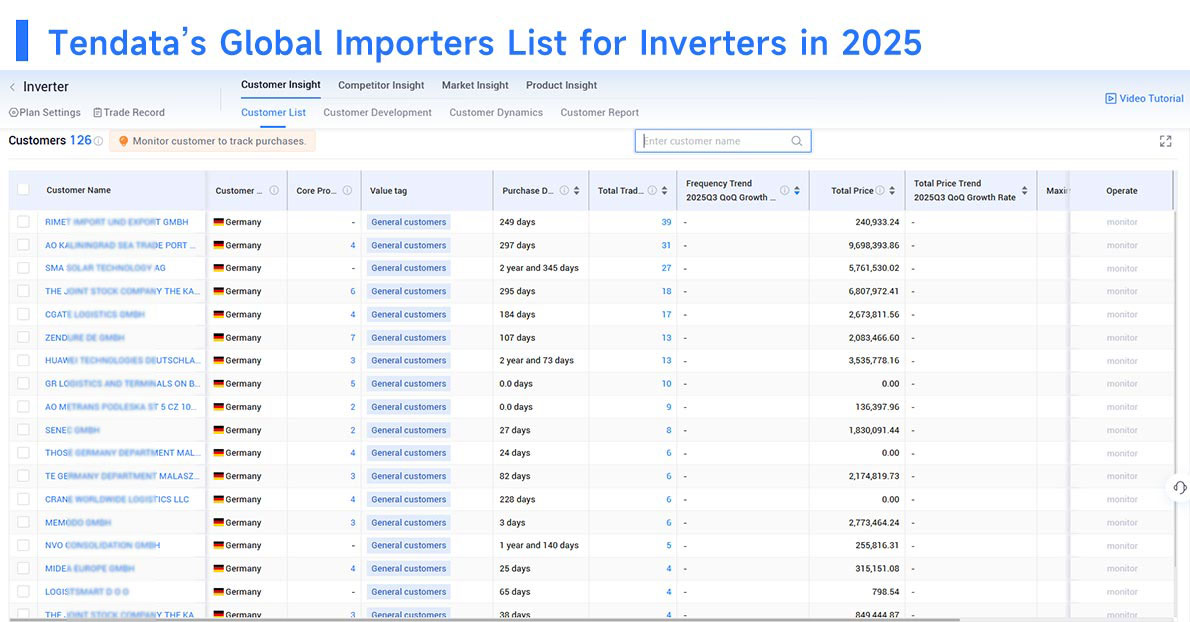
We need to conduct background checks on the target buyer company to see if there is any shipping information to verify the authenticity of the import and export company. We should check its basic situation, affiliated companies, trade partners, competitors, suppliers, and other information to provide accurate support for market development.
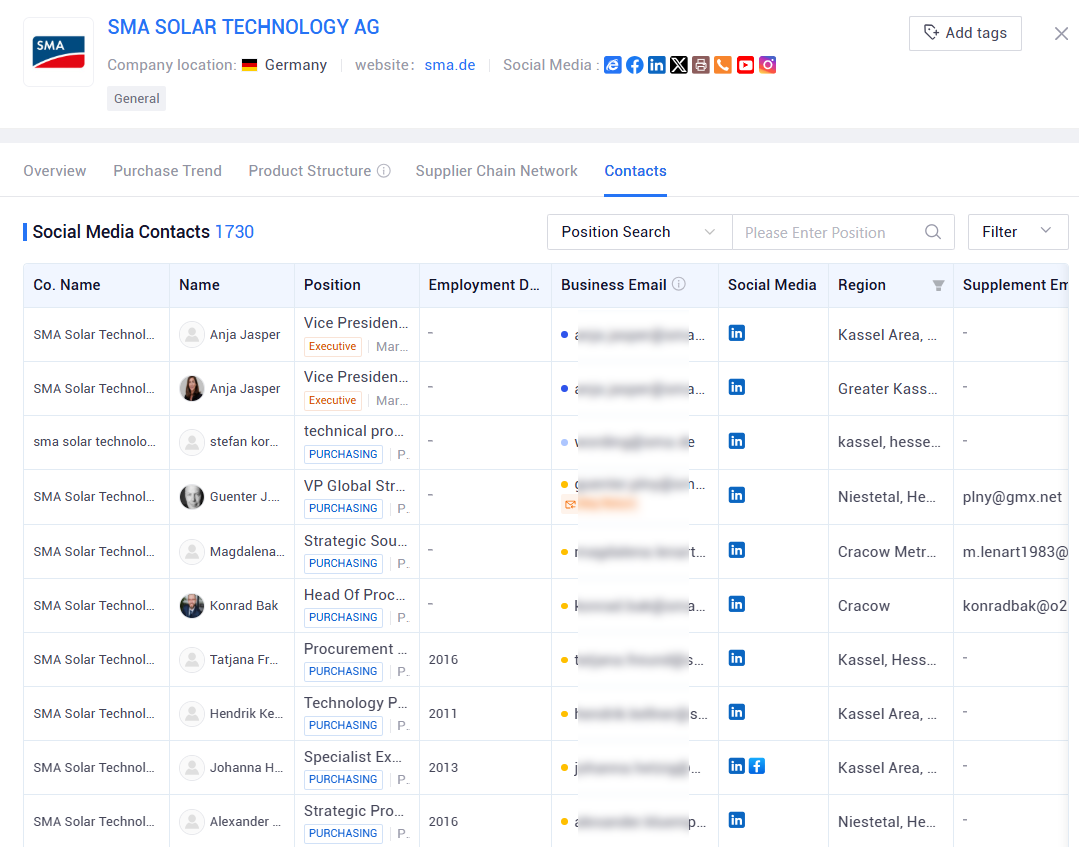
Once you have found the target customer, how do you contact them? You can also start by using the Tendata global trade data to find the social media and email contact information of the key decision-maker.
Other Methods
Of course, we can also use the names of our competitors to find useful information using global trade data. By entering a competitor's company name into the global trade data query system, the system's data can quickly provide the competitor's import and export data. Through the query, we can see the competitor's buyers, purchasing time, purchasing frequency, and the details of each shipment.
After screening, we select the customer we want to approach. We then conduct a detailed analysis of this customer within the global trade data, deeply investigating their profile, such as corporate credit, social media information, key contact person details, and so on. The rest involves establishing contact and finding a way to sway them.
I want to remind everyone that even though we have found a competitor's customer through various methods and techniques, it doesn't mean development will be easy. After all, it's not possible that a customer will consider switching from your competitor to you the day after you establish contact. You must be patient and proceed slowly in this process.
Category
Leave Message for Demo Request or Questions