 Tendata AI
  Exhibition
 B2B Platforms
 Standalone Website
 Social Media
 Emails
 Trade Data Provider
 2025-12-25
For many foreign trade professionals, global trade data is a goldmine—but only if you know how to dig. New users often encounter three common points of confusion: the prevalence of freight forwarders, low search volumes for specific keywords, and inconsistent data fields across different countries.
Below, we break down why these patterns exist and how to navigate them effectively.
1. Why are there so many Freight Forwarders in the data?
It is a reality of the industry: no matter which provider you use, trade data will inevitably include freight forwarders. In actual foreign trade operations, freight forwarders handle the logistics documentation; if they didn't appear in the data, that would be truly strange.
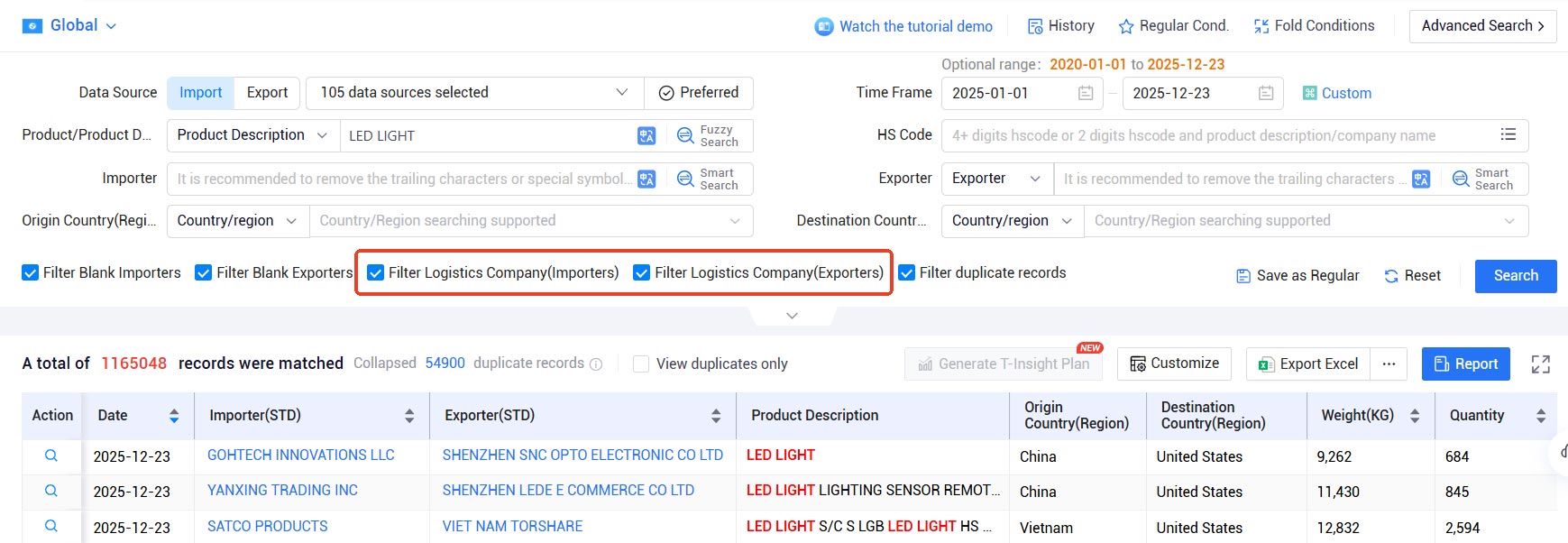
The ratio of forwarders to actual buyers varies by industry. However, it is almost impossible for an entire industry dataset to consist of forwarders with no real buyers. To save time, professional platforms like Tendata offer advanced filtering functions. These tools allow you to distinguish between logistics companies and actual importers/exporters, ensuring you focus your energy on the right Company Contact Infos.
2. Why does a precise keyword search yield so few results?
The logic behind trade data search engines is similar to Google, but with a twist. You must ask yourself: Will my specific keyword definitely appear in the cargo description of a Bill of Lading (BoL)?
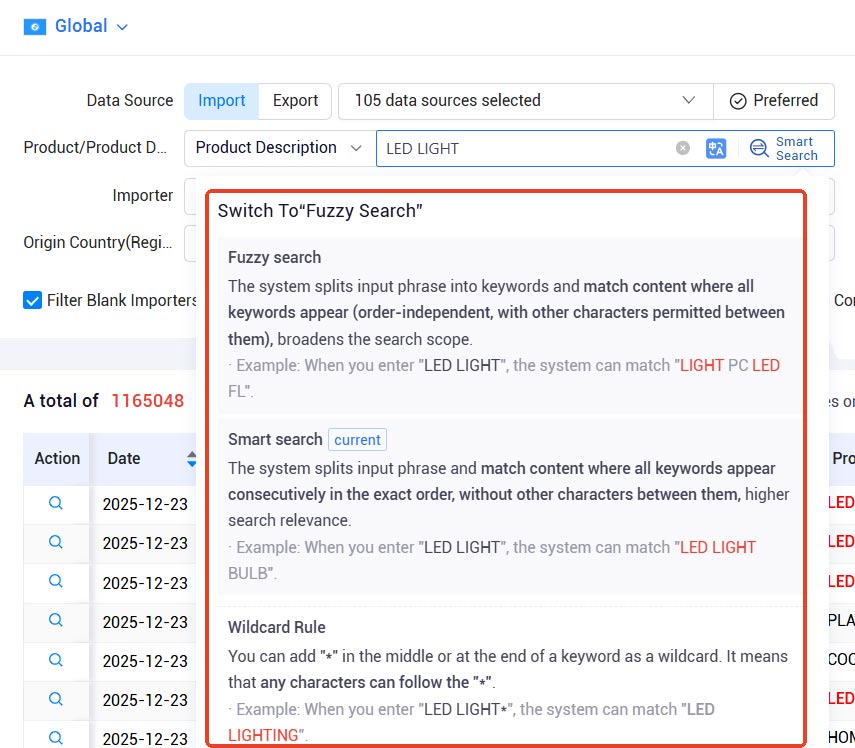
Often, forwarders or documentation specialists use vague or broad terms (e.g., "Lighting" instead of "Dimmable Waterproof LED Strip") to avoid errors or simplify complexity. If your search results are thin, try these strategies:
· Broaden your terms: Use more general category names.
· Reverse Search: Look up a known global competitor or a major buyer in your industry to see exactly which commodity descriptions they use in their filings.
· Switch Matching Modes: Adjust how your search tool matches phrases to capture variations in terminology.
3. Why do different countries show different data fields?
If a data vendor claims they have 100% of the data for every country in the world, they are likely misleading you. The reality is that data transparency varies significantly by jurisdiction. For instance, most European Union countries do not release detailed trade data to the public.
Among countries that do open their data, the format differs:
· Manifest Data: Provides detailed shipping and Bill of Lading information.
· Importers Lists: Provides directories of active companies without shipment-level specifics.
Does data without importer names still have value? Absolutely. Even in countries where buyer names are redacted, the data remains a vital strategic tool. You can use it to:
· Set realistic annual sales targets based on market volume.
· Monitor industry-wide transaction prices and fluctuations.
· Analyze the total import volume and price trends of specific target nations.
Summary
Global trade data is not just a list of names; it is a map of the global market. By using professional tools like Tendata to filter out forwarders and by learning to "think like a customs officer" when searching for keywords, you can unlock deep commercial value and secure the Company Contact Infos needed to grow your business.
Category
Leave Message for Demo Request or Questions