 Tendata AI
  Exhibition
 B2B Platforms
 Standalone Website
 Social Media
 Emails
 Trade Data Provider
 2026-01-05
Global trade data refers to detailed records collected by customs authorities during international import and export activities. These records reflect real, completed transactions, making global trade data one of the most reliable and powerful tools for anyone involved in international trade.
For importers and exporters, global trade data is not only essential for market analysis, but also a highly effective customer development tool.

Step 1: Identify Target Markets Using Global Trade Data
For companies looking to develop new customers, the first step is identifying the right markets.
By entering your product's HS code, you can quickly see:
· The top exporting countries and regions
· The main importing markets
· Current trade trends and demand distribution
Example: Fuel Pumps
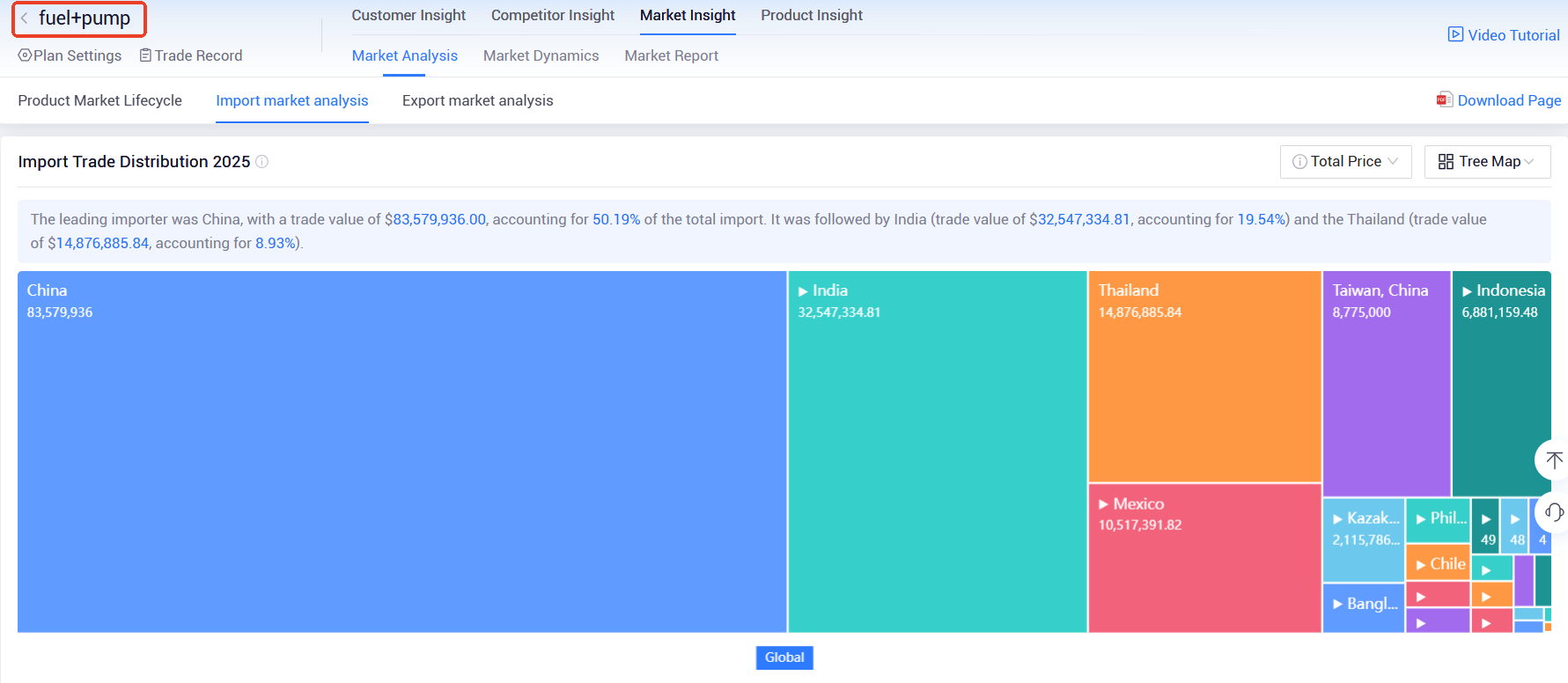
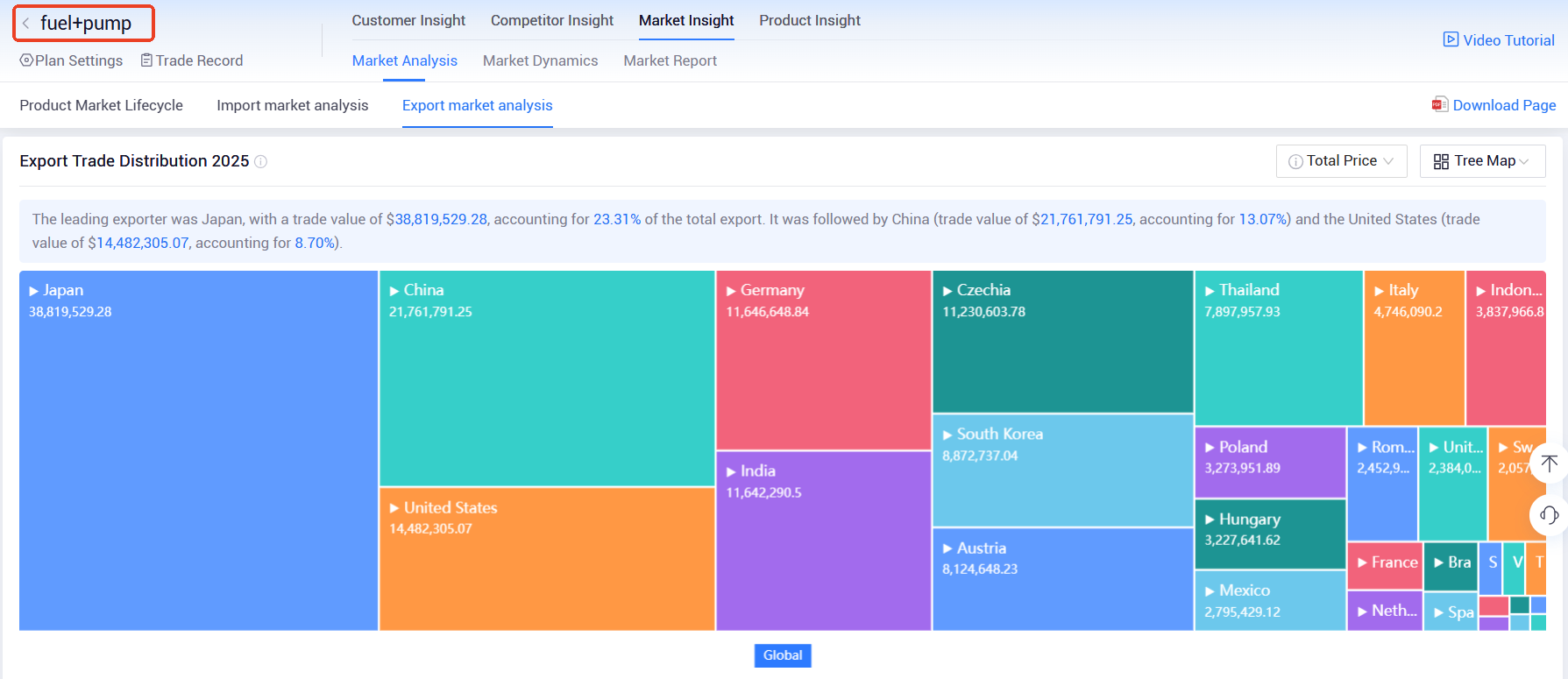
· Taking fuel pumps as an example, Tendata global trade data clearly shows that this year:
· Major exporting countries include Japan, China, and the United States
· Key importing markets include China, India, and Thailand
With these insights, exporters can focus their efforts on high-demand, high-potential markets instead of relying on guesswork.
Using Tendata's global trade data, you can efficiently select target markets and move to the next step of customer identification.
Step 2: Find Precise Buyers in Your Target Market
Once a target market is selected, global trade data allows you to locate verified, active buyers for your product.
Using the fuel pump example again, Thailand is currently one of the most active import markets. Through global trade data, you can identify Thailand's fuel pump importers and analyze them based on:
· Company size
· Purchase frequency
· Import quantity and unit price
This enables you to filter out low-quality leads and focus on high-intent buyers.
Step 3: Buyer Screening Criteria That Actually Work
To improve efficiency and conversion rates, buyers can be screened using the following criteria:
1. Purchase Frequency
If a buyer has import records for three consecutive months or more, it indicates stable demand rather than one-time purchasing.
2. Purchase Value
Annual purchase value of USD 1 million or more, or a level that matches your production capacity, suggests sufficient cooperation potential.
3. Number of Suppliers
Buyers with two or more suppliers and no single supplier accounting for more than 50% of purchases are more open to switching or adding new suppliers.
4. Product Match
HS codes that match or closely relate to your core products indicate high buyer relevance and higher conversion potential.
5. Purchase Cycle
Regular purchasing cycles (monthly or quarterly) help predict future orders and support long-term, stable cooperation.
Step 4: Conduct In-Depth Buyer Analysis to Increase Conversion
After initial screening, deeper analysis helps further improve sales success.
1. Purchasing Behavior Analysis
· Analyze purchasing cycles: monthly, quarterly, or irregular
· Observe purchase volume trends: increasing (high growth potential) or stable (lower risk)
· Review price ranges to evaluate your pricing competitiveness
2. Supply Chain Analysis
· Analyze supplier country distribution: Is there already a local supplier?
· Review supplier count: More suppliers often mean more entry opportunities
· Examine purchase share: A dominant supplier may indicate replacement potential
3. Buyer Background Research
Global trade data can also support company background checks, including:
· Company size and core business
· Revenue scale and market position
· Identification of key decision-makers, such as CEOs or procurement managers
This information allows sales teams to approach buyers with more accurate positioning and higher success rates.
Final
Global trade data transforms customer development from blind outreach into data-driven precision marketing. By combining market analysis, buyer screening, and deep customer insights, importers and exporters can significantly improve efficiency, reduce risk, and increase conversion rates.
Category
Leave Message for Demo Request or Questions