 Tendata AI
  Exhibition
 B2B Platforms
 Standalone Website
 Social Media
 Emails
 Trade Data Provider
 2026-01-20
When used correctly, global trade data can do far more than help you find a single buyer. It allows you to scale customer development from “1” to “100.” With just one known buyer or supplier, you can follow the data trail and systematically uncover dozens — hundreds — of highly relevant, verified prospects.

1. Start with a Target Buyer
A single buyer usually works with multiple suppliers over time.
Now ask yourself a key question: If those suppliers are serving your target buyer, aren't their other buyers also potential customers for you?
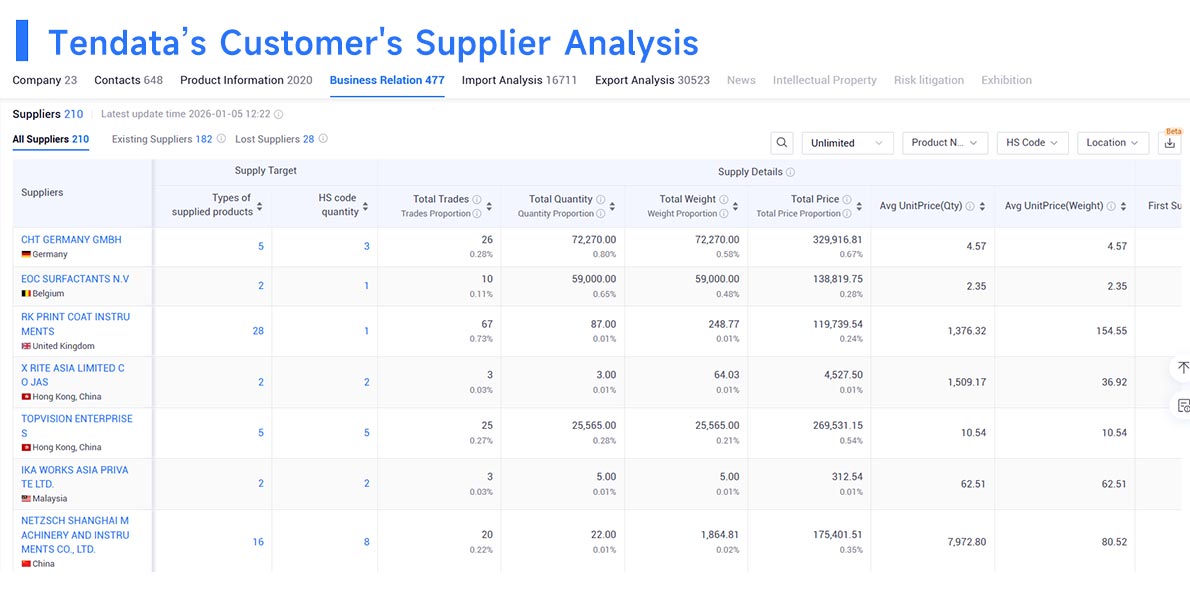
Using Tendata's company trade analysis, you can:
· Click into a target buyer's historical suppliers
· Instantly view each supplier's buyer list
· Identify new prospects for the next round of analysis and outreach
In many cases, your target customer's customers can also become your customers.
This creates a powerful expansion path:
Product name / HS code → Target company → Target company's suppliers or buyers → Next-level suppliers or buyers
By repeating this process, customer development becomes a network effect rather than a linear search.
2. Start with Your Competitors
One of the most practical uses of global trade data is poaching competitor customers.
Competitors typically have:
· Similar product positioning
· Comparable production capacity
· Overlapping target markets
Which means their customers are already validated, high-quality prospects.
With global trade data, you can clearly see:
· What products customers purchase from competitors
· Purchase prices, volumes, and cycles
· Supplier concentration and dependency
When combined with your understanding of a competitor's weaknesses—pricing, lead time, quality, or service—this becomes a decisive advantage in customer development.
3. Monitor Competitor Signals for Perfect Timing
Trade data is not just static history—it reveals dynamic signals.
Key opportunities appear when:
· A customer's purchase volume from a competitor drops sharply
· Purchase frequency becomes unstable
· A new supplier is introduced
These changes often indicate dissatisfaction, cost pressure, or supply chain risk—the perfect entry point for outreach.
Additionally, when competitors start developing new markets, it often signals emerging industry trends.
For example, during periods of heavy U.S. tariff increases, many Chinese exporters shifted their focus to Southeast Asia and Mexico. Trade data made these shifts visible early.
4. Understand the Limitations of Global Trade Data
While global trade data is powerful, it is not perfect.
Key limitations include:
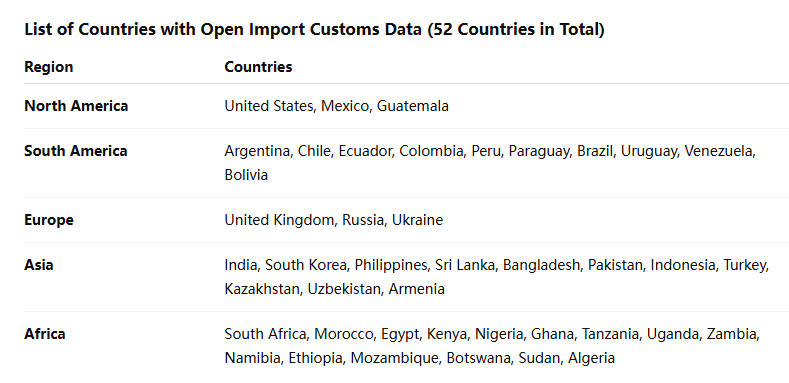
· Different countries have varying levels of data openness (for example, China does not publish full trade data; only mirror data is available)
· Only officially declared customs shipments are recorded
· Some records are filed under freight forwarders or logistics companies and require filtering
5. Use Trade Data the Right Way
These limitations mean one thing: choosing the right trade data platform matters.
When evaluating a provider, don't just look at price. Ask:
· How timely is the data?
· How accurate and clean are the records?
· How complete is the coverage?
· Does the platform support deep buyer and supplier analysis?
In trade data, there is no “lowest price”—only lower prices with higher risks.
Conclusion
The real power of global trade data lies in its ability to turn one known company into a growing network of opportunities.
By starting from buyers, suppliers, or competitors—and continuously expanding outward—you can move from random prospecting to systematic, scalable customer development.
Used correctly, global trade data doesn't just help you find customers.
It helps you build a repeatable growth engine—from 1 to 100, and beyond.
Category
Leave Message for Demo Request or Questions