
 Tendata AI
  Exhibition
 B2B Platforms
 Standalone Website
 Social Media
 Emails
 Trade Data Provider
 2026-01-30
How can you fully grasp buyer resources in a specific market?
How can you monitor existing customers, develop new ones, and analyze the distribution and business performance of your competitors?
How can you assess market prices, understand buyers' purchasing behavior, and precisely target high-potential prospects?
In addition, you also need insights into market demand, competitors' sales performance, seasonal trends, and buyers' procurement cycles.

In my opinion, purchasing trade data is one of the most effective solutions. I recommend a professional trade data platform: www.tendata.com.
Many people worry that buying trade data is expensive — but that's not necessarily true. With the right negotiation strategies, you can often access high-value data at a reasonable cost.
Currently, trade data on the market includes importer reports from multiple countries, such as the United States, the United Kingdom, South Korea, Russia, and seven Latin American countries (Argentina, Chile, Colombia, Ecuador, Peru, Paraguay, and Uruguay). These importer reports allow you to directly contact potential buyers and obtain transaction details such as prices and volumes, helping you develop new clients and evaluate their financial strength.
The data comes from real customs records. Although it is usually priced higher, the leads are highly accurate and high-quality thanks to professional data cleaning — saving exporters significant time in customer screening.
There are also free trial platforms available, such as Tendata Trade Data (tendata.com), where users can explore and understand trade data before making a purchase.
Advantages of Using Customs Bill of Lading Data
Using customs shipment data to develop clients offers several key benefits:
· Verified buyer authenticity
· Confirmation of product purchases
· Visibility into purchase volumes to assess customer scale and capacity match
Practical Steps for Customer Development
Verify whether the buyer purchases relevant products and required specifications
1. Analyze buyer size, purchasing habits, and procurement cycles
2. Study competitors to understand the market landscape
3. Visit the buyer's website for company details and contact information
4. Use Google search carefully (avoid unnecessary address elements)
5. Check content indexed by articles or B2B platforms if data is limited
6. Search by company address or building number as supplementary methods
Real Example
By checking U.S. bill of lading data, I identified a toy company named WOODY TOYS. After locating their website, I obtained detailed company information including product range, business profile, address, registration number, and banking details — enabling precise customer targeting and effective follow-up.
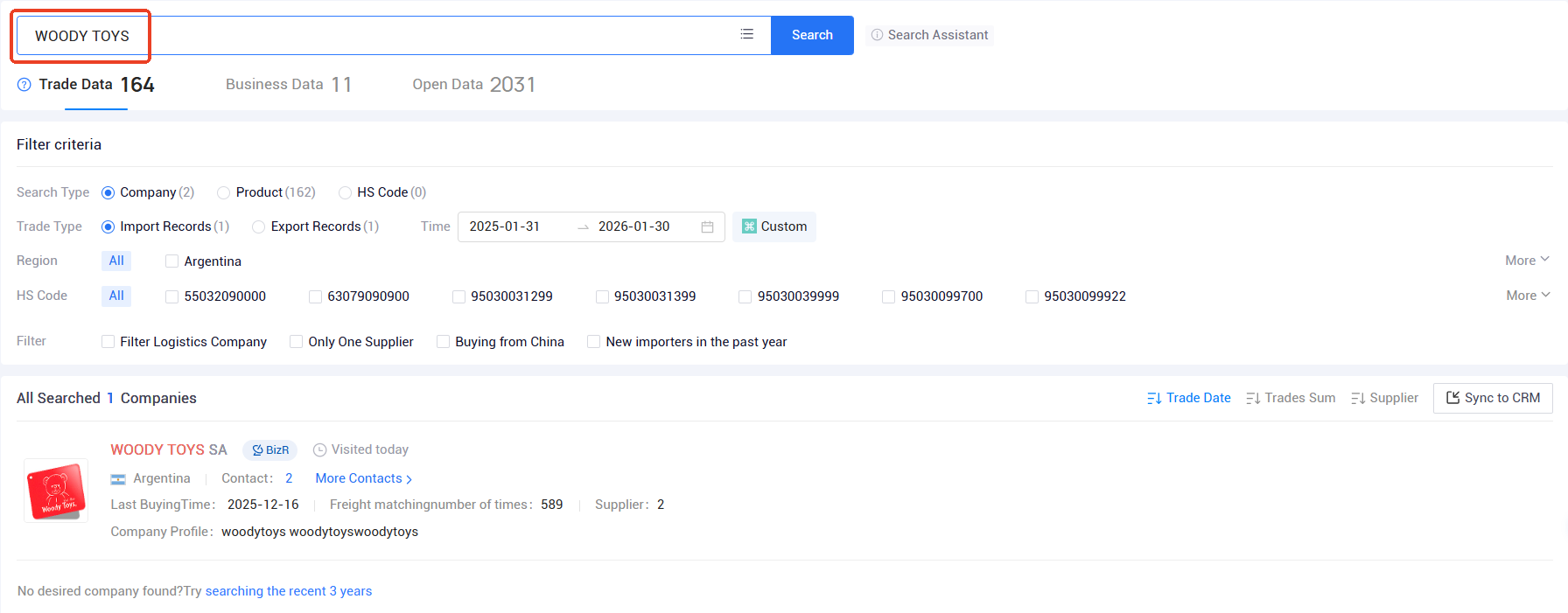
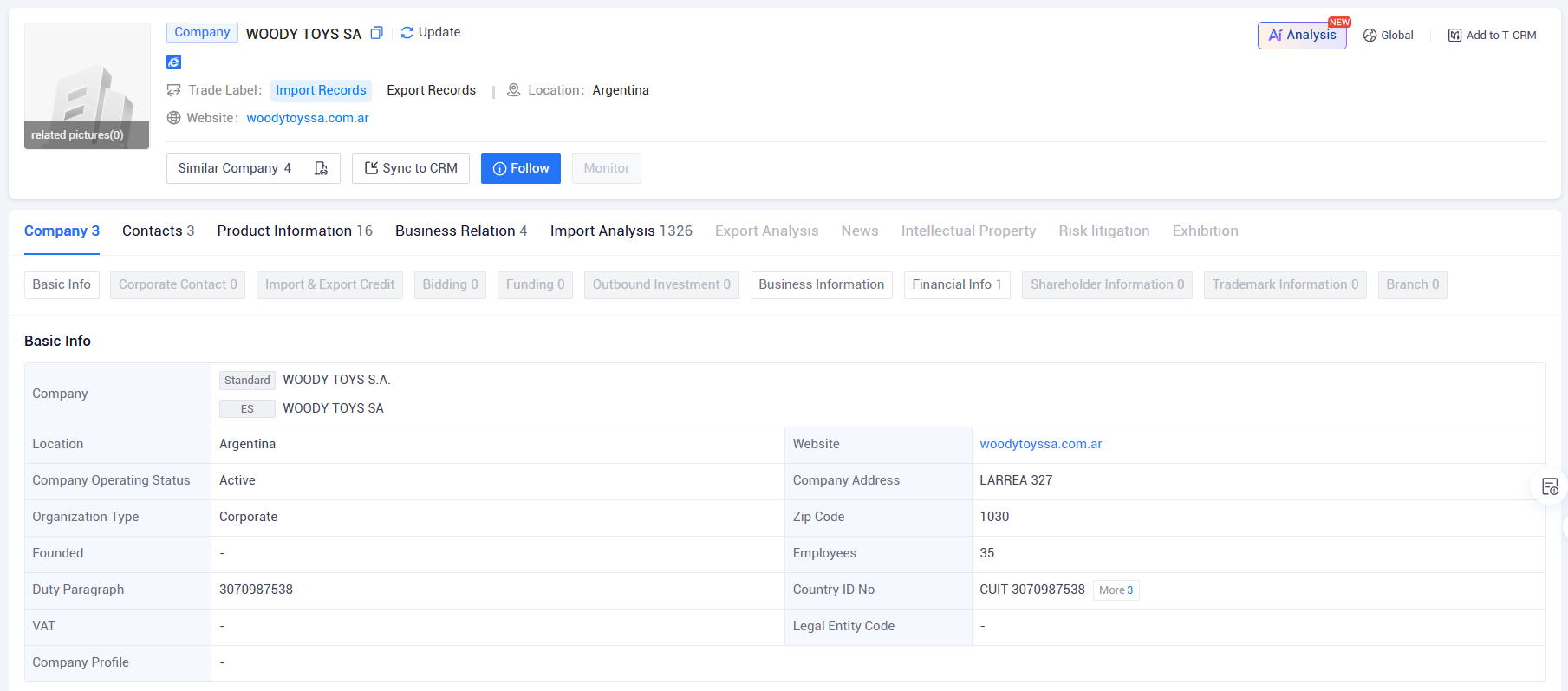
When preparing outreach emails, I first searched [email protected] on Google and found four public records, indicating high visibility and business relevance. I then reviewed their one-year purchase history through trade data to understand their volumes and buying cycles. Based on this insight, I crafted a concise but highly targeted outreach email — and the results were clearly positive.
Final Advice
When collecting potential customer information, preparation is essential. Sending generic outreach emails simply because you found an email address often leads to poor results.
Instead:
· Use trade data to verify real buyers
· Personalize outreach based on purchasing behavior
· Leverage search engines with multiple keyword strategies
· Cross-validate information to pinpoint the most accurate prospects
Targeted data-driven prospecting always outperforms blind outreach.
Category
Leave Message for Demo Request or Questions