
 Tendata AI
  Exhibition
 B2B Platforms
 Standalone Website
 Social Media
 Emails
 Trade Data Provider
 2026-02-06
One of the most common questions in foreign trade is simple but critical: how do you find the real purchasing contacts inside overseas companies?
Many exporters know where to look for potential buyers, but struggle to reach actual decision-makers. The good news is that there are multiple practical ways to gather buyer contact details—if you know how to use them strategically.
Below is a step-by-step breakdown of five effective resources, illustrated with an example product: industrial adhesive (instead of the original product keywords). The same logic applies to almost any industry.

1. Search Engines: It All Starts with the Right Keywords
Search engines remain one of the most powerful and accessible tools for finding potential buyers. The key lies in how you choose and combine keywords.
A. Direct Product Keyword Search
If your product is industrial adhesive, you can try variations such as:
· industrial adhesive
· buy industrial adhesive
· purchase industrial adhesive
· looking for adhesive supplier
· adhesive sourcing request
Think from the buyer’s perspective. If they were posting a sourcing request online, what phrases would they use? Then search all possible keyword combinations.
The results often lead to companies actively involved in procurement. If you find recently posted information, there’s a strong chance of getting a response. For older posts, you can still reach out with a message like:
“We noticed your previous inquiry about industrial adhesives. We’re currently supplying buyers globally and would be happy to assist if you have ongoing or new sourcing needs.”
This approach can uncover large volumes of potential leads.
B. Downstream Product Search Method
Another effective strategy is to search industries where your product is used.
For example, industrial adhesives may be used in:
· furniture manufacturing
· automotive assembly
· construction materials
· packaging production
You could search keywords like:
· furniture manufacturing companies
· automotive component manufacturers
· packaging material suppliers
These companies are real potential buyers because they actually need your product. The emails you find may belong to sales departments, but they still provide a starting point for deeper contact research.
2. Online Directories and Yellow Pages
Industry directories and Yellow Pages are straightforward resources for identifying companies within a specific sector.
For example:
· Search by industry category (e.g., chemicals → industrial materials → adhesives)
· Search keywords directly within directory platforms
· Or combine keywords with “yellow pages” in search engines
These platforms provide company profiles, addresses, and sometimes contact emails or phone numbers. Even if you initially reach a general contact email, you can still use it to request procurement contact details or verify decision-makers.
3. B2B Platforms: More Than Just Inquiries
B2B platforms remain valuable—not just for incoming inquiries but also for proactive prospecting.
A. Company Databases
Most platforms maintain large company directories. You can search for businesses related to your industry using the same keyword strategies described above.
B. Buying Leads
Many platforms publish buyer sourcing requests. While contact details may be hidden behind paid accounts, you can often:
· Send internal platform messages
· Add buyers as contacts
· Search their company names externally to locate emails or websites
For example, if you find a company called “XYZ Manufacturing,” try searching:
· XYZ Manufacturing email
· XYZ Manufacturing contact
· XYZ Manufacturing website
You may discover additional information posted elsewhere online.
C. Product Listings and Seller Databases
You can also search within product catalogs. If a company is selling industrial adhesives but not manufacturing them, they likely need suppliers—making them potential partners. Since fewer exporters approach these companies, response rates can sometimes be surprisingly high.
4. Trade Show Websites and Exhibitor Lists
Trade exhibitions remain valuable sources of industry contacts—even without attending physically.
Search exhibition websites for: Exhibitor lists, Product categories, Industry directories
Companies listed as exhibitors are often serious industry players, making them strong candidates for targeted outreach.
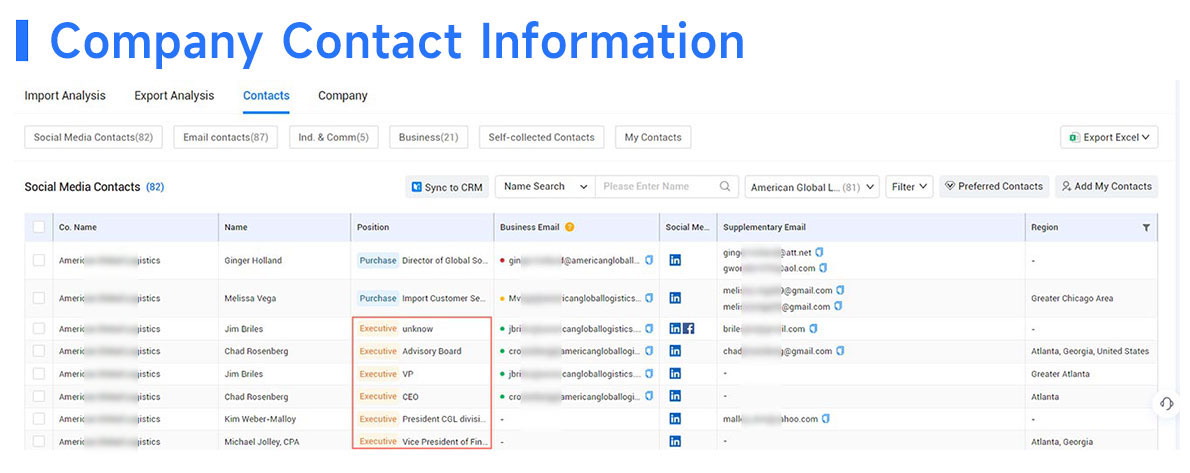
5. Using Tendata to Identify Decision-Makers
While traditional methods require extensive manual work, tools like Tendata significantly streamline the process.
With Tendata’s decision-maker discovery features, you can:
· Input company names, websites, or emails
· Identify senior executives and purchasing managers
· Access structured trade insights to verify whether a company is actively importing
Once you identify key contacts, you can send personalized emails or connect through LinkedIn, making communication more direct and effective.
Keyword Strategy Matters More Than You Think
When searching for buyers, remember that one product often has multiple names or technical terms. For example, industrial adhesives might also be described as: bonding agents, structural adhesives, epoxy adhesives, assembly adhesives
Different countries may use different terminology. You can also search using: HS codes, CAS numbers (for chemical products), Industry applications
Expanding keyword variations dramatically increases the number of relevant leads you can find.
Final Thoughts
Finding buyer contact information is not about luck—it’s about using multiple resources intelligently. Search engines, directories, B2B platforms, exhibition data, and specialized tools all play a role in building a strong prospect pipeline.
Manual searching can produce results, but for companies aiming to scale efficiently, structured platforms like Tendata can significantly reduce workload and improve accuracy by combining trade data, contact discovery, and customer analysis into a single workflow.
In foreign trade, tools alone don’t create success—but the right combination of strategy, keywords, and technology can make the process far more effective.
Category
Leave Message for Demo Request or Questions