 Tendata AI
  Exhibition
 B2B Platforms
 Standalone Website
 Social Media
 Emails
 Trade Data Provider
 2026-02-25
Today I'm going to share several ways to access free trade data, covering markets such as the United States and the United Kingdom, along with some highly practical customer development tips.
Of course, I haven't found any platform that is completely free — most only offer partial free features. But making full use of what's available for free is already quite valuable.

I. Recommended Free Trade Data Websites
1. ImportYeti (U.S. Market)
Free Features:
· Access to 70 million U.S. importer records
· Search potential customers by company name or industry keywords
· View basic importer information, transaction records, and supplier lists
· Supports HS code + filters (though results may be broad)
Suitable Scenarios:
You already have a target U.S. client and want to analyze their purchasing patterns
You want to identify potential customers using industry keywords
For example, if you search “lighting,” you'll see companies with “lighting” in their names. These are often direct importers of lighting products and accessories. The platform also displays some supplier information.
Clicking on a specific company allows you to view:
Website, Address, Recent transactions, Total sea freight volume, All suppliers, Trade network graph
Summary:
You cannot directly search by specific product keywords. Instead, you need to identify companies through directory browsing or shared characteristics in company names.
If you are developing U.S. clients and want to check their transaction history, simply enter the company name to search.
2. ImportInfo (U.S. Market)
Free Features:
· Search customers by company name or first letter
· View basic data such as purchase dates and supplier cooperation records
Tips:
Free access is limited. It's best suited for quick background verification and should be combined with other tools for more comprehensive research.
You can also view:
· Largest U.S. ports
· Top 10 imported vessels
· Detailed information within each category
Like ImportYeti, searches are based on company names or initials. If you already have a target company, enter it directly. If not, identify common naming characteristics and search related businesses for development.
When clicking into a company profile, you can typically see: Purchase timeline, Recent shipment details, Cooperative suppliers
3. UK Trade Info (UK Market)
Free Features:
· Supports keyword searches (product descriptions or company names)
· Data can be exported to Excel with one click for easier organization
Among the platforms I've tested, these three currently offer relatively more practical free features.
For other countries, relying solely on free functions to access trade data can be challenging. If I discover more useful options later, I'll share them.
II. Advanced Tips: How to Find Data Without Free Access
1. Smart Use of Google Search
Formula: Company Name + “trade data”
For example:
Search “HUAWEI TECHNOLOGIES CO., LTD + trade data” to find procurement records disclosed by third-party platforms.
2. Low-Cost Use of Paid Tools
Recommended: Tendata
Website: www.tendata.com
If you want to save time, investing some budget can significantly improve efficiency.
Tendata also provides partial free features. If you already have a potential client, search using: Company Name + “Tendata”
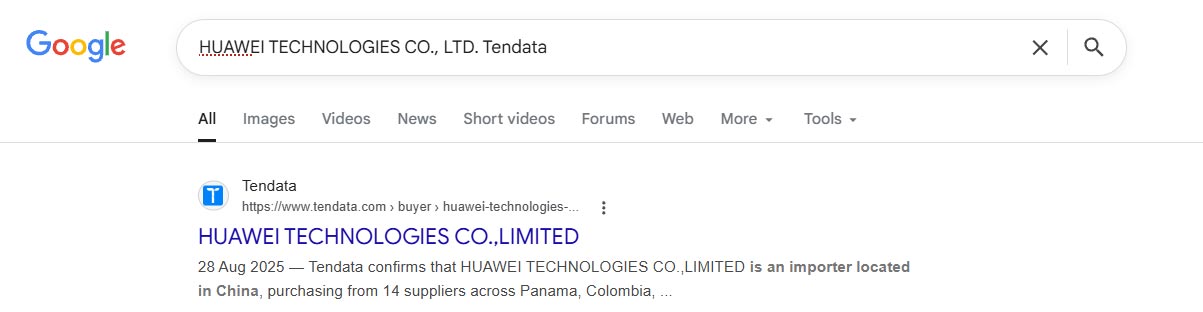
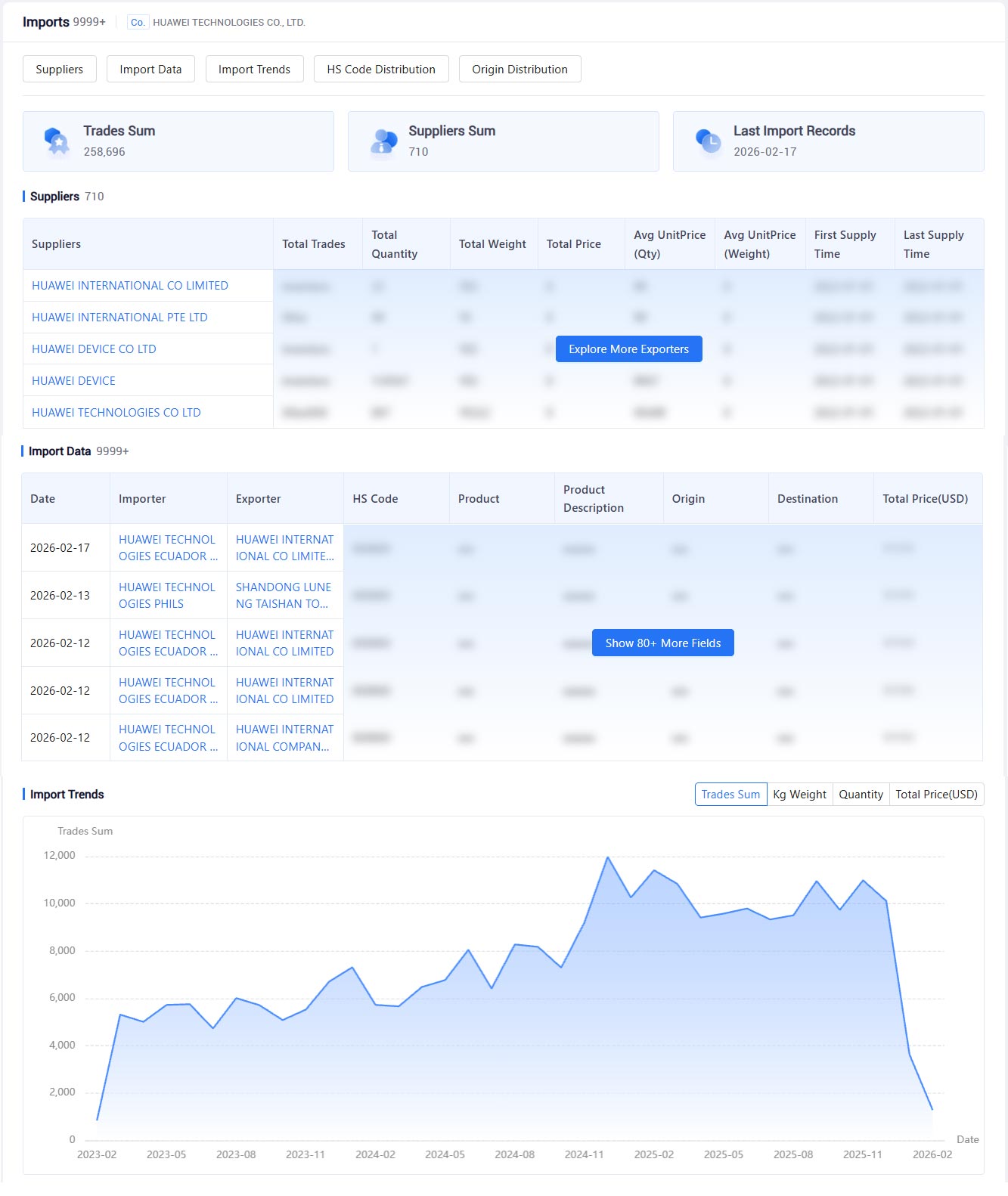
With basic queries, you can confirm:
· Whether the company had import/export activity within the past year
· The most recent import/export date
· Whether the company is still actively trading
· Main suppliers or buyers
· Trade trends over the past year
· Global company coverage
For deeper customer development and more detailed product-level trade analysis, paid access is required.
III. Why Do People Still Pay for Trade Data?
Even though free platforms exist, many businesses still choose paid tools. Why?
1. Free methods are time-consuming
Sales teams are already busy — prospecting, writing outreach emails, maintaining old customers, following up with new ones, and continuous learning. It's difficult to spend large amounts of time manually searching across free sources every day.
2. Free data is incomplete
The U.S. offers the most accessible free data. For many other countries, comprehensive data is difficult to obtain through free functions alone.
3. Functional limitations
High-quality platforms require manpower and resources to develop. Therefore, advanced features are usually restricted behind paywalls.
4. Lack of contact information
Trade data typically includes transaction records but not direct contact details. Paid tools often integrate contact acquisition functions to save time.
5. Slow updates
Free data may be outdated. Old data often has limited practical reference value.
In conclusion, choose the development method that best fits your actual situation.
Free tools are suitable for early-stage verification and exploration, while paid tools can significantly improve efficiency and depth when scaling your customer acquisition efforts.
Category
Leave Message for Demo Request or Questions