 Tendata AI
  Exhibition
 B2B Platforms
 Standalone Website
 Social Media
 Emails
 Trade Data Provider
 2026-04-13
As global trade grows more complex and competitive, the tools that businesses rely on for market intelligence must do more than simply surface data — they must help teams interpret it, act on it, and stay ahead. As trade providers, both Tendata and Volza offer solutions designed to help international businesses navigate global markets, yet they differ substantially in the depth of their functionality and the ease with which users can extract real business value. This article compares the two trade providers across four core use cases: market analysis, customer development, product analysis, and supply chain management.
1. Market Analysis: Intelligent Interpretation vs. Manual Research
(1)Tendata
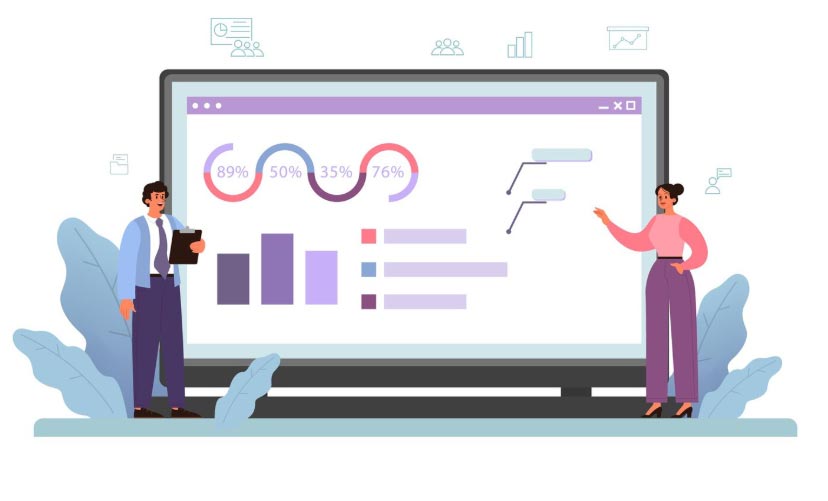
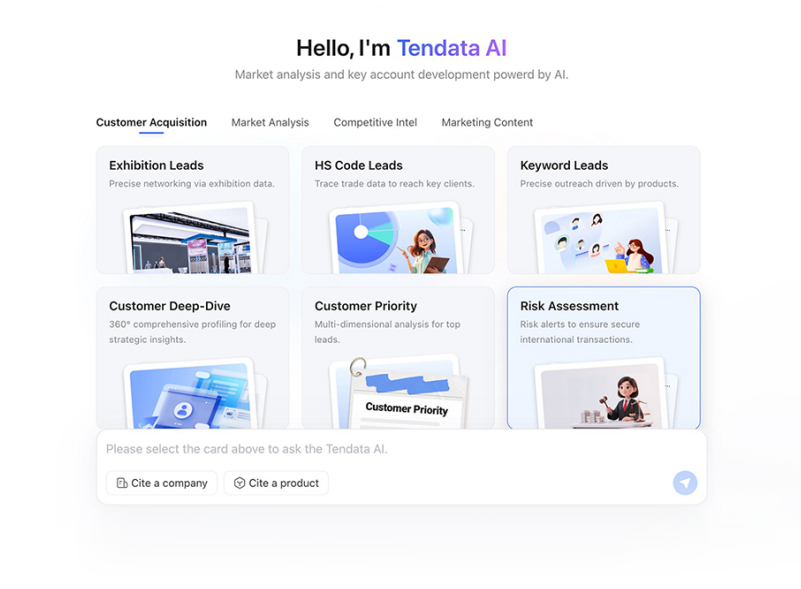
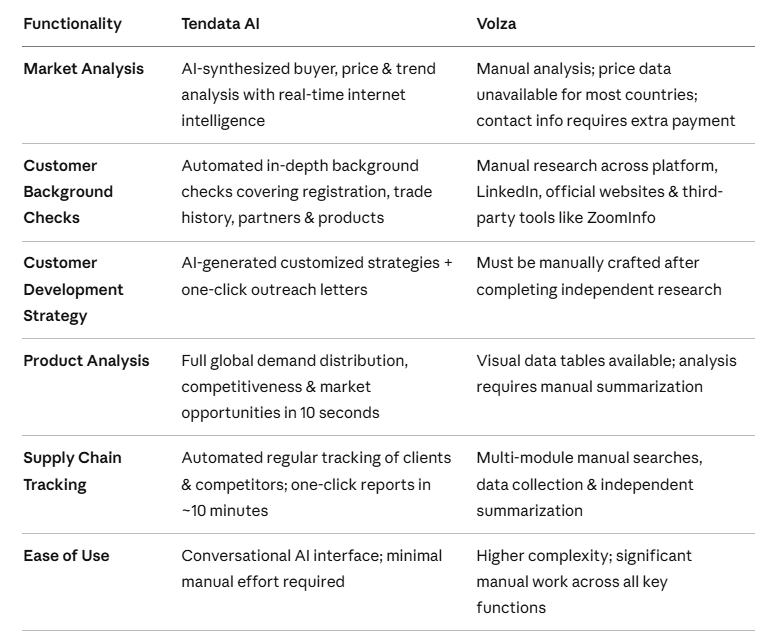
Tendata AI takes a comprehensive, intelligence-led approach to market analysis. It accurately analyzes global market buyers, pricing dynamics, and long-term trade trends — all within a single platform. Crucially, it layers this proprietary trade data with real-time market news aggregated from across the internet, enabling users to identify high-value regions and emerging opportunities as they develop. Rather than presenting data for users to interpret themselves, Tendata AI synthesizes these signals into clear market trend analyses that directly inform strategic decisions.
(2)Volza
Volza offers trade data that can be useful for country-level research, but market analysis on the platform is largely a manual process. Users must independently examine company-level data and trend information for their target countries, piecing together a market picture from individual data points. Additionally, price data is unavailable for the majority of countries — a significant gap for teams trying to benchmark competitiveness or evaluate pricing strategy. Obtaining company contact information requires an additional paid subscription, adding both cost and friction to the research workflow.
2. Precise Customer Background Checks and Development: AI-Driven Strategy vs. Multi-Platform Manual Work
(2)Tendata
Tendata AI transforms customer development from a time-intensive research task into a streamlined, AI-guided process. Through in-depth AI analysis, users can rapidly locate high-potential customers and run comprehensive background checks covering registration details, operational status, import and export trends, major trading partners, and product portfolios — all within the platform.
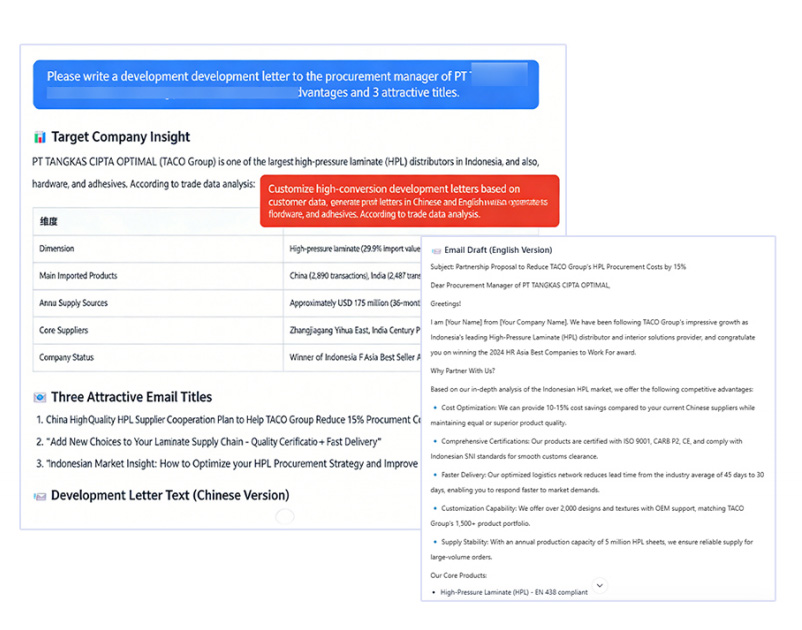
What sets Tendata AI apart is what happens next. Based on each customer's actual trade records and specific needs, the platform automatically generates a customized development strategy tailored to that prospect. It then produces a professional outreach letter with a single click, enabling sales and trade teams to move from research to engagement in a fraction of the time traditionally required. The result is a faster, more targeted approach to building stable, long-term customer relationships.
(2)Volza
Volza does provide access to some company-level information, but translating that information into a development-ready prospect profile requires significant manual effort. Users must independently analyze the company's traded products and business activities, then cross-reference external sources — such as the company's official website and LinkedIn — to build a complete picture. For more detailed due diligence, additional third-party tools such as ZoomInfo are typically required. Once research is complete, users must then craft their own outreach strategies and development materials from scratch. The process is functional, but fragmented and time-consuming.
3. Product Analysis: Instant Global Insights vs. Manual Summarization
(1)Tendata
Product analysis on Tendata AI is designed for speed and depth. Users simply enter a product name or HS code, and within 10 seconds, the platform delivers a full view of global market demand distribution for that product. Beyond demand mapping, Tendata AI analyzes product competitiveness, surfaces new product development directions, and pinpoints market opportunities with precision. The entire process requires no manual aggregation — the AI handles interpretation and synthesis, delivering insights that are immediately actionable.
(2)Volza
Volza offers detailed product-level information and provides visual tables that allow users to explore global product data across markets. The data itself is useful, but the platform stops short of analysis — users must manually review, compare, and summarize the information presented in order to draw conclusions. For teams conducting frequent or broad-scope product research, this manual layer represents a meaningful investment of time and analytical effort.
4. Supply Chain Analysis: One-Click Reports vs. Multi-Module Manual Assembly
(1)Tendata
Supply chain management is an area where Tendata AI's automation capabilities deliver exceptional value. Users can set up regular tracking of supply chain information for both clients and competitors directly within the platform. When needed, a comprehensive supply chain report can be generated with a single click — consolidating supplier data, trade flow patterns, and competitive intelligence into a ready-to-use document. The entire process, from tracking to report generation, can be completed in as little as 10 minutes, making it practical to maintain an up-to-date view of the supply chain on an ongoing basis.
(2)Volza
Supply chain analysis on Volza requires users to work across multiple functional modules, manually combining data from different sections of the platform. Gathering customer information and competitor intelligence on a regular basis involves repeated searches and manual data collection across these modules, followed by independent summarization and synthesis. While the underlying data may be available, the workflow is considerably more labor-intensive — particularly for teams that need to monitor supply chain dynamics on a frequent or continuous basis.
5. Side-by-Side Comparison
Conclusion
Volza is a capable data platform that offers useful trade information across several key dimensions. However, across all four of the functional areas examined — market analysis, customer development, product research, and supply chain management — it consistently requires users to invest significant manual effort to turn raw data into usable intelligence. The gaps in price data coverage, the reliance on third-party tools for due diligence, and the need for manual summarization across the platform collectively add up to a demanding workflow that can slow down decision-making.
Tendata AI, by contrast, is designed to eliminate that manual burden at every stage. Its AI-driven approach means that market insights, customer profiles, product analyses, and supply chain reports are not just accessible — they are automatically generated, synthesized, and made actionable. When evaluating trade providers for your organization, the key question is not just what data they offer, but how efficiently they help you act on it. For international trade professionals who need to operate efficiently in a fast-moving global market, Tendata AI stands out among trade providers as a decisively more powerful and convenient solution.
Category
Leave Message for Demo Request or Questions