 Tendata AI
  Exhibition
 B2B Platforms
 Standalone Website
 Social Media
 Emails
 Trade Data Provider
 2026-04-14
Market Analysis Before AI: A Multi-Step Manual Process
Traditional market analysis in international trade was a structured but laborious process. Before a single data point could be examined, a professional first had to define the precise dimensions of the inquiry: Which country or region? Which direction — import or export? Market trends, or price benchmarks? Competitive landscape, or logistics patterns?

Traditional workflow — step by step
1.Define the analysis dimensions — country, metric, product scope
2.Query each dimension one by one across separate platform modules
3.Manually compile, organize, and cross-reference the results
4.Statistically analyze the aggregated data and draw conclusions
The inefficiency becomes vivid with a concrete example. Suppose a trade professional wants to understand the global market landscape for coconuts. They would need to investigate four distinct dimensions — and each one requires a separate query in a separate module:
Example — coconut market research, 4 separate queries
· Main exporting countries,
· Main export prices,
· Main ports of use,
· Main exporting companies
Four queries. Four result sets. Then the work of stitching them together begins. For a single product, in a single market, this process could consume the better part of a working day — before any strategic thinking has even started.
Using AI for market analysis eliminates this hassle entirely — collapsing the entire workflow into a single, conversational query.
How Tendata AI Transforms Market Analysis
Tendata AI approaches market analysis in two distinct modes, designed to suit different levels of user intent — from the analyst who knows exactly what they want, to the professional exploring a market for the first time.
Mode 1:Template Mode
Pre-set market analysis dimension templates. Enter a product name or HS code, and Tendata AI instantly exports relevant data across all key dimensions — helping you pinpoint high-value markets and build a customized market entry strategy without manual querying.
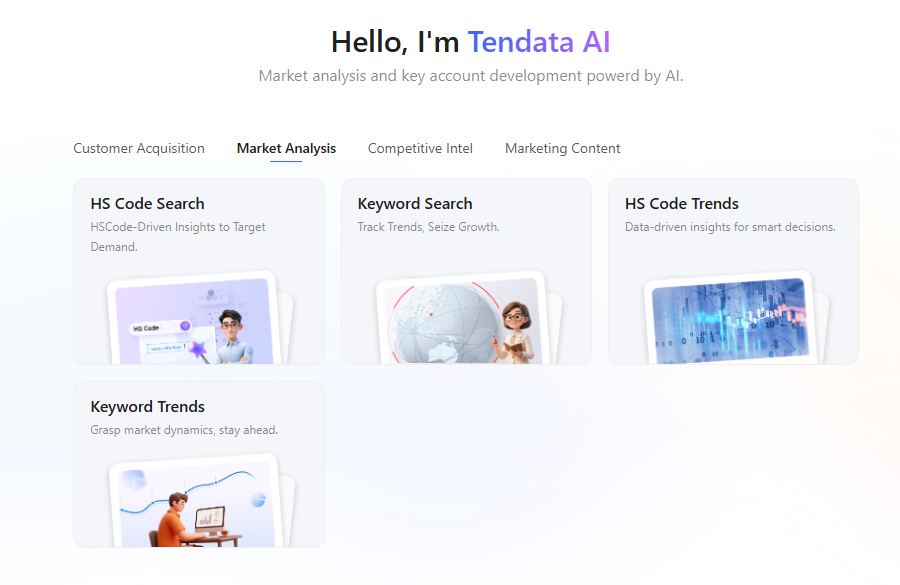
Mode 2:Expert Mode
Industry expert models built into the Tendata AI. When you're unsure which dimensions matter most, simply describe your product. The AI experts generate in-depth, multi-dimensional market analysis reports — detailed data, clear strategies, and actionable recommendations.
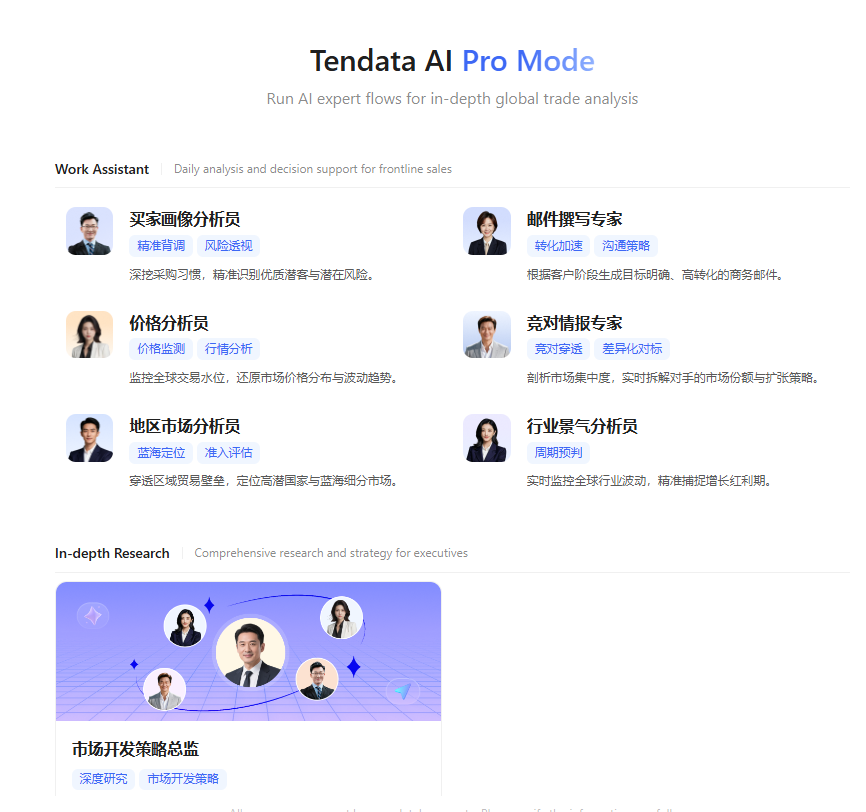
The distinction is meaningful. Template Mode is ideal for focused, repeatable analysis tasks — a professional who regularly monitors the same product categories can build a consistent workflow around it. Expert Mode is designed for exploration and depth: when entering a new market or a new product category, it surfaces insights that a purely manual approach would likely miss.
In both cases, the output is not raw data to be sorted and interpreted — it is structured, analyzed, and strategy-ready.
Why Tendata AI Produces Better Results
The quality of any AI-driven analysis depends entirely on the quality of the data behind it. This is where Tendata's foundational advantage becomes decisive.
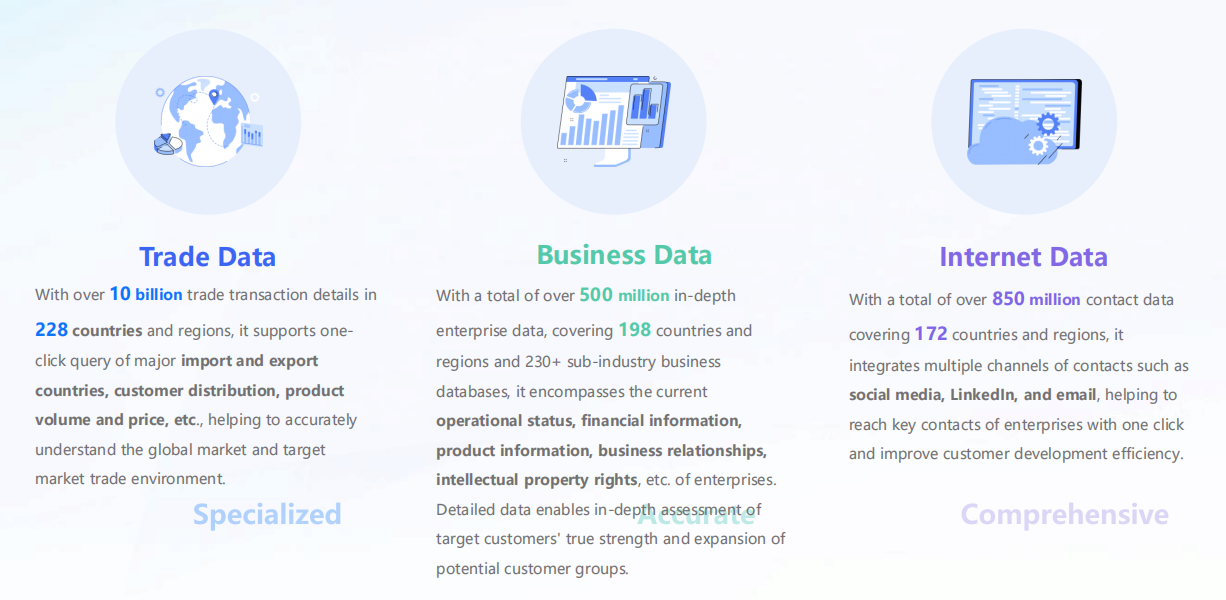
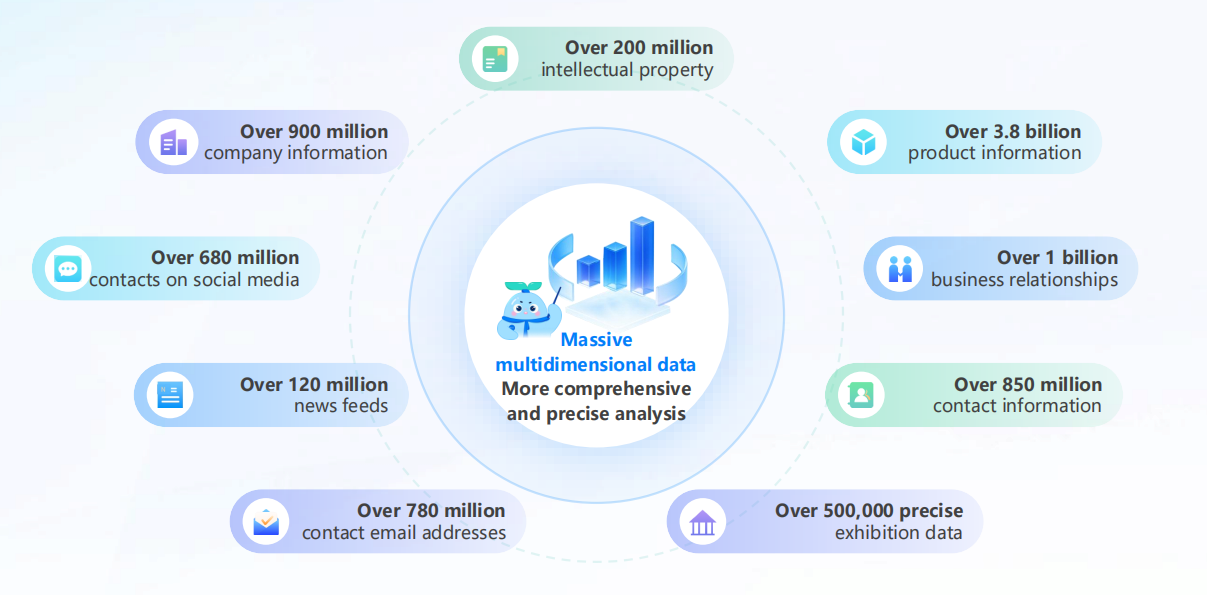
As a globally recognized trade data provider, Tendata has spent years building and verifying one of the most comprehensive trade databases in existence. Every analysis run through Tendata AI draws on this proprietary foundation — not on publicly available summaries or AI-generated estimates.
But Tendata AI doesn't stop at its own database. It also continuously incorporates the latest news, market updates, and industry developments from across the internet. This means that market analysis reflects not only verified historical patterns but also current conditions — the kind of real-time context that purely database-driven tools cannot provide.
Compared to manually compiling statistics from trade portals and then separately searching the web for industry news, Tendata AI accomplishes both in a single session — saving hours of research effort and reducing the risk of missing a critical market signal.
The result is market analysis that is faster to produce, broader in scope, and more reliable in its conclusions — precisely what international trade professionals need to make confident, data-backed decisions in competitive global markets.
Category
Leave Message for Demo Request or Questions