
 Tendata AI
  Exhibition
 B2B Platforms
 Standalone Website
 Social Media
 Emails
 Trade Data Provider
 2026-05-28
Key Points
· Why every exporter should investigate an import export company before cooperation
· The biggest risks of incomplete customer background checks
· How real trade data helps verify buyer authenticity
· How to analyze import records, suppliers, and purchasing behavior
· Why Tendata is a powerful solution for customer due diligence
Overview
In international trade, it is not easy to connect with a potential import export company. Sometimes you finally meet a buyer through a trade show, LinkedIn, or a B2B platform, and the company shows strong purchasing interest. They send detailed inquiries, request quotations, and even ask for samples. Everything looks promising.
However, many exporters have experienced the same frustrating situation. After spending significant time preparing quotations and shipping samples, the buyer suddenly disappears. In some cases, cooperation begins smoothly, but payment delays and unstable orders appear later. Some companies even stop responding completely.
The root problem is often the lack of proper customer background investigation.
Many exporters only focus on surface-level demand and overlook the real purchasing capability, financial reliability, and supply chain stability of an import export company. In overseas markets, information asymmetry is a serious challenge. A professional-looking website or a business card cannot tell you whether the company is a genuine large-volume buyer or simply a risky shell company.
This is why customer due diligence has become an essential step in modern international trade.
Why Is It Difficult to Investigate an Import Export Company?
One of the biggest challenges when evaluating an import export company is fragmented and unreliable information. A company website usually presents only positive marketing content. It rarely reveals actual import frequency, purchasing volume, supplier relationships, or real transaction history. As a result, exporters often rely on assumptions rather than facts.
Another common issue is unclear corporate background information. Many exporters do not know how long the import export company has been operating, whether it has stable business operations in its local market, or whether there are potential legal or financial risks behind the company.
Supply chain visibility is another major blind spot. Without trade data, it is difficult to understand where the company currently sources products, who its main suppliers are, and whether supplier relationships are stable or constantly changing. This information directly affects your pricing strategy, competitive positioning, and market opportunities.
Finding the real decision-maker is also challenging. In many cases, the publicly available email address belongs to a salesperson or customer service representative. Exporters often struggle to reach purchasing managers, procurement directors, or CEOs who actually control buying decisions.
Replace Guesswork with Data-Driven Customer Investigation
To properly investigate an import export company, relying on search engines or customer self-introduction is not enough. The more professional approach is to use real import and export trade data to reconstruct the company’s historical transaction profile and purchasing behavior.
The first step is verifying the company’s basic corporate information. Exporters should confirm the registration status, operating scope, and years of operation through overseas company verification tools.
The second step is analyzing import records. By reviewing customs data and bill of lading records, exporters can determine whether the import export company has real and continuous importing activity. Important indicators include import frequency, shipment size, procurement volume, and whether the imported products match your industry.
The third step is understanding the company’s supply chain structure. Exporters should analyze which countries and suppliers the company currently purchases from. For example, if the company mainly imports similar products from Vietnam or India, but your products have advantages in quality, price, or delivery capability, this may represent a strong market opportunity. At the same time, supply chain analysis also helps identify your direct competitors.
The fourth step is identifying key decision-makers. After analyzing trade and business data, exporters can use professional databases to obtain executive contact information, including procurement managers, directors, CEOs, email addresses, and LinkedIn profiles. This makes customer development more accurate and efficient.
Why Tendata Is an Excellent Import Export Company Investigation Tool
Among many global trade intelligence platforms, Tendata is specifically designed for import and export businesses. Its customer background investigation capabilities are particularly valuable for exporters looking to evaluate an import export company accurately and efficiently.
Unlike ordinary company information tools, Tendata combines customs data, business data, internet data, and AI-powered analysis into one integrated trade intelligence platform. Currently, Tendata covers customs data from 228 countries and regions, creating a comprehensive global trade intelligence network for exporters.
The platform integrates more than 10 billion global trade records, 500 million in-depth enterprise records, and 850 million potential customer contact profiles, helping users conduct professional background investigations on any import export company with higher speed and accuracy.
With Tendata, exporters can verify real shipment activities, analyze supplier relationships, monitor procurement trends, identify key decision-makers, and track customer purchasing behavior based on real trade data rather than assumptions.
For companies developing overseas markets, Tendata is not only a trade database, but also a powerful AI-driven customer development and risk control platform.
Core Advantages of Tendata Customer Background Investigation
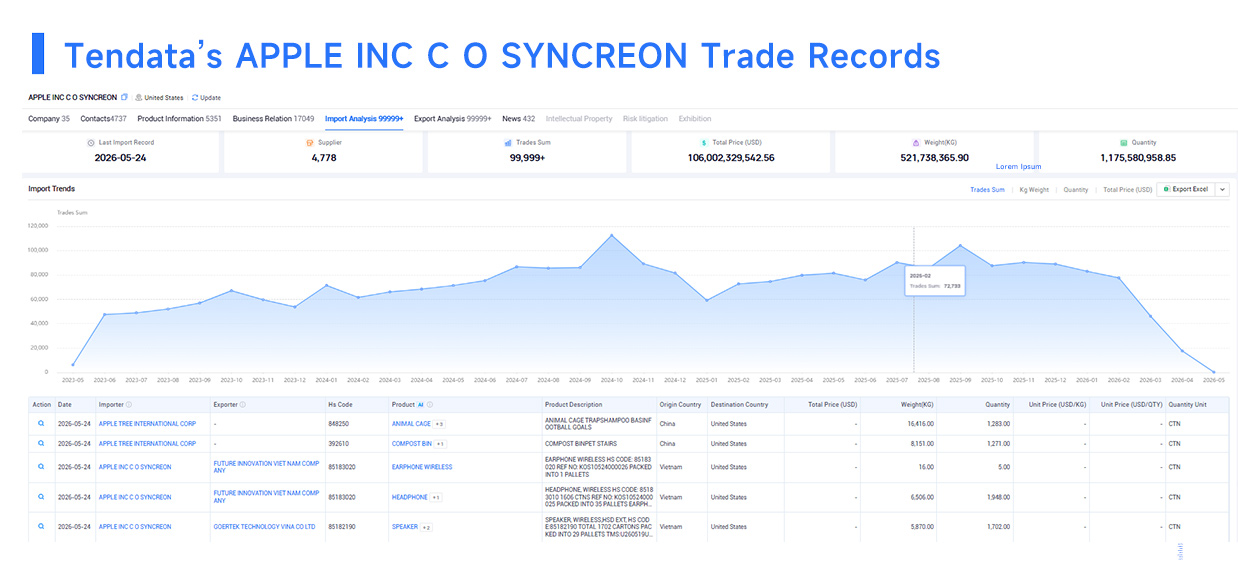
Real Transaction Verification
Tendata directly displays the real import records of an import export company over the past several years. Instead of relying on claims made by buyers, exporters can verify actual purchasing behavior through customs and shipment data. This helps filter out fake buyers who only request quotations for price comparison purposes.
>>> Click to View the Full List <<<
Deep Supply Chain Visibility
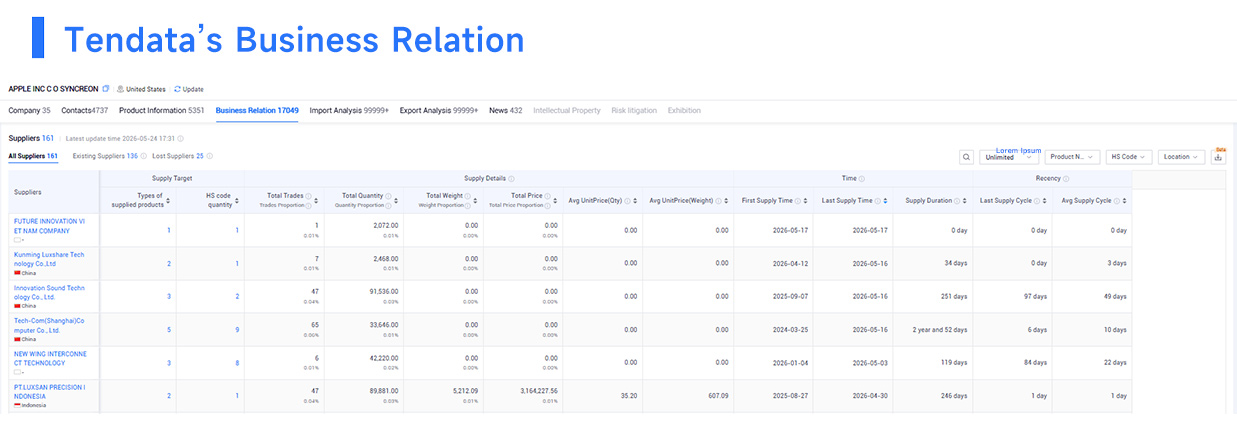
Tendata clearly shows supplier countries, supplier names, imported product descriptions, shipment volume, and purchasing cycles. Exporters can quickly determine whether they are competing against existing suppliers or entering the market as a potential alternative supplier.
>>> Click to View the Full List <<<
Comprehensive Corporate Profiles
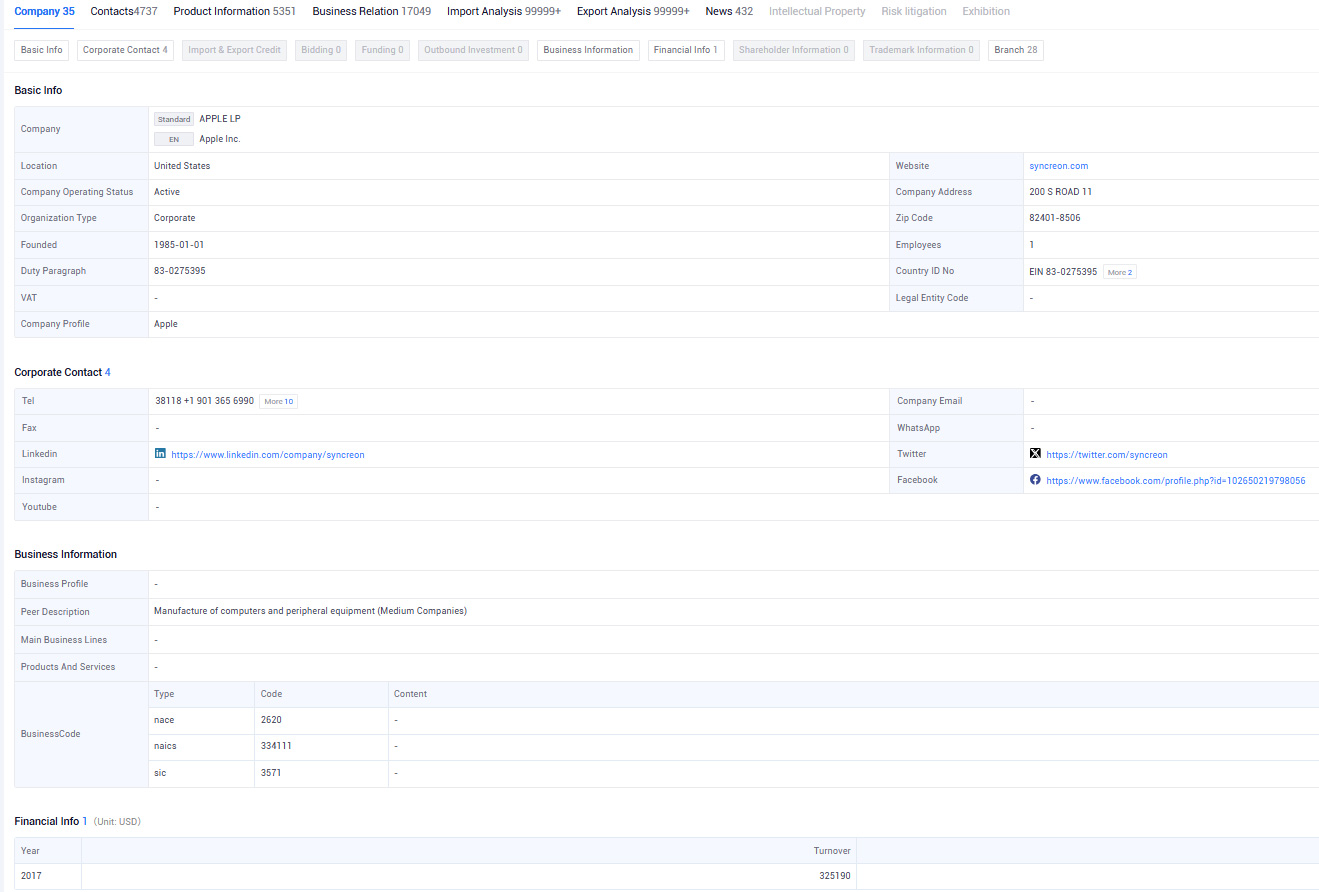
In addition to trade records, Tendata integrates company registration information, annual reports, social media profiles, and executive contact details. Exporters can better evaluate the business value, credibility, and communication channels of an import export company before investing significant resources into cooperation.
>>> Get More Customer Information via Tendata <<<
How Tendata Helps Exporters Reduce Risk and Improve Efficiency
Traditional customer investigation methods are time-consuming and often incomplete. Exporters may spend days searching websites, LinkedIn profiles, or public company databases without obtaining reliable purchasing information.
With Tendata, exporters can complete a professional background investigation on an import export company within minutes. Instead of manually collecting fragmented information, users can immediately access verified trade records, supply chain relationships, and key buyer contacts.
This significantly improves customer development efficiency. Exporters can focus on high-value buyers with real purchasing activity while avoiding low-quality leads and risky companies.
More importantly, data-driven investigation reduces cooperation risks. By understanding the real business situation of an import export company in advance, exporters can avoid working with companies that have poor payment history, unstable procurement behavior, or weak operational capabilities.
Summary
In today’s highly competitive global trade environment, conducting a deep investigation on every potential import export company is no longer optional. It has become an essential part of professional international business development.
Traditional investigation methods are slow, incomplete, and heavily dependent on guesswork. In contrast, Tendata provides exporters with a smarter and more reliable way to evaluate buyers through real global trade data.
By using Tendata for customer background investigation, exporters can save time, improve buyer targeting efficiency, reduce trading risks, and gain a clearer understanding of every import export company they plan to work with.
If you want to stop relying on intuition and start using real trade intelligence to identify trustworthy buyers, Tendata can help you enter a new era of intelligent customer investigation and precision customer development.
Category
Leave Message for Demo Request or Questions