
 Tendata AI
  Exhibition
 B2B Platforms
 Standalone Website
 Social Media
 Emails
 Trade Data Provider
 2026-06-04
Key Points
· Traditional B2B platforms and cold email campaigns are becoming less effective.
· Rising competition has increased customer acquisition costs for every import export company.
· Blind prospecting often targets unqualified leads with little purchasing intent.
· Tendata's customs and trade database enables businesses to identify verified importers and active buyers.
· Supply chain intelligence helps companies analyze competitors and develop targeted sales strategies.
· Combining Tendata data with LinkedIn outreach significantly improves response rates and conversion opportunities.
· Data-driven prospecting allows an import export company to focus on buyers who are already purchasing similar products.
Overview
In today's increasingly competitive global trade environment, every import export company faces a common challenge: finding qualified buyers efficiently and consistently. As information becomes more transparent and competition intensifies, traditional lead generation methods are producing diminishing returns.
Many business owners have noticed that the channels that once fueled growth—such as B2B marketplaces and cold email campaigns—are no longer delivering the same results. Response rates are falling, advertising costs are rising, and customer acquisition has become more difficult than ever.
To remain competitive, an import export company must move beyond traditional prospecting and embrace data-driven customer development strategies. This article explores why conventional methods are losing effectiveness and how platforms like Tendata help businesses identify real buyers, uncover market opportunities, and accelerate sales growth.
The Traditional "Golden Rules": B2B Platforms and Cold Emails
For many years, customer acquisition for an import export company relied primarily on two methods:
· B2B Marketplace Marketing
Companies opened stores on platforms such as Alibaba, Made-in-China, and other global B2B marketplaces. By optimizing product listings, purchasing advertising placements, and competing for keyword rankings, businesses could attract international buyers and generate inquiries.
· Google Search and Cold Email Outreach
Another common strategy involved searching for potential buyers through Google, collecting contact information from company websites, and sending large volumes of cold emails to generic addresses such as info@ or sales@.
These methods were highly effective during the early stages of internet commerce. At a time when supplier information was limited, simply maintaining a professional website and responding quickly could generate substantial business opportunities. However, the market has changed dramatically.
The Hidden Problems Behind Traditional Customer Acquisition
If your import export company still depends heavily on these conventional methods, you may already be experiencing several major challenges.
Rising Costs and Intense Competition on B2B Platforms
Today, B2B marketplaces have become extremely crowded. Thousands of suppliers compete for the same buyers, driving advertising costs higher every year.
To secure visibility, many companies spend heavily on pay-per-click advertising and premium memberships. Even when inquiries are generated, buyers can easily compare dozens of suppliers within minutes, creating intense price competition and shrinking profit margins. In many cases, businesses discover that they are competing primarily on price rather than value.
Cold Emails Often Go Unnoticed
Traditional cold email outreach is essentially a form of blind prospecting.
Most emails are sent to generic inboxes that are rarely monitored by purchasing decision-makers. Many messages are filtered as spam or ignored entirely.
More importantly, the sender often knows very little about the recipient. Without understanding whether a company imports similar products, has purchasing authority, or currently has sourcing needs, the outreach lacks relevance and credibility.
For a modern import export company, trust and timing are critical. Without either, even the most carefully written email is unlikely to generate meaningful results.
The Smarter Approach: Using Tendata to Find Real Buyers
If traditional prospecting is becoming less effective, what should an import export company do instead?
The answer lies in shifting from broad outreach to precision targeting through trade intelligence and customs data.
Rather than guessing who might be interested, companies can now identify organizations that are already purchasing similar products. This is where Tendata becomes a powerful business development tool.
Identify Genuine Buyers Instead of Middlemen
One of the biggest advantages of Tendata is its access to real import and export transaction records.
Instead of contacting random businesses, an import export company can directly identify companies that have recently imported products within the same category.
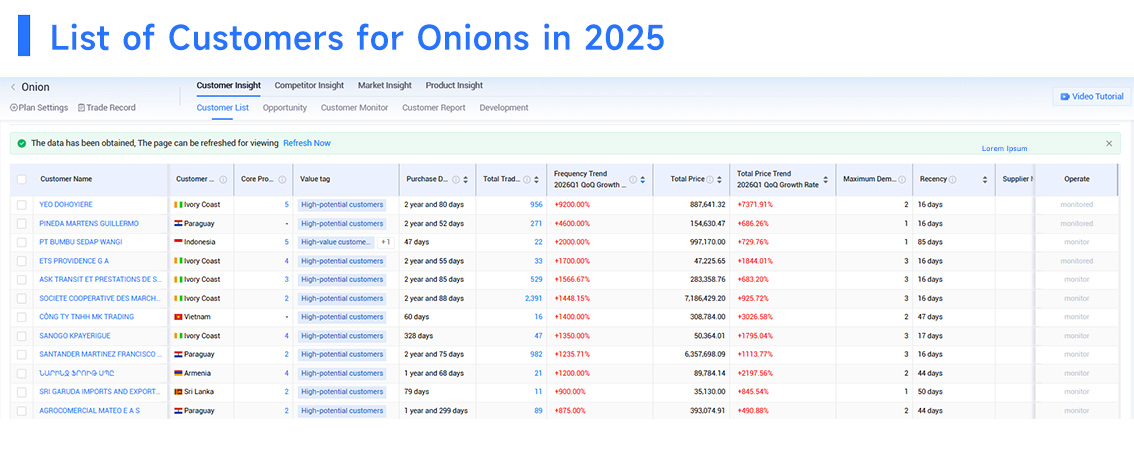
With Tendata, businesses can discover:
· Which companies imported similar products
· How frequently they place orders
· Estimated shipment volumes
· Source countries and suppliers
· Purchasing patterns and trends
This enables sales teams to focus their efforts on buyers with proven demand rather than speculative prospects.
Example: Using HS code 070310 (onions) to explore trade dynamics.
>>> Get a Free Demo from Tendata <<<
Conduct Deep Customer and Competitor Analysis
Finding a buyer is only the first step.
Tendata also provides valuable supply chain intelligence that helps businesses understand a prospect's purchasing behavior and existing supplier relationships.
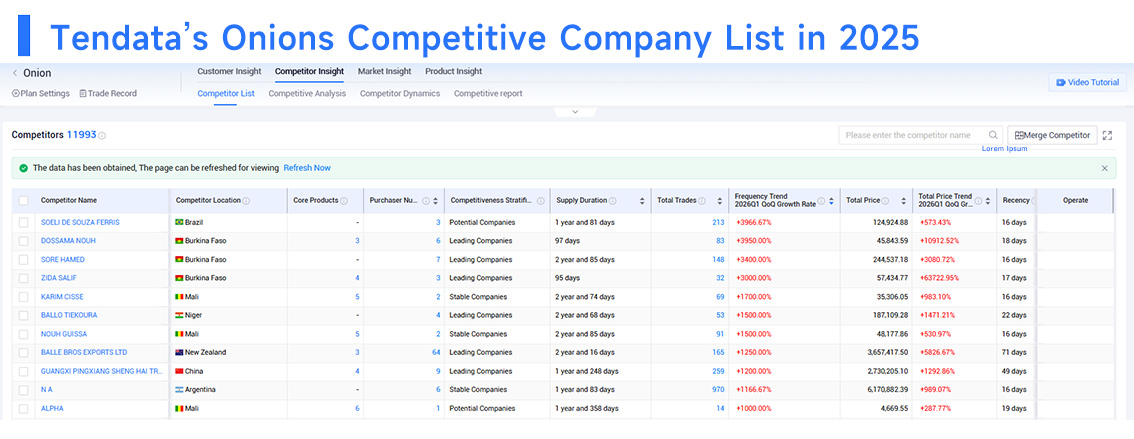
For example, an import export company can analyze:
· Current suppliers serving the buyer
· Purchase frequency and volume trends
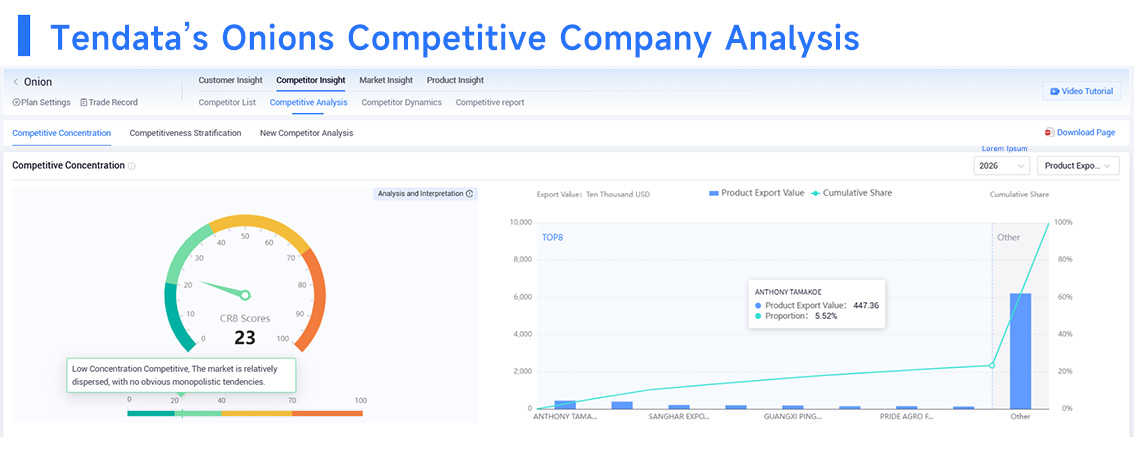
· Supplier concentration levels
· Potential weaknesses in existing supplier relationships
Armed with this information, sales teams can develop highly targeted proposals and competitive positioning strategies.
Instead of approaching prospects blindly, they can engage with detailed knowledge of the customer's sourcing situation.
>>> Tendata’s Onions Competitive Company List in 2025 <<<
>>> Tendata’s Onions Competitive Company Analysis <<<
Combine Data with Social Selling
Data alone is powerful, but combining data with relationship-building creates even greater results.
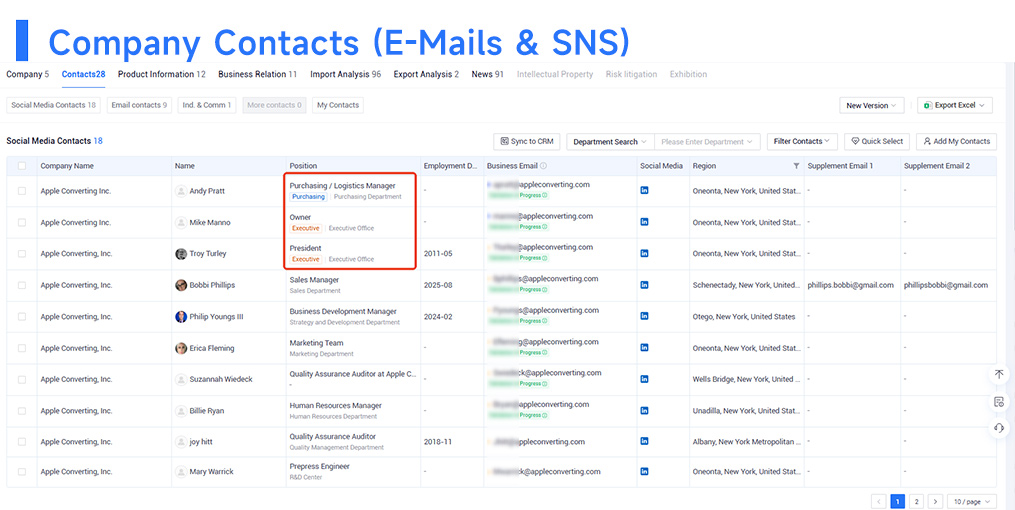
After identifying target companies through Tendata, businesses can leverage LinkedIn and other professional networking platforms to connect directly with purchasing managers, sourcing directors, and key decision-makers.
This approach transforms traditional cold outreach into informed, personalized communication.
Rather than sending generic emails, sales representatives can reference industry trends, purchasing history, and relevant business challenges, making conversations significantly more meaningful.
Many exporters have reported substantial improvements in engagement rates after integrating Tendata's trade intelligence with LinkedIn-based social selling strategies. In some cases, companies have increased response rates by more than 60% and generated millions of dollars in new business opportunities.
>>> Obtaining Customer Contact Information from Tendata <<<
Why Data Is Becoming the New Competitive Advantage
The era of easy traffic is gradually coming to an end.
Today, successful customer acquisition depends less on visibility and more on intelligence. The companies that understand their markets, identify active buyers, and engage prospects strategically will outperform competitors that continue relying solely on traditional methods.
For any import export company, access to reliable trade data provides a significant competitive advantage by:
· Reducing time spent on unqualified leads
· Improving prospecting efficiency
· Increasing conversion rates
· Enhancing sales forecasting accuracy
· Strengthening competitive positioning
· Supporting market expansion decisions
Platforms like Tendata help businesses transform raw trade data into actionable sales opportunities, allowing teams to focus their resources where they are most likely to generate results.
Summary
For today's import export company, relying exclusively on B2B platforms and mass cold email campaigns is no longer enough. While these channels can still play a supporting role, they should not be the foundation of a modern customer acquisition strategy.
The future belongs to businesses that leverage data to understand who is buying, what they are buying, and when they are buying it. By using customs data and trade intelligence solutions such as Tendata, companies can replace inefficient "spray-and-pray" prospecting with highly targeted outreach based on real purchasing activity.
In an increasingly competitive global marketplace, data is no longer just an advantage—it is a necessity. The sooner an import export company embraces data-driven customer development, the sooner it can uncover new opportunities, reach qualified buyers, and achieve sustainable international growth.
Category
Leave Message for Demo Request or Questions