
 Tendata AI
  Exhibition
 B2B Platforms
 Standalone Website
 Social Media
 Emails
 Trade Data Provider
 2026-06-04
Key Points
· Traditional trade leads are often outdated, shared with competitors, or difficult to verify.
· Many exporters waste valuable sales resources chasing low-intent buyers.
· Real customer development should be based on actual purchasing behavior rather than self-reported inquiries.
· Tendata helps businesses analyze markets, monitor competitors, and connect directly with decision-makers.
· Trade data provides transaction evidence, making customer targeting far more accurate than relying solely on trade leads.

Overview
For many exporters and international trading companies, trade leads have long been considered a primary source of new business opportunities. Whether obtained through free B2B platforms, purchased buyer lists, or online sourcing websites, trade leads once seemed like a convenient shortcut to finding potential customers.
However, as global competition intensifies and digital platforms become increasingly crowded, the quality of many trade leads has declined significantly. Fake inquiries, price shoppers, and unqualified prospects have become common, forcing sales teams to spend countless hours sorting through opportunities that rarely convert into real orders.
The problem is not the lack of trade leads—it is the lack of reliable data behind them.
This is where a data-driven approach, powered by Tendata's global trade intelligence platform, can fundamentally change the way exporters identify and develop customers.
The Traditional Approach to Trade Leads: Efficient on the Surface, Inefficient in Reality
Most exporters still acquire trade leads through three common channels:
Free B2B Platform Inquiries
Many platforms distribute buyer requests to thousands of suppliers simultaneously. While these trade leads appear attractive, they often trigger intense price competition, leaving little room for differentiation or profit.
Purchased Buyer Lists
Some providers sell databases advertised as global importer directories or collections of trade leads. Unfortunately, many of these records are outdated, duplicated, or gathered through automated scraping, resulting in low accuracy.
Google Search and Manual Prospecting
Some sales teams rely on keyword searches to locate procurement posts or company information online. Although possible, this process is labor-intensive and heavily dependent on manual evaluation.
At first glance, these methods generate a steady flow of trade leads. In reality, most represent low-intent prospects with weak purchasing signals and little competitive advantage.
The Biggest Weakness of Traditional Trade Leads
If your customer acquisition strategy still depends primarily on traditional trade leads, you have likely encountered several common challenges.
Unverified Buyer Authenticity
A buyer may publish a request such as "Looking for LED light suppliers," but how can you determine whether that person is a genuine purchasing manager, an intermediary, or simply collecting quotations?
Without supporting data, most trade leads offer no reliable way to verify purchasing authority.
Outdated Information
Many publicly available trade leads remain online long after the purchasing project has ended. By the time you submit your quotation, the order may already have been awarded to another supplier.
Lack of Trust and Context
A cold quotation sent in response to a single trade lead rarely creates meaningful engagement. The buyer does not know your company, understand your capabilities, or trust your pricing.
The core issue is simple:
Traditional trade leads provide indications of demand, but they do not provide proof of actual transactions.
A Better Alternative: Turn Trade Leads into Verified Opportunities with Tendata
Instead of collecting more trade leads, successful exporters are changing the way they identify opportunities.
Rather than listening to what buyers claim they need, they analyze what buyers are actually purchasing.
This is exactly where Tendata creates value.
Using customs data, shipment records, and global trade intelligence, Tendata helps exporters build a customer acquisition system based on facts rather than assumptions.
1. Understand the Market Before Evaluating Trade Leads
Many exporters receive a trade lead and immediately prepare a quotation without first understanding the market.
Tendata allows companies to analyze:
· Whether import demand for a product is increasing or declining
· Seasonal purchasing patterns
· Typical pricing ranges
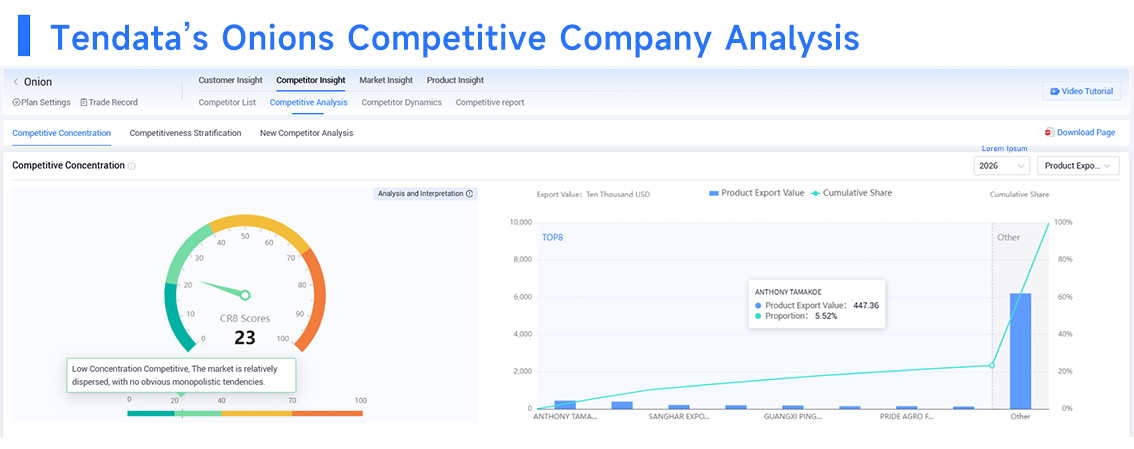
· Market concentration levels
· Emerging competitors entering the market
With this broader market perspective, businesses can quickly determine whether a trade lead represents a genuine opportunity or simply a distraction.
Instead of reacting blindly, exporters can prioritize the markets and buyers with the highest probability of success.
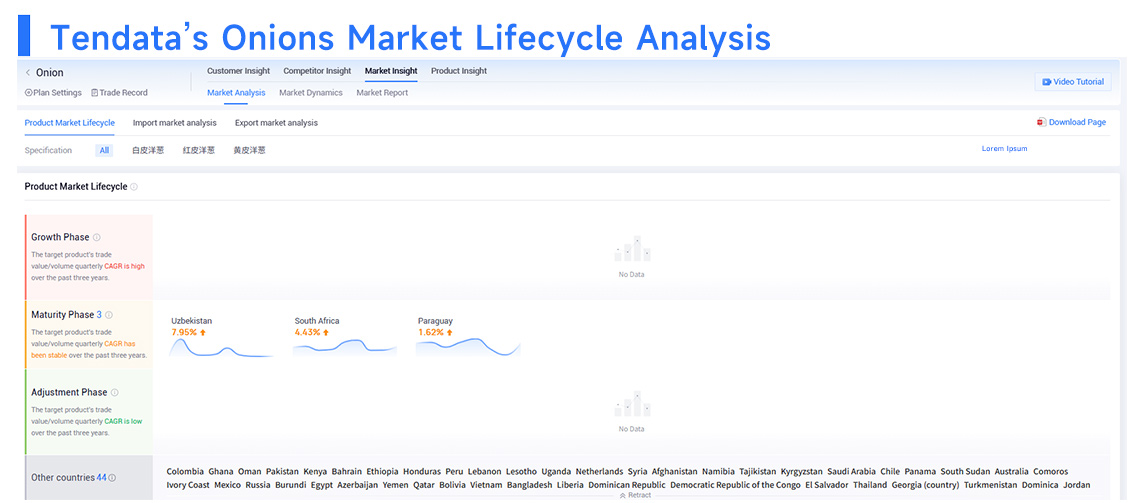
Example: Using HS code 070310 (onions) to explore trade dynamics.
>>> Tendata’s Onions Market Lifecycle Analysis <<<
2. Analyze Competitors and Identify Supplier Switching Opportunities
One major limitation of traditional trade leads is that they reveal nothing about the buyer's current supply chain.
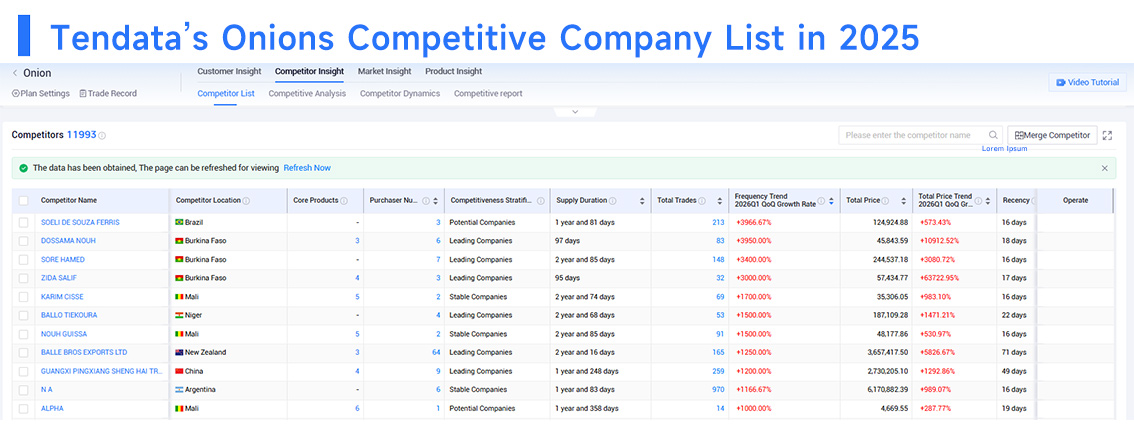
Tendata helps uncover critical insights such as:
· Existing suppliers serving a target buyer
· Shipment frequency and purchase volumes
· Historical pricing trends
· Product categories being sourced
· Changes in supplier relationships over time
This information enables exporters to identify situations where buyers may be actively looking for alternative suppliers.
When combined with traditional trade leads, these insights transform generic prospecting into highly targeted sales development.
>>> Tendata’s Onions Competitive Company List in 2025 <<<
>>> Tendata’s Onions Competitive Company Analysis <<<
3. Reach Decision-Makers Instead of Generic Email Addresses
Many trade leads provide only generic contact information such as:
· info@
· sales@
· contact@
These mailboxes are often ignored or managed by gatekeepers.
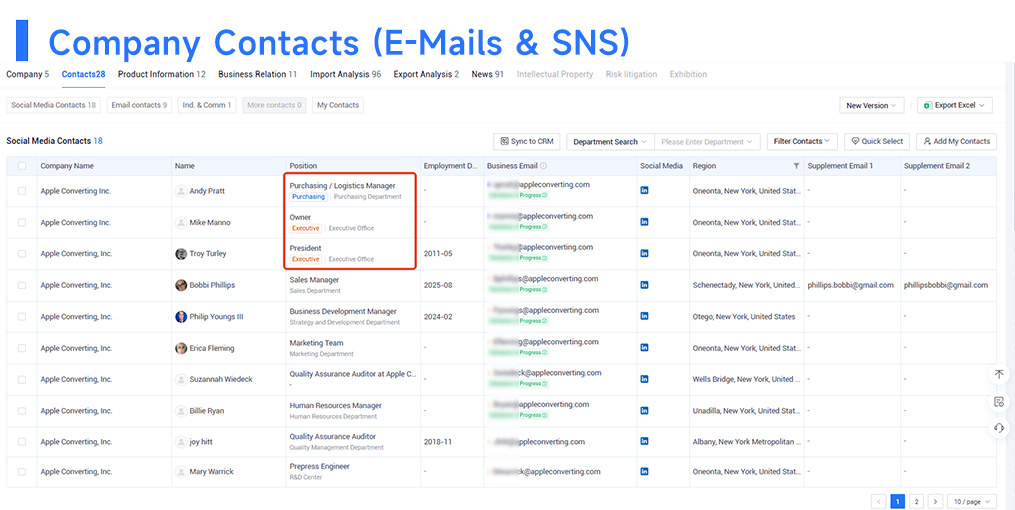
Tendata enhances prospecting by helping businesses identify key decision-makers, including:
· Purchasing Managers
· Procurement Directors
· Company Owners
· General Managers
In addition to professional contact information, users can often access business-related social channels such as LinkedIn and other professional networks.
By connecting directly with individuals who influence purchasing decisions, exporters significantly improve response rates and shorten sales cycles.
Example: For onions (HS: 070310), Tendata helps identify potential buyers, their purchasing habits, quantities, and cycles.
>>> Obtaining Customer Contact Information from Tendata <<<
Why Data-Driven Customer Development Outperforms Traditional Trade Leads
The global trading environment has changed dramatically.
Buyers receive countless emails every day, and suppliers compete aggressively for visibility. In such an environment, relying solely on trade leads is no longer enough.
The companies achieving sustainable export growth are those that combine prospecting with actionable trade intelligence.
Tendata enables exporters to:
· Discover active importers based on real shipment records
· Monitor competitors and supplier relationships
· Evaluate market demand before investing resources
· Identify purchasing cycles and replenishment patterns
· Build outreach campaigns around verified data
This approach reduces wasted effort and increases the likelihood of engaging buyers with genuine purchasing needs.
Summary
There is nothing inherently wrong with trade leads. The mistake is treating them as the only source of customer acquisition.
Modern exporters need more than inquiry information—they need transaction evidence, market visibility, and decision-maker access.
By using Tendata's global trade database, businesses can move beyond low-quality trade leads and build a more predictable customer development process based on real purchasing behavior.
The most successful exporters are no longer spending their days filtering questionable trade leads. Instead, they are using data to understand markets, track competitors, and connect directly with buyers who are already active in international trade. The question is no longer how many trade leads you can collect. The real question is whether you are using data to identify the customers most likely to place the next order.
Category
Leave Message for Demo Request or Questions