
 Tendata AI
  Exhibition
 B2B Platforms
 Standalone Website
 Social Media
 Emails
 Trade Data Provider
 2026-06-04
Key Points
· A modern data importer relies on verified customs and trade data, not surface-level inquiries
· Traditional B2B platforms provide leads, but not transaction validation
· Real competitive advantage comes from analyzing import history, suppliers, and volumes
· A professional data importer uses data intelligence to identify high-value buyers
· Tools like Tendata enable end-to-end buyer discovery and competitor tracking
· Precision targeting replaces mass outreach in a data importer workflow
· Trade data transforms exporters into strategic market operators, not just sellers

Overview
In today’s competitive global trade environment, the real challenge for exporters is no longer “how to find leads,” but “how to identify real buyers with verified purchasing behavior.” Many companies still rely on B2B marketplaces, generic Google searches, or cold outreach. However, these methods only generate surface-level leads—not actionable intelligence.
The real competitive advantage comes from becoming a data importer—a decision-maker who leverages customs and shipment intelligence to identify actual buyers, understand sourcing patterns, and predict future demand.
Platforms like Tendata enable exporters to shift from guesswork to data-driven acquisition by analyzing global customs databases and import-export transactions.
1. Traditional Customer Acquisition: Still a “Guessing Game”
Most exporters still rely on three conventional channels:
B2B platforms (Alibaba, Made-in-China, etc.)
Trade exhibitions and offline networking
Google search combined with cold email outreach
While these methods can generate inquiries, they rarely provide verified purchasing intent. In other words, they do not help you become a true data importer—someone who understands actual trade flows instead of relying on assumptions.
The result is predictable: high effort, low conversion, and intense competition over the same shallow leads.
2. The Core Problem: Leads Without Transaction Proof
The biggest weakness of traditional methods is simple:
You are not dealing with real buyers—you are dealing with signals.
A serious data importer mindset focuses on verified trade behavior, not interest signals.
Key limitations include:
2.1 No proof of real import activity
A company may send inquiries, but without customs records, you cannot confirm whether they have ever imported similar products. A real data importer filters out noise and focuses only on verified buyers.
2.2 Unknown supplier relationships
Without visibility into existing supply chains, pricing structures, and sourcing regions, your offer is blind. A professional data importer always studies competitor relationships before outreach.
2.3 Unclear purchase volume
Many “active” buyers only import minimal quantities. Without shipment data, exporters waste time chasing low-value prospects instead of acting like a strategic data importer.
3. The Shift: From Lead Hunting to Data Importer Intelligence
The modern approach is fundamentally different. Instead of waiting for inquiries, exporters actively mine global trade data.
With Tendata, a data importer can access:
· Verified import transactions by company name
· Shipment volume, frequency, and transaction value
· Country of origin and logistics routes
· Historical purchasing behavior over time
This transforms the role of a data importer from a passive marketer into a strategic market analyst.
4. Competitive Intelligence: Seeing What Others Cannot
A mature data importer does not only identify buyers—they analyze competitors.
Using customs intelligence platforms, exporters can uncover:
· Which suppliers are currently serving a buyer
· Shipping frequency and stability of competitors
· Pricing pressure and seasonal purchasing cycles
· Weaknesses in existing supply chains
This is where the real advantage of a data importer emerges: not just finding demand, but understanding how to replace existing suppliers.
5. Precision Outreach: From Cold Emails to Transaction-Based Communication
Traditional outreach is generic. A data importer approach is context-driven.
Instead of sending mass emails, exporters can:
· Reference actual import history
· Mention shipment volumes or sourcing patterns
· Tailor proposals based on real purchasing behavior
· Contact verified decision-makers directly
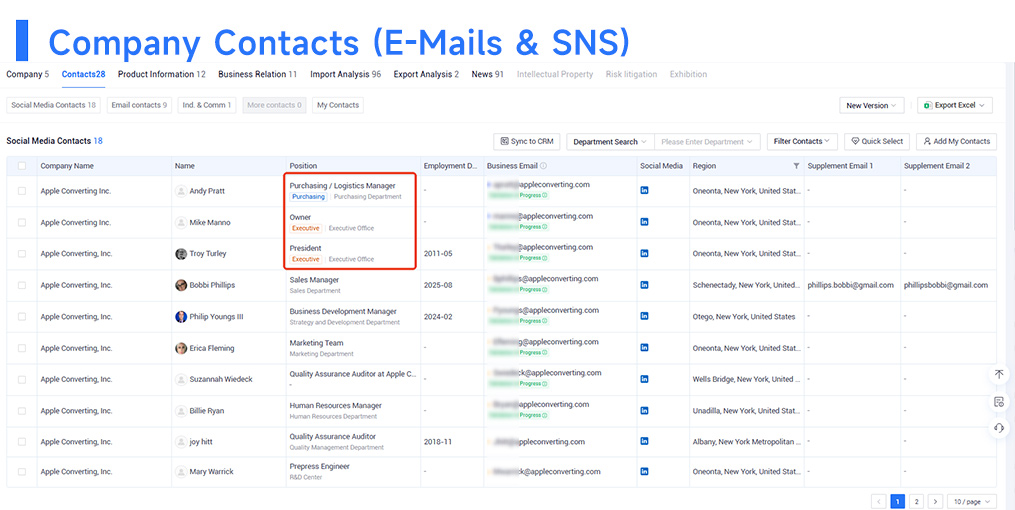
With tools like Tendata, a data importer can also identify procurement managers and key stakeholders, enabling highly targeted communication instead of blind outreach.
>>> Obtaining Customer Contact Information from Tendata <<<
Conclusion
The global trade landscape is shifting from intuition-based selling to data-driven acquisition. In this new environment, success belongs to the data importer—those who understand how to extract actionable insights from customs records and transform them into real business opportunities. Instead of waiting for leads, a data importer actively identifies verified buyers, analyzes competitors, and engages decision-makers with precision.
With platforms like Tendata, exporters are no longer limited to fragmented signals—they gain access to a structured global buyer map.
The future of export growth is not about more traffic or more inquiries. It is about becoming a smarter data importer, where every decision is backed by real trade intelligence.
Category
Leave Message for Demo Request or Questions