
 Tendata AI
  Exhibition
 B2B Platforms
 Standalone Website
 Social Media
 Emails
 Trade Data Provider
 2026-07-16
Global trade opportunities are constantly changing. New markets emerge, customer demand shifts, and competition between international suppliers becomes more intense. For businesses involved in exporting or importing, finding accurate market information is no longer optional—it has become a key factor in making better decisions.
This is why import export data has become an essential resource for manufacturers, trading companies, sourcing teams, and international sales professionals.
By analyzing import export data, businesses can understand global supply chains, identify active markets, discover potential partners, and evaluate industry trends. Instead of relying only on traditional methods such as exhibitions, referrals, or online searches, companies can use actual trade activities to guide their expansion strategies.
However, the value of import export data depends on the level of detail available. Basic trade statistics can explain market movements, while advanced trade intelligence solutions help companies understand who is buying, who is selling, and where real commercial opportunities exist.

Understanding Import Export Data
Import export data refers to information generated from international transactions when goods are shipped between countries. It records the movement of products across borders and provides insights into global trade activities.
Depending on the source, import export data may contain details such as product names, HS codes, countries involved, shipment dates, quantities, trade values, and company information.
For example, a manufacturer producing industrial equipment may use import export data to identify countries with increasing demand, study existing suppliers, and find companies that are already purchasing similar products.
Unlike general market reports, which often provide broad industry information, import export data reflects actual trade behavior. It helps businesses understand what is happening in the market instead of simply predicting what might happen.
Where Can Businesses Access Import Export Data?
Many governments and international organizations publish official trade statistics that help businesses analyze global markets, monitor import and export trends, and identify new opportunities. Here are some of the most reliable free trade databases:
1. UN Comtrade
Website: https://comtrade.un.org/
The world's largest official trade database, covering more than 200 countries with detailed import and export statistics by HS code.
2. ITC Trade Map
Website: https://www.trademap.org/
Provides official trade statistics, market share analysis, and trade flow data for over 180 countries.
3. WTO Data Portal
Website: https://stats.wto.org/
Offers global trade statistics, tariff information, and international trade reports published by the World Trade Organization.
4. World Bank WITS
Website: https://wits.worldbank.org/
Combines international trade and tariff data from multiple organizations for country and product analysis.
5. China Customs Statistics
Website: http://stats.customs.gov.cn/
China's official customs statistics platform, providing detailed import and export data across products and trading partners.
6. USITC DataWeb
Website: https://dataweb.usitc.gov/
The official U.S. government database for detailed U.S. import and export statistics by product, country, and transportation mode.
7. Eurostat
Website: https://ec.europa.eu/eurostat
The European Union's official statistics portal, offering comprehensive trade and economic data for EU member states.
8. India DGCI&S
Website: https://www.dgcis.gov.in/
India's official trade statistics platform, featuring import and export data by product, partner country, and time period.
9. Brazil Comex Stat
Website: http://comexstat.mdic.gov.br/pt/geral
Brazil's official foreign trade database with historical import and export statistics and market insights.
10. Singapore Customs
Website: https://www.customs.gov.sg/
Singapore's official customs portal, providing trade statistics, customs regulations, and import/export information.
However, most official databases focus on statistical analysis rather than identifying individual buyers or suppliers.
The Challenge of Using Traditional Trade Statistics
Accessing import export data is only the first step. The bigger challenge is extracting information that can support business decisions.
A company may discover that a country imports large volumes of a specific product, but several important questions remain unanswered.
· Who are the main buyers?
· Which companies import regularly?
· Are these businesses still active?
· Which suppliers are they purchasing from?
· How can you contact the right decision-maker?
These questions are critical for exporters trying to generate new business. Without company-level insights, businesses often spend significant time searching, verifying, and contacting prospects that may have little actual demand.
This is why many companies choose professional import export data platforms that combine trade records with business intelligence.
How Businesses Use Import Export Data in Real Situations
The application of import export data goes far beyond market research.
For exporters, it provides a clearer way to identify overseas buyers. Instead of creating a prospect list based only on online searches, companies can focus on organizations that have already demonstrated purchasing activity.
For importers and sourcing teams, import export data helps evaluate suppliers, compare market participants, and understand where competitors are sourcing products.
For manufacturers, it offers visibility into industry movements. By monitoring shipment trends and company activities, businesses can discover emerging markets and adjust their strategies before competitors.
In other words, import export data connects market information with real business actions.
How Tendata Helps Companies Maximize Import Export Data
Tendata is a professional global trade intelligence platform that helps companies analyze import export data and transform international trade information into business opportunities.
Unlike basic statistical databases, Tendata focuses on providing deeper insights into trade activities, helping users understand markets, competitors, and potential customers from a commercial perspective.
Explore Market Opportunities Before Expanding
Entering a new international market requires more than knowing that a product is popular. Companies need to understand whether demand is stable, who the major buyers are, and how competitive the market has become.
Tendata helps businesses analyze import export data by product, country, and trading activity. This allows companies to identify promising markets and better understand where opportunities are developing.
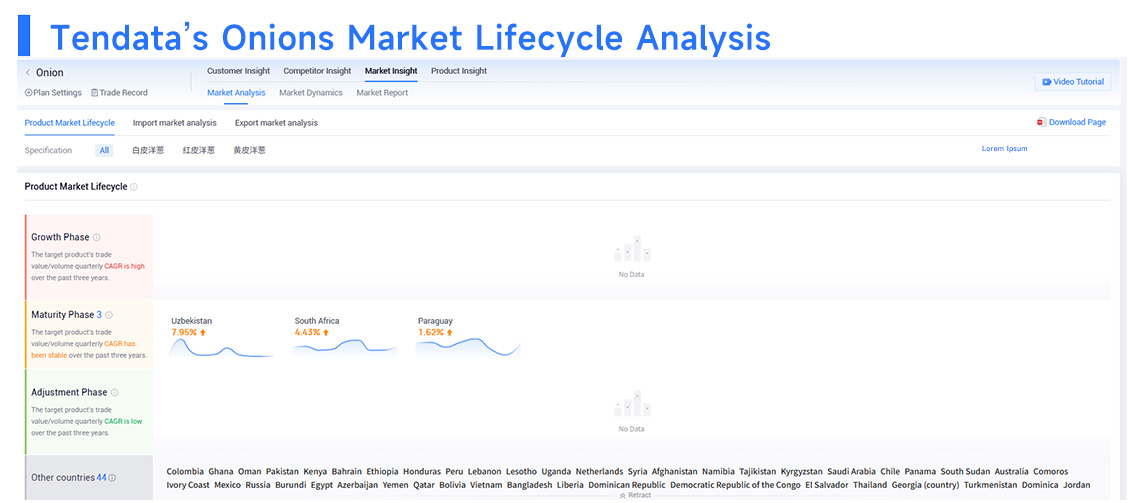
For example, an exporter of fresh agricultural products can analyze HS Code 070310 (onions) to review global purchasing activities, identify major importing countries, and discover companies with consistent demand.
With this information, businesses can focus their resources on markets with stronger potential instead of approaching customers randomly.
>>> Tendata’s Onions Market Lifecycle Analysis <<<
Gain Competitive Insights From Global Trade Activities
Competition in international markets is often difficult to understand from public information alone.
A company may know its competitors but have limited knowledge about their actual global activities.
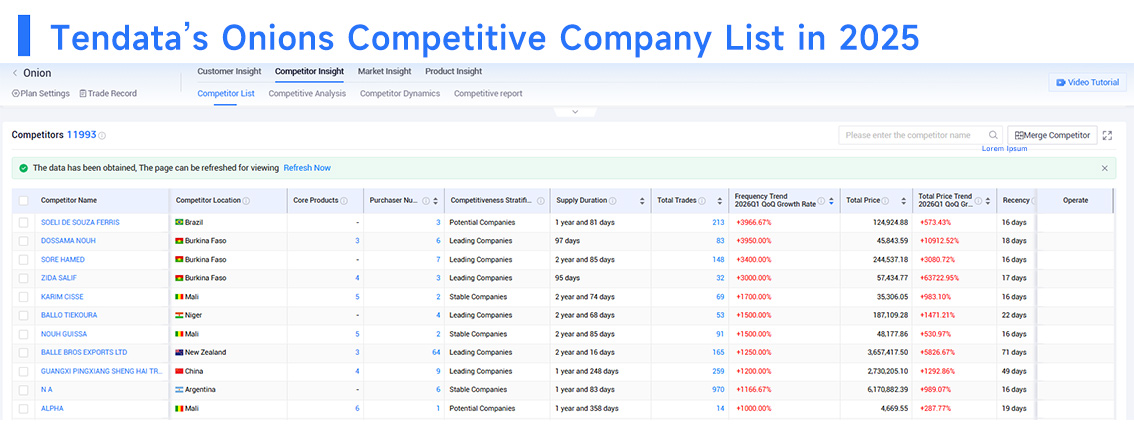
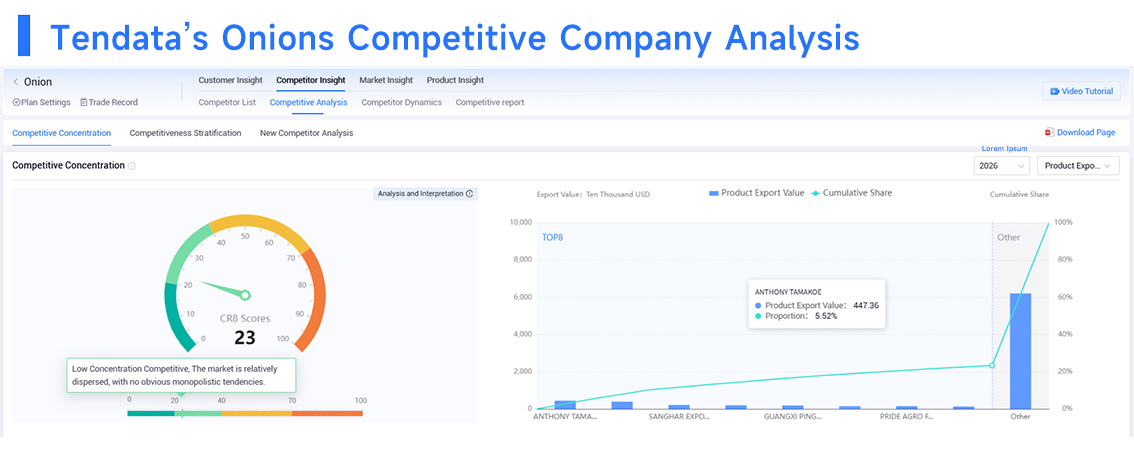
Through Tendata's import export data, businesses can analyze competitor movements, including their destination markets, trading frequency, and supply chain relationships.
These insights help companies understand market positioning, identify potential gaps, and develop strategies that are more competitive.
Rather than reacting to competitors after changes happen, businesses can monitor trade activities and make proactive decisions.
>>> Tendata’s Onions Competitive Company List in 2025 <<<
>>> Tendata’s Onions Competitive Company Analysis <<<
Find Buyers With Proven Purchasing Records
One of the biggest advantages of using professional import export data is improving lead quality.
Many exporters spend large amounts of time searching for potential customers, but not every company found online is an active buyer.
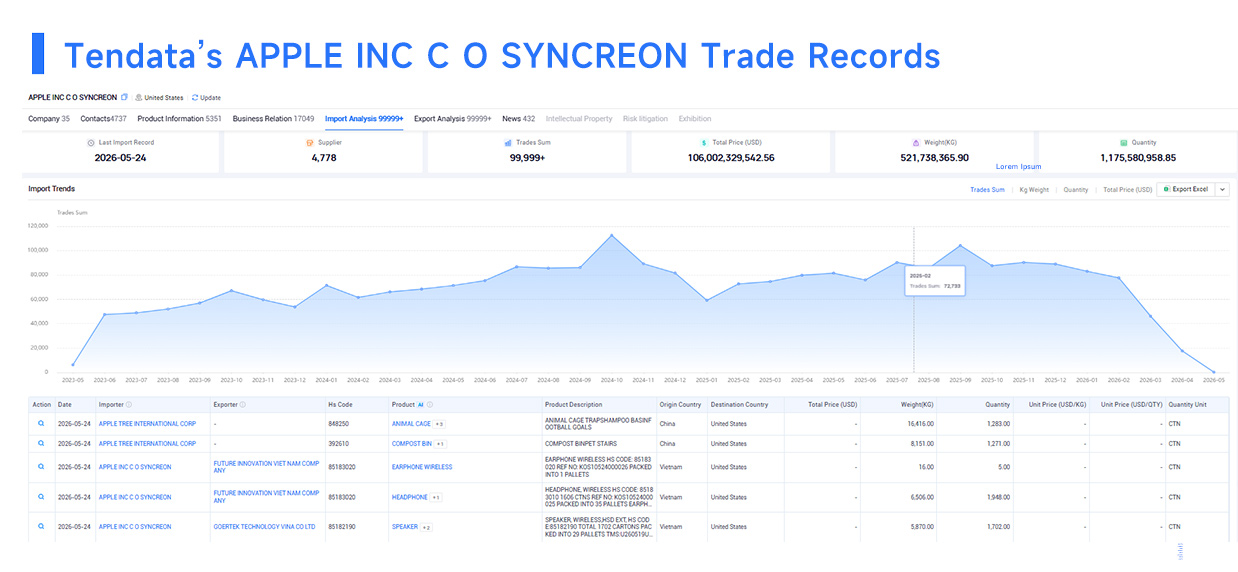
Tendata helps businesses identify companies based on real import activities. By reviewing purchasing records, product demand, and trading history, users can prioritize buyers that are more likely to need their products.
This approach helps sales teams reduce ineffective outreach and focus on prospects with stronger business potential.
>>> Get a Free Demo from Tendata <<<
Improve Customer Development With Contact Intelligence
Trade information becomes more valuable when it can be connected with communication channels.
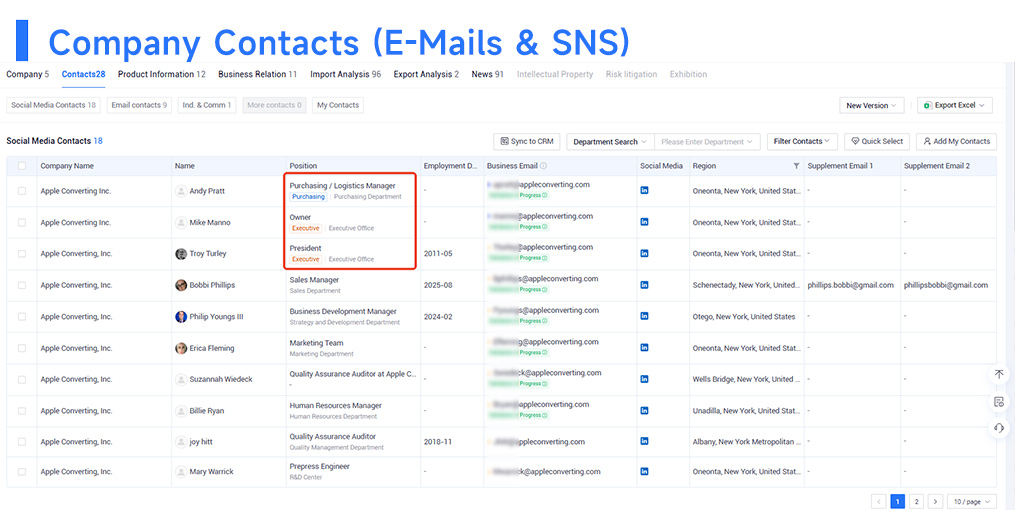
Tendata integrates import export data with available business contact information, allowing users to access company profiles, emails, LinkedIn accounts, Facebook pages, and decision-maker details.
This helps exporters create more targeted outreach strategies because they can understand a company's purchasing background before starting communication.
Instead of sending generic messages to unknown companies, businesses can approach prospects with more relevant information and stronger sales conversations.
>>> Obtaining Customer Contact Information from Tendata <<<
Summary
Import export data has become a valuable foundation for modern international trade. Free trade statistics help businesses understand overall market trends, but companies looking for customers, suppliers, and competitive advantages need deeper commercial insights.
Tendata helps businesses unlock the value of import export data by combining global trade records with market analysis, competitor monitoring, and buyer discovery tools.
By understanding real trade activities and connecting them with actionable business information, companies can identify better opportunities, improve customer acquisition, and make smarter decisions in the global marketplace.
Category
Leave Message for Demo Request or Questions